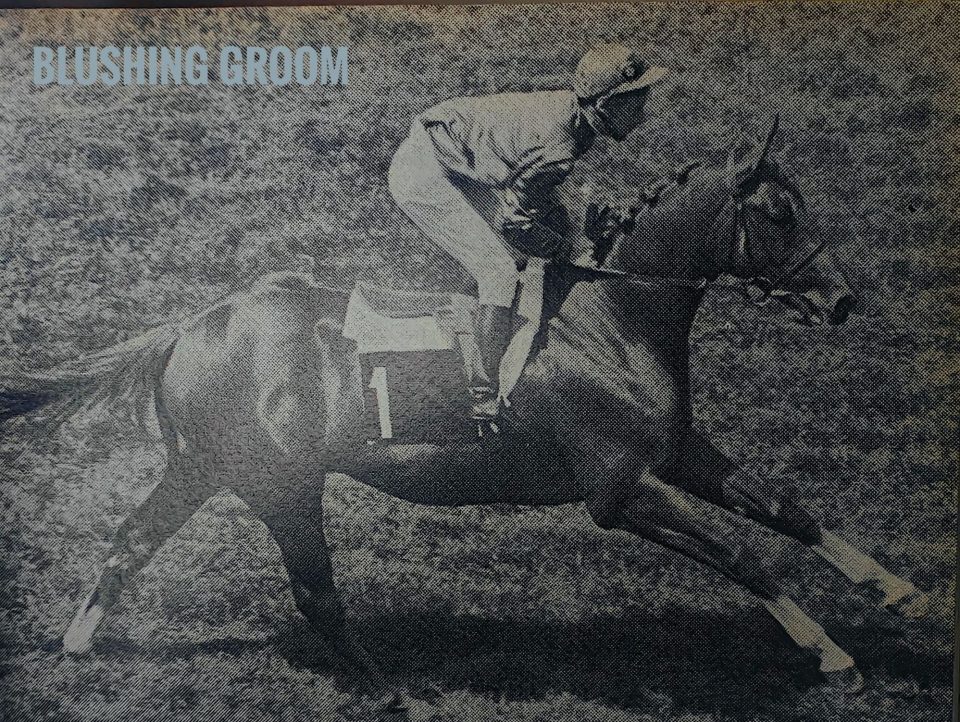
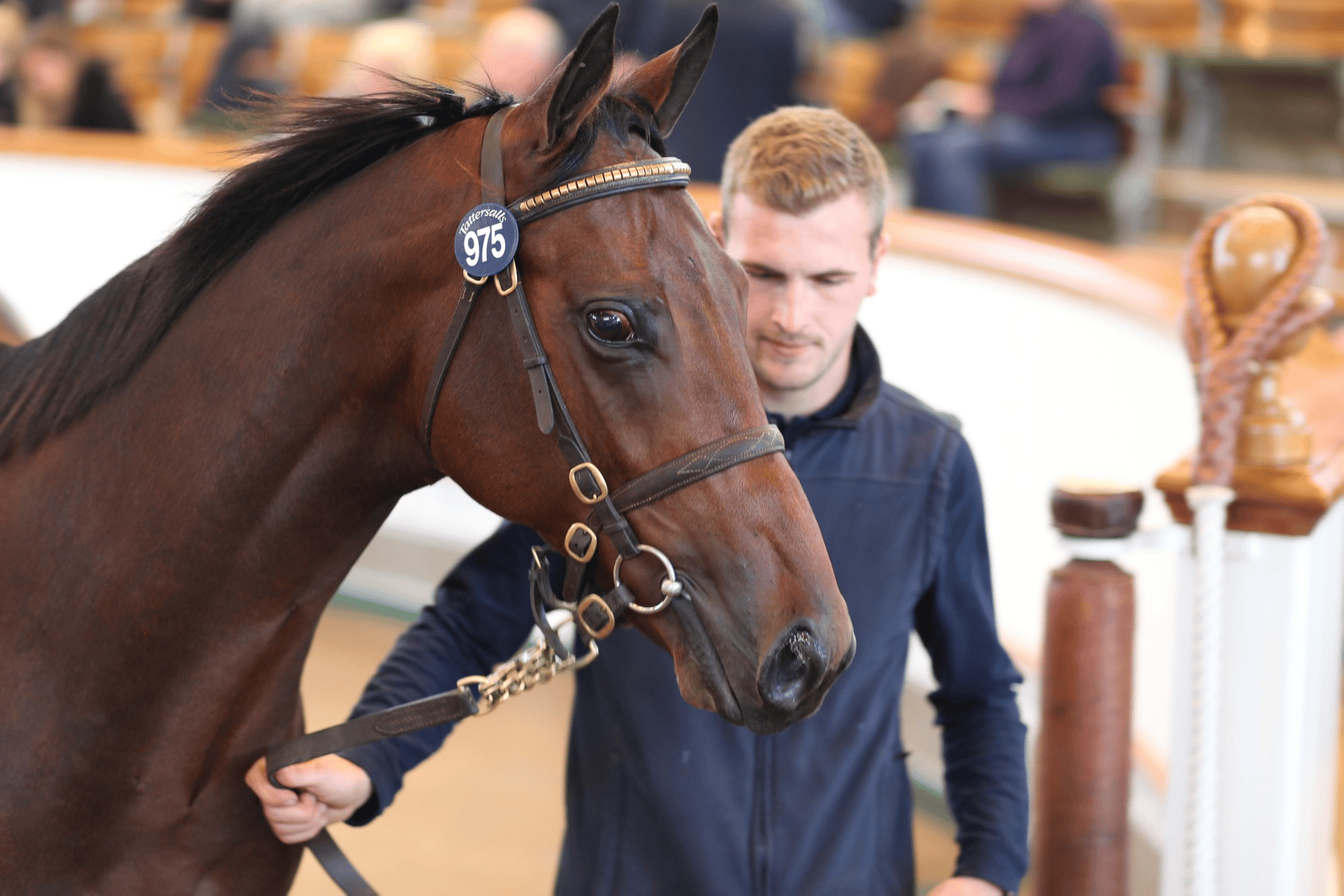
“a romantic end to a flawless campaign” – multiple Group 1 wins across Hong Kong, Japan, Australia, and Dubai. He is the only horse ever to win four Hong Kong Cups and one of only three horses to complete the Hong Kong Triple Crown – 30 starts 23 wins.
Lot 975 Acclamation (GB) / Folk Melody (IRE) B.C. (IRE) Corduff Stud, Ireland The Hong Kong Jockey Club 300,000gns Tattersalls October Book 2 2019
Romantic Warrior’s trainer Danny Shum saw a superior individual and made good advice to owner Peter Lau Pak-fai, as pick of them all. It was his head, his eye.
The best of the best will identify they move fluid, flexible, elastic, powerful. Intelligences to head are with inner character. They grow a stride ‘electric’.
Profile
TBL Research and analysis explores the immeasurable impact of Musket upon the Thoroughbred – to correlate his ‘type’/phenology influence.
Musket hoof – made into an inkwell
Romantic Warrior: @Pedigree distaff with 4th dam sire @The Minstrel (Northern Dancer ) from Fleur 7S x 6d x 8D Trenton by Musket, 2nd dam Flaming Top (USA) & @ Nijinsky (Flaming Page) its line to Halling (USA), the 3rd dam sire. Flaming Page > 7S x 6S x 9D x 8D Musket.
Nijinsky
Acclamation, 4th paternal @ Try My Best (dam, Sex-Appeal) has 5x Musket (Carbine/Trenton) + 4 x Trenton (note, raced from 6 furlongs & 3 miles) & 7x Spearmint by Carbine.
Carbine – stood only 4 seasons in Australia before his export in 1895 to England where his influence was highlighted by his son Spearmint, winner of the 1906 English Derby in record time. From 4 Australian crops, Carbine left a host of classic winners, Wallace a resounding stud success and Amberite.
Musket was scorned for his slow development. The owner/breeder the eccentric Lord Glasgow had an uncompromising attitude, culling any stock not to his liking. Reportedly, it was to be Musket’s fate on the basis of one trial in which he got beaten. His trainer intervened.
The Australasian colony breeders said the ‘Muskets’ were a breed on their own. His stamina and stayer and strength endowed to his progeny became champions of the turf. His racing performances at two and three miles were with astonishing weights. “They gallop in all shapes” and Musket, in the front rank of stayers, built with dray-horse quarters with his bull neck deep, had weight-carrying power.
He was sent to New Zealand as carriage, stock & station sire, his racing stock struck gold yet regarded with faults & imperfection. Sire Toxopholite. a bleeder and from a family prone to wind afflictions, from an unnamed mare by West Australian. West Australian had not yet proved the great sire influence he was to become.
Whilst Musket’s get Carbine & Trenton were considered best of his progeny none could be accounted as failures. His first thoroughbred mare Syliva resulted in Martini-Henry, VCR Mares Produce Stakes, VCR Melbourne Cup, VCR Victoria Derby, VCR St.Leger Stakes. Trenton his 2nd New Zealand crop won as a two-year-old and unsoundness prevented a three-year-old campaign. 13 starts 8 wins, his races where compounded by shelly-feet, further competing against other Musket sons and though the Melbourne Cup eluded him his progeny Auraria and Revenue were successful. Against many odds in the Northern Hemisphere, he was the grand-dam sire of Gainsborough, sire of Hyperion. Musket son Maxim won three races as a two year-old and undefeated at three. Sold to the United States where he enjoyed siring success. His daughter Catherine Wheel, 3rd dam of Phar Lap, ancestress of Sunline (NZ), her broodmare sire is a son of Nijinsky (hence, Flaming Page) Western Symphony.
Machine Gun (Hotchkiss by Musket from Rubina) 33 starts – 16 wins. Rated as of one of the greatest sprinters, especially under weight, of his or any other era. When he won the CJC Randolph Handicap in 1904, for the 2nd year he carried 11 stone 5lb (72 kg)and sped over the five furlongs in 58 seconds, a New Zealand record for more than 40 years. (credit – Tapestry of the Turf – John Costello & Pat Finnegan)
Musket stock & grandsons dispersed around the world, notably USA & Latin America. Musket daughter Ante Diem family accounted for at least 19 Argentine Classic winners, among them 1931 Triple Crown winner Mineral, as well as many other winners of top races in both Argentina and Brazil.
To the deep avenues: gold potent genetics, the Musket line did not wither but rather imprinted his enormous ability duly thanks to the foresight of a trainer who did not see him as a failure.
To define Musket, his imprinted bloodline yields the high profile type-setting.
The elites have it: the Man O War son War Admiral 3rd dam by Spearmint by Carbine, noting the MOW sireline West Australian has Musket broodmare sire.
Further by geno: the sire of Phalaris, Polymelus is the similar ‘in’ vein @ distaff ‘blood’ (Toxophilite/Quiver>Brown Bess) compare i) Musket ii) Carbine 3×4 Brown Bess.
@ Romantic Warrior
His dam Folk Melody – 5×5 Halo & of Halo – 6x Spearmint by Carbine noting Hail to Reason > 3rd dam sire St Germans, dam Hamoaze by Torpoint by Trenton.Cosmah 5×5 Spearmint
(Remember Northern Dancer has top and bottom Spearmint by Carbine via Chicle & Catnip + Hemlock, 2nd dam of Display sire of Discovery).
By genotype spectrums @ Polymelus (Toxophilite/Quiver/Brown Bess) influences Polynesian sire of Native Dancer.
Such and such a mare produced the Derby winner but nothing else – thereby implying that the production of Classic winners or high-class winners is something akin to sausages being rolled out of a machine.
Sir Charles Leicester – Bloodstock Breeding
Queens of the racing World – Enable, Zenyatta, Winx, Black Caviar, Sunline, Rachael Alexandra et al – each shattered records and made their world champion status something remarkable.
Onwards to a new chapter – the champion becomes broodmare, proceeds to the breeding barn where she will be covered by chosen and distinguished stallion.
The initial offspring make for headlines, suggesting remarkable performances will once again be applauded. Characteristically, their black type as worded for sale headlines.
Reality speaks otherwise…
Determining the regularity with which a productive fertile mare breeds throughout her lifetime recognizes a distinction between i) breeding and ii) racing. The commercial sector uses impression that the most esteemed mares are also the leading producers, a value as collateral asset, where based on performance and race record earnings.
A misconception common is that we do not value a strong maternal lineage. We assume that everyone agrees that, ideally, our broodmares should have a history of solid racing and a strong maternal lineage. But, for economic reasons, this is not possible for most market participants. credit – Turf and Élevage : 2026, Breeders: the debate between performance and pedigree.
Thoroughbred History tells of the great broodmares with their phenomenally hard racing records. They certainly contributed their fair share to the earliest development of the breed. Unequalled tap-root mares, the abnormal good matrons of a bygone age are all imprinted upon toughness.
Contrasting were the mares with poor stud records and when getting on in their years (around a 20-year-old mark) produced Derby winners. Their progeny shows the GSB elite.
Produced some useful stock but nothing comparable to Ksar (French Derby and first-class stallion) produced at 19 years old (Kizil Kourgan (1893) by Omnium II, a great race filly who won the French 1,000 Guineas, Oaks and Grand Prix de Paris but barren 1911, 1912 & 1917.)
At 14 produced Angelica (the dam of Orme) but no good until she was 16 and foaled St Simon – possibly the greatest horse of all time. Her bad stud record was the probable reason that St Simon was not entered for the Derby or St Ledger. Dam, St. Angela (1865) by King Tom. Her grandam was a half sister to The Little Wonder) The Little Wonder Thoroughbred
Bred nothing of note until 22 years old when she foaled the 2,000 Guineas, 1,000 Guineas and Oaks winner mare Crucifix. Octaviana (1815) by Octavian – 12 for 12 wins. Crucifix produced Surplice (Derby & St Leger), he sired Lady Clifden, no lines further
Produced nothing above selling-plate class until 20 years old when she foaled Le Petit France (French derby 1954) – Mercia by Teddy, full sister to the grandam of Phil Drake (1955 English Derby and Grand Prix de Paris). Le Petit France exported to Argentina 1955 – Puesto en la estadistica anual de padrillos 1962-19; 1963-10; 1964-21; 1965-21; 1966-21; Puesto en la estadistica anual de Abuelos Maternos: 1969-8; 1970-41; 1972-45; 1973-13; 1974-9; 1975-10; 1979-34; 1980-33; 1982-41; 1983-38;
Then again –
Tulyar, Mahmoud, Son-in-Law, Hampton were the first produce of dams.
These accounted are the extreme breeding greats. Santa Claus (Chamossaire) had come from a line of mares with nothing to recommend them on the racecourse. The great Sea Bird was even more bereft in this direction since not one of his first five dam in his pedigree won under rules on the flat. Sea Bird ( at first) got a reputation of being the failure at stud. Until Allez France winner of the French 1,000 Guineas and Oaks, the Arc de Triomphe, Prix Vermeille and Prix Ganay twice. Brillance came further to Gyr from an Italian mare and 2nd to none other than Nijinksy in the Epsom Derby. Son Arctic Tern a G1 champ at 4 years, was a top stallion in France.
As the industry ‘norms’ further evolved, the first few foals produced by a winning mare came usually regarded as superior sales prospects as compared to those from non-winners. However, with deeper examination reveals those winning abilities may not be as extraordinary as perceived; one or two successes achieved may lack significant merit or potentially aided by weight advantages or as occurring in low-class races primarily to secure a favorable position for early yearling saleable prospects.
These factors constitute the commercial prerequisites of the industry. The advantages shall somewhere lie in the geno strains/traits, the defined ‘type’ from a quality mare whereby adding to the stallion’s value, and thereby her female pedigree ‘upgraded’.
Breeding for outright champions of the turf – the underlying shall account strongly to a sudden hybrid explosion and when reviewing Queens of the Racing World their individuality has perculiar genetic pathways. Who or what may spear the pedigree is the perennial question. And here, analysis places due contributors, and secondly, the depth identifying patterns or crosses & conduits that are refreshing or ‘newly’ breaking from the conforming norms. (Wootton Bassett by Iffraaj is a prime example. Noting Ka Ying Rising (Timeform 130) reportedly trainer/owner of the mare had structural weakness to her racing ability and was accordingly advised a robust stallion being Shamexpress (OReilly)
At every generational wave, the genetic profile shall improve or decline or ‘rest’. Experience @TBL is that far to much in-breeding emphasis goes on speed for speed alone. Capturing more outcrossing strains preferred, based on stayer blood depth. Improve phenotype from less density in muscle – more length and strong bone skeleton.
Yet ever so oddly, a champions pedigree is one that cannot be so easily explained but fits priming a design; it addresses a phenotype we don’t see commonly.
In each case the apex of success having been at last reached, the process of deterioration sets in, and the immediate followers to these great horses were far inferior as racehorses.
Bruce Lowe (Breeding Racehorses by the Figure System)
Keep in mind, the incessant nature and practice of genetics may follow a ‘rest’ period. Keeping the champion value is back on the stallion. The individual progeny produced is continual noting ‘character’, its characteristics of typology. Here, the grandparent family (either side) are deciding a determination of representative physiology.
As breeders come to know their products more and more, (ie, families over many generations) there comes finer appreciation – as if it is a breeding ‘timeline’ to itself. Exactly how Tesio, Boussac, Aga Khan & stud breeder competency are judges being to finely observe what is working or not as to procure the stock desired.
(AI research produced, as follows)
Champion Thoroughbred mares often do not reproduce offspring as talented as themselves because racing brilliance is influenced by a complex mix of genetics, biology, and statistical probability. The science and breeding data show that even the best mares face structural limits that stallions do not.
🧬 Core Reason: Genetics of Performance Are Only Partially Heritable
Racing ability is heritable, but only 35–50% of performance traits (speed, stamina, soundness) can be passed on, according to modern breeding science. The rest depends on developmental factors, training, environment, and chance.
Even a mare with elite genetics can produce foals that inherit a weaker combination of alleles, because:
Performance traits are polygenic (controlled by many genes).
Key genes like MSTN (“speed gene”) vary in expression and combination.
Unlike stallions, who may sire hundreds of foals per year, mares produce one foal annually at most. This creates:
Small sample size — fewer chances to produce a standout.
Higher impact of random variation — one or two mediocre foals skew perception.
Physical wear from racing — intense campaigns may reduce reproductive efficiency.
Pedigree analysis shows that even among elite Classic-winning mares, only 18.5% ever produce a Group 1 winner.
🔒 The Closed Studbook Problem
All Thoroughbreds descend from a very small genetic base:
This creates a genetic bottleneck, increasing:
Inbreeding levels
Fertility issues
Reduced genetic diversity
Difficulty consistently producing elite athletes
🧩 Why Some Great Mares Do Become Great Producers
A small subset of champion mares—like Urban Sea and Miesque—produce multiple elite offspring. These mares tend to share:
Strong, consistent female families
High genetic compatibility with elite stallions
Favorable MSTN variants
Exceptional physical soundness
But these mares are statistical outliers, not the norm. Even among Classic winners, only 57% produce any stakes-level offspring at all.
🧪 Breeding Theory: “Breed the Best to the Best… and Hope for the Best”
Even with perfect pedigree matching, breeders acknowledge:
“A well-designed mating increases the probability of success, although many other factors also come into play.”
Elite mares increase the odds of producing elite foals, but they cannot guarantee it.
📌 Summary: Why Champion Mares Often Don’t Reproduce Themselves
1. Limited reproductive output — one foal per year. 2. Polygenic traits — racing ability is complex and only partly heritable. 3. Genetic bottleneck — limited diversity reduces consistent excellence. 4. Biological wear — hard racing careers may affect fertility. 5. Statistical reality — even top mares rarely produce top foals (18.5% G1 producers).
With reflection of the 2026 Kentucky Derby contenders came this fair hunch for Golden Tempo. Golden Tempo ran an exceptional race. His victory was well deserved.
The overview was because of Bates Motel, sired by Sir Ivor, with reference post – Butterfing (ARG), where Bates Motel is also 2nd dam sire of US champion sire Curlin.
Sir Ivor – a sire of outstanding fillies namely Lady Capulet (winner of Irish 1,000 Guineas on her racecourse debut. His colts Bates Motel (USA) – Sir Tristram (IRE) great Broodmare sire, as is, his superior stayer sire Zabeel (NZ) Absolute champion sire, 45 G1 winners of 140 SWs Leading Sire in Australia 6 times 🏆 A leading sire in New Zealand
Golden Tempo @ 5×5 Sir Ivor by Sir Gaylord dam Somethingroyal. Should any aspire for the extraordinary horse, examine the dynamic blue-hen Somethingroyal, as sired by toughness, staminain Princequillo. Naturally, and with Secretariat, to duplicate Somethingroyal 4x, these duplications furthering 10x Princequillo. Noting male-line, Smart Strike (CAN) is of the Princequillo distaff ex-4th dam, as is Quiet American (USA) by Fappiano, the dam-sire of Bernardini (USA), dam sire Golden Tempo. Golden Tempo Horse Pedigree
Sir Ivor – The Race calls – “Sir Ivor is welloff the pace”…does the run sound familiar??
Princequillo’s career began in the same way as his sire’s, in that he was foaled in England, exported to America and began in humble surroundings and in his case claiming races. However, Princequillo progressed, claiming America’s two major stamina tests, the Saratoga Cup and Jockey Club Gold Cup, among his 12 wins, though they seemed to count for little when he retired to stud at the lowly fee of $250.00 and received only 17 visitors in his first season. When he was moved to Mr Bull Hancock he received mares of much better quality. Princequillo’s role as broodmare sire struck gold when his mares went mated with Nasrullah. (post – The First Principle – Princequillo)
Golden Tempo’s dam Carrumba reminds her strong phenotype is akin to Mahmoudbones.
Mahmoud by Blenheim by Blandford: the record breaking Derby winner and great sire in America who stamped his conformation – Almahmoud (Northern Dancer) – Mahmoudess (Promised Land)– Mr Trouble(Sir Ivor) – Boldness (Quiet American) – Ghazi (Lady Capulet)
Teddy male line >>>> Promised Land 6×7 – @Wise Exchange & Spectacular Bid. To further note: Promised Land has 5th dam Spearmint by Carbine by Musket. Nearco has 2nd dam Catnip by Spearmint by Carbine by Musket. Northern Dancer’s 5th dam by Chicle by Spearmint by Carbine by Musket.
It highlights the ‘unspoken stayer geno’ much-distinguished sire-line to Musket, the antipodean sire of many a Melbourne Cup winner and of V.R.C. Derby’s. He left remarkable horses – Necklace, Krupp, Trenton, Fullisade, Fusilier, Thunderbolt and Nordenfeldt. And then one month before his death was the greatest of all, Carbine (1885).
Musket as a three year old, he ran nine times, winning seven races, being second once and unplaced once. A number of these races were over two miles. At Ascot he carried 8st 12lb to victory in the Ascot Stakes, his weight being the highest ever borne successfully then by any horse in that race. As a four year old he ran twice, winning the Midland Counties Handicap, two mile and running second to Rosicrucian in the Alexandra Plate, three miles. He was then retired to stud but during the six years his services were offered to English breeders but was not in popular demand. The Waikato Agricultural Company (New Zealand) sent Mr Thomas Russell to England to look for a sire for coach and utility horses. On the death of Lord Peel, Musket was auctioned at Enfield and was secured by Mr Russell for 520 guineas. The will of Lord Glasgow however provided that none of his horses should be sold, so this obstacle was overcome by selling a lease of Musket for 99 years. Two years afterwards Musket’s son Petronel won the Two Thousand Guineas and English breeders began to realize that they had been too hasty to condemn one of the stoutest-hearted and best stayers of any age or country.
A Noble Breed – William Mackie
Nijinsky – 13-7-20-0-0 (40) DI = 3.00 CD = 0.83 – GSV = 79.63✅