As the stallion ignites further commercial interest, TBL examines those Yaupon genetics that struck ‘bullseye’ – showcasing his integrity where undeniably, an intriguing genetic uniqueness appears.💥
This is CRAZY 😅
In the final stretch of the Forego Stakes, FIRENZE FIRE attempts to BITE his rival YAUPON 😬
A formidable male sire line, in its own right, it carries on by Uncle Mo’s intermediate/classic status. From the brilliant Grey Sovereign – Fortino (FR) – Caro (IRE) – Siberian Express (USA) – brilliant/intermediate In Excess (IRE) – Indian Charlie (USA) – Uncle Mo (USA) his G.1 son & sire, Yaupon (USA).
Further, working along these governing sire lines consistency established – a speed given upon their breeding influence, and onwards developing branches or supplementary lines. It is important to observe their broader genetic possibilities, engaging those various sires that may contribute to a stronger genotype, whereby tapping into unrealized potential.
What however captured Yaupon’s early success?
distaff Yaupon arises from 9th Generation @ *St Germans (GB)
Hail To Reason pedigree finds 3rd dam sire *St Germans (GB).
🏆St Germans (GB) – a magnificent influence through 2nd dam Sceptre (GB) 1899, as her dam is Ornament, a full sister to English Triple Crown Winner, the unbeaten Ormonde. A Line, father of Orme trails down to the electrifying breeder, Teddy.
Yaupon takes up strains @Hail To Reasonvia Leo Castelli (Nothirdchance distaff) – 4×3 Vindication (USA) – Roberto – In Excess (IRE) distaff/dam Vi by Vilmorin – Gold Bridge (FR) ➡️➡️ Orby/Orme/Ormonde. Noting also, Kris S, sire of Arch (Uncle Mo) – the 3rd dam by Gold Bridge (Fr) …Orby/Orme/Ormonde
Yaupon – 7s x 7S x 7D x 6D – Nothirdchance, (dam of Hail To Reason).
Hail to Reason – his dam Nothirdchance (USA) went by crossing 3×4 Man o’ War, 2nd dam St Germans (GB)
The Legacy to Hail to Reason, left the notable sires Roberto, Bold Reason, Halo, and Stop The Music to their consistent individuality.
St Germans (GB) sources Ormonde’s full sister Ornament, dam of Sceptre. He was the sire of Kentucky Derby and Belmont Stakes winner TWENTY GRAND, and Kentucky Derby and Preakness winner BOLD VENTURE
From a formative cross, Yaupon pedigree generates..
-its undisputed, his distaff has Hastings, sire of Fair Play – Man o’ War line et al @ 8x strains folding through, additionally both Hail To Reason & 3rd dam, St Germans & Man O’ War.
As yielded, upgraded upon and profiled on tight knitting lines, Yaupon introduces a very smart outcross. Yaupon Horse Pedigree
Physically, Man O’ War was a glowing chestnut, almost red, standing 16 hands 1,5/8 inches. He measured 71,3/4 inches at the girth and weighted 1100 pounds in training. As a stallion his weight reached 1370 pounds. He was unusually long bodied and powerfully muscled in the gaskins. He sired over 300 offspring who won over 1200 races.
photo credit – The English & Irish Thoroughbred – Sceptre the foundational mare (Persimmon – Ornament) 3rd dam St Germans.
Notes: compare pedigree Do Deuce Horse Pedigree male line Hail to Reason ‘X’ Vindication, champion 2-year-old colt.
Frankel embodies excellence; his genetics culminate to a remarkable equine inheritance. As a youngster characterized by unpredictability, Henry Cecil and rider Shane Fetherstonhaugh adeptly nurtured him towards patient composure, resulting the unbeaten, 14 wins from 14 starts.
Typically, bloodlines grow and demise grows causal. It was topical to Tesio’s studies of great Derby lines to the continuation of fresh blood and ‘class’.
The once, chefs-de-race classic lines – what ‘gave’ tremendous impact, today are treated commercial remote and or with little effect.
Effectively however is the strength: phenotype and genotype constitution and these came from powerful crosses added to its deep courses, to, and with the determinable bones.
two graphs above – excerpt Credited to Pedigree Analysis by Michael Ford, Keeper of the Australian Stud Book 2012. (n.b. whilst Australian numbers where researched, the basis in effect, inclines internationally)
‘Classic’ Blandford was an entire ‘brand’ of his own.
Blandford. 3-time Leading Sire. He produced four Derby winners. BAHRAM, sold to Argentina. BLENHEIM (exported to US, the rest is history) and TRIGO. Namely, sire of the great French champion BRANTOME. Windsor Lad – Badruddin – exported to Argentina, a genetic powerhouse – Umidwar – Bokbul (fated disappearance WWII). His Grace & Blue Skies, Bulandshar sent to N.Z. in 1934 4th on the Winning Sires List in 1942-43, 1943-44 and 1946-47. As broodmare sire Chanteur (FR). Big Game, son of Bahram. By male line, Loliondo (FR) – Val de Loir (FR) – Exbury (FR) – Vadamos by Monsun et al – Idomeneo (GB)/Alycidon – Norseman (FR) from the notable Teddy daughter Tara.
Whilst Frankel’s front profile – @ 5×5 Buckpasser – (go reminded Tom Fool/Menow/Plucky Liege) – @4×5 Natalma, the pedigree expansion details to Blandford’s contribution. A classy individual stamps likeness, thence Sadlers Wells/Thong – 5×3 Blandford.
Sadlers Wells (Northern Dancer – Fairy Bridge)
@Frankel’s dam Kind, female distaff
– Blandford son Brantome, son Caldrium (FR) @ 2nd dam, Stage Door Johnny (USA).
– 5th dam Nasira by Persian Gulf by Bahram/Blandford.
@ Galileo, Sadlers Wells/Thong – 5×3 Blandford – ‘speed’ multiples @ Blenheim (Blandford) descendants via Mahmoud, Nasrullah, Natalma. Bahram – dam sire of Expresso (6×4 Blandford), 3rd dam sire Galileo.
Breeding across, appraises where another great typealso earns desirable traits. Here, Blandford ( Simple, Complex & Remarkable- continues to the Blandford line) upon his bloodline cross to another bloodline had resulted in an extraordinary potency.
Ormonde – Orby – Orme, the male line thru time…(to Teddy)
Ormonde held undisputed sway over the most talented generation in racing history, yet he was generally compared unfavourably with St Simon, two years his senior, when discussion turned to the greatest horse of the 19th Century. Ormonde had great devouring strides. Ormonde looking as though he was enjoying himself in an exercise gallop on those following to duels between champions at racing pace throughout the finest mile race in history. Racing against Minting, it was as though the pair were staging an exhibition gallop, dictating the terms, showing why the phrase ‘poetry in motion’ was appropriate to thoroughbreds at full stretch. His final record read 16 wins over three years. Ormonde was the King.
Ormonde ®️
®️Orme by Ormonde – 18 starts/14 wins – Sire of 1899 Triple Crown winner FLYING FOX; Epsom Derby and Irish Derby winner ORBY
Speed was inherited from Orme and son Orby. Orme is out of a sister to St Simon . Tesio formula Havresac – Tracery dam Topiary = Ribot.
Apart from Brazil (Teddy line, 1! ) & New Zealand’s Rich Hill Stud standing Vadamos (FR), the hollowed out male line representation of *Teddy (Ajax/Flying Fox/Orme) or Blandford dissolved.
It is however to those Inbred lines: dam Thong (5×3 Blandford) her dam, Reine-de-Course mare Rough Shod sired by Gold Bridge @ 3×3 Orby @ distaff, Sadler Wells sire of Galileo, what paved genetics to ‘upgrade’.
Orme’s daughter Topiary, dam of Tracery (USA) sire of Papyrus, dam sire of Advocate, dam sire of Forli – 2nd dam Sadlers Wells. Prince Chevalier, brood mare sire Abbot’s Speed ➡️➡️Tracery (Orme). Prince Chevalier sire of Promised Lady inclusive to, Big Game by Bahram/Blandford, ➡️Lombard 2nd dam sire Galileo.
As above, so below: Frankel’s distaff, as mentioned above, the cross in-Type fixes again @ Nasira (GB) by Persian Gulf/Bahram/Blandford to Sir Cosmo/The Boss/Orby.
Frankel’s broodmare sire Danehill, the speed sire, through Almahmoud by Mahmoud by Blenheim/Blandford.
The presence and influence of i) Blandford and ii) Orme crossing was truly one of exceptionality. It created….
Frankel, thoroughbred gold
🏆🏆🏆🏆🏆🏆🏆🏆🏆🏆🏆🏆🏆🏆
Bahram raced five times as a two-year-old and won every time. He won the 1935 Triple Crown (2,000 Guineas, Derby, and the St Leger), unbeaten through his career and no horse really extended him. His trainer, Frank Butters declared that he never really knew how good the horse was because he was so lazy on the gallops and did no more on the racecourse than he needed to win his races. Although the Aga Khan never wished to sell Bahram, wartime Britain forced a decision, and he sold to America as were Derby winners Blenheim and Mahmoud to the USA. Six years later he was sold to Argentina. Bahram knew how good he was and a quirk of his was to lean against the stable walls, with legs crossed, looking disdainfully around him at lesser beings. Progeny of Bahram; son Bashir went to India but died as sire in his 1st season. Big Game champion sire of two-year-olds. Senegal (ARG) – exceptional record of 12 wins from 16 starts and multiple major stakes victories. Senegal sired on Antar (VEN) -the horse was recognised as the Champion Two-Year-Old of 1964, having won three important juvenile races (3×4 Blandford). Turkhan (GB) – 1939 : won Coventry Stakes 1940 : won St. Leger, Irish Derby @ Blandford, 5dx5d Orme.
Persian Gulf was winner of 4 races including the Coronation Cup, 1 1/2 miles and Fen Ditton Stakes, 2m. Persian Gulf ranked seven times among the top 10 English sires.
®️ @ The Thoroughbred Link,other as Credited, noted or linked
(Orme lines through i) Crimson Satan aka Royal Academy & Storm Cat ii) Star Kingdom (GB) / Makarpura (GB) -b/m sire Biscay (Aus)
note, Ormonde’s full sister Ornament is dam of Sceptre by Persimmon. Sceptre Horse Pedigree, an extraordinary mare, she won four of the five classic races.
references –
Great Moments in Racing – Tony Morris
author, Ken McLean books
Bluebloods September 2012.
Britain and Ireland’s Top 30 Racehorses of all Time
By examining bloodline characteristics, essential criteria can be identified. It remains to the astute observer to acknowledge inherent traits that shall persist and define the horse.
Humphrey S. Finney was an admirer of John F. Wall’s Thoroughbred Bloodlines (1930’s) stating: It is a weakness of our pedigree keeping that we do not record more of the “constitution, conformation, and disposition’ of its component animals.
The trainer also detected a special quality in St Simon, saying that he was fuller of electricity than any horse he had known
excerpt: Notable English & Irish Thoroughbreds (Alister Taylor)
As blood-vital over breeding decades, the #BT – Herod – St Simon is largely pivotal by either male-line or female admix to breeding profiles. Historically accounted #BT, Turkmen and its ancient characteristics of skeletal conformation are seen to photos below.
#BT – the English Thoroughbred – GSB
Identification of Genetic Variation on the Horse Y Chromosome and the Tracing of Male Founder Lineages in Modern Breeds (***The “Arabian” Blanket Term: Western buyers—including agents for the English aristocracy looking for racing stock—frequently used “Arabian” or “Turk (Turkoman)” interchangeably based on the port of export rather than the exact genetic origin of the horse. Market places Allepo, Syria. ⚠️The cited 2013 paper does not include 13 breeds and exclusive of data, Barb, however, view the interbreeding to other horse breeds inclusive breed as English thoroughbred. @The Barb or Berber are @ origins Layton’s Barb mare to Nearco and Man o’ War. Foundational, Taffolet Barb, Tregonwells Natural Barb, @ Family 1 by Byerley Turk. As was once considered by Bruce Lowe Breeding System – a Barb mare dam of Old Bald Peg, a Barb mare the dam of Dodsworth where seven Barb mare went recorded Vol.XVII. Lowe’s work, whilst rather discredited or erased in a number of genetic cases – it is interesting he noted Tregonwell’s Natural Barb mare, Burton’s Barb mare and Layton’s Barb mare having won nearly one-third of the English classic races. It shows the types are 1st crosses, as developed & foundational ‘head’).
Turkmene 15.1 h.h. (brown bay with golden tint, white markings; black, gey and dun with silver tint. Medium head, straight face long neck; high head carriage – fairly prominent withers – long neck – pronounced croup and sloping quarters – flat ribs running up – iron hard legs. Of exceptional stamina and endurance – fearless, obedient and very fast. The Turkmene (Achal-Teke) of ancient origin, valued for his speed 1,000 years B.C.
Achal-Teke 14.2 to 15h.h. (light head with long face, large expressive eyes – large fine nostrils – neck long and thin and set high – long high withers – long back and loins – croup pronounced – narrow chest and not deep – flat ribs and long sloping shoulders – legs, long – hard, strong tendons – hooves small with hard horn. A lively temperament and sound constitution. A horse known to cross 900 miles of desert without water to drink.
The science applied research to the racing thoroughbred to maintain causal speed, distance & stamina @ MSTN muscle type. The breeder’s logic may draw closer at type, body size and conformation: morphological equilibrium as any breed is designed to its efficiency, specialist sport performance.
It seems a genetic framework of *genes FRZB, MATN1, COL1A2, ACAN and IGF1 form a particularly interesting cluster because they all function & relate to skeletal growth, cartilage quality, soundness and athletic durability, traits that are highly relevant in riding horses, racehorses and sport horses*
Interestingly, the Gidran breed, Austro-Hungarian Empire studs (the Ottoman Empire) developed as derived through old-Spanish, Arabian, English Thoroughbred that makes positive contribution in Thoroughbreds. The candidate gene function influences exercise physiology, aerobic capacity & racing performance. Further to the Gidran breed is its chestnut ‘fixed’ coat (gene, MCIR) – Genome-Wide Homozygosity Patterns and Evidence for Selection in a Set of European and Near Eastern Horse Breeds – (*n.b. @link – AI crunched to genes)
To more practical and layman consideration constitution, conformation, and disposition – Jimmysstar’s sire Per Incanto, @Ahonoora possessed blistering early speed. He gained victory in the Spring Championship G2 and G3 King George Stakes over the minimum five furlongs. Ahonoora initially attracted little attention from breeders but managed to get top class runners over a wide variety of distances.
Though considered unfashionably bred, Ahonoora son Indian Ridge, a sprinter, captured the King’s Stand Stakes G2 and G3 Jersey Stakes where he turned out to be an exceptional sire of milers and sprinters.
(5×5) Sir Ivor, Lestor Piggott claimed he was the best horse he ever rode (apparently the jockey was not known for effusive praise). It was Piggott on Sir Ivor for the Washington DC International Derby, the 2000 Guineas and the Champion Stakes plus two other of the horse’s eights wins, as well as to be second in the Prix de l’Arc de Triomphe. Sir Ivor to his racing, went well off the pace, only to deliver a devastating turn of foot and take the win.
Tom Fool undefeated at four and 10 wins in his 1953 season. He proved so formidable that wagering was cancelled the four times he ran. He ran twice in the Suburban H. and won both times. 1953 Horse of the Year, Champion Handicap Horse, Champion Sprinter, his genetics are seen to Try My Best – Danehill – Stop The Music as noted to – Jimmysstar b/m sire Zed.
Note, Sir Ivor and Tom Fool take genetic affinity through chestnut mare Alcibiades dam of Tom Fool’s sire Menow and to Sir Ivor’s 4th dam.
Broodmare sire, Zed – notable sire of mare Verry Elleegant – 2021 Australian Racehorse of the Year, winner and stayer of Melbourne Cup. Zed has 10x Selene through her family as are noted to New Zealand breeding leading sires Sir Tristram and Star Way (discussed below)
Disciplines for inbreeding crosses continue to this very day is finding the duplication to Selene viz., Hyperion, Pharamond II, Sickle, Hunter’s Moon and through her daughter’s son Mossborough by Nearco. Mossborough’s dam All Moonshine the 3/4 family affinity to Hyperion. It’s worthwhile to remember and note Selene grand-sire St Simon and the downward ‘multiple’ strains of St Simon reinforce one superior performer.
Selene – credit source unknown
He was a strongly built chestnut standing 16 hands – Star Way sired by Star Appeal by Appiani the Italian Derby winner. Star Appeal won 11 races, including the Prix del’Arc Triomphe and Eclipse Stakes G1. Star Way sired 5 G1 winners in his 1st season: classic standard and middle-distance stamina to the likes of New Zealand’s champion, the chestnut gelding Waverley Star, multiple G1 winner & sire Sky Chase, and champion stayer mare Smiling Like.
His son Star Board won the Sires Produce Stakes Gr.1 at Awapuni (N.Z.) and headed the two-year-old Free Handicap with 58.5 kg. Star Board emulated his sire’s precociousness at the same age.
Pentire – an excellent sire for tough progeny producing middle distance to stayer, Melbourne Cup winner Prince of Penzance, 3rd place-getter Melbourne Cup Xcellent & Australian standing sire Xtravagant (NZ)
Jimmysstar distaff is more renowned to Argentina bloodlines & producers. His 4th dam by Climber (USA) noting #BT sire line + 2x Hyperion/Selene. He was an exceptional genetic sire for Argentina breeding. Another genetic monster in sire Penny Post (ARG) & further back Old Man 1901 (ARG). The family distaff heads @ Ante Diem (GB) a daughter of the ‘powerhouse’ male line by Musket. (*Pedigree Query notes – The ANTE DIEM family has accounted for at least 19 Argentine Classic winners, among them 1931 Triple Crown winner MINERAL, as well as many other winners of top races in both Argentina and Brazil)
Jimmysstar (NZ) on his powerful win Manikato Stakes, is again entered for TAB The Everest and will challenge Ka Ying Rising (NZ).
Ole’ to the wonders of those gene powerhouses.
******
references & credits – The Thoroughbred, Stallions and Stud of New Zealand by Bill Cox
Horses of the World – Daphne Machin Goodall
*** with acknowledgement to Janice Winterhalter, who has also provided – Cultural Politics of Thoroughbred Horses in the Ottoman and British Empire – 9d5f73c1-fa7b-3180-9b2b-1c3ef02b66e4
acknowledgment to Gilberto Junqueria – From 1415 onwards, conditions were created for a constant flow of new specimens coming from North Africa to Portugal, and the constant attempts at territorial expansion in Morocco also meant a significant number of equines making the same crossing, but in the opposite direction. In any case, it became clear that the introduction of horses from North Africa had a huge impact on the “Royal Stables” that at that time represented, to a good extent, the standard of the equine breed in Portugal, before the current concepts of breed even existed. (The International Circulation of Horses Fostered by the Portuguese Crown between the Late 15th and Early 16th Centuries) ORCID: https://orcid.org/0000-0002-7634-7559
Yet another breath-taking performance, Ka Ying Rising, the world sprint Champion won G3 Chief Executive Cup @Sha Tin, clocking record 1.06.11. He carried a top weight of 135 pounds (61.2 kg / 9kg concession to rivals)
We may be watching for the first time a horse with the perfect mechanics of action, so easily does he cover the ground – comments from a NZ race fan.
When St Simon cantered the next morning his new owner and trainer where disgusted with his action. “He appeared to move more like a rabbit than a horse and could not apparently stride over a straw” wrote Portland in his memoirs. After an unbeaten racing career in which he was never extended, St Simon went on to become perhaps the single most import sire in Turf history. His trainer used to say that the extraordinary thing about St Simon was that distance never seemed to trouble him; he was as good at a furlong as he was at three miles. The trainer also detected a special quality in St Simon, saying that he was fuller of electricity than any horse he had known.
Notable English & Irish Thoroughbreds (Alister Taylor)
Blue Peter @ 4x St Simon – son Sabaean, 4×5 Chaucer (St Simon – Canterbury Pilgrim from Moon Priestess, dam Selene by Chaucer. 5×4 Selene via Pharamond & at distaff – as seen to King Ying Rising profile > 5×4 Sir Tristram.
Sir Tristram’s 2nd dam is by My Babu (Djebel) + 4×3 Princequillo male to St Simon male line.
By #BT sire line, Djebel, a winner from 5 furlongs to 12,1/2 furlongs – 15 won. The descendant Ahonoora considered a sprinter.
– Ahonoora possessed blistering early speed and gained victory in the Spring Championship G2 and G3 King George Stakes over the minimum five furlongs. Ahonoora initially attracted little attention from breeders but managed to get top class runners over a wide variety of distances.
@ Ka Ying Rising profile – Ahonoora son Indian Ridge, a sprinter, captured the King’s Stand Stakes G2 and G3 Jersey Stakes where he turned out to be an exceptional sire of milers and sprinters. His sire Ahonoora however didn’t make a tremendous impression in Australia – his stamp less direct yet exerting notable influence through daughters Princess Tracy (Towkay) (see post American Eagle) & Park Appeal (Cape Cross) & Acclamation. (n.b. Also see Princess Tracy, been 3rd dam Shaft (AUS) broodmare sire of Australian sensation mare Sheza Alibi (Saxon Warrior)whom on-line, was a $10k purchase and has won 2026 Maybe Diva Stakes (3rd G1 title).
Ka Ying Rising further notes to ….His dam, Sex Appeal Buckpasser/Tom Fool/Menow, (Menow won the Futurity in WORLD RECORD TIME) – 3×4 War Admiral (MoW)- 3×4 La Troienne (Teddy).
Ken McLean (Australian bloodstock author) stated: Generally speaking, mares from Domino’s line linked successfully with Broomstick and his sons. Winners bred on this cross seemed to inherit an extended stride. (@TBL notes, Mr Prospector sire, Raise A Native, his dam Raise You with strains Domino & male @line Whisk Broom ii) Geisha dam of Native Dancer
(video above) – 3×4 Try My Best – an undefeated European Champion 2YO of 1977 winning 4 races from 5F to 7F including the G1 William Hill Dewhurst Stakes
@ trait – (8x) War Admiral wanted to dominate. A sire-line incomparable, critical strains factoring i) West Australian ii) Lexington iii) Glencoe iv) Spearmint
Chaucer (St Simon – Canterbury Pilgrim) responsible to the famed Phalaris & Chaucer cross as son Pharos, sire of Nearco. Also full-brother Fairway whom Tesio’s preference for his dam Nogara, however it accounts Fairway was fully booked with 40 mares. (side note: Fairway sired Fair Trial. His son Blue Peter today ‘diminishes’, he however, appears to be one powerful contributor for the reasons discussed above)
Subject – Modern: 2yo colt by 2025 retired sire, First Samurai(Giants Causeway) out of Fashionably by War Front. He broke his maiden on debut sprinting 6 furlongs on dirt and went on strong to the front to win. Modern Horse Pedigree
Here again profiles @ Plucky Liege her family of sons upon colt Modern distaff @ Ksheinskaya through 2x Bull Dog & Admiral Drake.
Sire side, second dam of Storm Cat, Crimson Saint has 3rd dam by the great sire Sir Gallahad (FR) 1950 shone his dynamic potency from short nine years as sire!
Modern’s grand-dam Fashionably, 3x Nijinsky @ 5th Generation twice through Rubiano & distaff. Nijinksy shows goldmine genetics all around (they don’t rest) however ‘connect the whys‘ Nijinksy broodmare sire Bull & Flaming Top by Omaha/Gallant Fox Sir Gallahad.
Modern profile as upgraded by 4x5x5 Fappiano ➡️ Fappiano 5×5 Bull Dog – broodmare sire Dr Fager – 3×4 Bull Dog + Spearmint
Furthermore, the question arises: what ultimately determines the phenotype?
The “more the merrier” – Plucky Liege interwoven causes mayhem in upgrading stock. In short, a template pattern shall ‘define’ with cyclic generation build-up behind pedigree. Overall, these inheritances through various descendant individuals raise into a powerful genetic influence.
Spearmint daughter, Plucky Liege,(view link)where all Spearmint sons & daughters appear to a timeless era, the ‘wonder’ genetics. As I was sourcing content material – a Western Horseman ‘Legends’ book had profiled an outstanding three-year-old filly Quarter Horse Breed.
October 1953 – Chicado V set a track and world record for three year olds.
– here resembled a close familiarity to a Spearmint female. The article accounts “not at all impressive looking but had speed to burn and became a great producer”.
Chicado V
– Chicado VChicado V Quarter Horse – her sire Chicaro Bill grandson of Chicle (TB) by Spearmint. Broodmare sire, Eck Davis (TB) male-line descendant Lord Clifden. In a nutshell, they are Martha Lynn strains. (note Chicle (TB) is sire of Mother Goose, 4th dam Northern Dancer, ii) Halo)
Northern Dancer
grandson of Chicle (FR) by Spearmint – Chicaro Bill QH sire of Chicado V.
Miss Monica’s sire & son of elite sire Gun Runner (USA), Early Voting, Early Voting – Taylor Made Stallions had a high-impacting but short race career.
2022 Withers Stakes (G3) — Winner
2022 Preakness Stakes (G1) — Winner
He defeated Kentucky Derby winner Rich Strike and Derby runner‑up Epicenter.
His Preakness (G.1) win was the defining moment of his career.
Progeny of Early Voting, 2YO colt Early Encore, suggests aptitude to lead early, make strong pace at the front @ I’m Smokin’ Stakes.
Another brave effort for the Early Voting colt, He is No Lie, runner-up @ G3 Iroquis Stakes.
Early Encore and Emisael Jaramillo turn it up a notch to absolutely smoke 'em in the I'm Smokin' Stakes.🔥 pic.twitter.com/qlJr5SiUOw
Fantastic typesetter – Fappiano has broodmare sire Dr. Fager (3×4 Bull Dog/Plucky Leige by Spearmint/Carbine ). His male line heads to 4sx4d distaff’s Sandiway by Clemence, the Martha Lynn family.
Pedigree students should (?) appeal affinity & link to Carbine & his descendancy (Chicle FR) arising 5 Martha Lynn strains. Add in Teddy @ Bend Or (Tadcaster not Doncaster) corrects family distaff @Clemence/Martha Lynn. (n.b. of interest, as claimed by Jack Glencarry N.Z. author, Tesio in his youth visited Australia and New Zealand and later to another of Tesio student John Aiscan in 1987 where citing remarks to the well-chosen Spearmint daughter in Catnip, 2nd dam Nearco. Spearmint notes to breed-shaper, Northern Dancer, 5×6 Spearmint/Carbine via dam Catnip & sire, Chicle)
Nearco’s dam: the Havreasac II mare Nogara (ex Catnip, by Spearmint). The photograph was in taken in 1939 when the mare was aged 11 years. (credit: Jack Glencarry’s Racing Miscellany)
Carbine started a sire line which was to gain international recognition and make an impact on English Derby history. His greatest product was undoutedly Spearmint, who won the 1906 English Derby. A bad-legged horse who cost only 300 gns, Spearmint was from Maid of the Mint by Minting. He beat a top Derby field and also won the prestigious Grand Prix de Paris. He was retired after only five starts. Carbine won the 1890 Melbourne Cup under 10.5, 147 lbs, 66 kgs by 2,1/2 lengths – a weight-carrying record for the 3200m.
Spearmint
Dr Fager carried weights up to 139 lbs. Under 134 lbs he shatters a world record.
Largely note: Miss Monica dam side – again Dr Fager @ 4th dam by Tasso by Fappiano. Her broodmare sire American Pharoah male-line 4th Fappiano.
@American Pharoah – En Gran Senor from dam Sex Appeal by Buckpasser/Tom Fool/Menow/Pharamond/Selene, a dam with 3×4 War Admiral + 4×5 La Troienne. His distaff @ Minnetoka (dam of Elliptical) 6×6 Plucky Liege as sired by Chieftan.
Typesetting: 2x Blushing Groom by Red God (Nasrullah – Spring Run by Menow) has (5x4x4 Blandford) with a strain to Menow & Bull Dog (Teddy/Plucky Leige) .
@Dam side – Miss Monica @ 2nd dam @ Cherokee Run >> Blushing Groom
Blushing Groom was the complete two year old. Outstanding two-year-old in Europe in terms of pace that he possessed the speed to beat high-class opposition at sprint distances, and outstanding in terms of stamina, in that he was able to win a top-class race over what is regarded as a stayers course for first-season performed. An attractive, well-grown individual as two year old, he had the physical development of a three-year cold. He acted well on soft going (notes F. Mathet, France 1976)
upfront Miss Monica profiles > 3x Storm Cat (Storm Bird/Northern Dancer noting Storm Bird b/m sire runs to male line Bull Lea/Bull Dog) + Secretariat & notably distaff, 4th dam Menow by Pharamond (Selene)
(above 1948) Dams of Winner of all Flat Races in Great Britain & Ireland 1915-1947
(above) Dams of Winner of all Flat Races in Great Britain & Ireland 1915-1947 (printed 1948 U.K. – add Bull Dog (FR) – Admiral Drake (Fr)Plucky Liege Offspring
Plucky Liege (1912) by Spearmint out of Concertina (1896) by St Simon out of Comic Song (1884) imported into France 1915 as the immortal name of this greatbroodmare is dam of six great stallions, Sir Gallahad III, Bull Dog, Quatre Bras II, Admiral Drake, Bel Aethel and Bois Rousel. Sir Gallahad was champion stallion in U.S.A four times in 1930,1934, and 1940 and his full brother, Bull Dog, in 1943. Admiral Drake made history in France but the “Benjamin” among Plucky Liege progeny foaled in 1935 when she was twenty-three years old, Bois Roussel. Bois Roussel’s great win in the Epsom Derby 1938 is still history. Bred by Monsieur Leon Volterra, in whose colours Bois Roussel, a son of Vatout, won his first race, the Prix Juigne at Longchamp in a field of seventeen, and afterwards sold to Mr Peter Beatty. Bois Rousel’s only race in England was for the Derby, which he won by four lengths from Scottish Union Pasch and nineteen others. Returning to his native country to run for the Grand Prix de Paris, in which Bois Roussel finished third to Nearco. (Racing Review Annual 1952)
Where stationing Plucky Leige/Spearmint @ Miss Monica’s sire Early Voting, his distaff @3rd dam by Chieftan dam Pocahontas by Roman by Sir Gallahad. Again, 3rd dam Silken Doll b/m sire Buckpasser by Tom Fool/Menow (Bull Dog) & War Admiral, to his 3rd dam Bathing Girl by Spearmint.
Miss Monica dam-side, 3rd dam Virginia Bee, grand-sire Riverman again Roman by Sir Gallahad.
Overall, Miss Monica ‘type’ inheritances are to those individuals who were & are the remarkable ‘elite’ breeders, remarkable weight carriers, dynamic front runners holding speed and stamina.
The high-class phenotype is the outstanding Dubawi male bloodline outcross over an Australian dam by Redoute’s Choice. American Eagle Horse Pedigree
The review @ pheno & trait.
Of late our TBL profiles @ Dubawi draw to influence @ Tom Fool (Dubai Millenium – Shareef Dancer – Dancing Brave) and here subject colt American Eagle whilst an outcross profile, again arises Tom Fool influence upon the Australian bred (via – Danehill & Snippets/Lunchtime/Silly Season).
Silly Season – Grandsire of Jesmond Lass, dam of Canny Lad, b/m sire Redoubte’s Choice & b/m sire American Eagle.
Tom Fool born to lead, born to win.
Tom Fool was purchased as a yearling by John Hay Whiteny on the account of the brilliant natural speed two-year-old Capot by Menow (Belmont & Preakness Stakes). Capot proved to be sterile.
Tom Fool raced with a smooth stride and effortless speed. He was a muscular powerhouse of a sprinter. To his four-year-old campaign he was undefeated in 10 races. 1953 he took to his honour, The Horse of the Year title from grey ghost, Native Dancer who won 9 of his 10 races. They never met.
Retired with 21 wins from 30 starts, his only losses came when carrying absurd weight. On a muddy Belmont track for the 1953 Sysonby Mile Tom Fool did something extraordinary: he won while carrying 136 pounds. Winning by 8 lengths his final remarkable show was the 1953 Jockey Club Gold Cup, a grueling two-mile test of stamina. It was a distance he had never run before, a distance that could bring even champions to their knees. But Tom Fool never faltered
Intelligent with sheer defiance, he possessed an ability to conserve speed. Tom Fool had the uncanny ability to read the race, exploding where it mattered most, at the wire. An inheritable factor his son Tim Tam was known for.
He was the best two-year-colt of 1951, Horse of the Year 1951 amongst the leading American sires with the great Buckpasser, Tim Tam (Kentucky Derby), and more.
Buckpasser could master instant acceleration, he was one of the gamest and most genuine stakes winners bristling with electricity and able to set a world record. He carried high weights in big Graded handicaps.
Tom Fool distinguishes individual superiority.
Tom Fool had undeniable versatility.
PRODUCED TYPE – selection, repetition – fixation.
FORM ✅+ PHYSIOLOGY ✅+ TEMPERAMENT ✅
By pedigree: FORM, FUNCTION, TEMPERAMENT AND with emphasis on outstanding LINEAGES ultimately decide finerselection targeting gain of functional optimum certainty. Where Tom Fool, an affinity exhibitive to Nijinsky with case to American Eagle’s broodmare sire @ Redoute’s Choice.
Tom Fool by Menow, Plucky Leige – Nijinksy 2nd dam Menow, Plucky Leige.
With each individual various, amass strains @Domino from dam, Mannie Gray. Domino has 3x4x4 Lexington by Boston (4x). Throughout breeding history, the Domino blood finds an exemplary class true. To capture this unique & striking phenotype identifies that inheritance.
As depicted above @ Byerley Turk descendant lines accentuate primarily a ‘vital blood’ and no finer pedigree can ever do without it. The early US breeders alongside French breeders were amazingly perceptive in their breeding founding new dynasties. Foremostly, the breeding trends went without over-saturating bloodstock. Many countries today find dilemmas to a superior outcross, with the demise of staying blood.
-#BT Tourbillon was the French counterpart to Phalaris and Hyperion, a staying sire without parallel who had been one of the foremost staying influences in France. Tourbillon was not considered a thoroughbred duly his American foundation mare (Frizette by Hamburg 4×4 Lexington). However, the multiple & considered genetic value through American Eagle via Lyphard dam side, Abdos (5x4x3 Teddy), My Babu, Ahonoora of no substitute.
#BT line Ahonoora also carries Plucky Liege through broodmare sire Martial (IRE).
3x Sir Ivor (Shareef Dancer – Show Lady – Sir Tristram) > Sir Ivor 5×5 Plucky Leige – @distaff Alcibiades by Supremus/Ultimus > 3×3 Domino.
Domino was undefeated as a juvenile and had only been beaten once when he faced Clifford and Henry of Navarre in the celebrated match race. His trainer Albert Cooper was so surprised by Domino’s brilliant speed the first time he tried the colt on the track, Cooper worked him again the next day with the same result.
The Domino effect isolates a great racehorse and was most successful during his short stud career of only two seasons. His son Commando was also an outstanding racer, unlucky ever to know defeat. He died young, having had only four years at stud during which he sired unbeaten Colin, Peter Pan, Celt and others of high merit in American racing. Ultimus never ran.
Nijinsky & Sir Ivor: Nijinsky’s 2nd dam Flaring Top was by Menow – whose half-sister Salaminia produced Sir Ivor’s grandam Athenis when mated with Menow’s sire Pharamond II.
The distaff side of Sir Ivor, his dam Attica won five race around a mile at three and four years of age, and was placed in two stakes races at 81/2 furlongs. Attica was by the stayer Mr Trouble , third in the Kentucky Derby and Belmont Stakes. Athenia, was second in the Kentucky Oaks, produced 11 foals, nine of which were winners.
Athenia was by Hyperion’s half-brother Pharamond II out of Salaminia, likely the best daughter of Man o’ War to race. Salaminia won two top-class races, the Alabama Stakes and the Ladies Handicap. Salaminia the half-sister to Menow, sire of Tom Fool.
The dam of Salaminia and Menow was Alcibiades, the Kentucky Oaks winner. The dam line was originally introduced to America in 1923, six years before the sire line was first seen there, when Regal Roman (by Roi Herode FR) was exported from England as a two-year-old.
American Eagle distaff 5d x 6d Bletchingly a champion sprinter and multiple champion Australian sire. Broodmare sire Relic gains MoW male line and the speed factor 5×3 Fair Trial.
@ distaff 3rd dam Swiftsynd 4×4 Star Kingdom + 5x5x5 Fair Trial + genetic cousin Nasrullah ex Lady Josephine/Americus Girl by Americus > 3×3 Lexington.
Apolo Rey (CHI), a son of Mendelssohn bred by Haras Don Alberto, has quickly become one of Chile’s most accomplished modern racehorses. His defining victory came in the St. Leger (G1) at Hipódromo Chile, where he powered home to win by 1¼ lengths, securing his status as the nation’s champion 3‑year‑old of 2025. He also captured the Ignacio Urrutia De La Sotta & Ignacio Urrutia Del Río (G3) at two, showcasing early brilliance that carried into his classic season. With five wins from seven starts, Apolo Rey stands out as one dominant Chilean Thoroughbred. Apolo Rey Horse Pedigree
TvTurf Móvil Presenta la Figura: Es el F.S Apolo Rey y equipo, ganadores del clásico Grupo I “St. Leger” la carrera del año, 2.200 metros.📸 Felicitaciones!!!🏆
TvTurf Móvil Presenta la Figura: Es el campeón Apolo Rey y equipo, jinete Jorge A.González, preparador Luis Urbina, cuidador Jaime Ordenes, Stud Super Nico y Haras Don Alberto.📸 Felicitaciones!!!🏆
Mendelsshon’s distaff (family 23-b) runs @ 8th dam Golden Apple 5x Domino (family 23-b) 18x Lexington – 28x Stockwell. Whereas @ 4th dam Last Bird @ 8x Fair Play – 24x St Simon.
Making type, these melodic lines built along Lexington, Stockwell, St Simon/King Tom to dam Pocahontas. He marvelsa pedigree with remarkable refinement.
The additional depth through dam 11x Selene sons Sickle, Hyperion, Pharamond, Mossborough dam All Moonshine from Selene + Plucky Leige of all 4 sons Bull Dog, Sir Gallahad, Bois Roussell & Admiral Drake shall explain to the enduring potency in Mendelsshon.
Apolo Rey’s Dam distaffBellonce(f.f. 6-d) noted to dam Teresina by Tracery. Tracery (a Tesio favourite) through St Simon & full sister Angela, dam of Orme geno affinity duo Ajax & Tracery. Teresina’s daughter Theresina has 4x St Angela, Irish Oaks winner. Wherever Northern Dancer – the Tracery son Abbots Trace (GB)
Tracery‘s Argentina daughter Trepandora to profile Crimson Satan, thereof Terlingua dam of Storm Cat, sire line.
Sire side, Theresina dam of Alihabi (Hyperion) dam sire of His Majesty seen to Tricky Creek.
Tracery sire of Papyrus broodmare sire of 5x Princequillo. Papyrus/Tracery has 4th dam/distaff to Utopico (ARG) a potent genetic dominant whose daughters of his distaff come notable – Candy Girl dam of Candy Ride (ARG), sire of Gun Runner. Note Papyrus, @2nd dam sire of Star Kingdom (IRE) descendant *Noholme.
When we compare the pedigrees of Tracery with that of his genetic relative Ajax (the sire of Teddy) we discover the similarity between these successful sires. Ajax was prevalent in Marcel Boussac’s matings, whereas Tracery was one of Tesio’s favourite sires.
ex- Ken McLean, Quest for a Classic Winner
🏆The super ‘O’ sire line 5×5 Orby/6x7x6 Orme/15x St Angela through Noholme (Aus) sire line to Apolo Rey’s broodmare sire Green Forest (USA). (sidenote: Noholme presents to Smart Strike (CAN) sire of Curlin, noted below. (🏇 @Australian readers – Noholme full brother Todman.)
– strain 5×4 Orme@Hadagal (USA) by Sir Gallahad through Noholme son Shecky Greene (USA). Winning 15 races and voted America’s Champion sprinter Shecky Greene sired the champion two-year-old of France Green Forest winning the Prix de la Salamandre and Grand Criterium rounding off as champion French miler at three.
Orme(@TBL private collection)
– 4x Tom Fool(Buckpasser, Tim Tam (Gone West) Bebopper (Stop the Music), Tom Cat (Hennessey)& his sire 6x Menow (sire of Flaring Top dam of 3x Nijinsky Johannesburg, Tricky Creek, 2nd dam Scat Daddy.
Remarkable striking phenotypes may lay upon Menow’s dam Alcibiades (notable dam line @ Sir Ivor, noting her daughter by Man O’ War).
To apply further unique typology @ Domino (3x Lexington) crossing Isinglass/Isonomy.
Here, it may be considered Mahmoud/Blenheim/Blandford (ie 3x Isonomy) came into formative or unique cross from Domino descendants (e.g example Sadlers Wells, Nureyev) duly through the tragic loss of availability and with severance of American bloodlines via the English, Jersey Act. We may never know only to acknowledge Major Daingerfield manager for James Keene had bred extraordinary genotypes from sire Domino at Castleton Farm.
4x Prince Bio @ 6th dam/daughter – @ Le Petit Prince/Keats (ARG) – @ Sicambre/ Sea Bird – Bebop (Stop the Music). are fillies which developed into more than above average producers. His sire Prince Rose was Belgium’s famous thoroughbred winning classics and stamped himself as an important sire from the limitation and of lacking opportunity.
Tragically Prince Rose’s life ended in France during World War II. This his legacy.
Princequillo, Prince Bio and Prince Chevalier, all three born during the war, which turned out to be fatal for their sire who was killed in a bombing at his box door in 1944. ex- (À propos de nous | Haras du Petit Tellier
@ Subject – 3 year old German bred filly Soreanga is a G1 German Oaks winner by Siyouni (Pivotal) – Saltito by Galileo. Soreanga Horse Pedigree, racing with a smooth & consistent fleet action 🏆
168. Henkel Preis der Diana – German Oaks (GR1) over 2200m at Duesseldorf🏆
3yo fillies- Group Race – 500.000€
🥇SOREANGA by SIYOUNI 🥈LAPOTHEOSE by WOOTTON BASSETT 🥉NOBLE LIPS by GLENEAGLES
The sound German, distaff/Female Family spells, maturity, development with greater distance up to 2400m. The filly’s distaff has interest for Australian racing, the gelding by Zoustar Zoumon Horse Pedigree, 2023 W J McKell Cup (AUS-L,2000m,Rosehill) – 2023 Caloundra Cup (AUS-L,2400m,Sunshine Coast) 2023 Grafton Cup (AUS-L,2350m,Grafton)
And by Australian sire Fastnet Rock Sottovento Horse Pedigree noting sound, competitive at 8 years – 1st Velká cena města Pardubic (cross) (Cze-NL,5800m,Pe); 2nd Cena města Pardubic (cross) (Cze-NL,5800m,Pe)
Further, the 2019 Irish bred colt Sammarco winner Sammarco Horse Pedigree, multiple G1 winner (Derby) in Germany.
This filly’s dam side and broodmare sire Galileo predominately take strains to Alchimist sire of Birkhann & Ticino. This draws an ‘in-type’ ancestor – Hampton sire of Bay Ronald & Ayrshire with ‘X’ to **Isonomy, (Triple Crown sire), its branch-sire line to 🏆Blandford down through Bustino 2nd dam sire of Pivotal, sire of Siyouni.
Mahmoud by Blenheim by Blandford – largely influential Northern Dancer & Danehill. Soreanga’s 4th dam/distaff sire Alpenkonig (Ger) is at male-branch, Blandford descendant ➡️➡️➡️➡️➡️**branch to Isinglass by Isonomy.
More ‘punch’ @ Hampton in-type male-line @ 4×4 Hyperion @ Nureyev ( 8x Hampton)to Siyouni by Pivotal. Continues 6x6x7 Forli (Hyperion), again a male line in Hampton.
Special mention @ subject filly: Asterus by Teddy @ Soreanga– son, Magnat (Ger) & thru Galileo via 7th dam Alameda cross ➡️Pharis & Djedahh sire of dam 2x Lalun, dam of Bold Reason, broodmare sire Sadler Wells & Never Bend, sire of Mill Reef running through to Dashing Blade (GB) 2nd dam sire.
*Quotes below are credited & referenced ex-Ken McLean Quest for a Winner
*Rarely does a modern Derby winner have inbreeding to one specific ancestor. ✅
*Blandford is a classic influence in any pedigree.🏆
*In many of the Aga Khan’s original broodmares, there appears to be a very strong bias towards collecting the strain of Blandford. The Aga Khan won the English Derby four times with Blenheim, Bahram, Mahmoud and Tulyar.
*Marcel Boussac, fascinated by the uncertainties of breeding the racehorse, privately studied all horses bred by Edmond Blanc hoping to find some clue that revealed how Blanc breed with classic winners. The idea of inbreeding to superior ancestors was therefore confirmed as being his goal.
*Many of Boussac’s mares are inbred or linebred to Teddy, Tourbillon, Pharis II, Astronomie, Asterus, (5×5 Hampton), Durban and Heldifann. To dilute the valuable genetic influence that has taken years for Marcel Boussac to build-up in those broodmares would seem unjust…..{their produce then returned to stallions with the Tourbillon-Teddy dominance}
*Ghislain Drion and the Aga Khan entrusted with the Boussac mares and we must hope that they understand why it is critical for them to disregard Vuillier dosages when matings are prepared for the Boussac mares with such unique genotype.
With pedigree completion, the Line certainly not to overlook is Buckpasser, Tim Tam, Tompion as sired by Tom Fool. Tom Fool requires deep examination.
Tom Fool, sire of Silly Season (USA) huge influence to Australian and New Zealand in Snippets ie Winx (b/m sire Al Akbar Aus) & 5×5 Black Caviar(Aus). To note 2nd dam sire Danehill line.
Tom Fool is impacted by enormous potent exclusive individuals per nicks Domino/Broomstick – Isinglass/Isonomy (dam-side Menow) – Galopin – Bend Or – Sundridge – Plucky Leige
Tom Fool
Hampton‘s two strongest points were gameness and stamina. He could fight out a long-contested finish as well as any racehorse of modern times, and the longer the course the better he ran. Not being a classic winner, he had to make his way at the stud against the feeling which exists with regard to breeding from handicap horses, but he was in capable hands, and he soon made his mark. Three winners of the Derby – Merry Hampton, Ayrshire and Ladas claim his as sire and to note Perdita II (f.f.7-f) the, daughter of Hampton and dam of Persimmon, Diamond Jubilee and Florizel II.
Madame Fayette is a Irish-bred filly and Listed winner over 2000m in France. Sired by Ghaiyyath (IRE), she profiles deep stamina influences through her dam side.
Sire:Ghaiyyath (IRE) — champion son of Dubawi, 2020 Cartier Horse of the Year and Champion Older Horse
Record: 13–9–1–2
Earnings: £879,923
By Dubawi out of Zomaradah
To Dam:Lexington Grace (IRE) by Sir Prancealot (IRE)
Dam sire line via Sir Prancealot Nayef (Gulch) ✅& 2x Nureyev, inclusive to notes below.
Races in Czech Republic and France 1600-2000m winner – 3 years, 1st Prix Madame Jean Couturie (Fr-L,3yoF,2000m,Vichy) – Madame Fayette Horse Pedigree
The #Dubawi male descendant finds potent influences with pointedly, Tom Fool (Menow)
Madame Fayette @9x #Tom Fool– 5x Buckpasser, – Tim Tam (Blue Bird) – Mrs Peterkin (Shareef Dancer) – Cap and Bells (Drone/Dancing Brave) – Moonmadness(Monsanto FR)
@distaff broodmare sire Sir Prancealot – male line @ Gulch. Gulch is a wonderful source to 2x Sir Gallahad plus two more sons and a son of Teddy. (ie Teddy/Plucky Liege). Tom Fool’s dam Gaga by Bull Dog (Teddy/Plucky Leige). And, noting Mr Prospector is 4×5 Teddy with 1 strain being @Bull Dog ex-Plucky Leige. Sir Prancealot’s dam Mona Em > 5×5 Tom Fool. Additionally, Tom Fool/Buckpasser arrives through 3rd dam sire, Slew O’ Gold.
@ 2nd dam Silver Charm (USA) sire line of Buckpasser/Tom Fool counts 6x Man O War’s as 4×5 War Admiral, 5th distaff dam Frilette @distaff sire Silver Buck. 7x Teddy and 6x Plucky Leige. Silver Charm’s racing credential at 2, 1st Del Mar Futurity At 3: 1st Kentucky Derby(G1), Preakness S. (G1), San Vicente S.(G3); 2nd Santa Anita Derby (G1), Belmont S.(G1), Malibu S.(G1) and at 4: 1st Dubai World Cup(UAE-G1)
The striking Yesteryear of New Zealand’s breeding influences: Commanding (NZ) developed from highly respected and untouchable stayers.
Balloch (Obliterate – Cinna, dam/distaff Quiver distaff by Toxopholite/Young Melbourne mare/Brown Bess viz genetics alike, Polymelus & Musket
Balloch, an unnamed youngster at the time, came on the market in England and I (Jack Lindsay) bought him for 2000 guineas. He went to stud as an unraced three-year-old. Balloch’s first progeny were just coming up. He was to prove a champion sire of stayers, his progeny including Dalray, Tauloch, Programme, Crimson King, Balfast and Great Scot to be an outstanding sire of broodmares. Leading Sire of two-year-old winners 1946-47 and 1947-48. Leading NZ Sire 1951/52 1952/53.
13th edition, DB Racing Annual – John Costello
Balloch – long-time patriarch of Alton Lodge Stud Farm (NZ) & sire of fine stayers. Alton Lodge was a famous thoroughbred horse breeding stud in Waerenga, near Te Kauwhata in North Waikato, New Zealand. 1953 Queen Elizabeth II on a royal visit to New Zealand visited Alton Lodge to admire Balloch (link)
Balloch’s daughter Qualify from dam First Round (NZ) (Nightly by Night Raid) and Treadmill (Catherine Wheel, as so named, 3rd dam of Phar Lap by (NZ) Night Raid) ‘with 7x Musket. These down-under’ (Australasian) bloodlines which foremostly shaped the most outstanding thoroughbreds of the times. Foundational – 25x Pocahontas, 11x Harkaway et al First Round Horse Pedigree
Madame Fayette’s ancestral origins (female family 8 ) – Beeswing by Dr Syntax, the male line of #GA/GB Matchem – 35 x’s Godolphin Arabian/Barb & 26’s Crofts Partner & 25 x’s Sister to Mixbury.
******
(ATTENTION)⚠️
Foreclosure threatens New Zealand Industry
Bleak racing industry future outlined in sobering documents (link)
Once upon a time there was a tavern Where we used to raise a glass or two Remember how we laughed away the hours Think of all the great things we would do?
Tokaido (GB) is a top-class juvenile sprinter, already a Group 2 winner, with a pedigree stacked with speed influences. His sire line through Danehill/Kodiac is son Ubettabelieveit) and dam line by Dark Angel. These point strongly towards elite sprinting ability — which his race record fully confirms to date.
At 2 years:
4 wins from 5 starts 1st Prix Robert Papin (Fr-G2,2yo,1200m,Chantilly) 1st Prix du Bois (Fr-G3,2yo,1200m,Deaville) 1st Prix La Fleche (Fr-L,2yo,1000m,Chantilly)
‘high’ on influential genes is Tom Fool (Menow). Tokaido‘s sire Ubettabelieveit has his 4th dam/distaff by Tom Fool + dam, Spring Adieu by Buckpasser/Tom Fool viz. Danehill + Tompion dam sire of Red Sunset (IRE) – all n’ all 3x Tom Fool.
Tom Fool’s sire Menow (champion 2 yo colt) appears 4x Tom Fool & with dam Spring Run sire of Red God
To the dam by Dark Angel – finding Buckpasser/Tom Fool has influence @Try My Best male side.
Several elite kind are to be remarked as follows.
2-year-old Tokaido >5×4 ***Ahonoora a champion sprinter and come, #BT male line unfolds 7x Djebel – Djebel being Tokaido’s 7th dam distaff.
Of the older order is Orby, and by following the strains down through, orders an extraordinary breeding influence on a two-year-old racing thoroughbred. His male strain/trait compels how the ‘critical mass’ exemplifies greatness.
Bloodstock writer Ken McLeanremarked:Orme (sire of Orby) was English champion two year old and an Eclipse Stakes winner. Mares sired by Orme were unattainable on the English Market!! {Obviously the male sire line had enormous impact; to note one of the all-time greats of American Racing remained unbeaten with major victories in the Lawrence Realization, Brighton Derby, Century Stakes, Tidal Stakes and the Champion Stakes. Sysonby died from a major infection the following year, 1906.) see Hall of Fame, Sysonby ➡️ Sysonby Horse Pedigree }
Tokaido @distaff.… > Sound Track (IRE) 7×7 traces to male line Orby. Sound Track’s sire Whistler was a champion sire of 2-year-olds. Whistler is the 2nd dam @ 5×4 ***Ahonoora. Additionally, Whistler via Dark Angel grandsire Royal Applause 2nd dam/daughter Whispering Star. The ‘pattern’ ➡️(* Ken McLean Bend Or/Macaroni reference below) repeats by ***Ahonoora 2nd dam Borealis (sire line Teddy/Orby).
Remembering…Gold Bridge (FR) (4×4 Orby) sire of Rough Shod (GB) distaff to Fairy King (USA) – 2nd dam sire Tokaido (GB).
Further to note at family distaff @ 7th dam Centaro, a grand daughter of Orby from sire, Vencedor.
These special linebreeding’s and inbreeding’s are typical of the way by which French breeders tried to upgrade for speed. (Alike, La Troienne’s profile contains many ancestors that were created by Monsieur Edmond Blanc who purchased Flying Fox to stand at his French farm). (credit ex Ken McLean)
Ormonde (grand sire of Orby) – the ‘breed’ created from the Bend Or/Macaroni nick.
Tokaido’s profile is crafted from the ‘highest’. Noting importance to Ahonoora daughters. #BT.
To Male line @Dubawi, sire & sons continues the breeder’s ubiquitous statement; his type shall dominate for several generations.
The grandson of Dubawi Bayside Boy (IRE) was a G1 winner at 3, to note as sire, blood free of Danehill and Galileo.
Bayside Boy further stamps the Dubawi sting: one outstanding turn of foot for 12,500 euros, @Bayside Boy | Ballylinch Stud
TBL Subject: Son of Bayside Boy is the two year gelded Arapaho Gold (IRE) winner 2026 Rose Bowl Stakes Arapaho Gold Horse Pedigree > 4×4 Wolfhound (USA) sprinter sire by Nureyev.
Arapaho Gold was offered as a yearling at the 2025 Goffs Ireland Orby Sale, where he realised €42,000 for Newlands House Stud. Now owned by Doug Graham & Carole Dods and trained by Michael Dods, he has already repaid that investment with an unbeaten juvenile campaign capped by the Listed Rose Bowl Stakes.
Dubawi (links (i) & ii the golden potency factor underlines @Tom Fool (Menow – Gaga by Bull Dog), 7x Tom Fool @Arapaho Gold (Buckpasser, Tim Tam, Mrs Peterkin, & Dinner Partner been a Tom Fool daughter distaff Arazi (USA) 3rd dam sire of pedigree).
Tom Fool classic type: Sainfoin/Sierra – St Simon – Domino
Greentree Farm’s chief stakeswinners were Capot, Tom Fool, and Stage Door Johnny. Capot (by Menow) won the Preakness Stakes and the Belmont Stakes to add to his Champagne Stakes victory as a two year old, but Capot proved to be a sterile sire. As a result, John Hay Whitney purchased Tom Fool (Menow) as a yearling. Tom Fool out of a slightly unsound mare (Bull Dog) who came from a strong winning female line. Tom Fool was voted American champion at three. Of all his sons it was mainly left to Tompion and Buckpasser to carry on the line. Tom Fool’s granddam was Alpoise, by Equipose out of Laughing Queen who was a sister to the brilliant but unsound Pompey. (credit ex- Ken McLean Quest for a Winner)
Arapaho Gold has 2nd dam sire Gulch – a significant sire, and nowadays not too common (it seems) upon your contemporary profiles. Gulch sources that goldmine of genetics: 4x Plucky Leige through sons Sir Gallahad & Bull Dog, full-brothers by Teddy to his sire-line in Orme.
Tragically Gulch’s dam Jameela, left no daughters. Her 27 wins from 58 starts records exceptional status, tough, Maryland Horse of the Year. Jameela dam of Gulch won the 1988 Breeders’ Cup Sprint-G1 and was named Eclipse-award winning sprinter that year. Gulch went on to become one of the nation’s most respected sires, counting among his 74 stakes winners champion and Kentucky Derby-G1 winner Thunder Gulch. (credit source – mdthoroughbredhalloffame.com)
@Mofida 6×5 ( dam of Zaizafon & distaff/daughter Dangora). The strains and elements of Mofida is of the potent “O” legendary sires (Orby, Orme, Ormonde) as classic ‘Y strain through ***Gold Bridge, sire of Golden Cloud, Vilmorin, Squander Bug etc. Sire of the Blue Hen Mare *Rough Shod II, strain of pure speed, highly significant on the racing breed.
🏇England’s champion two year old Orme, dam Angelica, a full sister to St Simon
Find, Mofida cuts ‘sharp’ to Arapaho Gold viz.,Vilmorin 8x7dx7d. Then dam, *Special (Forli) via Nureyev + Sadlers Wells as influentials viz., ***Gold Bridge. Vilmorin – notes distaff broodmare sire BungleintheJungle (GB) to Arapaho Gold.
Finally and never least…broodmare Gay Missile (Sir Gaylord, 4th dam sire Spearmint/Carbine, to note Plucky Liege by Spearmint) is producer of Lassie Dear & Gay Mecene as seen to Anabaa & 2x Wolfhound strains to sire Bayside Boy (IRE) should further promise ahead, an exciting sire.
Title Role (GB) – winner of German 2000 Guineas, Emirates 2000 Guineas and 2026 Belmont Derby.
The sire of sires Dubawi an exceptional ‘world’ breeder to honour his sire, Dubai Millennium. This vigorous male potent line represents 3-year-old colt, Title Role (GB) by Too Darn Hot Title Role Horse Pedigree
*(above) Dubai Millenium’s broodmare sire Shareef Dancer,winner of three Classic races, including the 1983 Irish Sweeps Derby in the second fastest time ever recorded.
TBL post, cracks – Night of Thunder (IRE) the ‘DM’ strains built dominance upon Tom Fool (2 year old sprint type) & #GA/GB War Admiral aka Buckpasser and again place Tom Fool for Belmont winner Title Role (GB) via his broodmare sire Lemon Drop Kid.
7S x 8s x 9s x 6D x 8d – Tom Fool (Menow X Bull Dog (ex- Plucky Leige by Spearmint/Carbine). Firing strains, Bull Dog/Plucky Leige throws type ‘Nijinsky’. Title Role 2nd dam sire line Isle de Bourbon by Nijinsky.
Stamping handsome are the Dubawi’s. Here, Title Role selling ➡️ Lot 488 (yearling) and link Lot 170 (breeze up sale) a strong Dubawi frame.
The much-admired Dubawi son Too Darn Hot threw success down under to Australian racing in Broadsiding (link) multiple G1 winner at two and three years and Hotazhell (Aus) two year old G1 winner & G1 sprinter Tropicus. More recently, two-year-old G2 sprinter, Afireofgidgeecoals.
Too Darn Hot @ tapping 2nd dam sire Top Ville(#Top Ville) emerges ‘Y’ descendancy where yielding line-bred Nearco – 20x overall.
Bearing in mind, @ 5th dam distaff has Nearco’s son Infatuation.(side note) Infatuation son Showdown1970 – Showdown to a Triple Crown! – Kings of the Turf 🏆🏆🏆blasted upon the 1969/70 Australian breeding scene to earn titles as 2-year-old sire, general sire and broodmare sire.
Top Ville – broke the time records for both the Prix du Jockey Club and the Prix Lupin in 1979. Pictured here as a new resident stallion.
Title Role has the great broodmare 4×5Delsy (FR), sire line of the #BT (Byerley Turk) in Abdos X’s on GA/GB @ Relic son Venture. Whilst Delsy has 5×6 #BT @Tourbillon + 5x Teddy + 9x Bay Ronald it developes the striking genetic configuration equating as superior and elite.
5S x 6s x 5D Shirley Heights ( (Mill Reef – Hardiemma ex- Hardicanute (IRE) via Darshaan (Mark of Esteem), Deploy (Dubawi) and daughter High Hawk (Singspiel)
*Shirley Heights,winner of two Derbys and sire of two Derby winners in his first three crops.
Breeding is Development & History!! ⬇️⬇️🏆🏆🏇notes…
Title Role 5th dam Easy To Love Horse Pedigree has 3×5 The Boss by Orby/Orme/Ormonde English Triple Crown Winner, unbeaten in his career 16 wins.
It (Ormonde) the greatest sire line of Teddy sire of La Troienne one of the most influential/breed shaping mares in history. Teddy, sire of Case Ace (Raise A Native, Deploy) & 5th dam sire Dubai Millenium.
On subjectTitle Role @ 6th dam/distaff Vilmorin male line to Orby and all n’ all makes for an exciting sire prospect ahead.
Picked out as a yearling, he was rated as one of the great ones. His trainer said “For brilliance xx, for toughness, Sir Ivor. At Prix de l’Arc de Troimphe, the trainer blamed jockey Lester Piggot for giving him “too much to do”. He lost by a head.
A runner like the wind, his grand sire is the unequaled Dubai Millenium(Seeking the Gold/Mr. P) as remembered for his magnificent front run, winning by 8 lengths in the 2000 Dubai World CupG1.
Galileo through Miswaki > again,Tom Fool, sire of Buckpasser. Additionally noting Green Desert (sire of Desert Prince) @ War Admiral @2nd dam distaff thence, Man O’ War 5×4 + 5×5 Sir Gallahad (FR) by Teddy ex- Plucky Leige by Spearmint/Carbine/Musket.
Sire, Night of Thunder 4×5 Mr Prospector (4×5 Teddy) – 5×4 Northern Dancer @ strains 2x Spearmint/Carbine- 5x6x5 Mill Reef. And, @ 4th dam Forest Flower 5×5 Bull Lea (Teddy ex- Plucky Leige by Spearmint) > 5×4 Musket
Breeders’ prototype exceptional: firing at the old Musket lines, this mighty sire line descendancy & with ‘prototype’ @Toxophilite by Longbow/West Australian cross take nice affinity Man O’ War >5×7 West Australian + 6×5 Lord Clifden @4 strains @Martha Lynn family viz affinity with Carbine @ Martha Lynn female-family.
GA/GB – The West, West Australian was the first horse to win the Triple Crown and certainly regarded as one of the great horses of the nineteenth century, although he was not supported by professional gamblers of the times. As a sire he was truly overshadowed by the acclaimed Stockwell and was not considered a siring success. Until West Australian genetics sprung being Man O’ War and as broodmare sire of Musket, the antipodean breeder of breeders. His son Australian (GB) places the Fair Play line with its prepotency.
West Australian ‘The West’ ridden by Frank Butler – portraiture by Henry Alken Junior.
Night of Thunder‘s, progeny winners to duplicated lines.
Inducted to the Racing Hall of Fame. He secured a stunning victory in the Prix de l’Arc de Triomphe against one of the most formidable fields known since the War. Greatly applauded for his blistering late attack it set a new record. Speed and a remarkable acceleration his full sister was champion 3 year old filly in France.
fact: his 2nd dam sire has 2x West Australian – 9x Toxophilite – 5x Musket
Be invited to Answer in Comments below & or, Subscribe
Prescription for the future – delve deep to those past generations noting remarkable stallion line daughters producing. Here, we focus differing sire lines appreciating eras 1970s and 1980s, showcased a variety of sire types to their equine conformation.
Piccola Piuma (IRE) dominated the 117th G2 Premio Oaks d’Italia, held at Milan’s San Siro Racetrack on Sunday, June 21, 2026. Trained by Stefano Botti and ridden by Fabio Branca, she powered clear of the 14-horse field to win by 3, 1/4 lengths. It is her 5th win of 7 races.
Piccola Piuma was purchased for 15,000 Euros (approximately US $17k – AUS $24k ) at Tattersalls Ireland Breeze-up sales. (see Lot 198 )
🇮🇹Premio Oaks D'Italia Tattersalls Milan – Groupe 2 – Femelles – 3 ans – 2100m – 16 Pts – 418 000 €
🏆 🥇Piccola Piuma (f3) (Ire) 🏇Branca Fabio 🥈Lady Evi 🥉Lizzana
📖(Saxon Warrior (Jpn) @coolmorestud – Shaaqaaf (Ire) par Sepoy (Aus))
— French and International Horse Racing (@Vincenzo0612) June 21, 2026
Moving aside 4×4 daughters of Danehill @ 3x Danzig, she gathers into a refining profile applying the transcendent sire-lines.
The impacting of notable Y sire-lines as referring sire Saxon Warrior (JPN) with distaff @BT Indian Ridge – Broodmare sire, Sepoy (Aus) Star Kingdom’s distaff, building on Cape Cross distaff @BT Ahonoora – Diktat @ GA/GB Warning/In Reality and again, Ahonoora daughter Park Appeal.
Diktat by Warning #GA/GB
To firstly note – Piccala has head and eye of a strong filly as when passed in (20,000 euros). What buyers did or did not see of character mould pheno; the type, theirgenetics are remembering that the hybrid nature relatable earns a potent contribution outside of the accepted, considered modern prototype (see Lot 198 ).
These much less ‘reported’ sire lines within the pedigree are making the strong genetic move back.
Yet another case in point, colt G3 winner Prix de la Porte Maillot Khovikhov Horse Pedigree by Al Wukair (IRE) / Dream Ahead / Diktat ( Al Wukair – a sire transferred to Spain)
⭕ #ParisLongchamp – @sgpools Singapore Pools Prix de la Porte Maillot (Gr.3) Khovikhov (M3 Al Wukair) signe sa 1ère victoire au niveau Groupe ! Le représentant d'A. Jathière et G. Augustin-Normand, entraîné par M. Delcher Sanchez et monté par @pouchinalexis, domine Silius et… pic.twitter.com/Z9o6Y7m0Ig
for READERS fun, TBL is adding a ‘quiz’. The sire below is mentioned to the above.
THE GOOD BREEDERS CLUB
“A small chestnut, neatly put together though a little lacking in substance, he arrived draggle-tailed and looking sorry for himself. The long journey from England had distressed him. His purchasers, inspecting him, each secretly wondered had they been sold a pig in a poke. Yet within days he had shaken off the effects of his travels; and soon his first crop of foals launched his career as a stallion as scintillating as his own first year as a racehorse. when he had won five of his six starts and on merit, earned second topweight in the Free Handicap for two-year-olds in England”. (n.b. Credit reference – Richard Ulbrich)
Who is he? And what sire line? (be invited to answer & comment below & subscribe)
Franco Varola saw the future as Growth Consumption, where mere few made for majority and the breeding by numbers would express amorphous challenges ahead. ➡️⬇️
The issue of the availability of the Y chromosome persists. From earliest developing phrases, the broader scale by type & types now presides to bare few. The rarity value considered lesser yet (thoughtfully) greater, as by comparison to a Darley Arabian scale.
The commercial bred further funnels toward same few stallions, accelerating a public dilemma.
By common-sense, the saturation and the over-saturation of a genetic threshold is what Varola with article above alludes overcooking the pot. Generally, science thesis makes for a genetic quality erosion however in-breeding model for deleterious alleles outcomes serves it own position.
By market dynamics, economics or otherwise, and with personal overview, it is fascinating to see what’s further developing out/within a pedigree, also with strong merit.
By this, it is analysing not to algorithm model linebreeding, but by appreciating ‘form’ to the forgotten. Additionally, it may be assumed these are the occurring trans-transposing genes.
We don’t yet fully appreciate emergence through and in another source.
Nature, however, compensates by locating unexpected sources of power and an unheralded racehorse achieves (new) stallion prominence.
The Developing Racehorse – what morphology principle?
Taking expertise from another, dressage school aligns ‘mechanics’ and function, carriage and balance: a deep look whether the horse can correctly access their hind end, the longissimus dorsi muscle and thoracic sling muscles to display symmetry of gait and purity of gait and a quality of movement which increases the horse’s soundness and longevity. Good horizontal balance transfers weight back toward the hindquarters, making the horse light and agile.
Serving functional, this is true inheritance and what individual(s) hinge into it for executing speed and stamina.
A phenotype study @Christmas Day (IRE) – – Christmas Day (IRE) & the Derby breeds. presented strain, Derring-Do descendant Nearco line (breeder, sire of sires) through Dante.
Dante was the outstanding racehorse of his generation; his excellence was honoured in 1958 when the York Racing Authority inaugurated the Dante Sweepstakes. He won eight of his nine starts. An exceptionally handsome brown, he was only a qualified success, signally failure to get any near him in racing ability. He was never the leading sire and the highest position he attained on this list was third place in 1954 and 1955, largely through his son, Darius, who was near the best of his age and winner in 1954 of the Two Thousand Guineas Stakes and third in the Derby, and in 1955 winner of the Eclipse Stakes. Darius was among the fifth of a total of seven crops of Dante. A handsome bay he raced on twenty occasions scoring nine victories. Stamina limitations restricted his career for he barely got one and a half miles. He proved the best of the three-year olds in the King George VI and Queen Elizabeth Stakes in 1954 when he finished thired place, ahead of Never Day Die and Arabian Nights.
credit – See How They Ran by Richard Ulbrich
The brilliant undefeated Nearco, had in his stallion career already produced New Derby Stakes winner in Dante (1942), the St Leger and Irish Derby win, Sayajirao (1944) and an Oaks and Irish Oaks winner, Masaka (1945). Via his sons, Nasrullah (1940) Royal Charger (1942) and Mossborough (1947) he was to prove himself the distinguished sire of sires. Nimbus (1946), winner of the Two Thousand Guineas and the Epsom Derby, (apparently) failed as a stallion. (Note Nimbus 1/2 brother to Grey Sovereign by Nasrullah by Nearco). Sire of Northern Dancer, Nearctic (CAN) was born 1954.
As astute breeders of animal husbandry ascertain two strains are All. Its evident that it is not alone to male line – Northern Dancer ➡️ Nearctic ➡️Nearco
Readers may further appreciate other genetic sources of Nearco (outside Nasrullah, Royal Charger, Nearctic) will feature to the Iffraaj son, Wootton Bassett (GB) dec. & Sea the Moon(IRE) & Camelot.
These, by example, ‘X’ types with #BT (Byerley Turk) Ahonorra (GB) his daughter Park Appeal (IRE) with @Nimbus (Nearco) distaff.
Time and time ‘dismissed’ or representee genetic strains are easily overlooked. And whilst thoroughbred breeding has certainly re-aligned itself to the Commercial entity product, it is without a doubt the natural genetic courses shall reoccur where nobody thinks.
Key Pedigree – Blakeney #BT Blakeney Horse Pedigree (#BT sire line Hethersett, noting Nearco daughter, Netherton Maid + Nasrullah by Nearco + Nebana daughter by Nearco. He raced 3 seasons and was a Champion British Sire of 2YOs.
When his sire Hethersett died in 1966, the breeding industry was yet to realise the vital loss to its ranks that it had sustained. In the short time that he was at stud, just two season, his two crops, which together numbered less than 48 runners, elevated him posthumously to third place on the list of leading sires in 1969 and to tenth position in 1970. Fortunately, in the year of his death, a son, Blakeney, the winner of the 1969 Epsom Derby was born. A medium sized, beautifully proportioned bay.
As swiftly as the opening appeared Blakeney, with quicksilver speed, burst through and in strides had the race won – a trait he was known for.
Blakeney – his winning performances were on good to solft, good and firm going. He stood 15.13/4 hands tall.
The capacity of a stallion to transmit racing ability is a mystery yet unsolved, and conceivably insoluble. Expectation and high hope in matters breeding have been a path to disillusionment, and “stud failure” is all too often the judgement handed down on a stallion who stud career has failed to match an illustrious racing career.
Richard Ulbrich
references credit, See How They Ran by Richard Ulbrich
(top right Blakeney & middle right Top Ville)
What of Top Ville (IRE) form ?
Al Wukair (#GA/GB) Diktat 2nd dam Park Appeal ✅- 3rd dam Top Ville ✅. He was transferred 2025, at Yeguada La Serreta Stud Farm and Valmodomus Farm Spain. Sire of note to G3 winner colt Khovikhov Horse Pedigree (FR) @ June 2026 – 1st Prix de la Porte Maillot (Fr-Gr3) 1400m
Credit References & chosen transcripts Richard Ulbrich, author.
His sire Camelot, the magnificent sire line to the one and only Montjeu.
Montjeu will best be remembered for his incredible wins in the Prix de l’Arc de Triomphe and King George VI and Queen Elizabeth Diamond Stakes as well as his runaway victories in the French and Irish Derbies.
On the racecourse Montjeu, who was trained in France by John Hammond for Michael Tabor, won 11 of his 16 starts capturing the Prix du Jockey Club, Irish Derby and Prix de l’Arc de Triomphe in 1999 and the following season produced one of the most impressive victories ever seen in the King George VI and Queen Elizabeth Stakes at.
Montjeu, the outstanding middle-distance racehorse who as a sire produced three Derby winners. His immense Montjeu electricity has a remarkable typology.
Montjeu Video | Facebook“if he was a human being, I’d describe him as an eccentric genius” John Hammond
Camelot’s dam Tarfah (USA) 3x Natalma through Northern Dancer & Danehill. Further the mare develops speed through Palestine/Fair Trial and Nasrullah being female family 9-c
…the Montjeu character by Sadlers Wells, to the dam Floripedes (FR) by Top Ville (IRE) – herself, 4×5 Prince Chevalier, akin to Varola classic strains pre-1980.
The Aga Khan’s High top colt Top Ville was considered to be the greatest French danger to Troy in the Prix de l’Arc de Triomphe. As a two year old Top Ville had won three times and on his first outing as a three-year-old he beat the very useful Bellypha (Lyphard) by a half a length in the Prix de Guiche. Top Ville then won convincingly beating Sharpman and Irish River.
Mare side: Noting the sire line @Cape Cross influence distaff female family Sister Sarah14-c. The Cape Cross typology fathering Sea the Stars continues by siring his stamina ‘gold’ to mare Beauly. The dam is an outcross over 5 generations.
A mare whose credentials were racing average, she has the genetic material aplenty.
Her 6th dam, Deed by Derring-Do (GB) by *Darius is the sire line to Top Ville (IRE) + @Camelot, via Persiopolis (FR) 2nd dam by Darius, ie Camelot > 5×7 Darius.
*Derring-Do by *Darius by *Dante resurrected from dimming obscurity and the quality of his blood carried in his veins emerges as a powerful strain.
Derring-Do. Described as without any distinguishment, his lop ears earned him ‘quaint look’. In training he had a fiery temperament, strong constitution. Various setbacks his temperamental natured tempered with age and his training vigour resumed. racing over three seasons. He won on good, firm and soft going from distances 5 furlongs to 1 mile for 6 victories, 3x second and 3rd, twice over 14 races. He stood 15.31/2 hands tall. His son High Top won the Observer Gold Cup & 2000 Stakes, sire of Top Ville – Prix St Romain Prix de Conde, Prix du Jockey Club, Prix Lupin, Prix de Guiche.
The profile of Christmas Day is characterized by exceptional high-speed stamina, and there are several noteworthy individuals who exemplify remarkable consistency.
To note: Grey Sovereign by Nasrullah (post link) via Camelot distaff Persepolis & dam’s distaff Birch Creek & with Zeddaan to Montjeu.
On dam side, ancestress dam 🏆Vaya🏆 the granddam to Vatout > Bois Roussel (FR) plus via Cape Cross @ dam Park Appeal @ Herbager sire line Vandale (FR). On Sire side, Tennyson 2nd dam Montjeu. (n.b. Vaya > 4x4x5 Hermit + Beppo, an West Australian male line descendant + dam Waterhen (f.f. 3c) Haplotype A1a, it indicative non-TB crown, akin to arab/barb signature. Non-coincidentally – Northern Dancer’s distaff @3rd dam grand-sire Chance Shot (USA is of this family, f.f.3c/haplotype with Fair Play, the West Australian male line descendant ) (ref., science link Fig 3)
Montjeu, arguably the most credentialed son of Sadler’s Wells to shuttle to New Zealand left his mark with two top class milers, Wall Street and Tavistock – where Mettre En Jeu was a staying type.
Montjeu grandson: West Coast was New Zealand’s champion steeplechaser deceased & humanely put down after breaking a shoulder during running of Signature Homes Waikato Steeplechase, 13-June-2026.
“a romantic end to a flawless campaign” – multiple Group 1 wins across Hong Kong, Japan, Australia, and Dubai. He is the only horse ever to win four Hong Kong Cups and one of only three horses to complete the Hong Kong Triple Crown – 30 starts 23 wins.
Lot 975 Acclamation (GB) / Folk Melody (IRE) B.C. (IRE) Corduff Stud, Ireland The Hong Kong Jockey Club 300,000gns Tattersalls October Book 2 2019
Romantic Warrior’s trainer Danny Shum saw a superior individual and made good advice to owner Peter Lau Pak-fai, as pick of them all. It was his head, his eye.
The best of the best will identify they move fluid, flexible, elastic, powerful. Intelligences to head are with inner character. They grow a stride ‘electric’.
Profile
TBL Research and analysis explores the immeasurable impact of Musket upon the Thoroughbred – to correlate his ‘type’/phenology influence.
Musket hoof – made into an inkwell
Romantic Warrior: @Pedigree distaff with 4th dam sire @The Minstrel (Northern Dancer ) from Fleur 7S x 6d x 8D Trenton by Musket, 2nd dam Flaming Top (USA) & @ Nijinsky (Flaming Page) its line to Halling (USA), the 3rd dam sire. Flaming Page > 7S x 6S x 9D x 8D Musket.
Nijinsky
Acclamation, 4th paternal @ Try My Best (dam, Sex-Appeal) has 5x Musket (Carbine/Trenton) + 4 x Trenton (note, raced from 6 furlongs & 3 miles) & 7x Spearmint by Carbine.
Carbine – stood only 4 seasons in Australia before his export in 1895 to England where his influence was highlighted by his son Spearmint, winner of the 1906 English Derby in record time. From 4 Australian crops, Carbine left a host of classic winners, Wallace a resounding stud success and Amberite.
Musket was scorned for his slow development. The owner/breeder the eccentric Lord Glasgow had an uncompromising attitude, culling any stock not to his liking. Reportedly, it was to be Musket’s fate on the basis of one trial in which he got beaten. His trainer intervened.
The Australasian colony breeders said the ‘Muskets’ were a breed on their own. His stamina and stayer and strength endowed to his progeny became champions of the turf. His racing performances at two and three miles were with astonishing weights. “They gallop in all shapes” and Musket, in the front rank of stayers, built with dray-horse quarters with his bull neck deep, had weight-carrying power.
He was sent to New Zealand as carriage, stock & station sire, his racing stock struck gold yet regarded with faults & imperfection. Sire Toxopholite. a bleeder and from a family prone to wind afflictions, from an unnamed mare by West Australian. West Australian had not yet proved the great sire influence he was to become.
Whilst Musket’s get Carbine & Trenton were considered best of his progeny none could be accounted as failures. His first thoroughbred mare Syliva resulted in Martini-Henry, VCR Mares Produce Stakes, VCR Melbourne Cup, VCR Victoria Derby, VCR St.Leger Stakes. Trenton his 2nd New Zealand crop won as a two-year-old and unsoundness prevented a three-year-old campaign. 13 starts 8 wins, his races where compounded by shelly-feet, further competing against other Musket sons and though the Melbourne Cup eluded him his progeny Auraria and Revenue were successful. Against many odds in the Northern Hemisphere, he was the grand-dam sire of Gainsborough, sire of Hyperion. Musket son Maxim won three races as a two year-old and undefeated at three. Sold to the United States where he enjoyed siring success. His daughter Catherine Wheel, 3rd dam of Phar Lap, ancestress of Sunline (NZ), her broodmare sire is a son of Nijinsky (hence, Flaming Page) Western Symphony.
Machine Gun (Hotchkiss by Musket from Rubina) 33 starts – 16 wins. Rated as of one of the greatest sprinters, especially under weight, of his or any other era. When he won the CJC Randolph Handicap in 1904, for the 2nd year he carried 11 stone 5lb (72 kg)and sped over the five furlongs in 58 seconds, a New Zealand record for more than 40 years. (credit – Tapestry of the Turf – John Costello & Pat Finnegan)
Musket stock & grandsons dispersed around the world, notably USA & Latin America. Musket daughter Ante Diem family accounted for at least 19 Argentine Classic winners, among them 1931 Triple Crown winner Mineral, as well as many other winners of top races in both Argentina and Brazil.
To the deep avenues: gold potent genetics, the Musket line did not wither but rather imprinted his enormous ability duly thanks to the foresight of a trainer who did not see him as a failure.
To define Musket, his imprinted bloodline yields the high profile type-setting.
The elites have it: the Man O War son War Admiral 3rd dam by Spearmint by Carbine, noting the MOW sireline West Australian has Musket broodmare sire.
Further by geno: the sire of Phalaris, Polymelus is the similar ‘in’ vein @ distaff ‘blood’ (Toxophilite/Quiver>Brown Bess) compare i) Musket ii) Carbine 3×4 Brown Bess.
@ Romantic Warrior
His dam Folk Melody – 5×5 Halo & of Halo – 6x Spearmint by Carbine noting Hail to Reason > 3rd dam sire St Germans, dam Hamoaze by Torpoint by Trenton.Cosmah 5×5 Spearmint
(Remember Northern Dancer has top and bottom Spearmint by Carbine via Chicle & Catnip + Hemlock, 2nd dam of Display sire of Discovery).
By genotype spectrums @ Polymelus (Toxophilite/Quiver/Brown Bess) influences Polynesian sire of Native Dancer.
Such and such a mare produced the Derby winner but nothing else – thereby implying that the production of Classic winners or high-class winners is something akin to sausages being rolled out of a machine.
Sir Charles Leicester – Bloodstock Breeding
Queens of the racing World – Enable, Zenyatta, Winx, Black Caviar, Sunline, Rachael Alexandra et al – each shattered records and made their world champion status something remarkable.
Onwards to a new chapter – the champion becomes broodmare, proceeds to the breeding barn where she will be covered by chosen and distinguished stallion.
The initial offspring make for headlines, suggesting remarkable performances will once again be applauded. Characteristically, their black type as worded for sale headlines.
Reality speaks otherwise…
Determining the regularity with which a productive fertile mare breeds throughout her lifetime recognizes a distinction between i) breeding and ii) racing. The commercial sector uses impression that the most esteemed mares are also the leading producers, a value as collateral asset, where based on performance and race record earnings.
A misconception common is that we do not value a strong maternal lineage. We assume that everyone agrees that, ideally, our broodmares should have a history of solid racing and a strong maternal lineage. But, for economic reasons, this is not possible for most market participants. credit – Turf and Élevage : 2026, Breeders: the debate between performance and pedigree.
Thoroughbred History tells of the great broodmares with their phenomenally hard racing records. They certainly contributed their fair share to the earliest development of the breed. Unequalled tap-root mares, the abnormal good matrons of a bygone age are all imprinted upon toughness.
Contrasting were the mares with poor stud records and when getting on in their years (around a 20-year-old mark) produced Derby winners. Their progeny shows the GSB elite.
Produced some useful stock but nothing comparable to Ksar (French Derby and first-class stallion) produced at 19 years old (Kizil Kourgan (1893) by Omnium II, a great race filly who won the French 1,000 Guineas, Oaks and Grand Prix de Paris but barren 1911, 1912 & 1917.)
At 14 produced Angelica (the dam of Orme) but no good until she was 16 and foaled St Simon – possibly the greatest horse of all time. Her bad stud record was the probable reason that St Simon was not entered for the Derby or St Ledger. Dam, St. Angela (1865) by King Tom. Her grandam was a half sister to The Little Wonder) The Little Wonder Thoroughbred
Bred nothing of note until 22 years old when she foaled the 2,000 Guineas, 1,000 Guineas and Oaks winner mare Crucifix. Octaviana (1815) by Octavian – 12 for 12 wins. Crucifix produced Surplice (Derby & St Leger), he sired Lady Clifden, no lines further
Produced nothing above selling-plate class until 20 years old when she foaled Le Petit France (French derby 1954) – Mercia by Teddy, full sister to the grandam of Phil Drake (1955 English Derby and Grand Prix de Paris). Le Petit France exported to Argentina 1955 – Puesto en la estadistica anual de padrillos 1962-19; 1963-10; 1964-21; 1965-21; 1966-21; Puesto en la estadistica anual de Abuelos Maternos: 1969-8; 1970-41; 1972-45; 1973-13; 1974-9; 1975-10; 1979-34; 1980-33; 1982-41; 1983-38;
Then again –
Tulyar, Mahmoud, Son-in-Law, Hampton were the first produce of dams.
These accounted are the extreme breeding greats. Santa Claus (Chamossaire) had come from a line of mares with nothing to recommend them on the racecourse. The great Sea Bird was even more bereft in this direction since not one of his first five dam in his pedigree won under rules on the flat. Sea Bird ( at first) got a reputation of being the failure at stud. Until Allez France winner of the French 1,000 Guineas and Oaks, the Arc de Triomphe, Prix Vermeille and Prix Ganay twice. Brillance came further to Gyr from an Italian mare and 2nd to none other than Nijinksy in the Epsom Derby. Son Arctic Tern a G1 champ at 4 years, was a top stallion in France.
As the industry ‘norms’ further evolved, the first few foals produced by a winning mare came usually regarded as superior sales prospects as compared to those from non-winners. However, with deeper examination reveals those winning abilities may not be as extraordinary as perceived; one or two successes achieved may lack significant merit or potentially aided by weight advantages or as occurring in low-class races primarily to secure a favorable position for early yearling saleable prospects.
These factors constitute the commercial prerequisites of the industry. The advantages shall somewhere lie in the geno strains/traits, the defined ‘type’ from a quality mare whereby adding to the stallion’s value, and thereby her female pedigree ‘upgraded’.
Breeding for outright champions of the turf – the underlying shall account strongly to a sudden hybrid explosion and when reviewing Queens of the Racing World their individuality has perculiar genetic pathways. Who or what may spear the pedigree is the perennial question. And here, analysis places due contributors, and secondly, the depth identifying patterns or crosses & conduits that are refreshing or ‘newly’ breaking from the conforming norms. (Wootton Bassett by Iffraaj is a prime example. Noting Ka Ying Rising (Timeform 130) reportedly trainer/owner of the mare had structural weakness to her racing ability and was accordingly advised a robust stallion being Shamexpress (OReilly)
At every generational wave, the genetic profile shall improve or decline or ‘rest’. Experience @TBL is that far to much in-breeding emphasis goes on speed for speed alone. Capturing more outcrossing strains preferred, based on stayer blood depth. Improve phenotype from less density in muscle – more length and strong bone skeleton.
Yet ever so oddly, a champions pedigree is one that cannot be so easily explained but fits priming a design; it addresses a phenotype we don’t see commonly.
In each case the apex of success having been at last reached, the process of deterioration sets in, and the immediate followers to these great horses were far inferior as racehorses.
Bruce Lowe (Breeding Racehorses by the Figure System)
Keep in mind, the incessant nature and practice of genetics may follow a ‘rest’ period. Keeping the champion value is back on the stallion. The individual progeny produced is continual noting ‘character’, its characteristics of typology. Here, the grandparent family (either side) are deciding a determination of representative physiology.
As breeders come to know their products more and more, (ie, families over many generations) there comes finer appreciation – as if it is a breeding ‘timeline’ to itself. Exactly how Tesio, Boussac, Aga Khan & stud breeder competency are judges being to finely observe what is working or not as to procure the stock desired.
(AI research produced, as follows)
Champion Thoroughbred mares often do not reproduce offspring as talented as themselves because racing brilliance is influenced by a complex mix of genetics, biology, and statistical probability. The science and breeding data show that even the best mares face structural limits that stallions do not.
🧬 Core Reason: Genetics of Performance Are Only Partially Heritable
Racing ability is heritable, but only 35–50% of performance traits (speed, stamina, soundness) can be passed on, according to modern breeding science. The rest depends on developmental factors, training, environment, and chance.
Even a mare with elite genetics can produce foals that inherit a weaker combination of alleles, because:
Performance traits are polygenic (controlled by many genes).
Key genes like MSTN (“speed gene”) vary in expression and combination.
Unlike stallions, who may sire hundreds of foals per year, mares produce one foal annually at most. This creates:
Small sample size — fewer chances to produce a standout.
Higher impact of random variation — one or two mediocre foals skew perception.
Physical wear from racing — intense campaigns may reduce reproductive efficiency.
Pedigree analysis shows that even among elite Classic-winning mares, only 18.5% ever produce a Group 1 winner.
🔒 The Closed Studbook Problem
All Thoroughbreds descend from a very small genetic base:
This creates a genetic bottleneck, increasing:
Inbreeding levels
Fertility issues
Reduced genetic diversity
Difficulty consistently producing elite athletes
🧩 Why Some Great Mares Do Become Great Producers
A small subset of champion mares—like Urban Sea and Miesque—produce multiple elite offspring. These mares tend to share:
Strong, consistent female families
High genetic compatibility with elite stallions
Favorable MSTN variants
Exceptional physical soundness
But these mares are statistical outliers, not the norm. Even among Classic winners, only 57% produce any stakes-level offspring at all.
🧪 Breeding Theory: “Breed the Best to the Best… and Hope for the Best”
Even with perfect pedigree matching, breeders acknowledge:
“A well-designed mating increases the probability of success, although many other factors also come into play.”
Elite mares increase the odds of producing elite foals, but they cannot guarantee it.
📌 Summary: Why Champion Mares Often Don’t Reproduce Themselves
1. Limited reproductive output — one foal per year. 2. Polygenic traits — racing ability is complex and only partly heritable. 3. Genetic bottleneck — limited diversity reduces consistent excellence. 4. Biological wear — hard racing careers may affect fertility. 5. Statistical reality — even top mares rarely produce top foals (18.5% G1 producers).
With reflection of the 2026 Kentucky Derby contenders came this fair hunch for Golden Tempo. Golden Tempo ran an exceptional race. His victory was well deserved.
The overview was because of Bates Motel, sired by Sir Ivor, with reference post – Butterfing (ARG), where Bates Motel is also 2nd dam sire of US champion sire Curlin.
Sir Ivor – a sire of outstanding fillies namely Lady Capulet (winner of Irish 1,000 Guineas on her racecourse debut. His colts Bates Motel (USA) – Sir Tristram (IRE) great Broodmare sire, as is, his superior stayer sire Zabeel (NZ) Absolute champion sire, 45 G1 winners of 140 SWs Leading Sire in Australia 6 times 🏆 A leading sire in New Zealand
Golden Tempo @ 5×5 Sir Ivor by Sir Gaylord dam Somethingroyal. Should any aspire for the extraordinary horse, examine the dynamic blue-hen Somethingroyal, as sired by toughness, staminain Princequillo. Naturally, and with Secretariat, to duplicate Somethingroyal 4x, these duplications furthering 10x Princequillo. Noting male-line, Smart Strike (CAN) is of the Princequillo distaff ex-4th dam, as is Quiet American (USA) by Fappiano, the dam-sire of Bernardini (USA), dam sire Golden Tempo. Golden Tempo Horse Pedigree
Sir Ivor – The Race calls – “Sir Ivor is welloff the pace”…does the run sound familiar??
Princequillo’s career began in the same way as his sire’s, in that he was foaled in England, exported to America and began in humble surroundings and in his case claiming races. However, Princequillo progressed, claiming America’s two major stamina tests, the Saratoga Cup and Jockey Club Gold Cup, among his 12 wins, though they seemed to count for little when he retired to stud at the lowly fee of $250.00 and received only 17 visitors in his first season. When he was moved to Mr Bull Hancock he received mares of much better quality. Princequillo’s role as broodmare sire struck gold when his mares went mated with Nasrullah. (post – The First Principle – Princequillo)
Golden Tempo’s dam Carrumba reminds her strong phenotype is akin to Mahmoudbones.
Mahmoud by Blenheim by Blandford: the record breaking Derby winner and great sire in America who stamped his conformation – Almahmoud (Northern Dancer) – Mahmoudess (Promised Land)– Mr Trouble(Sir Ivor) – Boldness (Quiet American) – Ghazi (Lady Capulet)
Teddy male line >>>> Promised Land 6×7 – @Wise Exchange & Spectacular Bid. To further note: Promised Land has 5th dam Spearmint by Carbine by Musket. Nearco has 2nd dam Catnip by Spearmint by Carbine by Musket. Northern Dancer’s 5th dam by Chicle by Spearmint by Carbine by Musket.
It highlights the ‘unspoken stayer geno’ much-distinguished sire-line to Musket, the antipodean sire of many a Melbourne Cup winner and of V.R.C. Derby’s. He left remarkable horses – Necklace, Krupp, Trenton, Fullisade, Fusilier, Thunderbolt and Nordenfeldt. And then one month before his death was the greatest of all, Carbine (1885).
Musket as a three year old, he ran nine times, winning seven races, being second once and unplaced once. A number of these races were over two miles. At Ascot he carried 8st 12lb to victory in the Ascot Stakes, his weight being the highest ever borne successfully then by any horse in that race. As a four year old he ran twice, winning the Midland Counties Handicap, two mile and running second to Rosicrucian in the Alexandra Plate, three miles. He was then retired to stud but during the six years his services were offered to English breeders but was not in popular demand. The Waikato Agricultural Company (New Zealand) sent Mr Thomas Russell to England to look for a sire for coach and utility horses. On the death of Lord Peel, Musket was auctioned at Enfield and was secured by Mr Russell for 520 guineas. The will of Lord Glasgow however provided that none of his horses should be sold, so this obstacle was overcome by selling a lease of Musket for 99 years. Two years afterwards Musket’s son Petronel won the Two Thousand Guineas and English breeders began to realize that they had been too hasty to condemn one of the stoutest-hearted and best stayers of any age or country.
A Noble Breed – William Mackie
Nijinsky – 13-7-20-0-0 (40) DI = 3.00 CD = 0.83 – GSV = 79.63✅
Unlocking the Stamina-built character are the German bred bloodlines, come the ‘back-bone’ to three-year-old colt Rayif by Sea the Moon (GER) from Rayisa (IRE) by Holy Roman Emperor (Danehill)
Rayif demonstrates a strong ‘kick-on’ ability, to win his G1 performance @ Poule d’Essai des Poulains 1600m. He profiles the core Derby heritage; a type tough constitutional as developed from sire lines, Dark Ronald by Bay Ronald, the Franco Varola classification professional.
German Derby winners stem originally from an offshoot of Isonomy/Isinglass which had taken the deep roots into Germany. It is a powerful dynastic contribution anywhere upon the today & modern pedigree, as built from the outstanding and huge ‘wave’ at the turn of the century. (& to note: Blandford > 3x Isonomy.
It was considered that Dark Ronald was not of an ideal type racehorse yet more than proved himself as the best of sires.
His descendant male line in Birkhahn (GER) by Alchemist i) 4th dam sire of Sea the Moon and overall to Rayif @4x Birkhahn – 5x Alchemist seen to Rayif by broodmare sire of ii) Nebbbiolo (GB)/ Selkirk – iii) 4th dam sire Urban Sea/Sea the Stars – iv) sire line Surumu (Ger) broodmare sire Monsun (Ger)
Birkhahn (GER) – Credit – unknown source. 1958 German Derby winner, who once stood at the German National Stud where Dark Ronald was based. Leading sire four times before he died at the age of 20. A distinguished sire of broodmares.
The stamina integrity chefs stout, rough, professional appears to occur the potent dominance – something like a ‘true’ breeder’s survival kit; only to say, T allele is critical, essential and no superior elite racehorse can be without it. Yes, it’s really proven by the science – stamina gets the pace and resistant to muscle fatigue. (post Modern Bred Modern Bred Fast, just Less so)
Varola stated and broadly commented the Dark Ronald line seems to have been born with a professional mission. Dark Ronald’s where able to breed internationally, the founder of the greatest professional stirp of the century.
Rayif’s professional genotype character inherits to Prince Chevalier. Varola notes of the Prince line, that inbreeding Prince Chevalier was not so common of the times. This well-considered and careful practice was not to overdose.
Prince Chevalier son Charlottesville (Rayif’s 7th dam sire) the Aga Khan bred was a French champion 3 year old colt. Prince Chevalier son Court Harwell (GB) is duplicated as 3rd dam of Selkirk. Prince Chevalier also duplicates as broodmare sire Lombard (GER) to sire, Sea the Stars.
Varola commented the produce of Charlottesville appeared to return to the Type as expressed at the turn of the century by Persimmon’s continuator Prince Palatine and progeny. Charlottesville was not an easy horse to train, and the fact he won five races off the reel as a three-year-old, including the French Derby and Grand Prix de Paris, was a tribute to his trainer.
Prince Chevalier (1943)
Prince Chevalier won the French Derby and six other races. Bought as a stallion to stand in England, he commenced his duties in 1947 & Arctic Prince came from his first and died of a heart attack in 1961. Three of his sons Charlottesville, Court Harwell and Doutelle have had particular importance at stud. His daughter Roal Danseuse won the Irish 1,000 Guineas and another of his fillies La Paiva produced the French Derby, who went to stud in the year his sire died. Court Harwell (1954) just below the highest class. He spent only three seasons at stud in Ireland before being exported to Argentina where he became a leading sire. From his first two crops in Ireland came Christmas Island, winner of the Irish St leger and from his third Meadow Court, whose success in the Irish Sweeps Derby and King George VI and Queen Elizabeth Stakes largely made Court Harwell leading sire in 1965. Meadow Court had the misfortune to meet Sea Bird in the Epsom Derby and given little chance to prove his worth at stud in Europe, being shipped off to Canada after a brief spell in Ireland. Prince Chevaliers sire Prince Rose was bred in England and sold to Belgium as a foal for 260 guineas. He turned out to be the best racer in Europe of his generation winning 14 of his 17 starts.
Prince Chevalier (photo credit @ Sports Horse Data)
It was noted that the finest specimens of the 1950’s and early 1960’s went expressed between the Swynford line (son Blandford) and the Prince Rose line. It found itself to the right-wing behaviour of production.
Rayif has 6x Varola classic Blandford. Blandford’s conformation was not considered the atypical thoroughbred type, even unconventional. What goes superior, is superior, became a scion of the most classic dynasty of the British Thoroughbred since Isonomy. Blandford had worked his way up entirely by himself. (by Blandford, Trigo – Blenheim – Windsor Lad – Bahram – Umidwar – Campanula – Isolater – Pasch – Midstream – Brantome – Blue Skies – Mistress Ford – Filarete).
Rayif’s overall depth type runs i) Swynford >> Isonomy ii) 13x Hyperion. Swynford grand-daughter 6x Sister Sarah dam of Lady Angela producer of Nearctic. She is the dam line of Park Appeal (IRE) by Ahonoora, sire Cape Cross. Sister Sarah also is the dam/distaff of St Paddy, 5th dam sire to Rayif.
➡️🏇@ St Paddy Derby S. Gr.1 (GB), St Leger Gr.1 (GB), Eclipse S. Gr.1 (GB) ( in record time), Jockey Club S. (GB), Royal Lodge S. (GB), Great Voltigeur S. (GB), Dante S. (GB-G2), Hardwicke S. (GB-G2), Coombe S. (GB – Dosage Profile reads = 6-0-25-15-8 (54) DI = 0.52 CD = -0.35 – GSV = 82.47 !!
St Paddy was a free-running horse who was a handful for his jockey in his early days and took some restraining. At the Eclipse Stakes he made all ground and broke the course record. He seemed to be more impressive with each race but proved to be a horse who looked to have more in hand that was the case. A handsome horse who grew stronger and more muscular St Paddy retired having won nine races. (Note influential St Paddy son and sire Welsh Saint (IRE) daughter Welsh Garden (IRE) is 2nd dam of Volksraad (FB), an 8-time champion sire in New Zealand, broodmare sire of Shamexpress (NZ) sire of world’s best sprinter Ka Ying Rising (NZ)
Sister Sarah (1930)
Caerlissa was the first of 20 foals produced by Sister Sarah, who had raced only as a two-year old, winning twice over five furlongs. She was not covered as a three-year old, but more than made up for that before she dies six hours after floaling her last produce Welsh Abbot in 1955.
Welsh Abbot was Sister Sarah’s eighth winner and her best since Lady Sybil 15 years earlier. Lady Sybil (by Nearco) won six races and was the lading two-year old filly of 1942. She became the dam of Count Rendered (useful middle-distance horse and champion sire in New Zealand)
Welsh abbot (by Abernant) won five race and a fairly useful sprint sire. Sister Sarah’s other winners include Black Peter by Blue Peter with five wins and Lady Angela (by Hyperion) winner of one race and known as the dam of 13 winners from 15 foals in North American including Nearctic (21 wins) Canadian Horse of the Year 1958 sire of Northern Dancer.
To a further mating with Nearco, Sister Sarah produced Sybil’s Sister another whose importance emerged when she went to the paddock, breeding seven winners including Sybil’s Nephew (leading sire in South Africa) and Sybil’s Niece dam of Grundy’s sire Great Nephew by Honeyway.
references
Typololgy of the Racehorse – Franco Varola
Bloodstock Breeding – Sir Charles Leicester
SEA THE MOON profile the reputation of German-bred racehorses has risen to an all-time high. You almost can’t believe a country which has been producing under 800 foals a year could do this, but this is what happened: ex-Bill Oppenheim
Champions – international diversity elevates vigour.
TBL Profile – Argentinian bred, Butterfing – 3 year old grey colt G1 winner 2026 Gran Premio de Honor.
The Gran Premio de Honor (Copa Julio y Carlos Menditeguy) – the prestigious Group 1 horse race held at the Hipódromo Argentino de Palermo in Buenos Aires, Argentina. It is a 2000-meter dirt race for horses three years old and older, a key fixture in the Argentine racing calendar. The race is often held around April/May and is a major test of endurance and speed.
Surface: Dirt (Arena).
Distance: 2000 meters.
Location: Hipódromo de Palermo.
Eligibility: 3-year-olds and older.
Importance: A high-level Group 1 race (G1), often part of the Palermo Oro Championship.
The race is highly regarded in South American turf racing and attracts top-tier horses from the region.
Tordillos al poder: Butterfing ganó el GP De Honor (G1-2000m) en Palermo, Nevado Catedral se llevó el Clásico Benito Villanueva (G2-1600m) en la misma arena de ese hipódromo y Cardo Castilla conquistó el Clásico Raúl y Raúl E. Chevalier (G2-1400m) en el césped de San Isidro. pic.twitter.com/Xh7ZIa0C6i
This is a great grand-sire line of Storm Cat; to colt sire Angiolo (ARG), a G1 sprinter ANGIOLO — Haras El Paraiso 5×4 Halo, 3x Northern Dancer, grandsons blue-hen Almahmoud.
Angliolo’s sire Grand Reward (USA) sire of Argentine champions G 1 mare Bellagamba and sire, Legion de Honor and Peruvian champion mare Smart Choice and sprinter, Toruk
(notes: Brigadier Gerard, a genuine stayer – and not to be overlooked, appears to upgrade: arises genuine stock & vigour – contemporary influence in Deep Impact (JPN) (Queen’s Hussar) & Ka Ying Rising (NZ).
Brigadier Gerard“with horses like Brigadier Gerard distance makes no difference” (Alec Head)
by Queen’s Hussar: Good miler, tough, sound, courageous; truly made particularly good limbs; ran up rather light in training; good but not too docile temperament. Resembled Fairway more than any other horse in his pedigree; later proved good sire; Brigadier Gerard, Highclere; at best on firm going.
March Past. Tough, sou,d genuine racehorse 6-8f. w.f.a. and top handicap class; well made but lacking quality, proflific and versatile of winners of all types and distances; good temperament; raced for three seasons; not typical of any particular horse in his pedigree, stock mostly good handicappers, but never sent top clss mares.
Petition. Top racer, at 2,3,4, years won Eclipse, New Stakes etc. Successful sire; tall horse, well made, good temperament, sound and courageous, sired most milers.
Jojo. Typical of her sire Vilmorin, strong, sprinting type, well made, good limbs and head, sound, won small 5.f. race at 3 years, first-class broodmare to all types of stallions; stock markedly superior to herself, distance of stock relative to that of good sires, good temperament.
Vilmorin. Top class sprinter won King’s Stand Stakes. In build typical of sire Gold Bridge, strong, well-made sprinter-type, kind and courageous, good sire of fast horses and sound.
***
Attentive@ broodmare sire Candy Ride (ARG): and why Candy Ride (ARG) soars his potency has the stoutacclaimed Sans Tares (GB) female family. She is quite an influence: Washington DC International S. winner 1) Worden and 2) Wilkes winner of the Prix Edgard de la Charme and Champion Australian Sire 3 times; additionally, the line to influential sire Le Fabuleux (Wild Risk), winner of 1964 French Derby, French champion 3yo male.
Candy Ride’s elite sire status, 🏆🏆🏆Gun Runner (USA) – pedigree influence summary (Candy Ride × Giant’s Causeway × Fappiano cross). Sire of Emerging Market (USA) ➡️ with victory in the louisiana derby, emerging market could be the next important sire prospect from candy ride | bloodstock in the bluegrass -2023 chestnut colt (4×4 Fappiano – 5d x5d In Reality) with an immediate impact on the track. Undefeated in two starts, won on debut, Maiden Special Weight at 8f on dirt in 1:39.11, then jumped straight into stakes company at three, capturing Louisiana Derby (G3) at 9.5f.
Wherever Storm Cat: its the blue-hen Somethingroyal (dam Secretariat), to Sir Gaylord from Somethingroyal. ie Storm Cat & Bates Motel
Sir Ivor, sire of Bates Motel 1983 U.S. Champion Older Male, 2nd dam sire Butterfing.
The clear conduit in Secretariat’s broodmare sire🏇 ‘Princequillo’ as so, Sir Gaylord.
Transforms to Butterfing’s noted distaff: the consistent, distinguished immortal Princequillo male line, Prince et al family. It is a male line to St Simon, its classic type awfully caught by tragedy and War.
The Prince Rose line spent in genetic exile a good part of the time between its ultimate founder, Persimmon, and its latter-day paradigmatic models, Princequillo, Prince Rose and Prince Chevalier, who have stimulated it again as an indispensable component of classic pedigrees. (Varola)
Butterfing (ARG) well represents the prestigious lineages; characterized by exceptional sires in building excellence.
Credit references @ Brigadier Gerard ex- John Hislop book Breeding for Racing 1976
These yearlings are of a nearly extinct male line.
Their sire, Comical (BRZ) – a 1500m & 2000m winner.
Comical’s sire – Linngari (IRE) 11 wins 1200m – 2000m @ two to six years competing in UK, Germany, Italy, Dubai & Hong Kong.
Linngari, the son of Indian Ridge (IRE)
his versatility for his gut-busting run in the Gr1 Hong Kong Cup, and his cheque-earning dash in the Gr1 English Champion Stakes? Linngari was a racehorse, no doubt about it.
Linngari was bred by the Aga Khan stud. He enjoyed great adulation for his globe-trotting successes and chalked up Graded stakes performances from Dubai to Dublin, from Paris to Pisa.
Columns written @ Genotypes developed from past years
– the “blending” of the TOURBILLON Lineage with the PHALARIS Lineage, the latter represented by its best son on the Tracks, that is, FAIRWAY, who established an important “Bloodline” of this Lineage, through his son FAIR TRIAL.✅🏆
Unfortunately, both the TOURBILLON Lineage and the FAIR TRIAL “Bloodline” are taking great strides towards extinction through their respective “Sire Lines”, and the Brazilian Breeding has been taking advantage of the promising Breeding Season, LINNGARI, in its last Breeding Seasons, while the FAIR TRIAL “Bloodline” is practically extinct with the death of the GYPSY ROAD Breeder. (reference:THE BEST PSI BRASILLEIROS link)
{“Sire Line” most active in the production of important “Stayers”, characterized by their Consistency and Resistance, privileging “Stamina”, with the Lineages HYPERION, are characterized by the rare and extraordinary predicate of Elastic Speed adjusted from the “Sprinter” to the “Stayer”}
**The greater critical factor for an elite horse maintains to T allele.
Franco Varola took the view, Stout chefs-de-race are that they are particularly charged with preserving the so-call moral qualities of the racehorse” courage, endurance, will to win.
He further stated, “the Galopin/St Simon responsible for more stout sires of the 20th century than any other lineage, as shown”. Stayers are ‘giants of the Turf’ of course!
Varola explains speed has a meaning when it can be carried or maintained over a certain distance, which means that stamina is also an important element to a racehorse.
To Sixties & seventiesera’s – it was said breeders generally avoided too much Tourbillon blood however there was no doubt that various Tourbillon strains brought great vigour to many breeding areas internationally.
Indian Ridge sired a dozen G.1 winners, his sire Ahonoora a tragic loss to breeding died at 14 years through a paddock accident at Segenhoe Stud, Australia. His 4 lines to Fair Trial @ 6th generation, two of which came through Court Martial was the ideal ‘cross’ progeny advancing through the ‘brilliant’ strains in Fair Trial. (PEDIGREE INSIGHTS pdf article)
Playing out the inherent true-stayer and speed blood maintains propulsion and an authentic strength. Breeding improvement cannot be achieved when cyclic duplication over numerous generations, perpetuate on same typical sire lines.
A strong statement (below) lays to the confronting issue.
They were responsible for the mentality, and the mentality is, they didn’t understand how the industry exists. The horse industry has changed … a lot. It’s business, yes, but it’s also stallions, mares, foals. … The government’s mentality is, “this is just gaming.” (ref, link above)
With World-wide prestige, father of fathers...IS the Tourbillon patriarchy expendable?
Racing and Sports lists Comical (BRZ) having: 7 total wins from his offspring – 7 runners – 5 individual winners. A 14-year-old sire no further information to Comical’s present locality can be found.
Modern Bred Fast, just Lessso – DNA analysis indicates that the Scythian people prioritized not only ‘speed’ in their breeding practices.
The science detected endurance, robust forelimbs, behaviour tractability, performance traits, stress response (docility) and trainability.
It suggested that the demographic collapse associated with domestication reduced the efficacy of purifying selection in filtering out deleterious alleles
(**science cited below)
The three greatest racehorse breeds in the world today, Thoroughbred, Standardbred and Quarter Horse, have a common origin: Irish Hobby, Scottish Galloway, and English Running Horse. These parent breeds consistently produced horses of speed, stamina, hardiness, soundness, comfortable gaits and good temperament then they remained uncontaminated. The historical record demonstrates that continual out-crossing with unrelated strains resulted in the lessening or loss of the admirable traits. (credit – American Running Horse: A Forgotten Breed – Kathleen H Kirsan)
Queen’s Hussar by March Past – Jojo by Vilmorin. Tough, sound, courageous, truly made with particularly good limbs, he resembled Fairway more than any other horse in his pedigree. Although not of classic ability on the racecourse himself, he was at his best on hard going. He proved a good sire and got the classic winners Brigadier Gerard and Highclere. (John Hislop) (note, Highclere 3rd dam Deep Impact JPN)
With horses like Brigadier Gerard distance makes no difference. Brigadier Gerard would have beaten the best sprinters of his day. (Alec Head)
The Scythian Bronze and Iron Age horses carried rich genetic diversity which through domestication, the modern Thoroughbred all but lost, weakened, as shaped by the handful of stallions and centuries of human pressure. The Sciences suggest that the Thoroughbred developed ‘highly specialised, genetically constrained modern creation‘, shaped by the few centuries to intense breeding management with its main contribution ‘fixed’ on speed.
Main Points
Ancient horses were far more genetically diverse, especially on the Y‑chromosome.
The collapse to a single dominant sire line is a modern phenomenon driven by selective breeding, not early domestication.
Modern horses carry more harmful mutations than ancient ones. This rise in genetic load aligns with the last two millennia—and intensifies in a closed studbook.
Early domestication drew on many male founders, the opposite of the Thoroughbred model, which relies heavily as the Darley Arabian.
Ancient breeders selected for much broader factors—endurance, robust limbs, tractability—while modern Thoroughbred breeding continues to focus on speed with heightened, specific muscle‑development traits.
Behavioural traits shaped by neural‑crest genes were central to early domestication. The Thoroughbred’s more reactive temperament reflects modern selection priority.
Iron Age breeders avoided inbreeding, even while selecting for performance. This contrasts with the rising inbreeding coefficients seen in today’s Thoroughbred population.
Some speed‑related alleles existed in ancient horses, but the deepened fixation in modern racing breeds is a recent, human‑driven development.
The MSTN “speed gene” was present in some ancient horses
Some ancient genomes carried variants linked to muscle development and racing performance.
This suggests the Thoroughbred’s speed‑related alleles are not new, but their fixation is modern bred.
MSTN (myostatin) is a gene that controls muscle growth.
When MSTN works normally → muscle growth is limited.
When MSTN is mutated → more muscle, especially in the hindquarters, and better sprinting ability.
Mutation associated with muscle hypertrophy and sprint performance
Bigger muscles are hypertrophy for short‑distance speed & fast acceleration.
Homozygous means the horse has two copies of the sprint version of the gene.
CC genotype at MSTN = sprint specialist
CT = versatile
TT = stamina type
The study suggests: some ancient horses had the same sprint‑type MSTN mutation that modern sprinters have.
But it gets Tricky…
There are two different MSTN mutations linked to speed:
The SNP (C/T variant) — the common one used in modern genetic tests
The SINE insertion — a chunk of DNA inserted near the gene that also reduces myostatin
The SINE insertion part was NOT present in ancient horses
Ancient horses had some sprint‑related MSTN changes, but not the modern version (the SINE insertion) that is strongly associated with elite sprinting in today’s breeds.
Research into the genetic basis of racing performance in Thoroughbreds has identified specific alleles in the ACN9, CKM, COX4I1 (COX4/1), and COX4I2 (COX4/2) genes as being under positive selection and associated with athletic performance. These genes are related to exercise-induced responses, mitochondrial activity, and cellular respiration.
The specific alleles/sequence variants identified are:
CKM (Creatine Kinase, Muscle): A significant association was found between CKM variants and elite racehorse performance, specifically relating to energy metabolism and fatigue resistance. A specific SNP identified is CKM g.15884567A>G, where the A allele is considered favorable for racing performance. Tesio, wrote a winner is the one with least muscular fatigue
COX4I2 (Cytochrome c Oxidase Subunit 4 Isoform 2 – COX4/2): The sequence variant COX4I2 g.22684390C>T is significantly associated with elite racing performance, with the T allele ✅being more frequent in elite flat-racehorses compared to non-winners. It is linked to beneficial adaptations in aerobic metabolism. C:C is associated to short-distance sprinters, C:T middle distance and T:T stamina.
ACN9 and COX4I1 (COX4/1): Along with CKM and ACSS1, these genes were identified as having SNPs associated with racecourse performance in a study of exercise-relevant genes.
Origin of Alleles: These specific alleles, along with others in the PDK4 gene, are considered part of the “genetic machinery” of modern Thoroughbreds that was inherited from, or closely related to, ➡️those found in ancient horses that were already adapted for high-intensity exercise ⬅️
These genes contribute to a higher metabolic capacity in skeletal muscle following intense exercise, aiding in faster recovery and better performance.
Associated with elite racing performance ✅ with the T allele ✅being more frequent in elite flat-racehorses ✅as compared to non-winners
Summertime (Precipitation – Great Truth by Bahram), a talented and elegant near-black English stayer who developed into one of the finest all-purpose sires. He endowed his stock with class, verve, acceleration and adaptability to almost any racing conditions and was a magnificent sire of broodmares. His son Sobig (3×5 Hurry On) was regarded as the greatest sire ever to have stood in New Zealand with progeny Australia, New Zealand and South Africa. (Ross du Bourg)
Numerous bloodstock writers, over time, predicted the overt enthusiasm in breeding ‘speed’. And or, its experiments. Franco Varola expressed each aptitudinal group did contribute in some degree to the well-being of the other groups. He noticed the early trend and its decline in stout factors, as further inclined on ‘brilliant’.
It is well evident Fair Play (5th male West Australian) Discovery, Man O’ War descendants’ particularly War Admiral, down to In Reality pierces into a much potent genetic threshold to the breed capturing stamina with speed. The indelible traits sought, is to recreate from the sources.
West Australian, the greatest horse sired by Melbourne and share with Barcaldine distinction of being “swell” of the line. He was, in fact, a very high-class performer, and many of the last generation of Yorkshiremen used to swear by him as the best horse they had ever known, even when the names of St Simon and Ormonde cropped up. (West Australian 8x Matchem, 11 x Eclipse, 14 Herod)
To add Hurry On/Marco/Marcovil et al, sire line West Australian. *{The peerless Precipitation male line (Hurry On) dynasty of classic stamina to New Zealand in 1946. A grand-son Mainbrace, winner of twenty three races from twenty five starts including seventeen wins in succession and one of the greatest champions ever to grace the New Zealand Turf}. Ross du Bourg
(side note comment) Profiling many of the contemporary bred, its noticeable Hurry On ‘dampened (?). Thoughtfully, a similar scenario akin to other professional Princequillo, Round Table)
The Hurry On blood is certainly one for robust versatility. And one only needs to review Wilkes (Fr) sire of Vain (Aus), > 3×4 Vain best example – Black Caviar (Aus), 25 for 25 wins.
Examining the Hurry On male line – find Barcaldine – jockey Fred Archer said of him, “I have a notion that Barcaldine could do more with his horses than any horse I can remember. By Solon the large Barcaldine (by Solon, a very big horse) 2×3 Birdcatcher mare & 3x Birdcatcher. There packed with geno source…Whim/Irish Drone/Master Robert >> Florizel by Herod.
Barcaldine (1878), unbeaten but took no part in classic races. Purportedly, Barcaldine had an extraordinary girth, eighty-six inches and upwards of 16 hands. He was a much bigger horse than St Simon in physique – St Simon with seventy-eight-inch girth. The 1901 author goes on to state that though a high ranked racehorse, Irish horses like Barcaldine, Irish Birdcatcher and Harkaway were discounted from the English turf.
The #BT’s, Djebel et al ‘Tourbillon blood’. who is Byerley Turk? A Temperament and intelligence is a powerful factor in the make-up of the racehorse. Tourbillon’s temperament and soundness was considered temperamental; yet a worser trait in temperament is lack of courage, since courage is one of the essential qualities of a top-class racehorse. *{Better Boy’s (My Babu) first crop made their debut on Australian race-tracks in 1960-1, thereby launching a saga of success which has continued unabated for nearly twenty years with aggregate progeny earnings astonishingly (then) neared the $A4 million mark}. Ross du Bourg
Hambletonian 1792 (by King Fergus). Beaten once in 17 starts. Described as having been rather harness-like in appearance, fine and lengthy. He did not get ‘size’ in his stock, so much as speed. Acknowledged with speed and stamina in most of the family, he produced more good horses & more so than any of other lines (attribute 1901)
The Australian, Bluebloods writer Mark Latham (2013) explored what duplicated lines made the holy grail? The article tables – total number of runners with minimum 50 bred on duplication. As then calculated dependent on overall breeding numbers – it grouped, (A) winners/runners %: (B) Group Winners/Runners % : (C) Stakes Winners/Runners %.
What got more productive than another?
In the scheme of things not much changes on typology and the author arrives to comment the winning edge lies elsewhere, through richer combination of strategies noticing successful matings are often up to 10 special affinities.
As the nuances are counter fold, (mindful it covered Australasian only), the work uncovered Nominal & notable sires as extracted below. It was noted, less runners more ‘success’ and those more significant sire duplications (ie Northern Dancer) would enable some conclusion.
Although end results were not conclusive; the delivery lies through a consistency of individuals, and the forefront came with little surprise.
In Reality (3×3 War Relic, 3x Fair Play) – Miswaki – My Babu (Djebel ex- Perfume by Badruddin, distaff 4th dam by Marco) – Dr Fager (Rough n’ Tumble ex-Aspidistra by Better Self) – Twig Moss – Native Dancer (Polynesian ex-Geisha by Discovery)
Twig Moss (FR) by Luthier (a leading three-year old in France, and champion sire in France in 1976 when his produce Riverqueen, the French 1,000 Guineas winner, Ashmore and Tip Moss (full brother) filled the first three places in the Grand Prix de Saint-Cloud)
Miswaki (Mr P ex- Hopespringeternal by Buckpasser, 2nd dam Princequillo), n.b. 3x Plucky Leige. Princequillo twice leading sire of winners in America to the eight times he led the list of broodmare sires). Broodmare sire of Galileo, daughter/dam Urban Sea.
How breeding achieves new winners is nature’s refinement. Better is the exercise to see emerging ‘trends’ or ‘patterns’ at work – how these individuals may come to maximum genetic efficiency. They represent a certain typology: Varola’s Stout/Professional Tables, integrating individuals with ‘speed’ from that Brilliant and Intermediate category.
Grand example ….
🏆🏆🏇🏇 2026 Dubai World cup winner 4 year old Magnitude (Not this Time) exhibited his talent in true blazing fashion to an admirable defeat over Japan’s Forever Young. His racing amongst finest (Sovereignty (Into Mischief) also from a Bernardini dam, Baeza by McKinzie) his dam an unraced Bernardini mare was purchased for $140k. Magnitude Horse Pedigree
The dam profiles > 4×4 Fappiano (Dr Fager) 🏆- 4×4 Caro, the quirky Caro Pedigree Analysis: Caro – BloodHorse. Grey Sovereign, Relic, Chamossiare/Hurry On
Another trait of profession chefs-de-race, just as significant as stamina, is the capacity for maturing later than other aptitudinal shades. This trait is not generally in favour nowadays, at least in the current transatlantic racing set-up, so much so that sires with a professional syndrome find life at stud very hard. But it is to be regarded ecologically as one of the assets of the breed, and one which might even return to popularity at some future time. The late-maturing trait, while generally associated with soundness and reliability, has in turn a drawback, since it may go hand in hand with a loss of finishing speed. (Franco Varola)
Unrelenting traits
Caro by Fortino ex- Chambord by Chamoissoire (by Precipitation by Hurry On)
What is the future?
Japan’s rising prominence becoming the breeder of stayers. A framework of British-bred stayer sires through 2015 study has highlighted the significant issues as faced similarly by numerous racing countries: the absence of sufficient staying programs.
Britain and Ireland staying sires however re-locate to the National Hunt breeding roster. In that, the bloodlines prevail.
Disclaimer: This post includes AI‑assisted interpretation of scientific material, references above. It is intended for general informational purposes only and should not be taken as scientific, veterinary, or breeding advice. Interpretations of research can vary, and readers should consult the original sources for authoritative information.
*The Australian and New Zealand Thoroughbred – Ross du Bourg
A presence beyond interpretation,Autumn Glow by The Autumn Sun (Aus) – a race mare with one heck of phenotype. Her next racing is the Queen Elizabeth, April 11 2026.
The Autumn Sun – Arrowfield producer strong, tough, dynamic individuals. The G1 champion performer gets the G1 progeny.
Autumn Glow from Via Africa (SAF) by broodmare sire Var (USA),Group 1 Winner Var Euthanised at 23. Unfortunately, Vars male legacy did not continue. His multiple and international performer at 6 years, G1 winning son Variety Club went infertile.
Var reminds this determinable scope, a dominant potency increased by other streams to gain genetic diversity availability. His daughter/dam smart sprinter Via Africa exported to Australia Via Africa | Sporting Post when demolishing her rivals, undoubtedly possessed ‘star’ quality,
Var @ 2nd dam Halley’s Comeback (USA) has, 2x *War Admiral + 2x Blenheim (sire of Mahmoud & Mumtaz Begum) and Var’s 3rd dam/distaff by Promised Land.
Promised Land, was not much of a house-hold name yet so much of the old-gold makes promise. **Teddy male-line, 2x The Tetrarch, dam Mahmoudess (Mahmoud). Promised Land broodmare sire of Spectacular Bid (Bold Bidder). Promised Land (note) had also sired Understanding, in turn he sires mare so-named Wishing Well, she produces Japan’s conduit factor, Sunday Silence.
(Jantar Mantar post (JPN) has Promised Land distaff, NEWS , Shadai Race Horse Company, which owns Jantar Mantar, has confirmed will not travel from Japan to the 2026 Dubai World Cup meeting, citing the uncertainty surrounding the conflict in Iran and across the Middle East. )
Autumn Glow, dam/distaff South Africa to her lines & development, come ‘solid’. Lords (SAF), Sovereign Path and 2x Hurry On, 2x Blenheim, Court Martial, 3x #Fair Trial additionally to the longer familial affinity branch has Persian Wonder (GB) been 5th dam Lady Americus by Americus (USA).
With account to the earlier pedigree cite Gold Bridge (FR). He is 3×3 Orby by Orme, he the male line to descendant **the Teddy tribe. Gold Bridge defined his ‘classic’ breeding influence – sire of Vilmorin and the blue hen Rough Shod thence there > Sadlers Wells through Galileo. Nureyev to Zilzal in Vars. 2x strains to dam’s distaff are Gold Bridge, Lords (SAF) & Denturius (GB)
Rough Shod – outstanding speed influence, though only won once in 7 starts. At 7 years purchased at the Newmarket December Sales, by A.B. “Bull” Hancock she has carried a legacy beyond.
To note: Autumn Boy G1 champ by The Autumn Sun winner 2026 ATC Rosehill Guineas G1 2000M dam by Savabeel. The nick depth in Rough Shod family, Nureyev through Zabeel and note, Vilmorin through Queens Hussar sire of Brigadier Gerard (GB) to dam Rosegarden (NZ)
**the ‘Teddy Tribe’ places Buckpasser. Also upon his line through The Autumn Sun distaff @ Azarrika (her sire Ribero (USA) 3rd dam Gold Bridge distaff). Fourth dam Norna (FR) (3×4 Teddy daughters), Anne de Bretagne (FR)and the much ‘TBL’ admired Tara , dam of Norseman. (side note: Tara the noted dam/daughter Sans Taras, dam of Wilkes (FR) & Worden (FR).
Line major, is that of #Fair Trial ‘pooled’ descendants (ie Fair Trial distaff Lady Josephine f.f. 9-c). The ultimate Australasian breeding Champion Australasian Sire (Combined Earnings) 1970/71,1971/72,1973/74, second 1968/69,1972/73,1974/75,, third 1969/70. Champion New Zealand Sire 1968/69,1970/71,1973,74, second 1969/70.1971/72,1972/73,1974/75. Champion Sire of 2YO’s 1967/68, second 1966/67,1968/69, third 1972/73,1974/75 is Pakistan Horse Pedigree – Fair Trial ➡️Palestine ➡️Pakistan2. Fair Trial ➡️Court Martial
Of the Varola Group dosages & Typology, his comments arise “Teddy classic-stout blood, merges to that of American strains classic-brilliant indicating that onwards, solid presence maintainsoutstanding producewith a reinforcement back to multiples in Teddy”.
There it goes: the precise application in the two G1 performers #Autumn Glow & #Autumn Boy
Arrogate died as a result of a neurological health problem at age seven. In his all to brief stallion career, Arrogate (USA) produced remarkable progeny.
2022 Kentucky Oaks winner Secret Oath from his first crop
2023 Belmont Winner and Champion Three Year-Old Colt Arcangelo
2024 Preakness winner Seize the Grey from his last crop
After a poor start, Arrogate’s running back of the field by ten lengths was a remarkable victory in the 2017 Dubai World Cup (G1). He decisively outran Gun Runner. Arrogate was a two-time World Champion in 2016 and 2017.
TBL profile – Arrogate Horse Pedigree 4×4 Mr Prospector – 5×5 In Reality – dam side 2x Northern Dancer explodes far further to a die-hard potency so penetrative.
By notable distinction it is with the great Man o’ War. He suffered his only defeat by the Whitney-owned Thoroughbred, appropriately named Upset. There was that other day, as Man o’ War raced against John P. Grier to defeat and broke his heart and spirit. (n.b. John P. Grier 2nd dam of Native Dancer)
Man o’ War was labelled a ‘half-bred’.
For reasons well known…historical bloodstock narration was directed largely towards English thoroughbred ‘imperialism’. It discounted unfavourably to stigmatize American exclusions as half-bred. It was a lengthy disheartening period for the American RH and additionally, French (RH), all selected well-built lines and ‘pools’ significantly managed out. (Executed detail, Kirsan’s book).
The Americans strongly objected. A long history and contribution left to be as rightly defended in altruism; a sincere desire to consider and improve the Thoroughbred as a world product and not an animal from any one locality or nation was dismissed. The formative commercialism restricting a market for American bred both in England and in other parts of the world. Pedigrees denied, pride hurt, confidence eroded that really ultimately American Stud Books were just as justified as the English, though neither recognised perfect.
{Well, the battle raged lustily…until the British began to wonder if the “Exclusion Act” instead of helping to improve British bloodstock was perhaps working to its disadvantage. Then came some rather shocking news: the American-bred Battleship, a son of Man o’ War (the half-bred), won the Grand National, most difficult jumping race in Europe, and the American bred Flares (full brother Omaha) won the Ascot Gold Cup, premier distance race of the work…and the great Italian horse Nearco began to assert his leadership and he too had the cursed American cross that made him a technical “half-bred” to his sixth dam by Lexington (on a Lexington/Glencoe cross). The British clearly saw the light and the “Exclusion/Jersey Act” was rescinded}. (H. Finny)
Behind ‘protectionism’, a discontinuing critique for defined Function. True purpose bred,versus notions placed upon ‘purity’ (the beautiful sham) that progressed or updated commercial appeal with fault.
The leading principles faltering, warped in time. Superior typology punches below and above, phenotype 🔄️ genotype.
Contemporary pedigrees come the two familiar determinations ie Mr P & N.D. They fire Native Dancer, fire Discovery, and thence if there is Discovery, it stands to full reason his grand-sire Fair Play & sire of Man o’ War – himself a transformative breed shaper, a trans-cross by America – English lines that so came to bear his fruit.
Man o’ War’s distaff had blending strengths of Herod – Godolphin Arabian & Eclipse via his descendant 3x Beningbrough, being of family 61 strains formulated to branch & breeds standardbred/trotter ex- Mambrino/Hambletoniandescendancy.
M o’ W overall to note, @t 14x Orville by Beningbrough – integral crosses for two-three types of speed, scoped to constitution, conformation and disposition.
Its expanse, ever dominant are of siring line(s) stamping afar. One naturally is not far from the other. Hastings ➡️ Fair Play (Man o’ War)➡️Display (Discovery) either & onwards descendants American Flag, War Admiral, War Relic➡️➡️➡️➡️In Reality. War Relic, the pedigree re-counts, daughter/dam selection to Lexington, the wheel rolls its ‘Typology’.
Varola’s typology went to consider a finer assessment work – not so much towards line-bred contributary factors but by functional; he calculated considered traits to the effects of breeding performance i) sire, or of ii) dam’s broodmare sire.
Varola – one ascribes the trait to War Admiral’s own grandsire Fair Play. The mention of Fair Play is not entirely out of order, because one of the recordable cases of split personality is precisely that of the great American racehorse and sire Man o’ War by Fair Play, out of Mahubah, by Rock Sand.
Man O’ War split his produced, broadly into a Fair Play type and a Rock Sand type. His most signficant runners and sires where of the Rock Sand type,
War Relic, a chestnut out of a chestnut dam, a small horse and distinctly hollow-backed
War Admiral, a brown out of a bay mare, in size little over 15 hands weighed 400 kilograms as against about 540 kilograms of Discovery.
Battleship, a chestnut out of a brown mare, a minuscule horse who won the Grand Nation in England and bred good jumpers in the US as well as some mares who bred on.
(i) above and ii) – Typology of The Racehorse – Franco Varola excerpts
Man o’ War
Man o’ War (Fair Play – Mahubah by Rock Sand) with his devoted groom Will Harbut. America’s “mostest hoss” was a product of the potent cross which was responsible for such high-class stakes winners, many of them good sires, as Mad Hatter, Mad Play, Chatterton, My Play, Sporting Blood, Blind Play, Broadside, Ordinance, Festival and Playfellow. Man o’ War was himself a leading sire of winners, two-year-olds, ‘chasers’ and broodmares. (extraction: Humphrey S. Finney)
The old timers tell of the Lexington-Glencoe ‘nick’. Of later years, evidences came to hand of a “nick” between the Fair Play tribe and the descendants of Roi Herode.
Because the late Major August Belmont had Fair Play in his stud as his head sire at the same time that he had a number of daughters of Rock Sand, he naturally bred a large number of the latter mares to the stallion and the results were such that everyone with a Rock Sand mare wanted to breed her to Fair Play to get some more Man o’ Wars and Mad Hatters, etc. (Humphrey S. Finney)
Chasing the Grey (roan) in Arrogate
Sire Unbridleds Song – dam Trolleys Song by grey Caro ➡️➡️Grey Sovereign & Myrobella by Tetratema. @ Dam’s Distaff – by Native Dancer dam Geisha, 4th dam La Grisette by Roi Herode (Fr).
The Herod blood in Greys…
*- Chanter, 1820, (renamed Skeleton when sent to Australia 1827). His brother Drone, traces down to the French horse Le Sancy, and back through Herod to the Byerley Turk. Drone was by Master Robert, 1811, sent to Ireland, by Florizel, sent to America, by Herod, 1758 by Tartar, 1743, by Partner, 1718, by Jig, by the Byerley Turk.
*Drone, 1823, a grey horse, got Whim, a grey mare, who foaled Chanticleer, a grey horse by Birdcatcher, who got Souvenir, a grey mare, who foaled Strathconan, a grey horse by Newminster, and he got Gem of Gem, dam of Le Sancy.
Le Sancy – Le Samaritain – Roi Herode – The Tetrarch – Tetratema – Mr Jinks et al
(* excerpts – Polo breeder Gerald M. Browne; His ‘Grey Wall’ are pictures – 1967 Humprey Finney)
Arrogate – an exceptional runner. A true champion whose spirit ignited the racetrack leaving his progeny to do the rest.
*Hostility’s grand-dam – Plucky Leige by Spearmint. Orange Riviera > Plucky Leige producer of sons @5x Sir Gallahad + @6x Bull Dog. Bull Dog & 3x Man O’ War are mix potent lines! (Hostility’s 5th daughter is double-copy mare Killaloe)
3rd dam Grand Splendor’s daughters Killaloe and Gonfalon are responsible for some big names, including Ogygian, Lookinforthebigone, Fappiano, Torrential, Clabber Girl, and Keeper Hill. The 2nd dam, Farnesol, was exported to Argentina and produced G2 performer Farenboy. Frieda Fritz (ARG) by Roy, a G2 winner in Argentina has Fappiano & Ogygian. Gonfalon is the great granddam to Florida sire, Curlin’s Honor. (not rostered)
As ‘School of Varola’– Brazil and Argentina bloodlines critique sires capturing Type. “When the name of Blenheim is chosen, and Blenheim is a name that can never be absent from a list of Breed Stallions.” (credit link)
Thus we see the emergence of two distinct tendencies from this count: one is that in which attendance decreases from father to son, i.e., Swynford 47, Blandford 34, Blenheim 12. In this case, we have a sequence that must be considered together, since each of its components demonstrates that it has not transmitted its qualities to a single son, but to a plurality of descendants.
DOSAGES “The selection of a sire for a given breeder must be indicated by its ability to correct excesses or deficiencies due to the presence of past Breed Chiefs in the mare’s pedigree. Consequently, bringing the pedigree of the planned product as close as possible to the recommended dosage.” credit –https://purosanguedecorrida.blogspot.com/
Admirably, what the above IS, has a specific instruction, dedicating question and answer for identifying what dosage, where it is or can be preferable in the pedigree, thereof to emerge influence.
Orange Riviera – 12 x Blenheim
Mahmoud (The Axe/Relaunch, Ogygian, Northern Dancer, Mr Trouble/Lode, daughter Clovelly/Wild Again/Wild Event)– Mumtaz Begum (Nasrullah) – Free America (2x Gonfalon by Correlation)– Mar-Kell (dam line, sire PUT IT BACK)
By influences @ male line, Blenheim – Blandford- Swynford @ 7th dam sire (Idle Hour GB) – 2x Swynford merges filly’s 3rd dam Fricote, 11 x Blandford.
Obviously, other numerous highly valued contributor sire ‘lines’ & of dams are equal, to some effect. The Bay Ronald, short-coupled Son-in-Law contrasts physical type @ 8 strains – ex 4th dam Quip Mask, a champion G1 mare reminds value is continued from its heritage.
To take awareness how powerful ‘they’ still have it – these stronger diverse descendants are remarkably potent and effective. With incomparable foresight “cultural stability achieved by the maintenance of cultural variety, just as biological stability is achieved by the maintenance of biological variety.” Franco Varola.
This gradual transformation of the Thoroughbred from feudal to corporative, and from corporative to international, is not only a striking parallel to the transformations which have occurred to Western society which sponsors it.
Sheza Alibi with her outright classic flesh and strong conformation, she is@ Plucky Leige – 5 lines noting – Bois Roussel 9dx7dx8D – Bull Dog 5x – Sir Gallahad 2x.
Closer…@ 2 strains @ War Gypsy 4th dam > Bois Roussell (Fr) by Vatout from Plucky Liege by Spearmint (Carbine)
Bois Roussell – an exceptional broodmare sire. Plucky Liege equally powerful (genetically) as Almahmoud.
> 12x Almahmoud thru Cosmah (Halo) & Natalma (Northern Dancer & Spring Adieu/Danehill). The siring class of Mahmoud (13x) by Blenheim got daughters producing natural speed, a constitution in turf steel.
Not so odd, many bargains appear to work through the numerous pathways via Mahmoud progeny.
To turn to the distaff side of Bois Roussel‘s pedigree, his dam Plucky Liege was one of the greatest broodmares of modern times whose influences has been felt on bloodstock, throughout the world. Bred in England 1912 she won four two-year old races, given the name Lucky Liege and then became Plucky Liege on account of her owner’s admiration for the defence of Liege during the early days of the First World War.
After her racing career Plucky Liege went to France. The first of her 12 produce of particular note was Sir Gallahad III, born when she was eight years old. He won the French 2,000 Guineas and other good races including the Lincolnshire Handicap and was placed in the French Derby and St. Leger. Sent to America he proved to be an exceptional stallion, compiling himself exceptional broodmares. Plucky Liege also continued to produce daughters’ winners until the age of 23. The outstanding point is that all her sons were good stallions. There cannot be a major bloodstock breeding country in the world that has not had one or more horses holding court by Sir Gallahad III, Bois Roussel, Bull Dog or Admiral Drake. In Bois Roussel’s case his granddam was by St Simon and his paternal great-grandsmire by St Simon.(excerpts Sir Charles Leicester, Bloodstock Breeding – Revival of the St Simon line)
The Vatout male line of stamina gained exceptional success in Australia and New Zealand through its two main branches of Vatellor and Bois Roussel. (Ross du Bourg)
Shez Alibi also upholds to the ‘revival’ of the St Simon lines: the transformative Lyphard from Goofed, Ahonoora via the filly’s Indian Ridge & Princess Tracy. As impactful, 8x Princequillo – 6x Selene, the premium S.S. ‘tribe’ once so powerful undoubtedly transforms breeding genotype for generating steely phenotype.
Profile 2x Bois Roussel, 5th dam grandsire Hindostan.
Australasian’s classic and astute stud masters further climaxed the Star Kingdom male line descendant to culminate, the freakish speed, Our Maizcay, a champion sprinter miler – 2nd dam sire of Sheza Alibi.
Our Maizcay – Selene dam line.
Clearly the major impact of Mahmoud progeny. Very interesting Alzao by Lyphard > 5×5 Mahmoud (Almamoud & Mr Trouble) other affinity Maizcay (Aus) via distaff, Donatella and Mahmoud son Cohoes ➡️ Rahy’s 3rd dam. Northern Dancer’s dam of course, Almahmoud, inclusive Danehill. Shez Alibi – 4×4 Danehill.
–Our Maizcay daughters may very well be the ‘new’ broodmare market in demand ie Selene (dam of Hyperion), ‘she’ is importantly, a St Simon sire line. Sire Maizcay, Star Kingdom/Hyperion male line. Maizcay, 3rd dam by Hyperion.
The Kisaragi Sho (Japanese きさらぎ賞) is a Japanese Grade 3 horse race for three-year-old Thoroughbreds run in February over a distance of 1800 metres at Kyoto Racecourse. The race is also known as the NHK Sho.
It’s Japan’s remarkable story – the purchase of Sunday Silence, what injected a breed-shaping development like no other in creation, the Japan ‘brand’ racehorse.
As a yearling Sunday Silence was considered undesirable, ‘skinny’, a modest pedigree growing into an unappealing stallion. His sire Halo got a difficult reputation yet by all accounts the Halo blood yielded a type to run on virtually any surface, being especially good and durable in mud and extremely competitive. He is of course a genetic ‘close’ to Northern Dancer. Sunday Silence simply was a whole lot more than what hit the eye.
The winning colt’s sire Maurice stands at A$55k shuttling to https://arrowfield.com.au/stallions/maurice/ Australia. Yearlings sold have averaged $197 – $200k, top price $600k.
In Australia, Maurice has produced multiple G1 winner Hitotsu and Mazu, (AUS-G1,1200m, Eagle Farm) & G1 performer, Cosmic Crusader. Maurice’s progeny achieve distances 1200m – 2400m.
At Arrowfield – Hitotsu stands for a fee of $22,000 serving 162 mares in his 1st season.
Maurice’s distaff develops through French breeding – @ the St Simon type @ TB-o1.
TB-o1 signature is a real and scientifically recognized Y-DNA haplogroup; it carries a powerful ancestral story.
ProfilingZoroastro > 4×3 Sunday Silence – 4×4 Sadler Wells – 5×5 Lyphard, taking attention to Maurice direct male line.
@ Silver Hawk by Roberto, daughter/dam Gris Vitesse duly dosage St Simon / Rablais blood#BT – Mat de Cocagne (Fr) Chouberski 5×5 + Kildare/Le Samaritain/ Le Sancy + Fastnet Alcantara, +Motley are of prescribed genetics, heart and soul.
What Japan appears to focus primarily, heads @ #BT type where though Lyphard by Northern Dancer, has that special dam Goofed (Court Martial) her dam Barra, primarily feminine #BT through 5×5 Chouberski.
Mat de Cocagne (Fr) is classified notably #female family 61 and the line @ ancestral origin Wyvills roan mare. Alike, #female family 61, King Fergus 1775 sire of Hambletonian, these distinguishing descendants indicates TB-M branch, crosses in several back strains to St Simon.
All branches of Rabelais, whether in France or South America, operated in the stout/professional areas of the functional diagram. St Simon down through Rabelais by the sequence: Biribi-Birikil-Mat de Cocagne-Al Mabsoot (FR). Stout “chefs-de-race” Typology of the Racehorse, Franco Varola
The difference between racing and breeding in South America and that in Europe prompted me to make an exception …….. to unify the stout and professional sections in a single, aptitudinal area. South American branches of Rabelais do not represent the standard, ………to prove that even in a different environment of the Rabelais line it has never given up its original vocation. ex- Franco Varola
@ Halo – 5×5 Blue Larkspur, recognize Roberto, 4×4 Blue Larkspur .
Blue Larkspur male-line expands Domino: interwoven history (thoroughbred & standardbred) by haplotype formulation competitive strains ‘speed’ the early and continuing technique upon American bred. It resulted to develop the breed specific speedier than what earlier English thoroughbreds had not achieved. More importantly is distinguishing how these lines are still the important jig-saw.
The invincibility blood: Hyperion/dam, Selene (male line – St Simon) to his daughter Lady Angela (Nearctic) and Aristophanes, son Forli > 5×6 Sadlers Wells. Another strain @ Forli placed to @ La Meilleure (IRE) dam of Sholokhov, Zoroastro’s 2nd dam sire.
The distaff – stamina German bred. Confusingly, 4th dam sire Kalaglow (IRE) is of GSB ‘error’ in not sire Kalamoun (IRE). (link)
Zoroastro’s distaff has Catnip, 2nd dam of Nearco, female family 4-r. Zoroastro distaff (f.f. 4-r), Catnip, 2nd dam of Nearco!! The remarkable and undefeated Nereide (Ger) had distances 1000m to 2400m inclusive of a record set. These are the names – the wider breeding formats the incredible champions of the future. https://www.thoroughbreddailynews.com/taking-stock-of-n-names-nazis-and-new-beginnings/
Genetic relationships @ German breeding are of stamina stayers. Naxos (f.f.4-r) – champion 3-year-old filly in Germany, is fine bred for true ‘type’; breed rare specific conformation, tremendous shoulder, short back, long rump, the Dark Ronald’s typeset. German dams like Aversion, that came to culminate German bred crosses with the USA’s (Sadlers Wells) getting the classic breeder in Galileo and Sea the stars (Cape Cross/Green Desert USA). Thereof, also came the desirable international hybrid and its typology.
This is what Japan leads to – dynamic breeding.
Sires Maurice and Hitotsu (Aus) across Australian mares offers similar potential.
The male direct stamps Full Keynote (Full Mast) the winner @ Gran Premio Miguel A. Martínez de Hoz (G1) 2026 @ Hipódromo de San Isidro, Argentina. https://www.pedigreequery.com/full+keynote
Dam:Yashmak (by Danzig) –5×5 Native Dancer from Geisha (by Discovery f.f. 23-b ✅ ) ➡➡️➡️ La Chica dam (Sweep/Domino)✅ – La Grisette (IRE by Roi Herode (FR) ➡️➡️➡️Le Sancy dam Gem of Gems ➡️ Strathconan (GB) by (Newminster/Chanticleer) *** DRONE ✅✅ (as discussed further below)
The G1 winner Full Mast arrives at Haras Chenaut. (2017 X- Twitter)
🏆 Racing Career Highlights
Major Wins
G1 Prix Jean‑Luc Lagardère (1400m) — awarded the win after stewards’ inquiry
G3 Prix La Rochette (1400m)
Prix du Val Sery (Deauville)
Other Notable Performances
Close 4th in the G1 Woodbine Mile behind Tepin (2016)
Competed in France, the U.S., and Canada
Career Record (France, USA, Canada)
10 starts: 4 wins, 1 second, 1 third
Earnings: €376,007
Full Mast (USA) reine-de-course broodmares Ride the Trails, Mrs Peterkin, Petitioner & Slightly Dangerous. Their inheritances – simply superior corresponding to ‘stamina and heart’ (ARTICLE link)(additional, Standard bred pdf @XH, TB originsLINK
Dam Keila (ARG) by Pollard’s Vision (USA) @ f.f. 23-b! – a G2 winner high-class 1m-9f dirt winner at 3-4 years & the sire of Eclipse champion 3 YO – Blind Luck (Pollard’s Vision – Lucky One).
Full Keynote, a 2nd dam by Argentina’s genetic powerhouse Fitzcarraldo (ARG) primarily the genotype alike, Hyperion/Selene’s family via Serenissima (GB) 1913. Credentials – https://www.americanclassicpedigrees.com/fitzcarraldo-arg.html. Co-affinity with the Selene family via sire Full Mast distaff @ Noblesse by Mossborough (GB) (Nearco – All Moonshine from Selene).
@ bottom distaff female family 9-g; family Ante Diem dam & daughter of the great antipodean sire Musket evolves further as family of the great Argentina sire Congreve
@3rd dam Kefallinia – 5×5 Fair Trial – 5×5 Prince Bio a spectacular genotype to this distaff…@ Fair Trial ex- Lady Josephine/Americus Girl + the ‘S’ family Sainfoin & Sundridge additional Mirza (Fr) (Blenheim/b/m sire The Tetrarch, daughter Mumtaz Mahal) as is Migoli (GB) (Bois Roussel/Mah Iran/Mumtaz).
Kefallinia @ 2x Prince Bio >5×5 St Simon with notable Grey Leg by Pepper and Salt (f.f.23a) 3rd dam by Rust by Master Robert. The Tetrarchdirect male line Le Sancy (Fr) Chanticleer 1843 (family 23) (Birdcatcher/Whim by ***Drone by Master Robert.
Lyphard (Northern Dancer/Native Dancer – Goofed/Court Martial (Fair Trial/Lady Josephine + 5×5 Chouberski + 5×5 Basse Terre. – @ distaff @ Alcantara (Fr) find Barcaldine 4×5 Whim by Drone as is Chanticleerdistaff Whim by Drone via crossing thru Le Sancy & also noting 2x Basse Terre has Chanticleer, he the 2nd dam sire St Gatien.
@ Drone by Master Robert
3x Cygnet mare by Cygnet dam Godolphin Blossom.
Origin thoroughbred, quietly unaccounted, it appears Drone mares are influencing super-elite thoroughbreds.
The influence spread: Bruce Lowe family 19-a, dam Southdown the 2nd dam of Cambuscan (Austro-Hungarian Monarchy 1872, stood at Kisber Imperial Stud) SIRE OF KINSCEM 54 starts, 54 wins.
Cambuscan influences are Ajax, sire of Teddy – Ajax dam/daughter Havresac (Fr) b/m sire Nearco
Also, the influence of thoroughbred strain to French Trotter via Ada (GB), f.f. 19-a 1824, 4th dam Ministere 1875 sire of Intendante (1886 French Trotter) & broodmare sire Jaguar III 1887 – 8th dam french trotter, Idao de Tillard
As named lines Le Sancy (Fr) & Ajax thru Orange Peel 1919 (TB) has the siring-line Alme Z (@breed Selle Francais) well-famed & breeder to sports and jumping lines (noting please, sports bred horses are not my forte!) however majorly exposes potent genes are absolutely all-round competitive.
🏇🏇 … why Grey Sovereign blood?
The ancestral distaff (f.f.6-f) @ Fancy full sister to Diomed by Florizel from a Cygnet mare by Cygnet, dam Godolphin Blossom. His up-front profile i) 4×5 The Tetrarch ii) Havresac via Ajax distaff Cambuscan Drone Mare + iii) Lady Josephine/Americus Girl by Americus >> Boston 5×5 Diomed by Florizel from Cygnet mare/Cygnet. Americus Girl also to her 2nd dam sire/grand-sire Solon 3rd dam Whim by Drone.
Godolphin Blossom dam of Cripple & Cygnet
Gimcrack pedigree
‘phenotype’ Gimcrack – Sire of outstanding American stallion Medley, sire of top class Bell-Air (sire of dam of top class Sir William and grandam of great racehorse Henry), Grey Diomed (sire of dam of Duroc, sire of great racehorse and outstanding sire American Eclipse); and of 3rd dam of American Eclipse (a painting by George Stubbs)
Determining influences are the criteria towards establishing how a classy-Type goes bigger than pedigree.
After the 2026 New Zealand & Australia yearling bloodstock sales buyers cited their athletic or scopey type purchases.
Another view took hip and depth/hindquarter wide was consistent by certain sires.
With a pedigree overview of stallion lines, the emergent and prime genetic influences for their supremacy is featured.
First distinguishment is Grey Sovereign. His global breeding impact thereof numerous notable branches(see) https://www.thoroughbreddailynews.com/pdf/cau/cau020521.pdf where each developed on and re-created male dynasty line to grand-son Caro, to deceased sire Uncle Mo (USA).
Grey Sovereign was a champion breeding sire of two-year-olds. He was notorious for ill-temperament (history notes to Chanticleer (IRE) 1843 by Birdcatcher) yet nevertheless, the line truly flourished –
Sovereign Path by Grey Sovereign, also a leading sire of 2-year-olds, sire of winners of 421 races.
Grey Sovereign’s coat 2x The Tetrarch, (link The Tetrarch) undoubtedly a Individual type and speed influence impelled like no other strain. Whether G gene coat, a constitution, or ‘speed’ endurance an ancestor mare factors considerably Godolphin Blossom. > see Chanticleer/Drone/Master Robert).
The determination of great sires appears and re-appears much to that nucleus mare, and the work is often finding what are carriers.
Second significant influence – Vilmorin (GB) through the Deep Impact males.
Vilmorin, 16 hand horse sired Quorum and there rolls in the ‘magic’ of astonishing racehorses, sire of immortal Red Rum, Grand National Steeplechase (thrice), 2nd twice, Scottish Grand National
Vilmorin, his daughter/dam Jojo (GB) dam of Queens Hussar and she, sire of Brigadier Gerard. Queens Hussar profile 3×3 Fair Trial (hence Lady Josephine f.f.9-c) + The Tetrarch + Vilmorin catalyses one genetic powerhouse.
@ Australasian breeding, there generated the fabulous family – Denises Joy (Aus) by Seventh Hussar (FR).
The Grey Sovereign and Vilmorin cross with homozygous grey coat bred Zeddaan (GB), his grandson Kenmare (FR) sire of Virage (Aus), black-type producer (Virage de Fortune, Glasnots, Avenue).
Virage de Fortune is 3rd dam of rising star and grey-colt Hidrix (Extreme Choice). Further in brief, the 6th dam by Gunsynd influences Hidrix’s profile & ancestrally same to Grey Sovereign, Florizel mare Fancy 1780 being a full sister to Diomed.
"He's the nicest yearling that we've ever seen!" 🔥@RickySurace__ from @B2BThoroughbred who purchased HIDRIX has huge praise for the @cwallerracing colt who is now an $8 equal favourite for the Golden Slipper! 🤩
3x Cygnet mare – an exceptional broodmare CYGNET MARE (GB) gr. M, 1761 {5}
Dam of 1) the outstandingly successful stallion Florizel, sire of at least 175 winners of £75,901, the sire of a) top class racehorse and outstanding sire Diomed (1780 Derby, sire in America of the top class racehorses Lavinia, [Ball’s] Florizel, Duroc (sire of the great American Eclipse), [Wilkes’] Wonder (sire of [Tennessee] Oscar), and sire of the dams of the great Henry and top class Sir Alfred; however, his crowning achievement was as sire of great racehorse Sir Archy, one of greatest stallions in American turf history); b) Eager (1791 Derby); c) Tartar (1792 St Leger); and d) Ninety-Three (1793 St Leger);
full brother – Bourdeaux (1774 Jockey Club Plate [4yo division] –
Again, the female family origin – Grey Sovereigndistaff comes from a Florizel mare Fancy 1780 being full sister to Diomed.
Below examples Uncle Mo son, Arabian Knight (f.f. 23-b) Mannie Gray family – 3×3 Lexington. Further back 11 lines Florizel, 12 lines Diomed, 3x Gimcrack.
Through his sire line @ In Excess (IRE) has 2nd dam by Vilmorin, daughter Vi.
A New Zealand $10k sire takes the dream win with 2-year-old filly Dream Roca at the Karaka Millions, New Zealand. https://www.pedigreequery.com/dream+roca (El Roca – Petrachor ex Redwood).
NZ$75k purchase, her dam’s first foal winning $1m prizemoney TAB Karaka Millions.
El Roca presented as an honest stallion: El Roca – A Rocket Man Stallion(n.b. reference older TBL post) with his female distaff also belonging to champion Australian sprinter Redzel, 2x Everest Winner and G1 winner BRC Doomben & VRC Victoria Racing Club Stakes.
Fathoming genetics has perennial questions whether by layman or sciences for what ‘nucleus’ thoroughbred and hybrid breeding encompasses.
Scoping sire speed is insufficient.
The research wants for a truer determination; speed endurance (stamina) and soundness sustained elsewhere.
– with focus & of strain(s) @ female family 23-b, by Type and pedigree, it is comprehending two speed types within & alongside to a hybrid dominance factoring with double copy mares.
– Dream Roca’s profile has Chiefs Crown (Danzig/Secretariat, distaff mare *Chris Evert, where breaking down into Chris Evert profile aligns at ‘old’ US classic speed strains.
With a probing further to the Byerley Turk blood, it shall be ‘seen’ to align remarkably well to ‘old’ USA strains – more so noted to Tourbillon & his descendants.
Note Tourbillon descendants are from direct male line @ Androcles (FR) f.f. 61 (find Wyvills Roan mare strain/origin), the family inclusive to high class racehorse and exceptional sire King Fergus, Champion Sire 1797 and sire of Young Traveller (1791 St Leger, 1792 Doncaster Cup), Beningborough (1794 St Leger and a good sire), Hambletonian (1795 St Leger and a good sire.
Hambletonian and alike aligns TB-dM
Tourbillon’s dam 2x Hanover (USA) – 13x Diomed has 12x Beningborough, for again, the truer determination stems or serves Type in pedigree.
The Tourbillon son Djebel (filly profile 6x Djebel) dam Loika by Gay Crusader, dam Gay Laura by Beppo, male line Marco by Barcaldine, is equally remarkable.
Barcaldine – (who would’ve have known)... not only the old stayer type but there deep within @ Drone (IRE) by Master Robert has 3x Cygnet mare by Cygnet from Godolphin Blossom. Godolphin Blossom progeny – her testament to its sole branch of breeding that identifies a hallmark of US race ‘speed’ matches.
By Blossom’s influence: 3rd dam of Gimcrack (by Cripple (GA / Godolphin Blossom) one of first early turf superstars, winner of 26 of 36 starts, sire of 1) outstanding American stallion Medley, sire of a) top class Bell-Air (sire of dam of top class Sir William and grandam of great racehorse Henry) and b) Grey Diomed (sire of dam of Duroc), sire of great racehorse and outstanding sire American Eclipse
Seriously failing breeding… disappearance of the magnificent unmatched male lines yet so fortunately remaining, evolve by remaining daughters/female lineages.
Insanely, the modern-day diversity Tourbillon and respectably, Hurry-On. (Marcovil) still misunderstood or undervalued.
She showcased her sire’s worth – a strong win from her debut start, the 2 year old bay filly Toorak Jewel https://www.pedigreequery.com/toorak+jewel by Tassort (Aus) from Toorak Rose ex-Toorak Toff (Aus) surely shone bright.
@ sire Tassort, son of Brazen Beau (Aus) B.B’s distaff goes by a Nearctic daughter, Nearctic Answer (Can) (n.b. Nearctic’s broodmare sire Hyperion viz., > 6x Northern Dancer).
Tassort’s dam Essaouira, the producer of 3x G.1 wins mare, Alizee (Aus – sire, Sepoy) & G1 at 3 years – Astern (Medaglia D’Oro) standing 2025, Turkey.
Toorak Jewel profiles @12 x’s Star Kingdom to the old road: Star Kingdom (IRE) with his sire-son 5x Biscay & son sire Bletchingly noting the broodmare sire Relic, to 6x Relic & contributor Fair Trial (f.f.9-c).
The mention @Fair Trial in Biscay’s pedigree take lines @ 4x Sundridge (Star Kingdom – 2x Sunstar – Solario – Lady Juror. ‘S’ family, f.f 2-g: Sundridge’s dam Sierra & Sainfoin’s dam are genetically 1 n’ same, hence find with 3x Tracery.
The filly’s 6th dam/distaff @ Todman by Star Kingdom – distaff Haplotype @ Todman f.f. 1-u same f.f. 6-e being Selene/Hyperion + sire, Selene/*Sickle (note below) inclusive to her son Pharamond (thru Sir Ivor which notes, Green Desert sire & male line).
Star Kingdom was the prolific breeder of breeders; his sons entirely dominated Australian turf & breeding mid 60’s & 70’s; the rise n’ falls of sires so declined of this preeminent male line in Hyperion however to become reclaimed through generation and critical mass.
Broodmare sire Toorak Toff is both by sire-male line & by distaff, Hyperion.
credit: Kingsley Park Thoroughbreds – Tasmania
Star Kingdom’s son Todman is also 2nd dam sire to Strategic (Aus) – a powerful breeder of his own account.
Toorak’s Jewel distaff has a famous race mare – Allez France by Sea Bird by Dan-Cupid 5×3 *Sickle from Selene.
Allez France – 1972 French Champion 2YO Filly – 1973 French Champion 3YO Filly – 1974 French Horse of the Year / Champion Older Mare – 1975 French Champion Older Mare.
Allez Franche is the dam of Air de France (USA) by Seattle Slew Toorak Jewel’s 3rd dam sire. Allez France’s distaff brings to the fold…War Admiral/Man O War and connect that through Relic/War Relic/Man O War (specific carriers @ speed sound Type) are pre-determined traits dominantly stronger than pedigree itself. (n.b. Out of date criteria, PedQuery – GSV 35.99?)
Sharp, explosive pedigree it further applys speed-endurance with Australian champion sprinter @ Exceed and Excel (Aus) through his distaff @ f.f. 23-b Back Britches & Watch Your Step dam Stepwisely 10x Lexington by Boston @ 14x. Again @ f.f.23-b Chief’s Crown, he at 2 years old: 1st Breeders’ Cup Juvenile(G1), Norfolk S.(G1), Hopeful S.(G1), Cowdin S.(G1), Saratoga Special S.(G2); 2nd Futurity S.(G1) At 3 years old: 1st Marlboro Cup Invitational H.(G1), Flamingo S.(G1), Travers S.(G1), Blue Grass S.(G1), Swale S.; 2nd Preakness S.(G1); 3rd Belmont S.(G1), Kentucky Derby(G1), Woodward S.(G1)
A Norwegian saying “Marry not the one who is the only good one in the breed”
Perhaps someday somebody will make a study of the interwoven history of the Thoroughbred and the Standardbred. Until that has been done, it cannot be realized how intimate it has been and with what far reaching influence throughout both domains of sport. That the Standardbred was founded by the English Thoroughbred Messenger is generally known. But it is not understood that throughout the development of both types, the connection between them has been constant and pervasive.
(the above by John Hervey a master writer of horse breeding from sources who bred the greatest US trotters and US thoroughbreds known. Major Daingerfield and his family of breeders, Major Barak G. Thomas the breeder of Domino & James R. Keene. They were breeders of ideas and methods.
A John Hervey article writes of a magnificent world champion trotter, a gray gelding by the name of Greyhound 1932, bred by Henry Knight during the Depression. Henry Knight thought highly of his yearling (Greyhound) and ensured at the very least he would go into good hands as prices went poor. From those humble beginnings, the picturesque, majestic, head high, tail elevated with a long sweeping but perfectly controlled stride, hurled himself through the air with power and velocity that was thrilling. His action was an entirely inspiring sight. (transcript John Hervey)
– Greyhound was to typify the close relationship between two great breeds of speed horses.
Examining his distant blood distaff, to observe Gimcrack’s influence; the Clockfast dam come (nowadays) are truly understated; origin& family strains going uncovered to our recent TBL posts.
Joe Gales was a 19th‑century American Thoroughbred stallion who became historically important because his bloodlines were absorbed into the early Standardbred breed. He appears in both Thoroughbred and Standardbred pedigree databases, and his descendants contributed to the foundation of American harness racing lines
…{ throughout the development of both types, the connection between them has been constant and pervasive.}
To another date and time, the thrill of velocity for an Australian thoroughbred, thunder from down underChautauqua by Encosta de Lago from Lovely Jubly ex- Lion Hunter. The gray flash delights, running last to first by an explosive turn of foot. https://www.pedigreequery.com/chautauqua2
Chautauqua (f.f. 8-k) ancestral distaff has quite ‘rarity’ in Harkaway, the Irish Eclipse. Yet for sorting what governed the English GSB pedigree baseline (Sire Lines upon Herod – Eclipse – Matchem, it for whatever reason, excluded a great born sire Gimcrack (see – https://www.pedigreequery.com/grey+diomed2) and of those speed descendant traits must and did so, come interwoven.
We now comprehend these align somewhere with @ TB-dM sire-line branch, unique from the alone father of thoroughbreds Whalebone, Tb-dW demonstrating two types are indeed, to be referenced.
Hypo theoretical align to TB-dM (Hambletonian by King Fergus f.f. 61, & Mambrino by Engineer (Blaze f.f.61 & Hip f.f.23 line) these been Standardbred & Morgan horse assigned: a main, distinguishable branch Haplotype. (link, view FIG.1) & Fig 3. Wallner doc & http://dx.doi.org/10.1016/j.cub.2017.05.086 – Page 4 Figure 2. (do Note, not TB- dW1 (aka Whalebone) where science suggests almost ‘fixed’ @ 93.4% to thoroughbred pool). The character & attributes of sport Type are better & finer understood to researcher, Kathleen Kirsan’s work & books.
Early English breeders loved incestuous breeding. More to the point however close in-breeding wasn’t a big deal. The method as such, came with climaxing important critical strains. Back in the day – a setting of their speed blood.
Of Chautauqua’s female ancestor, Campania (Aus) 1891 f.f. 8-k her Marpessa line (Pocahontas’s dam) @ Maribynong (Aus) by Fisherman. Working with strains like 15x Orville > King Fergus from Creeping Polly, Blaze, Portmores Whitenose (sister to Blaze), Hip, Cripple (Gimcrack’s sire) from Godolphin Blossom. Fisherman inclines to a New Zealand bred family @ Kilting 1927.
Another ‘gray flash’ that draws something spectacular, unusual and special is Gunsynd – 54 Starts, 29 wins. He endearingly played the crowd like no other.
Unbeknown to early Australian breeding, the diligence for speed endurance was already displaying of those 2-types built for speed. His sire Sunset Hue (Aus) from distaff through to Americus daughter Lady Americus, commonly f.f.9-c, as is Fair Trial b/m grand-sire of Gunsynd. And further ancestral Gunsynd distaff – observe (f.f. 6c) Fancy (GB) 1780 a full sister to Diomed by Florizel.
The study of Diomed & Fancy pedigree by Florizel is a fascinating one for his broodmare sire Cygnet from dam Godolphin Blossom is also dam of Cripple being Gimcrack’s sire. Miss Belvoir (GB) 1761 through daughters Sister Three to Steady & Sister One to Steady substantiates how comprehensive speed-endurance traits emerged.
White Abarrio (carriers in brief... via female family 23-b dominance viz Into Mischief, Lochinvar distaff, discovery, Haste, Affirmed collective, cannot be affinity differing with from descendant families @Mumtaz Mahal et al & more to Myrtlewood under f.f.13-c, – Hamburg & Domino.
🏇 Brazil…5 year old & G.1 winner Galo White celebrated his 7th victory a distinguished win – going clear. Whilst profile has 3x Lyphard review Shenanigans Cherokee Rose (Royal Academy), John P. Grier (Native Dancer) Boola Brooke (Red God & Crafty Admiral) to note speed endurance strains (as afore mentioned) built through yielding two types.
In closing and of interest – it was recently noted the NZ standardbred boys suggest not the in-breeding, but the close breeding.
Their Pearl of Wisdom describes practice and though complex, a finer interpretation of the racing pedigree to comprehensively integrate ‘in’ 2 Types from the accurate account of one, John Hervey.
But it is not understood that throughout the development of both types, the connection between them has been constant and pervasive.
It always impresses how Brazilian breeding maintains bloodlines rather than speculate to the marketplace. Thereby protecting dissolution of that particular bloodline where its generational ‘blood’ may not be replaced.
Resilient strains purposefully bred is Brazilian acumen.
3 year colt winner 2025 Derby Paulista (G1) Havana Cigar by (Can the Man (USA) – Havana Club (BRZ) ex- Vettori (IRE) inherits a dam’s distaff built/developed from the great Brazilian sire Locris (FR), a Relic, Man O War descendant male line 3×3 Tourbillon – 5×5 Teddy. His 5th dam Freedwoman (GB) by Lorenzaccio (#BT).
Broodmare sire, G1 winner French Two Thousand Guineas Vettori (IRE) – the sire that ‘gave to the world‘ Lady Vettori dam of Lope de Vega (Shamardal (USA)
To genetics: a comprehension what really furthers to this magnificent ‘X’ potency, shall go uncovered.
Firstly ...Locris inheritability speaks to the magnificent cross to make conduit Type; the selector work of Marcel Boussac. Boussac like other dedicated French breeders of the time Francois Dupre & Madame Jean Couterie experimented in crosses.
Philosophy drives Brazil’s breeding and its history, the accounts of Senor Federico Tesio apprentice – https://luizeduardolages.com/aiscan.htm summarizes “Unfortunately, almost everything about the commercial tendency in the world breeding became true and the stamina of the modern racehorse today is on the point of extinction!” QUOTED
Havana Cigar Profile: Sired by Can the Man (dec. 2023) Havana Cigar is the grandson of sire Into Mischief (USA), who secured his seventh consecutive leading sire title by earnings in 2025, to place him alongside a legend. He is the first stallion to secure that many consecutive titles since the legendary Bold Ruler, from 1963-69. (ref cr. link)
Into Mischief has a notable female *family 23-b, (& with Affirmed, b/m sire Harlan’s Holiday) a dynamic strain that has long potent history and examining its ‘origin’ strongly suggests this is a breed within the breed – one that takes the lead.
Yes He Can wins his second consecutive race at @turf_paradise Thanks to Jose Puentes for the opportunity — and my second win of the day. 🏆🐎 pic.twitter.com/qnkGa7L2hh
@Can the Man’s 3rd dam Best in Show (USA) distaff factors @ 3x Rock Sand (4x *Pocahontas) + 2x Fair Flay, Discovery & Mr Busher by War Admiral – a recognisable and impressive distaff as well known to Australasia through Redoute’s Choice (4th dam) and Written Tycoon (Iglesia) sires’ bloodlines.
Can the Man’s 2nd dam sire Blushing Groom (FR) by Red God (USA) has the Type-setter markers viz., Nasrullah through Americus Girl >> 3×3 Lexington 4x Glencoe 4×4 Chloe Anderson where Rodolph (USA) has Harts Maria 3x Medley by Gimcrack. Harts Maria is the transmitter influence of Spendthrift and this transpires Fair Play/ Man o’ War dynastic descendants.
Bell-Air by Medley by Gimcrack influences the distaff of Enquirer (sire of Minnie Gray, *f.f. 23-b) + American Eclipse (through Grey Diomed & Grimcrack mare)
Where the pedigree ‘stamps’: – Ultimus (USA) 2x Domino dam Minnie Gray, Peter Pan by Commando and elite dam, Pink Domino
Upfront profile: Red God has 5×5 Spearmint (#Carbine) + 2x Chaucer (daughters Selene & Scapa Flow) & 5×5 Roi Herode (Fr) by Le Samaritan, sire of The Tetrarch & daughter Regal Roman, @ distaff Menow. (With these, observe Pocahontas, & by duplications @ Martha Lynn > Le Samaritan, Carbine & Voltigeur, Bend Or.)
@ Haplotype Determinations & ‘sizing’ a core-contributory Type
Foundation Mare Family 23 The GSB says that Hobby Mare (dam of the famous racemare Brocklesby Betty, (GSB) Gimcrack distaff) was out of Piping Peg. However, evidence in early breeder Cuthbert Routh’s stud book, various 18th century stallion adverts and Racing Calendars clearly evidence that Hobby Mare was out of Piping Peg’s dam, not Piping Peg. mtDNA analysis of family 23 found 3 different haplotypes showing the family consists of three separate founder mares. One haplotype is found in the trunk and both branches and is most plausibly that of Piping Peg’s Dam. Another haplotype is found only in branch 23-a, and the third only in branch 23-b, indicating pedigree errors at some point in both branches. Piping Peg’s Dam is dam of top class racehorse *Brocklesby Betty (4 King’s Plates 1716 to 1718): of the King’s Plate winners Brocklesby and Long Megg; and of the good stallion Hip (her full brother), which sires a number of mares which breed on, including an unnamed mare which is dam of Sampson (winner of six King’s Plates and sire of high class race horse Engineer, the sire of top class racehorse Mambrino)(source link)
Hypo theoretical align to TB-dM (Hambletonian by King Fergus f.f. 61, & Mambrino by Engineer (Blaze f.f.61 & Hip f.f.23 line) these been Standardbred & Morgan horse assigned: a main, distinguishable branch Haplotype. (link, view FIG.1) & Fig 3. Wallner doc & http://dx.doi.org/10.1016/j.cub.2017.05.086 – Page 4 Figure 2. (do Note, not TB- dW1 (aka Whalebone) where science suggests almost ‘fixed’ @ 93.4% to thoroughbred pool). The character & attributes of sport Type are better & finer understood to researcher, Kathleen Kirsan’s work & books.
Early & well-renowned Type-setter Martha Lynn (f.f. 2-h) has 3x King Fergus. King Fergus is reinstated to Family 61 distaff (formerly 6-x) sourced to Wyvills Roan mare and sourced as Hobby. (ref. Kirsan). Co-affinity of another to family 61, is the sire Blaze broodmare sire of Herod, as is his full sister.
The full sister named, Sister to Blaze, is dam of sire, Portmores Whitenosef.f. 61 This dam and her son enter (amongst others) West Australian, his dam is Mowerina distaff to 7th dam (n.b. female line of Danzig USA, West Australian male line descendant Hurry On (GB)).
West Australian is the broodmare sire of Musket, sire of #Carbine
What’s this about?
The specific to determine or, isolate what traits forth i) truer native mare heritage(s) ii) powerful DNA influence for its hardy ‘will’, soundness, temperament the factors of high-paced speed with stamina which appear and come to this remarkable genotype.
Such Genotype appears critical, amass a newer or current typesetter, where conduits draw relationship. ( Example to ***Newminster & Hermit provided further below).
Profile upfront: Havana Cigar
@ 5×5 Stop the Music daughters (Hail to Reason – Bebopper by Tom Fool). 4x Pocahontas – 3x Plucky Leige (Spearmint by Carbine) + 5×5 Newminster (thru Carbine & Petrarch). Remembering, Martha Lynn 3x King Fergus (family 61), granddaughter Clemence by Newminster from Beeswing by Dr Syntax (an outstanding stayer) 3rd dam Prince T’quassaw mare by Prince T’quassaw (Snip) (@ accounts GSB?!) has distaff, Brocklesby Betty (family 23)
@ 4×5 Mr Prospector strains multitude – However in short, 3×4 Teddy, a Bend Or (Tadcaster/Martha Lynn) male descendant – his sire Ajax, b/m sire Clamart’s dam Princess Catharine of a Pocahontas distaff. Teddy’s broodmare sire Bay Ronald (Newminster male descendant).
{***Newminster (though of a Whalebone male line TB-dW1 has duplications with suggested TB-dM genotype viz. duplications @ King Fergus, his son Beningbrough through Portmores Whitenose from dam, Sister to Blaze distaff + Williams Forester by Crofts Forester, dam Bay Brocklesby of Brocklesby Betty family line. (note subject to GSB!)} Newminster the sire of Hermit, with again by distaff/dam influences with Orville (King Fergus, Blaze, Portmores Whitenose + Gimcrack’s sire Cripple) + 3x Selim – Blaze, Portmores Whitenose, Crofts Forester.
Discovery – @female family 23-b. {Discovery had been beaten with 143 lbs up, but no horse in this country had ever won with that much weight so we weren’t very upset over it. The cause of most of his bad race – he hit his hocks and refused to extend himself. This to our minds accounted for his reluctance to break and his lack of early foot, of which he had had so much as a three- and four-year-old. We sent him to the farm and advertised him for the stud next spring.} source Horse & Horsemen, Alfred G. Vanderbilt, Seven Old Shirts.
Havana Cigar has 6 lines through Geisha Native Dancer + Traffic Court, Traffic Judge sire of Best in Show, My Recipe, dam of Intentionally.
look into a pedigree not at a pedigree, know what every name on the page means
2026 – the year of a Fire Horse to arrive new opportunity; sudden ability to transform and occurs wild or natural excitement.
2025 we closed the year upon a small, gallant horse named Gimcrack – a horse who changed ownership hands frequently. By all appearances he appears to be the ideal wagering horse beating early match horses and those identifiable names were entered to the early Studbook.
Gimcrack’s racing feats and progeny are a marvel of those times. Early American breeders bought his sons Medley and Clockfast and dam/grand-dam.
It is difficult to understand how the English allowed Gimcrack to diminish when as sire of numerous winners, among them being Grey Robin, his dam Snapdragon by Snap, winner of the Great Sweepstakes pf 5,600 gns, ran Newmarket Second Spring meeting 1777 to be one of the most remarkable races ever run. The little horse holds ‘honours’ @ Gimcrack Club Dinner held in York every December. To his name, Stakes races are held in honour to this very day.
Having always mused what is a ‘true’ thoroughbred, Type and types takes the greater equation. The classified haplotypes stand affixed yet distracts ‘pools’ or gene ‘islands’ – as ‘lesser’ proportioned contributor breeds. (in context, think of your family DNA)
Alike interpretative: – It may mean entirely different blood in different pedigree, and you must search further to have an intelligent knowledge of the blood lines of the animal. (Osborne)
Through the yarns and expanse of horse tales, the course of history may sound inconsequential however a cross weave inside the very breeding fabric determines an ultimate genotype that simply over time, almost fell between cracks. Hell, it could never disappear.
His (Bruce Lowe) figures are misleading and do not sow “at a glance” what blood has been brought into the combination.
Today, Inbreeding appears to a sire line bottleneck, (science maintains however plenty allelle diversity available) yet for the only remaining complexity – what will incline the elite bred.
Governance to the historical development by GSB, was only approved sires, these came by Herod – Matchem – Eclipse. This somehow overlooked this very distinguishing character where… {the period 1756 to 1765 was noted, not only for the three great horses born within its cycle – Herod (1758), Gimcrack (1760) and Eclipse (1764) but for the quickening of the impulses which were leading to the Golden Age of industry}.
Turning now to Part I., it will be seen that seventy-eight of the principal stallions covering in the United Kingdom during 1898 and following seasons are advertised in this volume, together with their pedigrees and performances in full; and dividing them according to their descent from the three great sires, Eclipse, Herod and Matchem, through the amalgamation of whose blood the breeders of old found the best result, they will be found to stand thus… (Joseph Osbourne Horse Breeders Handbook)
The entrapment of breeding idealism had begun to show…
Eclipse was quite as much due to the five strains of the Lister Turk (+ 9 strains D'Arcy's White Turk) than to the single strain of the Darley Arabian. (n.b. this explanation is noted to Osbourne because the author entirely dismisses the works of Bruce Lowe figure numbers and its introduction as taproot families)
Outstanding among all thoroughbred founder sires, Eclipse was sold as yearling after the death of his breeder. The Duke’s (Duke of Cumberland) stud was sold, according to Professor Robertson, by Tattersall. Robertson gives no authority for his statement, which had, however, been preceded by a similar statement by his predecessor, James Whyte. In his reference to the sale, Whyte referred to the disposal, “for a trifling sum”, of Marske. The buyer was a farmer, who put him to country mares in Dorset, at a fee of half a guinea. Later, the famous Wildman acquired him for 20 guineas. Meanwhile Wildman had bought Eclipse at the sale. He must have been the cleverest, or luckiest, man in London at that time. He bought Eclipse for 75 guineas, Marske for 20 guineas, and Gimcrack, bred by Mr Gideon Elliot.
By introduction or rather the elimination of a key bloodline genotype, only tipped and furthered those 3 determined sires’ lines as they went repeatedly crossed as such English Thoroughbred. Thoseout of the framework illogically over-ridden.
However, overtime, nature’s genes had come to prove the ‘fire’ of the little horse, a Sub- type, little acknowledged.
Accepting that particular genotype is where today’s breeding should only focus.
Should Byerley Turk, Godolphin Barb, Darley Arabian (Whalebone) are Foundational, the other goes wantonly amiss.
Libraries should give you an idea of the enormous wealth of information at our disposal…. not only the practical breeder but also the scientist to go through the bookshelves and lift the curtain which still covers so many hidden truths. (Tesio)
Our post appraising Byerley Turk morphological delves the Tourbillon pedigree and with a finer or deeper appreciation what has been previously overlooked – the powerful depth 5×5 Hanover (USA) – Gimcrack male line Wild Medley (USA), his daughter Ophelia 4th dam Hanover, – Leading Sire in North America 1895, 1896, 1897, 1898 (n.b.> references blocking the American RH lines 1908 onwards, see P.320 Kirsan*)
By strains to Gimcrack – those of Domino, Ben Brush sire of *Sweep and Broomstick and Fair Play descendants – the breeding propensities were so effectively perpetuated that each individual successfully established a significant sub-family in its own right toasting elite individuals like the undefeated Colin and the famous “chocolate soldier” Equipoise.
This Type clearly displays something so potent and is found to recent deceased Coolmore sire Wootton Bassett distaff through Blue Banner, a daughter of War Admiral (ie Man O’ War/Sweep) – Blue Larkspur (male descendant Domino) – Stimulus. (2x Domino + 2x Lady Thompkins 3x Gimcrack)
Fascinatingly, it is recorded to the racing style of War Admiral , he broke early and lead from the front. Hanover – 17 straight wins in 1st 2 years, including elders., won from 6f to 16f. It is a phenomenon to breaking clean and early of those distinguishing elite performers.
Who would have thought that Australia’s wonder girl, Four Time Australian Champion Racehorse of the Year, champion Winx (Street Cry) had the above Gimcrack (Grey Diomed + Hoskins Melzar) in her veins through broodmare sire line to Hold Your Peace. Or short cut into Type markers – Tourbillon/5×3 Blue Larkspur, Man o War, the rarer distaff (f.f.12-b Lady Grey). This is also @ Hoist the Flag dam Tourbillon/War Admiral to Street Cry’s sire Machiavellian.
World champion sprinter Ka Ying Rising is another ‘break early and lead’. As the punters say, he doesn’t need to go through ‘gears’.
We now understand ‘why’…this is about Type Markers Gimcrack.
references
Tattersalls, Two Hundred Years of History – Vincent Orchard
Breeding the Racehorse – Tesio
The Thoroughbred World – Walter Osborne
The Horse Breeders Handbook – Joe /Beacon’ Osbourne
American Running Horse – A Forgotten Breed, 2nd Edition – Kathleen Kirsan*
In the last week or so when one thinks all there is to know, comes the most interesting to date.
Through Rodolph distaff (Harts Maria (USA) – Rodolph daughter Chloe Anderson (Glencoe), her daughter Novice dam of Norfolk (USA) and distaff to Americus , sire of Americus Girl, ie Lady Josephine/Mumtaz Mahal f.f. 9-c, Nasrullah
Navigating strains models the veritable work of Kathleen Kirsan (speed + stamina + 5th gait Types at foundations, galloways and hobby’s.
World-champions inherit ‘Gimcrack’, a name to oddly mean, ‘showy but cheap.’
The early founders of the American Stud very well knew what they were about when they bought Medley and Clockfast, the granddam of Medley, as well as the dam of Clockfast, being got by Regulus. (The Horse Breeders Handbook, Jos. Osborne)
This will mean today’s Gimcrack sources are only through the (USA) roots, bred in.
To last post (@ End/ additional section), identified some pedigrees that carry Gimcrack.
Gimcrack gave gait and pace rather than alone expressively speed and stamina.
How he transformed pedigrees shall take first-light…
...any rate a great thing to have kept alive the memory of that gallant little horse, which I don't suppose stood over fourteen hands, for nearly a century and a half. He was a horse which I think anybody would fear to possess now with the conditions that he was to run two or three four-mile heats every week for fifty pounds; and having been so valuable and admired as to found a Club of his own. He constantly changed hands and was once even allowed to become the possession of a foreigner. There must have been heavy hearts in York when Gimcrack became the property of a Frenchman. But he was reclaimed and lived to a good old age and so immortalised himself. (the Frenchman Count Lauragnais had a heavy wager, to find a horse able to compass 22,1/2 miles within an hour, came to England and bought Gimcrack winning him the 'match').
The period 1756 to 1765 was notable, not only for the three great horses born within its cycle Herod (1758) – Gimcrack (1760) and Eclipse (1764), but for the quickening of impulses where leading to the Golden Age of industry. (Tattersalls – Two Hundred Years of Sporting History, Vincent Orchard)
Gimcrack serves as a formative foundation, and his blending crosses reveal his distinct morphological identity that over the 300 years plus became increasingly remote yet one of high importance.
For example, Black Caviar (Aus)
In brief, Black Caviar – Royal Academy – 3×4 Vain below – Green Desert – Silly Season, Menow.
Below Vain and his greater female family.
“Best wishes for a wonderful Christmas and a brilliant 2026!”
Unexpectantly for punters a roughie 2-year-old filly lead start to finish for one spectacular show. Amongst the expected performers was Wootton Bassett’s colt Vatican on his debut run being placed 5th. Early days however!
Vatican was a high-profile purchase, secured for A$1.2 million at the Inglis Easter yearling sale by Tom Magnier of Coolmore.
As of December 2025, Vatican recently made his debut in the A$400,000 Inglis Nursery at Randwick, finishing 5th. He had two trials leading up to his first start.
Fastnet Rock’s impact in the breeding shed far surpassed his racetrack achievements. Like his sire Danehill, he became a champion sire in Australia twice (2011/12 and 2014/15). His legacy includes:
Progeny: He sired nearly 1,200 individual winners globally, including 197 stakes winners and 44 G1 winners, a record for an Australian-born sire. Notable offspring include Atlantic Jewel, Avantage, Merchant Navy, and Via Sistina.
Versatility: His progeny were known for their versatility, winning G1 races at various distances.
Broodmare Sire: His influence continues through his daughters, who have produced over 150 stakes winners, making him a top-ranked broodmare sire.
The filly’s sire – Trapeze Artisthttps://widden.com/stallions/trapeze-artist/ distaff family 2-r. This distaff hints fame to none other than Phar Lap and Sunline. T.A. is the sire of G1 Griff, 2023 Caulfied Guineas winner and the curiosity where family 2-r may align to.
To get an idea, Trapeze Artist’s racing below – he goes wide, his spectacular turn of foot in beating Redzel, a back to back winner of The Everest.
Trapeze Artist – 5×3 Bletchingly (Star Kingdom/Hyperion male direct) – 4×5 Storm Bird by Northern Dancer to 3x N.D (with focus to Peace Chance/Fair Play). This has the profile expansive.
Trapeze Artist encompasses a true-type of types, both kernel and nut-shell focusing Relic – War Relic – Man O War – Fair Play – Hastings – Spendthrift. This backbone is the grand-sire Snitzel’s distaff In Reality ➡️➡️3×3 War Relic to 3x Fair Play through Discovery.
Trapeze Artist broodmare sire Doomsday > Damascus through sire Sword Dancer with Man O War distaff – evident how that cross is working.
T.A. distaff – 3rd dam Elegant Walk (AUS) 3x Hyperion, which also notes a dam 4×5 Honey Buzzard by Papyrus. She is the dam of Honeyway (GB) and why peculiarly, coincidentally (?) upon ff. 2-r, has alike influence to our great New Zealand mare Australian Hall of Fame – Sunline (Desert Sun)
Honey Buzzard/Honeyway also influences Fastnet Rock through 4th dam Hondalae by Better Honey.
To further observe @Where’s the Circus distaff > Sir Ivor from a Man O War daughter @ 3rd dam. His son Sir Tristram 6×5 Papyrus. Papyrus repeats to line Star Kingdom, 4x Star Kingdom. The upfront profile @2x Danehill, has through Ribot, to the 2nd dam by Papyrus, dam Barbara Burrini. (post – Papyrus Princequillo)
T.A. future matings should or may bring Nijinsky/The Minstrel duly to the dam Flaming Page. Flaming Page has 4th dam by Man O War. She also carries 3 strains to the great Musket. For phenotype – the two ‘bone’ sires Man O War and Musket are ultimate true-typesetters – they represent the heart of the breed itself, a breed of breeds.
Where’s the Circus 👇👇
Nijinsky
6×5
The Minstrel
7×5
One cannot mistake the consistent prepotency – this unbeatable MOW backbone (each n’ all, a specific line ‘marked’ with good reason) alike to Golden Sixty & Ka Ying Rising where KYR has just matched Golden Sixty’s record of 16 wins straight.
We wanted to know just exactly what obscure dominancy? What earlier strain/ trait bred-in may have developed a superior pedigree, which surpasses all. For reference, this focuses Man O War male line parentage inclusive and with descendants et al collective.
Let’s uncover the gem: Harts Maria (USA) > 3x Medley by Gimcrack (GB). The dam Harts Maria is significant female influence to Spendthrift, Man O War’s 3rd sire.
Gimcrack (above) – a grey, foaled 1760 and though only a little over fourteen hands high won a great number of races, and in fact made a very big mark on the turf. He began his running career when four years old and won races when he was eleven and his victories were very greatly in excess of his defeats. Gimcrack is elsewhere documented as a Galloway from a hobby mare whose daughter is Brocklesby Betty family 23.
Sire, Man O War (of his blue-bloods) has the great son War Admiral and there in, a super potent genotype X: accorded again by 5×4 Gimcrack (Medley & Gimcrack mare) to produce American Eclipse. (n.b. his daughter/ dam Lize has another strain Gimcrack through his grand-son Bell-Air. Lize’s daughter Lida is dam of Enquirer (USA).
Cornelius van Ranst’s AMERICAN ECLIPSE – Northern color bearer in his victorious match race with Sir Henry. (photo – The Thoroughbred World, Walter D. Osborne)
Enquirer (USA), sire of Mannie Gray, dam of Domino. This carries ‘geno’ to Sweep (USA), a champion two- and three-year-old from dam Pink Domino. Sweep is the b/m sire of War Admiral, daughter Brushup.
@Where’s the Circus profile, > the Nijinsky son the beautiful Royal Academy thru Crimson Satan , sire Spy Song @ 3×3 Peter Pan/Commando/Domino – 4×5 Hastings by Spendthrift.
What’s that trait about?? “the best racers of their day, although they were generally small; but their limbs were remarkably fine, and they were distinguished for their ability to carry weight ” ➡️https://www.tbheritage.com/Portraits/Gimcrack.htm
additional
(Hot! take on board pedigree Sally Ward, founder of f.f. A4 > 6×5 Medley by Gimcrack). Readers know this… as California Chrome (Lucky Pulpit – Love the Chase) 7x G1 winner. 2014 Horse of the Year and Champion Three-Year-Old Colt – 2016 Horse of the Year & Champion Older Male – Richest Kentucky Derby Winner in History
{‘Shocky’ shown here sharing a moment with Flemington strapper Deep after notching up his 14th career win in the Listed Testa Rossa Stakes. The remarkable Here to Shock, Kiwi-bred son of Shocking, is our evergreen 8yo galloper whose reliability, consistency and personality have earned him a large share of real estate in the Lindsay Park team’s heart. It was an excellent ride by Mark Zahra who rated him perfectly in the running before skipping clear on straightening and holding on for a well deserved victory despite carrying the 60kg top weight. Wonderful result for the great Slade Bloodstock ownership group! } Credit ref: FB Linday Park Racing, & Photo 👇
Testa Rossa Stakes I Here To Shock
Here To Shock narrowly sees off Persian Spirit, who was absolutely jumping out of the ground into second ⚡️ A brilliant front-running ride by Mark Zahra.
It also mentions little-known English sire Robert the Devil who competed regularly against Bend Or. Not considered successful as a sire, his type-set goes 3x Guiccioli blood which made it to our antipodean shores.
‘Robert’ again surfaces to Sir Dane (NZ) by Summertime (GB) #GA/GB where infused upon Australian family distaff, through his dam Frescoes (Aus), she by Lonhro.
the prototype reflects 3x Guiccioli (f.f. 11) – St Angela f.f. 11 – f.f. 4 Wenlock
Today speed advertising makes its common appeal for breeding progeny successful, competitive, athlete. Conspicuously the decline of stamina influence is surely one powerful background under played. What can be the Geno to reflect it?
Today the market is dominated by commercial breeders who are guided by fashion and stallions need to adapt to the prevailing commercial parameters, currently initial success and speed are everything. Consequently, the bloodlines with more stamina and class are not flashy because they are not shiny and, unfortunately, are not fashionable. Therefore, the demand is low and these paternal lineages are disappearing. CREDIT – https://purosanguedecorrida.blogspot.com/2025/
Of course, the subject of bloodlines is not as simple as favoring one paternal lineage over another. Each stallion represents a mix of influences, and as such, there are opportunities to be taken advantage of. There is an argument that the health of the PSI will not benefit from the current situation, the lack of genetic variety of decades ago already takes its toll in terms of the durability of the breed. And this is an important aspect that must be considered https://purosanguedecorrida.blogspot.com/2025/
Nature of the beast – true classic speed gears with a stamina phenotype, as old day bloodstock writings saw such racehorses as genuine ‘flyers’.
The classic ‘speed ‘ factors were set long, long ago yet modern conjecture implies it appeared or ‘evolved’. By seeking out determining facts rather than premises applied through popularized narrative and other works US researcher, Kathleen Kirsan’s newly released book sets finer parameters. Its clarity has well documented history. It also begins to unravel a modern dilemma just what goes into breeding. Kirsan’s book has an ultimate level of discernment and gathers examined accounts in all matters.
In similar study, we’ve gone re-visiting our old books as this information reveals the curiosities of earlier breeding developments, the why’s of in-breeding and it accounts today where geneticists determine –
Whalebone.
Whalebone heritage records, are thrown as the Father of ‘modern’ racing thoroughbred, stamped to Haplotype TB-dW1, a crown HT-3, born 1807. (Fig 3)
The Historical records development of racing & the Thoroughbred went into a resting period due to the political unrest between 1795 and 1815 (Ireland and Britain were deeply affected by political unrest, rebellion, and war). Breeding and racing trials (testing breeding material) went neglected from 1795 & recommencing 1815. Prior were regular races in different localities (to observe the sire’s progeny performances) having all mixed ages, yearlings to older stock (even at 20 years) went gathered for spectators: the unequalled enthusiasm and sheer fun of the day for amusement and gambling on running horses.
What really weighed out however, would peak at the second half of the nineteenth century that the weight carrying capability of two- and three-year-olds was thought to be much improved; three-year-olds had almost approximately reached that point of weight carrying capability which was formerly held by five- and six-year-olds.
There came however a newly ‘formed’ retrogression of the development where existence of the many short Handicaps for the higher numbers of two-year-old racehorses exceeded the number of three-year-olds making for an obscure turning point that came upon re-producing a lesser resisting power.
Sound familiar?
The ‘mutation’ Tb-dW1, Whalebone (sire, Waxy) has by studbook full brother Whisker (born 1812) Derby winners and full sister Wire born 1811 and at 3 and 4 years a good racer. She had 17 foals ( 15 GSB) and lived to 28 years of age.
Wire is the ancestral dam to stand out sire & racehorse, War Relic (Man O War) – sire of Relic, sire of Pieces of Eight daughter Eight Carat, dam of Octagonal, sire of Lonhro.
Whalebone, Whisker are the sire factors with female factors @ Family 4 & 11, bred on as f.f. 3-m. What is largely significant to this cross has Sister to Regulus, the Grey Robinson – sedbury mare(s) (these feature to last post)
A modern representative Nashua broodmare sire of Mr Prospector and you will see how that begins to line-up. (Here to Shock – 4×5 Mr P)
The ancestress focus is dam Amazon and her daughter, Antiope (Whalebone) f.f. 3-m akin Isinglass, male line of Swynford (he, 18x Whalebone + 4x Whisker).
Notable sire Star Kingdom, his distaff 4th dam/daughter by Swynford, sire of Biscay (Aus), Here to Shock, 3rd dam distaff.
Such type captures Consols (FR)f.f. 3-m > 3×5 Mieuxce (Fr) observed to sire Shocking’s distaff through Right Boy (IRE) daughter Right Bank.
In the framework of what is a thoroughbred – other european pedigree tables had existed of the later 1800’s – Herman Goos – Frentzel – Antwerp and Lamplighter.
Later Captain Bobinski whom Federico Tesio was a contributor to the compilation of the Bobinski Tables later taken up by Toru Shirai (1989). Breeding Racehorses by the Figure System compiled by Bruce Lowe 1895 supplements the GSB though foundations are revised by geneticists, the GSB still stands.
In consideration of Whalebone’s mutation, full brother and sister, the possible answer is that he, Whalebone, was a half-bred and stated so. The author thought along with a number of others that the necessary in-breeding as required (remember, it was a ‘time’ of setting the blood) proved difficult. As follows…
Half-bred stallions, excellent in their conformation but with insufficient inbreed support as for example Optimus – Whalebone – Sorcerer are often very difficult to mate to get the best results. As in the pedigree of Half-Breds, Thoroughbreds are generally the best ancestors, it is recommendable in Half-bred breeding to direct the inbreeding as far as possible to a Thoroughbred ancestor. B. Von Oettingen Horse Breeding in Theory and Practice. 1907*
To the above, appreciate its true source accounts running horse female families 4 – 11 – 13 and f.f. 3-m through Sister to Regulus, Grey Robinson et al, codex family.
The breeding to Ka Ying Rising – heads up a remarkable Ancestry.
Sister to Regulus, the Sedbury Royal Mare – Family 11, 13, 4
Sister to Regulus – full brother Regulus (Godolphin Arabian) studbook origin, @family 11 and its branches @ Haplotype I2a1. Details to: mares Grey Wilkes & Hautboy mare/ > Sister to Old Country Wench = GREY ROBINSON https://www.pedigreequery.com/grey+robinson
Regulus daughter Sister to South, 4th dam Grey Royal https://www.pedigreequery.com/grey+royal Family 13 (1687) ancestress to Sovereign Edition, sire of K.Y. R’s 4th dam, Taiona. The scrutiny to 13 families (by G.S.B.) – the New Zealand sire O’Reilly (f.f.13-b) would also take another geno-type-affinity.
@ K.Y.R., the St Simon blood runs focus to female conduit, dam St Angela (f.f. 11-c).
(Pompeii Court/Tell – et al The Prince Lines – Indian Ridge – St Simon direct male descendants)
By Teddy multiples > his male line Orme from dam, Angelica, the daughter of St Angela. (again, f.f. 11-c). Super Champion NZ stayer sire, Le Filou has 3×4 Teddy plus, of S.S male line, >7s x 7d the big Fil goes seen to Grosvenor’s 2nd dam Gay Poss, her daughter My Tricia by Hermes is interestingly distaff @ f.f. 11-d.
Referencing Orme it is worth noting his direct male line culminates to Sir Cosmos sire of Knight’s Daughter dam of Round Table, sire of Tell, sire of Pompeii Court & seen to Sir Tristram.
8x War Admiral (MOW) his dam Brushup, from his distaff @ f.f. 11-g carrying St Simon through his son Persimmon with his daughter Permission carrying 5 strains to branches 11. All branches (according to Studbook) Sister to Regulus foundation. (note, ⚠️reserving, family 11-g haplotypes are of two: I2a1 & N2a, this considered generallyto Family 1)
Man O War – through Sir Ivor daughter/distaff Salaminia (USA) + daughter Speed Boat (Damascus) & son, American Flag (Raise A Native). > 5X4 Sir Tristram.
5×4 Sir Tristram (Selene) family 6-e with KYR broodmare Per Incanto (USA) family 1-u are designated @ Haplotype L3a1b. 9x Selene, family 6-e, thru Pharamond male-line Buckpasser, Halo, distaff Sir Ivor – Hyperion, Moon Priestess + Schiavoni to Last Tycoon.
@ KYR distaff, family 7-d infuses Orme daughter Vane, 5th generation to New Zealand mare Hauteur, matriach breeding dam Taiona, dam of Melbourne Cup winner Guerners Lane (Australian Horse of the Year) beating Kingstown Town, though KT carried 3 kg more. Full brother Sovereign Red (a multiple G1 winner, distances 1000m to 2500m!) & full sister Trichelle, a G1 performer with 6 wins from 1200m to 2200m.
How the pedigree had evolved with attention to the ‘uncommon’ sire of the G.S.B. foundational pedigree is 🏇Robert the Devil.
History documents Robert the Devil and Bend Or met five times, where Bend Or won the first and last of five races, he could not stay the St leger distance and most certainly Robert was his superior as an autumn three-year old. Robert was undoubtedly the better stayer of the two and endured racing scandals of the day to Bend Or’s identity with alongside the objections to Bend Or’s running, the fowling upon Robert the Devil’s credibility.
Should it happen that Robert the Devil is awarded the bets, more than one bookmaker has expressed his intention of resigning the business rather than re-settle…. {The Judges’ verdict therefore remains undisturbed}. credit reference – https://www.thoroughbredracehorse.co.uk/investigation12.htm
Robert the Devil’s son Chittabob to race & train was unmanageable. It was stated ‘he would have proved himself a great horse if it was possible to train him’. Chittabob however did sire a chestnut daughter named Carlin producing a son Demosthenes who was a leading sire in New Zealand 1919/1920. His grand-daughter is Hautere (NZ).
Type-set > Robert the Devil has 3 strains to mare Guiccioli (IRE), matriarchal, a racing phenomenon @ family 11.
Born 1823, Guiccioli at 2 to 6 years was a very good racer. Ran as a 6 year old, after foaling and again in foal producing a healthy foal. Ran six times, won twice in the King’s Plates over 4 miles with heats in September at the Curragh and in Northumberland Handicap in October at the Curragh of 11 starters, amongst which were such good horses as Skylark, a 3 year old and Napoleon a 5 year old. 13 foals amongst which were Birdcatcher & Faugh-a-Ballagh. At 21 years living twins one of which was Gramachree, a foundation mare in family 11. At 24 years St John (later Carlow), a good racer 2 to 7 years old.
Guiccioli is the 6th dam distaff Sister of Regulus from Grey Robinson by Bald Galloway.
Striking geno similarities between Grey Robinson (family 11 & Grey Royal family 13, as Sedbury Royal mare(s), dated by 15 years) through sire Darcy’s White Turk, Places White Turk , are same (sire of Hautboy) + of family 4 Historical records: Mitochondrial DNA has shown that Family 13 shares the same maternal line as Families 4 and 11. As there is no identifiable link (?) between the families in historical records, the Sedbury Royal Mares which are the Foundation Mares of Families 11 and 13, and the Layton Barb Mare, Foundation Mare of Family 4, must all share a common maternal ancestor which predates the historical records. (ex-https://www.pedigreequery.com/sedbury+royal+mare)
(n.b. update – ERROR! – the haplotype family 7 > L3a1a), equivalent > f.f.17-b & 22)
Robert the Devil
New Zealand breeding
Three days before the 1980 Melbourne Cup, New Zealand bred Sovereign Red won the VRC Derby. Sovereign Red, one of Sir Tristram's first crop, was from the Sovereign Edition mare Taiona and Melbourne trainer Geoff Murphy got him for a mere $55oo at the 1979 Waikato Yearling Sale. When Sovereign Red went to stud himself, syndicated for $1.6 million. He had six Australian Group One wins to his credit. A year after she gave birth to Sovereign Red, Taiona mothered another Sir Tristram colt. This one had all sorts of problems as a youngster - an accident with a fence that endangered his life, and a wind affliction. On top of that he was an ugly foal. He was not good enough for the sale ring and eventually sent to Murphy by Hogan for $7000. Named Gurner's Lane by the syndicate that bought him, the horse was not as brilliant as Sovereign Red as a spring three-year-old. However, he won the AJC and VRC St Legers in the Autum at the same time as Grosvenor, Cossack Prince and Sir Trout all by Sir Tristram. As a four-year-old in the spring of 1982 Gurner's Lane began his march to the Caulfield-Melbourne Cups. Gurner's Lane took the Caulfield Cup, bolting in by 5 lengths on a sodden track, and earned a three kilograms penalty to take his Melbourne Cup weight to 56. Kingston Town back to his best after a long layoff, won the Cox Plate for a remarkable third successive time from Grosvenor and Axeman. Gurner's Lane was a good seventh. Sir Tristram won more newspaper space when Grosvenor captured the Victoria Derby a week later. Kingston Town, a Cup certainty according to Tommy Smith, stayed in his stable on Derby Day but Gurner's Lane ran a slashing second to Axeman in the McKinnon Stake. Gurner's Lane, ridden coolly by Queenslander Mick Dittman, got a lovely run on the rail and finished brilliantly to catch Kingston Town 15 metres from the line and score by a neck. Gurner's Lane victory made him only the seventh horse to win the coveted Cups double and the first since Galilee in 1966. (credit extract November Gold by Max Lambert)
Gurner’s Lane & Kingston Town near the finish line of the 1982 VRC Melbourne Cup.(photo credit The Australian and New Zealand thoroughbred – Ross du Bourg
https://www.pedigreequery.com/trumpets+dam -The third earliest mare in the lineage of Family 4. Dam of an unnamed mare by Brimmer through which the maternal line of the family continues. Ancestress of many top class racehorses including Sir Harry, Alice Hawthorn, Thormanby, Apology, Kincsem, Iroquois, Seabeeze, Thebais, Common, Rock Sand, Bruleur, Man O’ War, ☑️Coronach, Nearco, Assault, Ribot, Dan Cupid (sire of Sea Bird II), Generous and many others…
Grandam of Brown Farewell, the grandam of Matchem (Champion Sire 1772, 1773, 1774, sire of 354 winners of over £150,000, sire of Hollandaise (1778 St Leger); Tetotum (1780 Oaks); Conductor, sire of Trumpator (Champion Sire 1803, sire of Sorcerer, Champion Sire 1811, 1812, 1813); and progenitor of the Godolphin Arabian direct male line to (fading) the present day)
Thoroughbred bloodlines master Ken McLean (2021) advocated * –
{had Northern Dancer never covered mares with a source of French champion Teddy (best son of Ajax), I truly believe he would not have become a champion sire}
It raises an interesting observation – classic backbone shall not alter. It rather persists dominantly.
Perhaps its epigenetics we do not know; yet the interpretative cross in-type/of-type is applicable.
Physical type is therefore an important ingredient in mating. With excellent individuals, breeding good with morphologically good is probably the best way to preserve your conformational strengths. With defective individuals, one must choose a partner who can compensate for these defects.
Before Northern Dancer, grandsire Nearco/ Phalaris, thence Cyllene tail-male family 9e ‘G’ Haplotype structure, #Bend Or (Clemence)
Admittedly from studbook, seeking modern diagnostics makes for one’s greater guess however should G haplotype sequencing (of traits) be of a racehorse, a reasonable conclusion the pheno distributed to ‘Teddy’ culminates elite racing type. Remembering Teddy’s 2nd dam is from Bend Or.
Phalaris represent the Cyllene branch of #Bend Or(see reference)
To forward McLean’s supposition to colt, Bayaan>> 4x Northern Dancer as crosses with 5×4 Mr Prospector (@5×6 Teddy) – 6×5 Buckpasser (@4×4 Teddy) – distaff, 3rd dam Flood 5x5x5 Sir Gallahad (Teddy).
Sire of G.1 Tornado Alert (IRE), (juvenile stallion) Broadsiding (Aus) & mare, Fallen Angel, stallion Too Darn Hot @female distaff @ Delsy (3 strains, 5x4x6 – Teddy) – 5×6 Tourbillon #BT .
His broodmare sire Singspielwhilst 5×4 Almahmoud, significantly has >5×3 Herbager & Herbager is 3rd dam/daughter of Teddy + 3x Phalaris + Singspiel – 5×3 Hail to Reason > 2nd dam/daughter Sir Gallahad/Teddy.
Teddy – a chestnut foal with a strong build, which was given the name Teddy. Sold as a 2-year-old by a disheartened Blanc during the war, proved himself to be the best of his generation while racing in Spain. He then became an extraordinary sire, much to the delight of his owner, J-D Cohn. (https://www.france-galop.com/en/content/history-edmond-blanc-tribute-founder-saint-cloud?)
Credit references & reading
💌It is not my job, or that of any other analyst, to defend or even attack this or that theory. This would be like you yearn to turn into a monster. It is up to us, analysts, – not the monsters – to explore the results, analyze them in an unbiased way and present theories of why they may have “something in common”. And when this particular “something in common” starts to seem with a certain constancy, try to create a way to treat and explore these “coincidences”. (🏆albatrozusa.blogspot.com)
To a second start of her career, the filly Well Written (Written Tycoon) took victory by six and three-quarter lengths.
Purchased for NZ$80,000 from the 2024 National Online Yearling Sale @ Gavelhouse Plus to the recent high-profile purchase of a 50% share by global racing giant Yulong.
TBL profile: When one becomes aware of how superbly impacting the Byerley Turk/St Simon lines come, the pedigree shall ‘shape’. (n.b. when you get it, you get it…👉Updated TBL post who is Byerley Turk?cross examines sire type, sire haplotype with science & photos)
Her sire, Written Tycoon viz #BT lines are Milesian & Better Boy. Her Broodmare Sire, Sebring 2nd dam Lady Moulin (AUS) typesets 5×4 Djebel, where through Djebel tails Better Boy (My Babu).
To her distaff female family 3-b, the ancestral Byerley Turk’s Sister One True Blue (ref, updated post has also yesteryear accounts to the True Blue’s)
Her 3rd dam Torolosa (NZ) has 3 strains Nasrullah.
His sire More Than Ready (Halo male line) was a leading World Sire with the quality as outright game and determined in action. He stood 16 hands and had an excellent temperament. More Than Ready was a versatile stallion with top progeny on both turf and dirt and had Grade/Group 1 winners from sprint distances up to 2400 metres.
More than Looks TBL profile has – First Landing sire of 1971 Champion 2yo Colt, 1973 Champion Older Horse & 1998 Racing Hall of Fame the great Riva Ridge.
🏆✅👉For some time, we’ve taken an increasing interest to this wonderful, yet much less talked strain@ First Landing. Breeding talks to much of speed – much less of bone & phenotype.
Grandsire, More than Ready> 3rd dam/daughter Good Landing (First Landing) >> 2x La Troienne (Teddy) + 2x Black Servant are all high-quality speed factors.
Penny (Chenery) Tweedy led in the winning Secretariat, but then sought out Riva Ridge later explaining, “I have the greatest admiration for Secretariat, but I love Riva Ridge.
Insights @ Riva Ridge (First Landing) figures through to 2025 $5,000,000 Fasig-Tipton Kentucky Fall Mixed Sale 2025 black-type producer mare, Puca. (Big Brown). Puca’s 5th dam Castle Ridge by Riva Ridge. Puca is the dam of 2023 Kentucky Derby winner Mage, 2024 Belmont Stakes winner Dornoch, Gr 1 Winner Baeza.
First Landing dam Hildene designated Blue Hen mare, Reine-de-Course was also dam of Hill Prince (Princequillo). 4×4 Ben Brush (Bramble) – 5×4 Commando (Domino) they’re gold: old-stock American bred genes with toughness and brilliant speed with 5×5 Hampton.
Sire, More Than Looks (US) has the pedigree well stacked with the back-lines Teddy ✅🏆& Princequillo ✅🏆. His female distaff @ family 2-N signals co-affinity inheritance to Teddy (also 2-N) and likely gets the G haplotype winning (the winning Chromosome? homogozity admix. Hildene (family 9-b) > G Haplotype. (note More Than Looks sire More Than Ready has Sea-Bird, also a family 2-N)
More Than Looks sire pedigree is for mine, one that should go places…and genetically anywhere. The important genetics furthers@ his 3rd dam Vanquished (5×3 Dr Fager &Empire Maker @ 4×3 In Reality, direct male descent of champion Man O War by Fair Play) )being the optimal carriers of the thoroughbred. The type-setter Man O War (Fair Play) stakes upon grand-sire More Than Ready in 3rd dam Sea Saga (5×4 Discovery> Display> Fair Play).
Teddy (direct Orme male line) and Princequillo (direct male line – St Simon line) is the Long Term Plan to advancing invincibility – a very meaningful pattern in pedigrees of horses.
Quality determines bone & phenotype, alongside speed.
The Belmont Stakes was Riva’s kind of race. No mud, no surprises—just a long, grueling stretch where the best horse would prove himself. And when the gates flew open, Riva ran like he had something to prove. There was no contest. He powered home seven lengths ahead, an easy, effortless winner (ttps://www.facebook.com/search/top?q=riva%20ridge%20colt)
Sire, More Than Looks is USD $15,000 in the United States and AUD $22,000 (inclusive of GST) in Australia for the 2025 and 2026 breeding seasons.
As of October 2025, Skyglider’s sire Flying Artie (Aus) has overall winners-to-runners ratio of 62.1%. This statistic includes all seasons of his progeny’s racing performance.
Total numbers: From 306 individual runners, he has produced 190 individual winners.
Stake-winners: An article from June 2024 notes that his first crop produced six stakes-winners, and his second crop produced 49 winners from 72 runners, including stakes-winners.
Success in Australia and New Zealand: Among his notable progeny is Fierce Flight, a six-race winner in New Zealand, and Coin Toss, a Listed winner in Australia and Singapore.
Sire-line reputation: While Flying Artie was a high-class juvenile, he comes from a sire line known for producing horses that mature and improve with age, a trait his progeny have demonstrated.
Winners-to-runners ratio for Flying Artie has varied by season:
2024/25 Season: 46.9% winners-to-runners (147 total wins).
2023/24 Season: 46.2% winners-to-runners (146 total wins).
2022/23 Season: 48.8% winners-to-runners (138 total wins).
"If you had a stable full of horses like this bloke, it would be an easy job," – stable representative Darren Beadman speaking about @cwallerracing Skyglider after winning the @kiaorastud Brian Crowley Stakes pic.twitter.com/vYppFarb99
Pedigree discussions place a certain sire and tribe lineages – Almahmoud, Cosmah et al. These discussions are not critiquing better or for worse with ND; it is the scale of the thoroughbred’s ecological balance, his TB Sire Clade for that considered phenotype influence.
Northern Dancerwas arguably the most successful stallion of the 20th century and his descendants have been the dominant sire lines in Australia and Europe for the last quarter century. https://www.nature.com/articles/s41598-019-57389-5
Topically @ Byerley Turk what remains to Byerley Turk male & his family line determinations gets ‘tragedy of the commons’.
Breeding must Identify…
Clear as day, the Byerley Turk has unique clade branch of the hybrid-Thoroughbred – the DNA sequences are the specific allelic variant being used to identify this genetic lineage.
Figure 1 Tables (link) the specific Tb-oB1 remembering the Tb-dW (Whalebone/Darley arabian) has deepened, escalated over 176 odd years of breeding. (The global spread of Oriental Horses in the past 1,500 years through the lens of the Y chromosome where Oriental (generic term) appears its of an ancient or of Wild origin extraction per brief & reference below)
Domestic horse lineages have an ancient origin. Thus, given the 6000-year origin suggested by the archaeological record, numerous matrilines must have been incorporated into the gene pool of the domestic horse. High mtDNA sequence diversity of horses implies an unprecedented and widespread integration of matrilines and an extensive utilization and taming of the ‘wild horse’. https://www.science.org/doi/10.1126/science.291.5503.474
The complexes of what may determine the well-bred athlete goes by observing where elite pedigrees are clearly dosed with a # BT/St Simonmale line crossed to the Whalebone clade. Take that famous mare Somethingroyal (dam of Secretariat & Sir Gaylord) by Princequillo, descendant of St Simon. With running approximated @ 1 – 2% of the population #BT St Simon male line is obviously an outstanding potent contribution to the racing thoroughbred, therefore, is the alone classic phenotype required.
Skyglider’s sire Flying Artie has 5×5 Better Boy. Octagonal My Babu/Klairon. The too-short siring life (3 years) of Dr Grace by Sir Tristram My Babu & Twig Moss (Fr) – all these are #BT factors.
Better Boy (IRE) sired something genetically extraordinary.
(As above by Better Boy), the brilliant filly, Better Draw for 10 wins – 2 at 2 from 1000m to 2,500m. (One wonders what speed aptitude has not yet ‘discovered’ to the Byerley Turks?)
Better Boy was a 4-time Champion Sire in Australia (1965-66, 1970-71, 1971-72 and 1976-77). Sire of 35 stakes winners – Champion Broodmare Sire in Australia 1978-79.
Flying Arties 3rd dam Better Fantasy – the dam of Better Loosen Up (8 G1 races including Japan Cup)
Cox Plate @ Better Loosen Up 🎇🎆🎇
In practice the breed today is almost entirely carried forward through the Darley Arabian’s male line @ 95%. It is subjectively purported commercial breeders place Darley Arabian alike descendants because it indicates the modelling of proven numbers.
Yet as sharply distinctive that a modern pedigree captures, refines necessary genotype and phenotype quality to the Byerley Turk integrity and its accounted brilliance.
Shisospicy @ Mahmoud – dam’s distaff has @ 7th dam by Mahmoud. To follow back into Mahmoud via Northern Dancer @ his 2nd dam Almahmoud. Same to Halo >> Harlan, Harlan’s Holiday, Into Mischief
Haplotype @ L1, 9-c female family hence Nasrullah & Tudor Minstrel, 2nd dam sire Blushing Groom (FR).
6×5 Caro – male line Indian Charlie (Mitole) & broodmare sire Unbridleds Song.
Caro (IRE) – considered a good sort of colt, lengthy and strong. Commented to stay a mile and a half so well that the distance was not thought the limit of his stamina. Said to act on any going. His noted qualities were gameness and consistency. His sire Fortino was a sprinter and dam Chambord a good stayer galloping the opposition into the ground – 1st Royal Standard Oaks, Newmarket Oaks, 2nd Yorkshire Oaks and 3rd Park Hill Stakes. (TBL photo)
Research notes: @ Mitole distaff (f.f.11-d) his 7th dam features the French bred @ Capella 5×4 Asterus remarkable Marcel Boussac’s breeding *Ardan (by Pharis, 3x Cyllene, 2x St Simon) a champion at 3 and 4. He stood at Spendthrift Farm, Lexington, Kentucky. Lifetime sire of 183 foals, 152 starters, 124 winners, 11 stakes winners – Lifetime AEI = 1.35.
Mitole‘s 4th dam Merces Miss > 5×5 *Ardan (Pharis) daughters with Nasrullah X.
Boussac’s Pharis was finest bred although limited as a classic sire, marginalized by WW II.
Bearing Cyllene in mind…5×6 Storm Cat from Secretariat daughter Terlingua Secretariat – as never seen before & Field of chestnut Gold…Cyllene 1895. Cyllene # G haplotype (family 9). Science figures speed chromosome on # ‘G’ (also 2N) though complex as it is, fathoming why the quality is ‘up’ for another deep enquiry.
Cyllene sired four English Derby winners – Cicero, Minoru. Lemberg and filly Tagalie. Leading sire in England 1909/1910 and also leading sire in Argentina. Here was horse that could accelerate more than once during a race and he was able pass this gift to many of his progeny. Ken McLean – Designing Speed in the Racehorse
(n.b. At this point acknowledgment to American researcher Kathleen Kirsan whose valuable work is about to be released (date to be advised). In short, her work on American sporting horse lines has evaluated extraordinary history before the thoroughbred. For my work here, it has been a ‘turning point’ and makes for more germane evaluation before the 1791 Studbook, thoroughbred records.
Establishing how pedigrees may ‘step-up’ or upgrade the layer in Type the indications find the Mitole filly Shisospicy inherits an obscure profile as early befuddled names by the earliest studbook; the pre-thoroughbred females.
By Shisospicy sire distaff (f.f. 11-d) and dam distaff (f.f. 2-N) may amass some non-coincidental co-affinity ancestrally through two sisters.
***Sr Mathew Pearson’s little Bay Mare, full Sister to his sorrel Running Mare; which sorrell Mare was Old Merlin’s Dam
***out of Sr Mathew Peirson Running maire wch was the most famouse maire in my time
you reach the stage where you finally begin to understand the real ancestors that supply strength and speed.
Ken McLean
These mares DNA thread their way through the studbook. The conclusion has their unique female consanguinity exposes a powerful biological wonder.
It accounts like this “Ormonde sired a brilliant son named Orme, a colt out of a mare named Angelica, sister to champion St Simon. Orme sired a Triple Crown winner from his initial foal crop, the high-class Flying Fox. Flying Fox was the leading sire in France and his male line flourished via Ajax’s son Teddy, the champion 3 year old in France, sire of the inluential brothers Bull Dog and Sir Gallahad III, (see Shisospicy >>Gold Liaka distaff) also Asterus, Sun Teddy and the elite mare La Troienne.
Who would have thought a couple of running mares had so much influence on the thoroughbred.
***horses supposedly bred at Hampton Court during this period were, in fact, bred at Sedbury
Let’s hope breeders recognize Boussac bloodstock is not a thing of the past but has the essential thoroughbred itself.
Rejoicing the New Zealand thoroughbred success and the passing of a great stallion, So You Think (NZ) – (2006 – 2025).
A stallion of true class to blood lines High Chapparal (Sadler Wells), broodmare sire Tights by Nijinsky and the little acknowledged Long Row (GB) by Linacre encompasses the old bone stayer. Additional lines, Foxbridge – Cyllene male line @ Matinee Idol (Aus)… So You Think daughters/broodmares are to be the admired broodmares of the future.
New Zealand breeds for versatility and over the last few weeks sporting interests took serious note.
World best sprinter – Ka Ying Rising (NZ) takes out the Everest.
A dominant New Zealand sire line places the winner, 135th running of the 6.9 km Czechoslovakia steeplechase Velka Pardubicka , as named Stumptown (IRE) by Laverock by male line, Octagonal (NZ) by Zabeel (NZ). https://www.pedigreequery.com/stumptown noting, Octagonal sire of the exceptional Lohnro (Aust)
🏇 Ka Ying Rising is currently recognized as the world’s top-ranked sprinter, and his Timeform ratings take elite status: Ka Ying Rising’s consistency and dominance across international turf make him a standout in modern racing.
📊 Timeform Ratings Overview
Peak Rating: 132 — achieved earlier in 2025 during a race in Hong Kong.
Everest 2025 Rating: 128 — earned during his victory at The TAB Everest in Sydney. Although slightly below his peak, this rating still ties for the highest ever recorded in the Everest’s history.
Hong Kong Jockey Club Rating: 137 — his official rating as of October 2025
The youngster himself, Ka Ying..
Best of luck to this 🚀 today! So proud our farm raised him as a young horse for the Auret family & can’t wait to see our brand racing in the Everest 🏔️ #KaYingRisingpic.twitter.com/SsUPoOjb8w
🏇 Stumptown (IRE) made history in 2025 by becoming the first Irish-trained horse to win the Velká Pardubická, one of the most grueling and prestigious steeplechases in Europe.
🏆 2025 Velká Pardubická Victory Highlights
Race Date: October 12, 2025
Jockey: Keith Donoghue
Trainer: Gavin Cromwell
Course: 6,900 meters with 31 obstacles, including the infamous Taxis Ditch
Challenge: Stumptown struggled early, especially at the Taxis Ditch and fences 8 and 9, but rallied late to overtake High In The Sky on the final stretch.
Marcel Boussac – practical and astute in his approach to building his ‘brand.’ He consistently sought to identify and rectify any flawed process, correcting as fundamental policy each issue and of every matter diligently.
A nonconformist in his own way, he obstinately refuses to read notes or statistical tables. All this only serves to confuse the mind, he assures. The only thing that counts is the discussions, the inspections in the field.
With nostalgia reflected to the Boussac breeds @ pedigree comes the 2025 winner of the Arc de Triomphe. From generational ‘D’ bred females by daughter line from Boussac’s home-bred sire Djebel to arise Daryz by Sea the Stars from Daryakana. https://www.pedigreequery.com/daryz
Boussac’s breeding & by his name alone widely distributed itself to a global population.
These are the Daughters of pre-potent sires and are inheritances that time (genetics) cashes on. ‘If only’ known or ‘should’ know what or where success heads; encompassing genetics that Marcel Boussac ever so accurately bred.
Boussac the meticulous, bought the best thoroughbreds, crossed the most beautiful cracks
An old horse book (1901) covering the English thoroughbred of those times has a remark that had Herod (@#BT) held for brilliance & Eclipse for consistency. Apparently even to those times Herod (oddly) had trouble in finding his successor – all changed when St Simon came to the breeding scene.
@TBL research – a recent discovery isolates an astonishing detail to the superior and quality merit of Djebel’s breeding – the plain fact to the immensely powerful mitochondrial DNA at originating mares, and in particularly one is striking that eventually leads into Loika, Djebel’s dam. f.f. 5-j.
It is she at origin, whom unfolds with the elite type-integrity written above inbred or line bred. (n.b. this Framework will be accounted to next post @ Barnavara (Calyx)(subscribe)
For Daryz – this source dam appears via…
‘D’ distaff/Djebel – Selkirk & Sharpen Up✔️
Sea the Stars – Green Desert, Ahonoora, Miswaki ✔️
…….
Boussac was a leading French owner 19 times, and the leading breeder 17 times. Breeder of Pharis, whom he considered a prisoner of war when taken by enemy forces WWII. He refused to acknowledge any German bred progeny by Pharis.
Pharis was considered Le Cheval de La Ciecle [Horse of the Century] and the paradox where (seemingly) so little of Pharis blood to contemporary bred appears. However and ever profoundly…the Boussac bred Pharis did exactly influence top-class. https://www.thoroughbredracing.com/articles/2516/was-real-horse-20th-century/
The ‘A’ distaff, female family 9-h to Galileo and Daryz’s sire Sea the Stars, is namely Allegretta. Her 4th dam is German derby winner Asterblute by Boussac’s Pharis.
In Boussac experimentation, his sire Pharis produced Phidias. At six years Phidias is exported to Argentina becoming the country’s 7x leading sire & 10x leading broodmare sire. Phidias is the half-brother of Djebel, out of Loika.
Like Boussac, the Aga Khan legacy at elite breeding are foundation families with continuous principle.
By distinguishment, the pedigree focuses Black Maria (USA) 1923 alongside ancestress Queen Mary: a critical mass for Australian bred 4-year-old subject mare, Treasurethe Moment by Alabama Express (Aus) from Street Cry mare – Draconic Treasure (USA)
Black Maria was a Champion 3yo Filly, 1927/28 Champion Older Female for 18 wins. She defeated the best milers winning the Metropolitan Handicap to a weight of 116 pounds.
Black Maria had the only one foal Black Queen. Black Queen (Pompey) had early juvenile speed and as broodmare, produced seven winners. The daughter Black Polly (by Polymelian, a sound muscular horse with powerful hindquarters for exceptional speed & a huge over-stride) produces Polynesian, a US champion sprinter/miler. Sadly, Black Polly never produced a filly that would carry on her exceptional female line. (credit references – Ken McLean Designing Speed in the Racehorse)
McLean sights Polymelian acts as 2/3 genetic brother to Phalaris, specifically Polymelus by Cyllene & alongside sprinter ‘S’ genes, aka Sundridge ex-Sierra & Sainfoin, dam Sanda. McLean notes fault characteristics ” be aware of Pompey’s brilliance came with structural weakness in the ankles”.
Polynesian sire of Native Dancer, sire of the great mare Natalma, dam of Northern Dancer we can further understand how these pedigrees came to explode with Mr Prospector. Through pedigree development theyforward. Yet your contemporary breeding profile for gaining potency is not alone with same duplication; it is genetic material @variance of same.
Treasurethe Moment – her 4th dam Market Slide (USA) > 5x5x4 Polynesian. The Polynesian daughter Banquet Bell (reine-de-course mare) dam of full brother & sister Chauteagay (champion 3year old colt) & Primonetta (1962 Champion Older Mare, 1978 Broodmare Of The Year) @ f.f. 16-h by Swaps. Polywich (f.f.10-a) through Forsythia (Broomstick, male line to Queen Mary) + her distaff to Hampton/Queen Mary + Disguise, his 3rd dam Queen Mary. Additionally @ 2nd dam by Pennant has (Hampton/QueenMary) – War Admiral through MOW (Merry Hampton/Hampton/Queen Mary & b/m sire Sweep ‘Y’ line to Queen Mary through son Bonnie Scotland.
Notably to McLean’s advisory @ ‘S’ speed (Sainfoin/Sanda & Sundridge/Sierra/Sanda to War Admiral as these influence, Polywich (Polynesian).
Queen Mary – the 1st ancestraldam has great significance
there is always something beforeto look at…
Queen Mary is a fine Type-setter gathered to jumping and of the sports bred as well subject, racehorse. Her 1st dam ancestral records by ‘Y ‘ Lister Turk / Snake / Williams Squirrel. She, Fair Helen, where her probable native breeding records the owner a grandson via his mother to Catherine Manners/Duke of Rutland peerage where numerous earliest mares introduced Racehorse thoroughbred runners.
Once the heart of high society and thundering hooves — the old racecourse holds stories of the Manners family’s sporting legacy. https://www.instagram.com/reel/DM8L9Y1o0O0/
Further to survey Lister Turk (1687, also known as the Stradling Turk) has close identical biographical to/with Byerley Turk (1680) and by research conjectured, one n’ same – reference/credit https://www.thoroughbredracehorse.co.uk/investigation8.htm(n.b. further their breeding dates can vary). The clue or answer may lay to Y Chromosone gene (2022) where classed to Tb-oB1 (a) (b) (c). https://doi.org/10.3390/genes13020229
about Lister Turk takes – 5 strains Eclipse. The Lister Turk, brought into England in the reign of James II was purchased by Mr Lister and covered in Lincolnshire. Coneyskins by the Lister Turk was a grey horse bred in 1712 by the Duke of Rutland, breeding not preserved. Another daughter of Coneyskins. Snake by the Lister Turk brought into England by the Duke of Berwick (illegitimate son of James II) from whom he was purchased by Mr Lister. The stud book gives no account of the dam of Smith’s son of Snake, although he begat Williams Squirrel in 1719. ( note, these are earlier bloodstock notes to old studbook 1901) . Lister ownership is likely Matthew Lister or Dr Matthew Lister, a physician well connected to Manners family & Duke of Rutland. https://www.tbheritage.com/Portraits/ListerTurk.html
Two sisters by the Lister Turk make for a lasting impression to this very day Brocklesby Betty (f.f.23) & (f.f.23-b), the hobby mare. (see further, Bounty Lawless). Example f.f.23-b, US sire Ghostzapper & Chief’s Crown. To Australian interests – Exceed and Excel (Danehill) f.f.23-b.
Another Lister Turk mare/Black Lister mare is more remote – said to influence family 14.
Lister Turk/Snake – sire of 2nd dam to Regulus (Godolphin Arabian)
Lister Turk/Snake – https://www.pedigreequery.com/molly+in+the+moss Full sister to top class racehorse [William’s] Squirrel, triple King’s Plate winner in 1725 and 1726; and to the stallion Easby Snake, sire of Mother Western, grandam of Eclipse.
Treasurethe Moment as ‘type-template’ appears similar Deputy Minister (Can) – 5×4 Polynesian + 5×4 Bounty Lawless.
Bounty Lawless sire Ladder thru 3rd dam Court Dress (USA) has 3 strains Queen Mary. Ladder only produced Bounty Lawless & a filly, a female line likely gone extinct.
Clearly the QM potency stamps, sighted to US sires – Curlin sire of Journalism. 3rd sire of Ghostzapper to sire of Justify. Sire of Dehere to Omaha Beach, sire of mare, Kopion. An influence to City of Light, sire of Eclipse Champion Two Year Old Male 2023 – Fierceness.
The gold Queen Mary & Black Maria declares Black Maria’s sire Black Toney from dam Belgravia is distaff to Queen Mary + QM son n’ sire Bonnie Scotland is the Y male @ 5×4 QM.
Appreciating historical phenotype: Hampton began not as a classic horse – he began life as a selling plater, his first win being scored on the old Hampton race-course – (Hurst Park) and from the victory he so obtained his name. Sold he left platers class, becoming a high-class handicap horse of sterling merit. Hampton’s two strongest points were gameness & stamina. He could fitout a long-contested finish as well as any racehorse of those times and the longer the course the better he ran. Not being a classic winner he had to make his way at the stud against the feeling which exists with regard to breeding from handicap horses, but managed in capable hands, soon made a mark. Three winners of the Derby, Merry Hampton, (f.f.22-c) Ayrshire (f.f.8-h) & Ladas (f.f. 1-l) + *^Sheen (10 wins f.f.2-d).
Of the Fillies Florizel (f.f. 7-f) 11 wins, & *Perdita (f.f.7-f) sire of Persimmon & Diamond Jubilee, a huge genetic influence to Argentina. Sire of Bay Ronald, sire of **Bayardo (2x Q.M + f.f. 10a) sire of Gainsborough, (sire of Hyperion) & Gay Crusader. Hampton/Bay Ronald sire of mare Rondeau, dam of Teddy.
Queen Mary(an engraving by E. Hacker after the painting by Harry Hall)Blink Bonny, daughter of Queen Mary (artwork as described above)*Perdita with Persimmon (a painting by J. Hanson Waler, Junior)Diamond Jubilee (dam Perdita by Hampton) photograph. Won the 1900 Derby in 2 minutes 42 secs (12F). Swept English Triple Crown of 1900.
examine by deep detail
Treasurethe Moment through sire Bounteous (@3rd dam Invincible Spirit) has 4×4 **Bayardo + Bosworth (a, Y male line Bay Ronald/Hampton. Jamaica f.f. 1-l) has 3x Hampton – Hampton – Ladas – Sheen) > 4th dam @ Street Cry.
Dam Draconic Treasure (USA) explodes to Queen Mary bloodlines. Remembering the factors @Native Dancer by Polynesian running through Northern Dancer & Mr Prospector is the express train BUT also remembering Disguise – MOW – War Admiral are as much the integrity to Show Lady (USA) thence Redoute’s Choice & Royal Applause (Best in Show) to Treasurethe Moment’s sire Alabama Express (Aus).
Individuality must have been exceedingly conspicuous in such famous stud matrons as Giantess, Beeswing, Alice Hawthorn, Martha Lynn, Pocahontas….(1901 – Book of the Horse, Charles Richardson)
In his two juvenile starts Brant remained unbeaten, capturing his debut then the Grade I Del Mar Futurity at 7 furlongs in 1:21 .92 on a fast track.
He is a ‘Type-set’ reflective of famous stud matron Martha Lynn. Brant’s distaff female family (f.f.2-h) where his 10th dam Doggin It (1946) has 5×6 Sandfly, dam Sandiway – Clemence – Eulogy – Martha Lynn.
A US$3mill purchase, son of Gun Runner, the sire’s immense bloodlines firing Fappiano 4×4 + 5×4 Lyphard.
Brant’s b/m sire Liam’s Map ➡️(4th sire Fappiano). Spearing @Martha Lynn is Dr Fager (Rough n’ Tumble) to 4th sire Sting (1921) duplicating 4×4 Sandiway et al. Sting’s sire Spur echoes to those foundational matrons introduced – importantly Spur’s 2nd dam by Ayrshire 4×4 Martha Lynn. Rough n’ Tumble 4×4 Spearmint by Carbine (NZ), @ Carbine’s Martha Lynn distaff.
To Fappiano – 2nd dam sire Correlation his b/m sire Roidore (GB 1922) is the male line Le Samaritain (Fr) grey, a Martha Lynn distaff through dam Clementina.
– Brant’s genes & gray coat – The gray gene (G) is an autosomal dominant gene.[1] In simple terms, a horse which has even one copy of the gray allele, regardless of other coat color genes present, will always become gray. This also means that all gray horses must have at least one gray parent. If a gray horse is homozygous (GG), meaning that it has a gray allele from both parents, it will always produce gray offspring no matter the color genetics of the other parent. However, if a gray horse is heterozygous (Gg), meaning it inherits one copy of the recessive gene (g), that animal may produce offspring who are not gray, depending on the genetics of the other parent and Mendelian inheritance principles. Genetic testing is now possible to determine whether a horse is homozygous or heterozygous for gray.[9] The gray gene does not affect skin or eye color, so grays typically have dark skin and eyes, as opposed to the unpigmented pink skin of white horses.[1] ref, Wikipedia
“its that we have moved the entire breed to a different conformation”
“we’ll breed to anything that produces a fast horse”
“We (the author here is Ellen Parker @ reines-de-course) have seen some very meaningful patterns in the pedigree of horses he (A.B. “Bull’ Hancock) stood at stud and the families he collected over the year. The main line he seemed to fancy was St Simon. Nasrullah was inbred to St Simon, Princequillo was St Simon line. Round Table was inbred to St Simon. The beautiful Le Fabuleux was also St Simon line.” ( ex-reference, http://www.reines-de-course.com – The Hancock Patterns)
St Simon – an original photo
Tesio never liked to give away secrets but he did mention St. Simon was a stallion who changed the conformation of the English racehorse. Tesio believed St. Simon transmitted conformational differences such as a sloping croup and different shape of hocks that gave his descendants athletic advantage. He attributed the difference in physical structure to genes transmitted from St. Simon’s broodmare sire King Tom, son of famous mare Pocahontas (by Glencoe), with noting Glencoe is of the Herod/Byerley Turk male line (credit ref https://www.stallions.com.au/2021/10/18/battle-of-the-sexes/)
Everyday breeders and researchers will look through individual pedigrees not perhaps fully comprehending the modern thoroughbred goes akin to the simple basis of either two and of other in selection, ‘types’.
Many pedigree fans simply fail to draw out the striking opposite patterning and these categorically are the competitive type to the lines of Byerley Turk/St Simon.
The comparisons how the modern breed possibly changed and whilst one cannot accurately judge, one of the unique anatomical traits of the Arabian is that it often has 𝟓 𝐥𝐮𝐦𝐛𝐚𝐫 𝐯𝐞𝐫𝐭𝐞𝐛𝐫𝐚𝐞 𝐢𝐧𝐬𝐭𝐞𝐚𝐝 𝐨𝐟 𝟔, and 𝟏𝟕 𝐩𝐚𝐢𝐫𝐬 𝐨𝐟 𝐫𝐢𝐛𝐬 𝐢𝐧𝐬𝐭𝐞𝐚𝐝 𝐨𝐟 𝟏𝟖, contributing to its compact and strong frame. Simple comparisons follow –
Feature
Arabian
Thoroughbred
Stride length
Shorter
Longer ✅They rely on covering maximum ground per stride rather than rapid turnover
Stride frequency
Higher – they maintain speed without overextending
Lower – Lower stride frequency but longer stride length.
Efficiency
Energy-conserving, endurance
Speed-maximizing, sprint ✅
Best suited for
Endurance racing, uneven terrain
Flat racing, sprint distances
Racing Thoroughbreds (longer back):
Result: longer stride length, ideal for sprinting and flat racing.
Extra vertebrae allow more flexibility and extension.
Longer stride means they cover more ground per step. (*** see below)
It is breeding to Types that has coursed history: ‘certain parallels between England and Arabia to both were for centuries developing and consolidating a certain breed of horse; in Arabia for war, in England for sport’ -The Arab Horse in Europe, E. Schiele
The Byerley Turk foaled about 1680 and is said to have been brought by Captain Byerley, as his share of the booty, taken from the Turkish army before Vienna. He came to England about 1684 and was ridden by Byerley as his charger when he was stationed in Ireland in 1690.
Genes as progenitor of the English Thoroughbred, as so named of three foundational sires, the Byerley Turk today arises as the near extinct male-line to the modern era racehorse breeding.
His TB-o1 signature is a real and scientifically recognized Y-DNA haplogroup; he carries a powerful ancestral story.
The highly acclaimed bloodstock writer Rommy Faversham states ➡️{*The Byerley Turk would go on to sire a number of highly influential daughters, most of whose names do not survive. These include the taproot mare for Bruce Lowe’s female families, #1, #3, #8, #17 & #41. } – (credit excerpt-*Faversham)
Dam of the Two True Blues (ancestral Sunday Silence)
The second Byerley turk mare of the dam of two grey colts by Honeywood’s arabian (also knows as Williams Turk and Sir Charles Turner’s Turk). These grey colts were foaled in 1710 and 1718 and it has lately been the custom to describe their dam as the dam of the two True Blues, the colts having been known as True Blue and Young True Blue respectively.
Between 1710 and 1718 (the exact dates not been give) the dam of the two True Blues foaled two grey fillies to Honeywood’s Arabian, and in turn the elder of these fillies bred two fillies to Bartlett’s Childers, and from her many of the best known race-horses are descended. There is no need to give a full list, but the names of the Flying Dutchman, of Stockwell, Rataplan, and King Tom, of Galopin, Isinglass, and of the famous fillies Memoir (St Simon) and full sister, La Fleche may be mentioned. (excerpts are 1901 The New Book of the Horse).
Reading a pedigree the Byerley Turk blood shall always captivate to his honourable presence. Yet it is the puzzling demise how an outstanding breed has silently coursed an exhaustion: a withering of the vine 1980’s onwards.
(ex-Faversham) We don’t really know the extent to which biodiversity is being forfeited when a sire line dies. It does, however, stand to reason that if one chooses to acknowledge the value in recognizing the spectrum of sire lines, it should in turn, be difficult to believe the breed suffers no meaningful loss when you eradicate one.
Let there be no doubt Byerley Turk Horse & Type, has structural backbone genetic or otherwise.
Milesian by My Babu @ Tb-o1
son of The Tetrarch (male line Thormanby/Herod) – compare the pheno to the Tb-o1 structural as also representive, Polish Arabian, (below).
To contemplate the genetic relationship among those Tb-o1, shall credit a ‘distinctive’ genetic ‘value’ incomparable. His relationship and value as thoroughbred originates from the Turkoman horse (Akhal- Teke). These origins to be spread widely by English Thoroughbred stallion descendants. In presence of clade Tb many European breeds has no documented influence of English Thoroughbred stallions which shall certainly demonstrate the influence of Turkoman stallions, as independent of the English Thoroughbred.
With references @ (** 2022 science publication **) see Fig 1 & Table 1 (cited below) – @ Clade T@ Tb-o1a,b,c, the given type thoroughbred alongside original arabian clades are the given Type to be critically observed. These cited and selected arabian identities (Table 1, pg 12) is to assess what Byerley Turk (Tb-o1b) gets for an ‘elite’ genetic capability.
These two photos below are representee to TB-o1.🏇✅ these are classified as Polish Arabian yet maybe comparable to other sire lines TB-o1, observing Byerley Turk ancestral type.
Kuhailan Afas’s mother – Kuhailat Afas, photo from the book “Under the Bedouin Tents”, 1933
Kuhailan purity is preserved while one may discover exquisite jewels within this heritage, prudence is essential in making acquisition.
Kuhailan Krusch, sired by the esteemed dam Kuhailat Afas, exhibits the quintessential attributes of an ideal horse. She possesses a robust physique, characterized by low-set legs, a long and well-coupled body, and remarkable withers. Her neck is elegantly elongated and noble in appearance, complemented by a refined head that embodies Arabian lineage, featuring large eyes and a delicate-skinned muzzle, albeit with slightly soft pasterns. Her hind legs are of impeccable quality.https://polskiearaby.com/en/breeding/35784-from-the-desert-to-poland-90-years-of-polish-kuhailans-part-1
The significant observations indicate that this distinguished horse @typology possesses qualities that go well beyond foundational storytelling.
The TB-o1 type characterizes a diverse breeding spectrum, which is likewise proportionately reflected to elite pedigrees.
Isinglass – female family 3-m, a Byerley Turk female line. The pedigree has 3×4 Pocahontas. Isinglass is sire line of Blandford.
Twig Moss by Luthier – (influence to Australian champion sire – Fastnet Rock (since dec.) @ distaff)
TB-o1 assigns the arabian Latif 1903. He was an outstanding stallion, excelled for French bred anglo-arabian winners.
⬇️⬇️⬇️
(above) The desert-bred stallion Latif (b. 1903, by Hamdani El Samra) was imported to France in 1909, where he helped shape early 20th-century Arabian breeding with his authentic desert type—dry, balanced, and correct. He sired 38 purebred Arabians and left a lasting legacy through his chestnut son Denouste, the most influential French sire of his era (credit info- FB Arabian Horse Database)
(above) Steel won the Waxy Cup at The Curragh 1817. 4x Herod over 5 generations (Eclipse patri-line)
Bay Malton has 7x Herod (with Herod’s tail-male line) over 5 generations from a Byerley Turk distaff. @Family 35, no Haplotype records.
With reflection to Byerley Turk’s Tourbillon tail-male line – France’s most successful sire line in the mid-century, successful crosses aligned My Babu – Ambiorix – Klairon to Turn To male line where his 3rd dam Sweet Lavender complemented. The investigation into the crossing of the blood of those relatives found disproportional levels of success throughout much of each (and every) strain to worldwide pathways. (Excerpt ref. A relative Matter – Rommy Faversham – Thoroughbred Times 7/12/1996 & Inbreeding to Superior Females)
Ambiorix
By breeding horizon, The Byerley Turk appears abandoned and yet it is to ask how, what or why arose this cause n’ effect circumstance? The Byerley Turk at times appears unusually judged for slow development, problematic surrounding successive sons & sires, stayer or hurdler type and or, not appealing the commercial 2-year-old precocity type for the marketplace, hence, culminates the decline.
Although ignorance persists; it is to scientific enlightenment exactly refining what the elite racehorse has to their brilliant performance.
***– : {Elite racehorses reach peak speed by predominantly increasing stride length rather than stride frequency [15]. Over the last 200 m of any race, horses that can maintain stride length and/or frequency tend to achieve a better finishing position.} {We suggest that aptitude for superior performance is variable for each individual racehorse, relying on unique physiological factors. Furthermore, race-day performance prediction can be equally influenced by intrinsic aspects such as the sex of the horse (colts have a greater chance of winning) and their particular aptitude for race distance where stayers also more likely to win} ✅https://www.mdpi.com/2076-2615/14/9/1342
The Quest for speed dominance alone has surely made representational over-refinement. The over saturating the blood, a term of the old school breeders with insight for hybrid vigour replacement. The racing thoroughbred population has clearly become disproportionate at expense of T-C geno, where higher proportion of shorter races favor horses with sprint-type C-allele. The Darley Arabian has taken a long expanse evolving dominance @Tb-dM1a (Mambrino / Hambletonian type). (Fig 3 – https://www.nature.com/articles/s41598-019-42640-w
Hambletonian – Original, from an early engraving after the painting by Francis Sartorius.
Whalebone – from the painting by J.F. Herring. The Whalebone mutation around 1800 has the haplotype TB-dW1. This genetic marker is almost fixed in modern English Thoroughbreds, with the paternal lineage of the Darley Arabian (Eclipse’s sire) now representing almost all male Thoroughbreds.
By statement (ref link) : Genetic diversity in the Thoroughbred breed has been reduced in recent decades due to the increased commercialisation of popular stallions providing large genetic contributions to the population.
Retaining high level of genetic variability is the key to robust allelic richness and a moderate heterozygosity supports genetic health of populations – the continual foundation for future breeding.
The #BT trait, its locus indicates a potential breed-specific fixation of the allele. It is the aerobic function (to sustain energy at speed) versus non-aerobic energy production, sprinter.
Genotype
Racing Style
Optimal Distance
Muscle Profile
C:C
Sprinter
≤ 1 mile
Compact, muscular
C:T
Versatile
All distances
Balanced
T:T
Stayer & Endurance
> 1 mile
Lean, stamina-focused
Studies shall highlight how specificequus caballus Arabian genetic regions are containing unique genes vital for energy production, mitochondrial function, and motor control, these contribute to the exercise performance seen in Thoroughbreds with those of Arabian ancestry. {11 chromosomal segments unique to Arabian on ECA2, ECA3, ECA8, ECA12, ECA19 and ECA23. The Arabian (only) have selected regions contain recognizable equine exercise relevant genes inclusive COX4I129,46,47, PPARGC1A47,48 and DMRT349; all three of these genes have been identified within run of homozygosity in several horse breeds50 to indicate that stretch of DNA has been driven toward fixation of centuries of breeding.
Essentially the functions reflect superior oxidative clearance and optimal aerobic power to elite horses. Elite horses handle oxidative stress.
Gene
—
Effect on Mitochondria
Performance Impact in Racehorses
COX4I1 – Central to mitochondrial electron transport and maximal oxygen consumption – fundamental for prolonged, aerobic exercise.
↑ Complex IV assembly; ↑ VO₂ maximum aerobic capacity
+5 % endurance output; faster recovery times ✅
PPARGC1A – Master regulator of mitochondrial biogenesis, oxidative phosphorylation, fatty-acid oxidation and Capillary formation in muscle.
Science comes to ‘explain’ racehorse performance centers other phenological traits and are increasingly scrutinized. Individuals with a short-distance-suited genotype were distributed mainly between 1000 & 1800 m.
Using the very last Byerley Turk Sire Line stallion’s left in the world and what it means to the horse racing scene wherever so, can produce the brilliant quality and that particular horse with a different pedigree can flourish unexpectantly. As important are the daughters breeding and, in most instances, the #BT dam lines upon breeding today will display dynamic.
As campaigns go to save the sire, Pearl Secret (by Compton Place #BT), he went exported to Arrow Stud in Japan. https://www.pedigreequery.com/pearl+secret Yuki Shimomura, owner of Okaribe Farm in Hokkaido, hopes to save the sire line of the Byerley Turk by standing Pearl Secret at Arrow Stud.
The scarcity of his bloodline was the catalyst for the acquisition, as stated “He’s been keen on Pearl Secret for some time. Not only was he a classy sprinter, he’s one of the very few horses continuing the Byerley Turk sire line. “I think he’ll prove to be quite an interesting proposition for some Japanese”.
Those who breed desiring G1 performers, the genetic factors towards ancestral are to remain absolute. The Byerley Turk bubbles through the elite pedigree and how can he not when the science asserts his specific genotype as so described.
These below are recent 2025 winners with Byerley Turk/Tourbillon influence (n.b. other Herod lines are not mentioned ie, The Tetrarch, #BT amongst)
🏇2025 G3 winner, Shallow Now (BRZ) blk/br. F, 2020 {f.f. B3} 3rd dam Femme Fatale 3x Tourbillon through Coaraze (Fr) & Locris (Fr) Brazil’s Byerley Turk lines!
🏇Quisisana (FR) b. 5 yo mare – Prix Jean Romanet (Fr-Gr1) 2000m – 4×4 Konigsstuhl (Ger)
🏇2 year old colt Realize Sirius (JPN) – {13-b} – G3 winner, Niigata Nisai Stakes
🏇Australian sire Flying Artie > 2x Better Boy, 4-time Champion Sire in Australia (1965-66, 1970-71, 1971-72 and 1976-77). The Sire of G1 2025 Nunthorpe Stakes Asfoora (Aus). (New Post – where sky is the limit – Skyglider (AUS) by Flying Artie – refers contributions of Better Boy. 2) Well Written (Written Tycoon)
🏇3 wins from 3 starts Elle Sourit (NZ) ch. F, 2021 {5-h} – 4x4x5 Sir Tristram > My Babu + Klarion (Star Way) + Djeddah (Riverman)
🏇Twig Moss(pictured above) to deceased sire Fastnet Rock, sire of the international G1 performer & Australian based mare Via Sistina (Ire) at age 7 winning 2025 ATC Queen Elizabeth Stakes G1 2000m for 24 starts & 13 wins. Additionally noting her grand-dam is by Indian Ridge #BT.
Auguste Rodin (Deep Impact) champion 3yo in GB & Ireland. G1 winner at 2, 3, 4 years 7 – 12 furlongs. Female Family 3-d, the Byerley Turk foundation.
Additional Notes
Observing Byerley as of the Turk breeds – has both lean body mass and or musculature type. It needs pointing out that the Turks are of ‘type’ several, noting there appears 3 Haplotype clades @Tb-o1 > (a, b,✅& c) separate & distinct from Godolphin Arabian (TB-03Bb) and Darley Arabian (Tb-d). (cited – Y Chromosomal Insights etc, below…).
Problematic – blue print thoroughbred types. Clearly, they are not viz. Whalebone as pictured above.
The execution is to appreciate that necessary aerobic & essential circadian, mitochondrial functions are implicated by T/C geno.
Without what diversity remains, rare variants go lost and what places perfection is the overall balance, the distribution of all 3 contributors crossed. It is discussed to Bluebood article: Herod’s vanishing sire line by Rommy Faversham
Our TBL evaluation has cross-referenced numerous science publications & the most significant are cited below.
https://www.nature.com/articles/s41598-019-42640-w Figure 2, The third founder, Byerley Turk, born in 1680, was newly characterised by an allelic variation of the tetranucleotide microsatellite fBVB (GATA14/GATA15; Supplementary Table S8) that defines the Tb-oB1 clade + (Figure 3)
Bluebloods 2021 – Issue 4, hard-copy publication: Herod’s vanishing sire line by Rommy Faversham. (excellent article with graphed siring lines through Europe, Australasia and USA (Diomed/Glencoe/Hanover – demonstrates relationships dovetailing)
We continue to examine the significance of ‘Blandford’ genetics. (last post link)
In the context of establishing modern pedigrees, Blandford’s influences are mainly examined to standardization @ Nasrullah (specifically Mahmoud by Blenheim) and Royal Charger (notably Mumtaz Begum by Blenheim), particularly in relationship to the female family line 9-c. There, goes an appreciation with ✅Northern Dancer, Halo, et al.
Exploring further Blandford/Blenheim diversity, it is lines Honour and Glory (Relaunch) when he shuttled to Australia and Argentina for 12 seasons and the remaining years at stud in Uruguay. Notably, his 3rd dam sire Correlation is from Blenheim’s male line, the pedigree also influenced to The Axe by Mahmoud/Blenheim through Relaunch.
As brood mare sire (he, Wild Event) to dam Variety Lady (BRZ) gets superb G1 filly Special Do Iguassu (BRZ) by Forestry (Storm Cat) has 11x Blenheim + as above.
@Chile racing – three year old G1 filly @ 1500m Diosa Del Rock (Timojin USA) . 4th dam Advertising 4×4 Mahmoud by Blenheim + 4x Northern Dancer
Chefs classic-sire Blandford echoes Madame Vullier (took over Aga Khan breeding) “My magic is science. My art is genealogy. A good pedigree reads to me as a Bach fugue sounds to a musician. It’s heredity that’s winning, not the horse. What difference does it make what the horse looks like, so long as he has the correct genealogy?” Quote credit – https://time.com/archive/6832622/sport-my-magic-is-science/
these Excerpts below, also astutely observe, what is the mastering...
Blandford🏆🏆🏆
At the center of our line-up, we find precisely the classics, that is, those that achieve perfect balance, which, as everyone knows, is a very rare thing and in fact, during the whole of this century, very few products belonging to an even more restricted number of strains have managed to rise to this coveted foot: Swynford, Blandford, Blenheim ⬇️⬇️⬇️
Isonomy has maintained its very refined classical expression and has, in this century, at least seven fundamental by – Swynford, Blandford, Blenheim (3x Isonomy), Donatello II, Alycidon, Big Game and Ticino ⬇️⬇️⬇️
We have here a situation in which it is easy to see that Blandford made his influence felt through his plurality of descendants of which Blenheim represents only one among many, although it is the most important
⬇️⬇️⬇️ Therefore, a breeder who reasons in practical terms must not only search for Blenheim’s blood but also Blandford’s and even Swynford’s, when he presents himself, by any other way than Blandford.
Like no other influence – Blushing Groom (Fr) >5x4x5 Blandford + 2x Blenheim + Northern Dancer/Mahmoud by Blenheim = CANDY STRIPES (ARG). B/m sire Influence@ Gun Runner (USA) 4×5 Blushing Groom + 3x Northern Dancer. By Gun Runner, the ill-fated mare Echo Zulu (G1 filly at 2years & G1 at 4 years) thru her dam Letgomyecho 4×4 Tatan (ARG) through his broodmare sire Donatello by Blenheim + 4×5 Nasrullah + 5×4 Northern Dancer.
Let’s further examine this frame-geno – what we believe is the ‘rare’ female type that doesn’t go mentioned, if ever. Her name is Guiccoli 3x Isonomy. Blandford 3x Isonomy.
The breaking of classic unity, which occurred in the Swynford Line during World War II, and from which this line never quite recovered was certainly the most dramatic happening in the Thoroughbred breed during the Century, and it is symbolic of the crisis in Western society which was precipitated by the corresponding political events. In the space of a few years, an impressive chain of events took place which it would have been impossible even for the keenest soothsayer to predict.
ref ⬆️Typology of the Racehorse – Varola ⬆️
The Phalaris line occupies the ‘vacuum’ left weakened by the Blandford line. (Varola)
Blandford – greatest classic sie of the early 20th century and the embodiment of the very notion of classicity. (Varola)
Struck by genetic-gods the 2022 Eclipse Horse of the Year and Champion Older Dirt Male 2022 Longines World’s Best Racehorse Flightline(Tapit) profile places amongst 11x’s Blenheim (**Blandford).
The first Flightline yearling through the ring sells for the equivalent of $1.3m at the JRHA Select Sale to Susumu Fujita. The colt from Northern Farm is out of G2 winner Selflessly (More Than Ready). pic.twitter.com/BszteUV6M4
Of Blandford deep veins implies a noteworthy connection to the multiple G1 winner at three years old, Journalism; his exceptional quality is indicative of inherent capability, which translates into his spectacular performance data.
The Gmax data for Journalism in the Preakness is pretty incredible. He ran his final furlong (12.30) over a second faster than his penultimate furlong (13.44) with all that trouble.
Similarly mind-boggling stride length data at that point, going from 23 feet to 25+ feet. pic.twitter.com/xCec1VWD8v
3×5 Deputy Minister > 4×3 Bounty Lawless (f.f. 23-b) ➡️2 haplotype branches @ either I2a, M1a.
Deep Profile
Journalism’s distaff/9th dam Silver Blue is by the Blandford son Blue Skies (FR). Raja Baba carries 3x Blandford – Blenheim, Umidwar, Badruddin (Blandford sons) to 16x Nasrullah (Mahmoud by Blenheim). There is also via In Excess / Uncle Mo >>4x Blandford (Blenheim, Bahram, Udapair) akin also to @ Flightline > Indian Charlie/In Excess. His sire Curlin, carries 6x Blandford through Blenheim & Windsor Lad.
Flightline’s 7th dam is by Whirlaway from Blenheim.
I don’t think ever seen a thoroughbred move like Journalism
Having spent my life riding/breeding dressage horses you dream of finding one with this cadence, rhythm, balance and hind leg power
Regardless of what happens Saturday i’m convinced this is the best horse in America pic.twitter.com/ugdaI0VDDp
As the stallion ignites further commercial interest, TBL examines those Yaupon genetics that struck ‘bullseye’ – showcasing his integrity where undeniably, an intriguing genetic uniqueness appears.💥
This is CRAZY 😅
In the final stretch of the Forego Stakes, FIRENZE FIRE attempts to BITE his rival YAUPON 😬
A formidable male sire line, in its own right, it carries on by Uncle Mo’s intermediate/classic status. From the brilliant Grey Sovereign – Fortino (FR) – Caro (IRE) – Siberian Express (USA) – brilliant/intermediate In Excess (IRE) – Indian Charlie (USA) – Uncle Mo (USA) his G.1 son & sire, Yaupon (USA).
Further, working along these governing sire lines consistency established – a speed given upon their breeding influence, and onwards developing branches or supplementary lines. It is important to observe their broader genetic possibilities, engaging those various sires that may contribute to a stronger genotype, whereby tapping into unrealized potential.
What however captured Yaupon’s early success?
distaff Yaupon arises from 9th Generation @ *St Germans (GB)
Hail To Reason pedigree finds 3rd dam sire *St Germans (GB).
🏆St Germans (GB) – a magnificent influence through 2nd dam Sceptre (GB) 1899, as her dam is Ornament, a full sister to English Triple Crown Winner, the unbeaten Ormonde. A Line, father of Orme trails down to the electrifying breeder, Teddy.
Yaupon takes up strains @Hail To Reasonvia Leo Castelli (Nothirdchance distaff) – 4×3 Vindication (USA) – Roberto – In Excess (IRE) distaff/dam Vi by Vilmorin – Gold Bridge (FR) ➡️➡️ Orby/Orme/Ormonde. Noting also, Kris S, sire of Arch (Uncle Mo) – the 3rd dam by Gold Bridge (Fr) …Orby/Orme/Ormonde
Yaupon – 7s x 7S x 7D x 6D – Nothirdchance, (dam of Hail To Reason).
Hail to Reason – his dam Nothirdchance (USA) went by crossing 3×4 Man o’ War, 2nd dam St Germans (GB)
The Legacy to Hail to Reason, left the notable sires Roberto, Bold Reason, Halo, and Stop The Music to their consistent individuality.
St Germans (GB) sources Ormonde’s full sister Ornament, dam of Sceptre. He was the sire of Kentucky Derby and Belmont Stakes winner TWENTY GRAND, and Kentucky Derby and Preakness winner BOLD VENTURE
From a formative cross, Yaupon pedigree generates..
-its undisputed, his distaff has Hastings, sire of Fair Play – Man o’ War line et al @ 8x strains folding through, additionally both Hail To Reason & 3rd dam, St Germans & Man O’ War.
As yielded, upgraded upon and profiled on tight knitting lines, Yaupon introduces a very smart outcross. Yaupon Horse Pedigree
Physically, Man O’ War was a glowing chestnut, almost red, standing 16 hands 1,5/8 inches. He measured 71,3/4 inches at the girth and weighted 1100 pounds in training. As a stallion his weight reached 1370 pounds. He was unusually long bodied and powerfully muscled in the gaskins. He sired over 300 offspring who won over 1200 races.
photo credit – The English & Irish Thoroughbred – Sceptre the foundational mare (Persimmon – Ornament) 3rd dam St Germans.
Notes: compare pedigree Do Deuce Horse Pedigree male line Hail to Reason ‘X’ Vindication, champion 2-year-old colt.
Frankel embodies excellence; his genetics culminate to a remarkable equine inheritance. As a youngster characterized by unpredictability, Henry Cecil and rider Shane Fetherstonhaugh adeptly nurtured him towards patient composure, resulting the unbeaten, 14 wins from 14 starts.
Typically, bloodlines grow and demise grows causal. It was topical to Tesio’s studies of great Derby lines to the continuation of fresh blood and ‘class’.
The once, chefs-de-race classic lines – what ‘gave’ tremendous impact, today are treated commercial remote and or with little effect.
Effectively however is the strength: phenotype and genotype constitution and these came from powerful crosses added to its deep courses, to, and with the determinable bones.
two graphs above – excerpt Credited to Pedigree Analysis by Michael Ford, Keeper of the Australian Stud Book 2012. (n.b. whilst Australian numbers where researched, the basis in effect, inclines internationally)
‘Classic’ Blandford was an entire ‘brand’ of his own.
Blandford. 3-time Leading Sire. He produced four Derby winners. BAHRAM, sold to Argentina. BLENHEIM (exported to US, the rest is history) and TRIGO. Namely, sire of the great French champion BRANTOME. Windsor Lad – Badruddin – exported to Argentina, a genetic powerhouse – Umidwar – Bokbul (fated disappearance WWII). His Grace & Blue Skies, Bulandshar sent to N.Z. in 1934 4th on the Winning Sires List in 1942-43, 1943-44 and 1946-47. As broodmare sire Chanteur (FR). Big Game, son of Bahram. By male line, Loliondo (FR) – Val de Loir (FR) – Exbury (FR) – Vadamos by Monsun et al – Idomeneo (GB)/Alycidon – Norseman (FR) from the notable Teddy daughter Tara.
Whilst Frankel’s front profile – @ 5×5 Buckpasser – (go reminded Tom Fool/Menow/Plucky Liege) – @4×5 Natalma, the pedigree expansion details to Blandford’s contribution. A classy individual stamps likeness, thence Sadlers Wells/Thong – 5×3 Blandford.
Sadlers Wells (Northern Dancer – Fairy Bridge)
@Frankel’s dam Kind, female distaff
– Blandford son Brantome, son Caldrium (FR) @ 2nd dam, Stage Door Johnny (USA).
– 5th dam Nasira by Persian Gulf by Bahram/Blandford.
@ Galileo, Sadlers Wells/Thong – 5×3 Blandford – ‘speed’ multiples @ Blenheim (Blandford) descendants via Mahmoud, Nasrullah, Natalma. Bahram – dam sire of Expresso (6×4 Blandford), 3rd dam sire Galileo.
Breeding across, appraises where another great typealso earns desirable traits. Here, Blandford ( Simple, Complex & Remarkable- continues to the Blandford line) upon his bloodline cross to another bloodline had resulted in an extraordinary potency.
Ormonde – Orby – Orme, the male line thru time…(to Teddy)
Ormonde held undisputed sway over the most talented generation in racing history, yet he was generally compared unfavourably with St Simon, two years his senior, when discussion turned to the greatest horse of the 19th Century. Ormonde had great devouring strides. Ormonde looking as though he was enjoying himself in an exercise gallop on those following to duels between champions at racing pace throughout the finest mile race in history. Racing against Minting, it was as though the pair were staging an exhibition gallop, dictating the terms, showing why the phrase ‘poetry in motion’ was appropriate to thoroughbreds at full stretch. His final record read 16 wins over three years. Ormonde was the King.
Ormonde ®️
®️Orme by Ormonde – 18 starts/14 wins – Sire of 1899 Triple Crown winner FLYING FOX; Epsom Derby and Irish Derby winner ORBY
Speed was inherited from Orme and son Orby. Orme is out of a sister to St Simon . Tesio formula Havresac – Tracery dam Topiary = Ribot.
Apart from Brazil (Teddy line, 1! ) & New Zealand’s Rich Hill Stud standing Vadamos (FR), the hollowed out male line representation of *Teddy (Ajax/Flying Fox/Orme) or Blandford dissolved.
It is however to those Inbred lines: dam Thong (5×3 Blandford) her dam, Reine-de-Course mare Rough Shod sired by Gold Bridge @ 3×3 Orby @ distaff, Sadler Wells sire of Galileo, what paved genetics to ‘upgrade’.
Orme’s daughter Topiary, dam of Tracery (USA) sire of Papyrus, dam sire of Advocate, dam sire of Forli – 2nd dam Sadlers Wells. Prince Chevalier, brood mare sire Abbot’s Speed ➡️➡️Tracery (Orme). Prince Chevalier sire of Promised Lady inclusive to, Big Game by Bahram/Blandford, ➡️Lombard 2nd dam sire Galileo.
As above, so below: Frankel’s distaff, as mentioned above, the cross in-Type fixes again @ Nasira (GB) by Persian Gulf/Bahram/Blandford to Sir Cosmo/The Boss/Orby.
Frankel’s broodmare sire Danehill, the speed sire, through Almahmoud by Mahmoud by Blenheim/Blandford.
The presence and influence of i) Blandford and ii) Orme crossing was truly one of exceptionality. It created….
Frankel, thoroughbred gold
🏆🏆🏆🏆🏆🏆🏆🏆🏆🏆🏆🏆🏆🏆
Bahram raced five times as a two-year-old and won every time. He won the 1935 Triple Crown (2,000 Guineas, Derby, and the St Leger), unbeaten through his career and no horse really extended him. His trainer, Frank Butters declared that he never really knew how good the horse was because he was so lazy on the gallops and did no more on the racecourse than he needed to win his races. Although the Aga Khan never wished to sell Bahram, wartime Britain forced a decision, and he sold to America as were Derby winners Blenheim and Mahmoud to the USA. Six years later he was sold to Argentina. Bahram knew how good he was and a quirk of his was to lean against the stable walls, with legs crossed, looking disdainfully around him at lesser beings. Progeny of Bahram; son Bashir went to India but died as sire in his 1st season. Big Game champion sire of two-year-olds. Senegal (ARG) – exceptional record of 12 wins from 16 starts and multiple major stakes victories. Senegal sired on Antar (VEN) -the horse was recognised as the Champion Two-Year-Old of 1964, having won three important juvenile races (3×4 Blandford). Turkhan (GB) – 1939 : won Coventry Stakes 1940 : won St. Leger, Irish Derby @ Blandford, 5dx5d Orme.
Persian Gulf was winner of 4 races including the Coronation Cup, 1 1/2 miles and Fen Ditton Stakes, 2m. Persian Gulf ranked seven times among the top 10 English sires.
®️ @ The Thoroughbred Link,other as Credited, noted or linked
(Orme lines through i) Crimson Satan aka Royal Academy & Storm Cat ii) Star Kingdom (GB) / Makarpura (GB) -b/m sire Biscay (Aus)
note, Ormonde’s full sister Ornament is dam of Sceptre by Persimmon. Sceptre Horse Pedigree, an extraordinary mare, she won four of the five classic races.
references –
Great Moments in Racing – Tony Morris
author, Ken McLean books
Bluebloods September 2012.
Britain and Ireland’s Top 30 Racehorses of all Time
By examining bloodline characteristics, essential criteria can be identified. It remains to the astute observer to acknowledge inherent traits that shall persist and define the horse.
Humphrey S. Finney was an admirer of John F. Wall’s Thoroughbred Bloodlines (1930’s) stating: It is a weakness of our pedigree keeping that we do not record more of the “constitution, conformation, and disposition’ of its component animals.
The trainer also detected a special quality in St Simon, saying that he was fuller of electricity than any horse he had known
excerpt: Notable English & Irish Thoroughbreds (Alister Taylor)
As blood-vital over breeding decades, the #BT – Herod – St Simon is largely pivotal by either male-line or female admix to breeding profiles. Historically accounted #BT, Turkmen and its ancient characteristics of skeletal conformation are seen to photos below.
#BT – the English Thoroughbred – GSB
Identification of Genetic Variation on the Horse Y Chromosome and the Tracing of Male Founder Lineages in Modern Breeds (***The “Arabian” Blanket Term: Western buyers—including agents for the English aristocracy looking for racing stock—frequently used “Arabian” or “Turk (Turkoman)” interchangeably based on the port of export rather than the exact genetic origin of the horse. Market places Allepo, Syria. ⚠️The cited 2013 paper does not include 13 breeds and exclusive of data, Barb, however, view the interbreeding to other horse breeds inclusive breed as English thoroughbred. @The Barb or Berber are @ origins Layton’s Barb mare to Nearco and Man o’ War. Foundational, Taffolet Barb, Tregonwells Natural Barb, @ Family 1 by Byerley Turk. As was once considered by Bruce Lowe Breeding System – a Barb mare dam of Old Bald Peg, a Barb mare the dam of Dodsworth where seven Barb mare went recorded Vol.XVII. Lowe’s work, whilst rather discredited or erased in a number of genetic cases – it is interesting he noted Tregonwell’s Natural Barb mare, Burton’s Barb mare and Layton’s Barb mare having won nearly one-third of the English classic races. It shows the types are 1st crosses, as developed & foundational ‘head’).
Turkmene 15.1 h.h. (brown bay with golden tint, white markings; black, gey and dun with silver tint. Medium head, straight face long neck; high head carriage – fairly prominent withers – long neck – pronounced croup and sloping quarters – flat ribs running up – iron hard legs. Of exceptional stamina and endurance – fearless, obedient and very fast. The Turkmene (Achal-Teke) of ancient origin, valued for his speed 1,000 years B.C.
Achal-Teke 14.2 to 15h.h. (light head with long face, large expressive eyes – large fine nostrils – neck long and thin and set high – long high withers – long back and loins – croup pronounced – narrow chest and not deep – flat ribs and long sloping shoulders – legs, long – hard, strong tendons – hooves small with hard horn. A lively temperament and sound constitution. A horse known to cross 900 miles of desert without water to drink.
The science applied research to the racing thoroughbred to maintain causal speed, distance & stamina @ MSTN muscle type. The breeder’s logic may draw closer at type, body size and conformation: morphological equilibrium as any breed is designed to its efficiency, specialist sport performance.
It seems a genetic framework of *genes FRZB, MATN1, COL1A2, ACAN and IGF1 form a particularly interesting cluster because they all function & relate to skeletal growth, cartilage quality, soundness and athletic durability, traits that are highly relevant in riding horses, racehorses and sport horses*
Interestingly, the Gidran breed, Austro-Hungarian Empire studs (the Ottoman Empire) developed as derived through old-Spanish, Arabian, English Thoroughbred that makes positive contribution in Thoroughbreds. The candidate gene function influences exercise physiology, aerobic capacity & racing performance. Further to the Gidran breed is its chestnut ‘fixed’ coat (gene, MCIR) – Genome-Wide Homozygosity Patterns and Evidence for Selection in a Set of European and Near Eastern Horse Breeds – (*n.b. @link – AI crunched to genes)
To more practical and layman consideration constitution, conformation, and disposition – Jimmysstar’s sire Per Incanto, @Ahonoora possessed blistering early speed. He gained victory in the Spring Championship G2 and G3 King George Stakes over the minimum five furlongs. Ahonoora initially attracted little attention from breeders but managed to get top class runners over a wide variety of distances.
Though considered unfashionably bred, Ahonoora son Indian Ridge, a sprinter, captured the King’s Stand Stakes G2 and G3 Jersey Stakes where he turned out to be an exceptional sire of milers and sprinters.
(5×5) Sir Ivor, Lestor Piggott claimed he was the best horse he ever rode (apparently the jockey was not known for effusive praise). It was Piggott on Sir Ivor for the Washington DC International Derby, the 2000 Guineas and the Champion Stakes plus two other of the horse’s eights wins, as well as to be second in the Prix de l’Arc de Triomphe. Sir Ivor to his racing, went well off the pace, only to deliver a devastating turn of foot and take the win.
Tom Fool undefeated at four and 10 wins in his 1953 season. He proved so formidable that wagering was cancelled the four times he ran. He ran twice in the Suburban H. and won both times. 1953 Horse of the Year, Champion Handicap Horse, Champion Sprinter, his genetics are seen to Try My Best – Danehill – Stop The Music as noted to – Jimmysstar b/m sire Zed.
Note, Sir Ivor and Tom Fool take genetic affinity through chestnut mare Alcibiades dam of Tom Fool’s sire Menow and to Sir Ivor’s 4th dam.
Broodmare sire, Zed – notable sire of mare Verry Elleegant – 2021 Australian Racehorse of the Year, winner and stayer of Melbourne Cup. Zed has 10x Selene through her family as are noted to New Zealand breeding leading sires Sir Tristram and Star Way (discussed below)
Disciplines for inbreeding crosses continue to this very day is finding the duplication to Selene viz., Hyperion, Pharamond II, Sickle, Hunter’s Moon and through her daughter’s son Mossborough by Nearco. Mossborough’s dam All Moonshine the 3/4 family affinity to Hyperion. It’s worthwhile to remember and note Selene grand-sire St Simon and the downward ‘multiple’ strains of St Simon reinforce one superior performer.
Selene – credit source unknown
He was a strongly built chestnut standing 16 hands – Star Way sired by Star Appeal by Appiani the Italian Derby winner. Star Appeal won 11 races, including the Prix del’Arc Triomphe and Eclipse Stakes G1. Star Way sired 5 G1 winners in his 1st season: classic standard and middle-distance stamina to the likes of New Zealand’s champion, the chestnut gelding Waverley Star, multiple G1 winner & sire Sky Chase, and champion stayer mare Smiling Like.
His son Star Board won the Sires Produce Stakes Gr.1 at Awapuni (N.Z.) and headed the two-year-old Free Handicap with 58.5 kg. Star Board emulated his sire’s precociousness at the same age.
Pentire – an excellent sire for tough progeny producing middle distance to stayer, Melbourne Cup winner Prince of Penzance, 3rd place-getter Melbourne Cup Xcellent & Australian standing sire Xtravagant (NZ)
Jimmysstar distaff is more renowned to Argentina bloodlines & producers. His 4th dam by Climber (USA) noting #BT sire line + 2x Hyperion/Selene. He was an exceptional genetic sire for Argentina breeding. Another genetic monster in sire Penny Post (ARG) & further back Old Man 1901 (ARG). The family distaff heads @ Ante Diem (GB) a daughter of the ‘powerhouse’ male line by Musket. (*Pedigree Query notes – The ANTE DIEM family has accounted for at least 19 Argentine Classic winners, among them 1931 Triple Crown winner MINERAL, as well as many other winners of top races in both Argentina and Brazil)
Jimmysstar (NZ) on his powerful win Manikato Stakes, is again entered for TAB The Everest and will challenge Ka Ying Rising (NZ).
Ole’ to the wonders of those gene powerhouses.
******
references & credits – The Thoroughbred, Stallions and Stud of New Zealand by Bill Cox
Horses of the World – Daphne Machin Goodall
*** with acknowledgement to Janice Winterhalter, who has also provided – Cultural Politics of Thoroughbred Horses in the Ottoman and British Empire – 9d5f73c1-fa7b-3180-9b2b-1c3ef02b66e4
acknowledgment to Gilberto Junqueria – From 1415 onwards, conditions were created for a constant flow of new specimens coming from North Africa to Portugal, and the constant attempts at territorial expansion in Morocco also meant a significant number of equines making the same crossing, but in the opposite direction. In any case, it became clear that the introduction of horses from North Africa had a huge impact on the “Royal Stables” that at that time represented, to a good extent, the standard of the equine breed in Portugal, before the current concepts of breed even existed. (The International Circulation of Horses Fostered by the Portuguese Crown between the Late 15th and Early 16th Centuries) ORCID: https://orcid.org/0000-0002-7634-7559
Yet another breath-taking performance, Ka Ying Rising, the world sprint Champion won G3 Chief Executive Cup @Sha Tin, clocking record 1.06.11. He carried a top weight of 135 pounds (61.2 kg / 9kg concession to rivals)
We may be watching for the first time a horse with the perfect mechanics of action, so easily does he cover the ground – comments from a NZ race fan.
When St Simon cantered the next morning his new owner and trainer where disgusted with his action. “He appeared to move more like a rabbit than a horse and could not apparently stride over a straw” wrote Portland in his memoirs. After an unbeaten racing career in which he was never extended, St Simon went on to become perhaps the single most import sire in Turf history. His trainer used to say that the extraordinary thing about St Simon was that distance never seemed to trouble him; he was as good at a furlong as he was at three miles. The trainer also detected a special quality in St Simon, saying that he was fuller of electricity than any horse he had known.
Notable English & Irish Thoroughbreds (Alister Taylor)
Blue Peter @ 4x St Simon – son Sabaean, 4×5 Chaucer (St Simon – Canterbury Pilgrim from Moon Priestess, dam Selene by Chaucer. 5×4 Selene via Pharamond & at distaff – as seen to King Ying Rising profile > 5×4 Sir Tristram.
Sir Tristram’s 2nd dam is by My Babu (Djebel) + 4×3 Princequillo male to St Simon male line.
By #BT sire line, Djebel, a winner from 5 furlongs to 12,1/2 furlongs – 15 won. The descendant Ahonoora considered a sprinter.
– Ahonoora possessed blistering early speed and gained victory in the Spring Championship G2 and G3 King George Stakes over the minimum five furlongs. Ahonoora initially attracted little attention from breeders but managed to get top class runners over a wide variety of distances.
@ Ka Ying Rising profile – Ahonoora son Indian Ridge, a sprinter, captured the King’s Stand Stakes G2 and G3 Jersey Stakes where he turned out to be an exceptional sire of milers and sprinters. His sire Ahonoora however didn’t make a tremendous impression in Australia – his stamp less direct yet exerting notable influence through daughters Princess Tracy (Towkay) (see post American Eagle) & Park Appeal (Cape Cross) & Acclamation. (n.b. Also see Princess Tracy, been 3rd dam Shaft (AUS) broodmare sire of Australian sensation mare Sheza Alibi (Saxon Warrior)whom on-line, was a $10k purchase and has won 2026 Maybe Diva Stakes (3rd G1 title).
Ka Ying Rising further notes to ….His dam, Sex Appeal Buckpasser/Tom Fool/Menow, (Menow won the Futurity in WORLD RECORD TIME) – 3×4 War Admiral (MoW)- 3×4 La Troienne (Teddy).
Ken McLean (Australian bloodstock author) stated: Generally speaking, mares from Domino’s line linked successfully with Broomstick and his sons. Winners bred on this cross seemed to inherit an extended stride. (@TBL notes, Mr Prospector sire, Raise A Native, his dam Raise You with strains Domino & male @line Whisk Broom ii) Geisha dam of Native Dancer
(video above) – 3×4 Try My Best – an undefeated European Champion 2YO of 1977 winning 4 races from 5F to 7F including the G1 William Hill Dewhurst Stakes
@ trait – (8x) War Admiral wanted to dominate. A sire-line incomparable, critical strains factoring i) West Australian ii) Lexington iii) Glencoe iv) Spearmint
Chaucer (St Simon – Canterbury Pilgrim) responsible to the famed Phalaris & Chaucer cross as son Pharos, sire of Nearco. Also full-brother Fairway whom Tesio’s preference for his dam Nogara, however it accounts Fairway was fully booked with 40 mares. (side note: Fairway sired Fair Trial. His son Blue Peter today ‘diminishes’, he however, appears to be one powerful contributor for the reasons discussed above)
Subject – Modern: 2yo colt by 2025 retired sire, First Samurai(Giants Causeway) out of Fashionably by War Front. He broke his maiden on debut sprinting 6 furlongs on dirt and went on strong to the front to win. Modern Horse Pedigree
Here again profiles @ Plucky Liege her family of sons upon colt Modern distaff @ Ksheinskaya through 2x Bull Dog & Admiral Drake.
Sire side, second dam of Storm Cat, Crimson Saint has 3rd dam by the great sire Sir Gallahad (FR) 1950 shone his dynamic potency from short nine years as sire!
Modern’s grand-dam Fashionably, 3x Nijinsky @ 5th Generation twice through Rubiano & distaff. Nijinksy shows goldmine genetics all around (they don’t rest) however ‘connect the whys‘ Nijinksy broodmare sire Bull & Flaming Top by Omaha/Gallant Fox Sir Gallahad.
Modern profile as upgraded by 4x5x5 Fappiano ➡️ Fappiano 5×5 Bull Dog – broodmare sire Dr Fager – 3×4 Bull Dog + Spearmint
Furthermore, the question arises: what ultimately determines the phenotype?
The “more the merrier” – Plucky Liege interwoven causes mayhem in upgrading stock. In short, a template pattern shall ‘define’ with cyclic generation build-up behind pedigree. Overall, these inheritances through various descendant individuals raise into a powerful genetic influence.
Spearmint daughter, Plucky Liege,(view link)where all Spearmint sons & daughters appear to a timeless era, the ‘wonder’ genetics. As I was sourcing content material – a Western Horseman ‘Legends’ book had profiled an outstanding three-year-old filly Quarter Horse Breed.
October 1953 – Chicado V set a track and world record for three year olds.
– here resembled a close familiarity to a Spearmint female. The article accounts “not at all impressive looking but had speed to burn and became a great producer”.
Chicado V
– Chicado VChicado V Quarter Horse – her sire Chicaro Bill grandson of Chicle (TB) by Spearmint. Broodmare sire, Eck Davis (TB) male-line descendant Lord Clifden. In a nutshell, they are Martha Lynn strains. (note Chicle (TB) is sire of Mother Goose, 4th dam Northern Dancer, ii) Halo)
Northern Dancer
grandson of Chicle (FR) by Spearmint – Chicaro Bill QH sire of Chicado V.
Miss Monica’s sire & son of elite sire Gun Runner (USA), Early Voting, Early Voting – Taylor Made Stallions had a high-impacting but short race career.
2022 Withers Stakes (G3) — Winner
2022 Preakness Stakes (G1) — Winner
He defeated Kentucky Derby winner Rich Strike and Derby runner‑up Epicenter.
His Preakness (G.1) win was the defining moment of his career.
Progeny of Early Voting, 2YO colt Early Encore, suggests aptitude to lead early, make strong pace at the front @ I’m Smokin’ Stakes.
Another brave effort for the Early Voting colt, He is No Lie, runner-up @ G3 Iroquis Stakes.
Early Encore and Emisael Jaramillo turn it up a notch to absolutely smoke 'em in the I'm Smokin' Stakes.🔥 pic.twitter.com/qlJr5SiUOw
Fantastic typesetter – Fappiano has broodmare sire Dr. Fager (3×4 Bull Dog/Plucky Leige by Spearmint/Carbine ). His male line heads to 4sx4d distaff’s Sandiway by Clemence, the Martha Lynn family.
Pedigree students should (?) appeal affinity & link to Carbine & his descendancy (Chicle FR) arising 5 Martha Lynn strains. Add in Teddy @ Bend Or (Tadcaster not Doncaster) corrects family distaff @Clemence/Martha Lynn. (n.b. of interest, as claimed by Jack Glencarry N.Z. author, Tesio in his youth visited Australia and New Zealand and later to another of Tesio student John Aiscan in 1987 where citing remarks to the well-chosen Spearmint daughter in Catnip, 2nd dam Nearco. Spearmint notes to breed-shaper, Northern Dancer, 5×6 Spearmint/Carbine via dam Catnip & sire, Chicle)
Nearco’s dam: the Havreasac II mare Nogara (ex Catnip, by Spearmint). The photograph was in taken in 1939 when the mare was aged 11 years. (credit: Jack Glencarry’s Racing Miscellany)
Carbine started a sire line which was to gain international recognition and make an impact on English Derby history. His greatest product was undoutedly Spearmint, who won the 1906 English Derby. A bad-legged horse who cost only 300 gns, Spearmint was from Maid of the Mint by Minting. He beat a top Derby field and also won the prestigious Grand Prix de Paris. He was retired after only five starts. Carbine won the 1890 Melbourne Cup under 10.5, 147 lbs, 66 kgs by 2,1/2 lengths – a weight-carrying record for the 3200m.
Spearmint
Dr Fager carried weights up to 139 lbs. Under 134 lbs he shatters a world record.
Largely note: Miss Monica dam side – again Dr Fager @ 4th dam by Tasso by Fappiano. Her broodmare sire American Pharoah male-line 4th Fappiano.
@American Pharoah – En Gran Senor from dam Sex Appeal by Buckpasser/Tom Fool/Menow/Pharamond/Selene, a dam with 3×4 War Admiral + 4×5 La Troienne. His distaff @ Minnetoka (dam of Elliptical) 6×6 Plucky Liege as sired by Chieftan.
Typesetting: 2x Blushing Groom by Red God (Nasrullah – Spring Run by Menow) has (5x4x4 Blandford) with a strain to Menow & Bull Dog (Teddy/Plucky Leige) .
@Dam side – Miss Monica @ 2nd dam @ Cherokee Run >> Blushing Groom
Blushing Groom was the complete two year old. Outstanding two-year-old in Europe in terms of pace that he possessed the speed to beat high-class opposition at sprint distances, and outstanding in terms of stamina, in that he was able to win a top-class race over what is regarded as a stayers course for first-season performed. An attractive, well-grown individual as two year old, he had the physical development of a three-year cold. He acted well on soft going (notes F. Mathet, France 1976)
upfront Miss Monica profiles > 3x Storm Cat (Storm Bird/Northern Dancer noting Storm Bird b/m sire runs to male line Bull Lea/Bull Dog) + Secretariat & notably distaff, 4th dam Menow by Pharamond (Selene)
(above 1948) Dams of Winner of all Flat Races in Great Britain & Ireland 1915-1947
(above) Dams of Winner of all Flat Races in Great Britain & Ireland 1915-1947 (printed 1948 U.K. – add Bull Dog (FR) – Admiral Drake (Fr)Plucky Liege Offspring
Plucky Liege (1912) by Spearmint out of Concertina (1896) by St Simon out of Comic Song (1884) imported into France 1915 as the immortal name of this greatbroodmare is dam of six great stallions, Sir Gallahad III, Bull Dog, Quatre Bras II, Admiral Drake, Bel Aethel and Bois Rousel. Sir Gallahad was champion stallion in U.S.A four times in 1930,1934, and 1940 and his full brother, Bull Dog, in 1943. Admiral Drake made history in France but the “Benjamin” among Plucky Liege progeny foaled in 1935 when she was twenty-three years old, Bois Roussel. Bois Roussel’s great win in the Epsom Derby 1938 is still history. Bred by Monsieur Leon Volterra, in whose colours Bois Roussel, a son of Vatout, won his first race, the Prix Juigne at Longchamp in a field of seventeen, and afterwards sold to Mr Peter Beatty. Bois Rousel’s only race in England was for the Derby, which he won by four lengths from Scottish Union Pasch and nineteen others. Returning to his native country to run for the Grand Prix de Paris, in which Bois Roussel finished third to Nearco. (Racing Review Annual 1952)
Where stationing Plucky Leige/Spearmint @ Miss Monica’s sire Early Voting, his distaff @3rd dam by Chieftan dam Pocahontas by Roman by Sir Gallahad. Again, 3rd dam Silken Doll b/m sire Buckpasser by Tom Fool/Menow (Bull Dog) & War Admiral, to his 3rd dam Bathing Girl by Spearmint.
Miss Monica dam-side, 3rd dam Virginia Bee, grand-sire Riverman again Roman by Sir Gallahad.
Overall, Miss Monica ‘type’ inheritances are to those individuals who were & are the remarkable ‘elite’ breeders, remarkable weight carriers, dynamic front runners holding speed and stamina.
The high-class phenotype is the outstanding Dubawi male bloodline outcross over an Australian dam by Redoute’s Choice. American Eagle Horse Pedigree
The review @ pheno & trait.
Of late our TBL profiles @ Dubawi draw to influence @ Tom Fool (Dubai Millenium – Shareef Dancer – Dancing Brave) and here subject colt American Eagle whilst an outcross profile, again arises Tom Fool influence upon the Australian bred (via – Danehill & Snippets/Lunchtime/Silly Season).
Silly Season – Grandsire of Jesmond Lass, dam of Canny Lad, b/m sire Redoubte’s Choice & b/m sire American Eagle.
Tom Fool born to lead, born to win.
Tom Fool was purchased as a yearling by John Hay Whiteny on the account of the brilliant natural speed two-year-old Capot by Menow (Belmont & Preakness Stakes). Capot proved to be sterile.
Tom Fool raced with a smooth stride and effortless speed. He was a muscular powerhouse of a sprinter. To his four-year-old campaign he was undefeated in 10 races. 1953 he took to his honour, The Horse of the Year title from grey ghost, Native Dancer who won 9 of his 10 races. They never met.
Retired with 21 wins from 30 starts, his only losses came when carrying absurd weight. On a muddy Belmont track for the 1953 Sysonby Mile Tom Fool did something extraordinary: he won while carrying 136 pounds. Winning by 8 lengths his final remarkable show was the 1953 Jockey Club Gold Cup, a grueling two-mile test of stamina. It was a distance he had never run before, a distance that could bring even champions to their knees. But Tom Fool never faltered
Intelligent with sheer defiance, he possessed an ability to conserve speed. Tom Fool had the uncanny ability to read the race, exploding where it mattered most, at the wire. An inheritable factor his son Tim Tam was known for.
He was the best two-year-colt of 1951, Horse of the Year 1951 amongst the leading American sires with the great Buckpasser, Tim Tam (Kentucky Derby), and more.
Buckpasser could master instant acceleration, he was one of the gamest and most genuine stakes winners bristling with electricity and able to set a world record. He carried high weights in big Graded handicaps.
Tom Fool distinguishes individual superiority.
Tom Fool had undeniable versatility.
PRODUCED TYPE – selection, repetition – fixation.
FORM ✅+ PHYSIOLOGY ✅+ TEMPERAMENT ✅
By pedigree: FORM, FUNCTION, TEMPERAMENT AND with emphasis on outstanding LINEAGES ultimately decide finerselection targeting gain of functional optimum certainty. Where Tom Fool, an affinity exhibitive to Nijinsky with case to American Eagle’s broodmare sire @ Redoute’s Choice.
Tom Fool by Menow, Plucky Leige – Nijinksy 2nd dam Menow, Plucky Leige.
With each individual various, amass strains @Domino from dam, Mannie Gray. Domino has 3x4x4 Lexington by Boston (4x). Throughout breeding history, the Domino blood finds an exemplary class true. To capture this unique & striking phenotype identifies that inheritance.
As depicted above @ Byerley Turk descendant lines accentuate primarily a ‘vital blood’ and no finer pedigree can ever do without it. The early US breeders alongside French breeders were amazingly perceptive in their breeding founding new dynasties. Foremostly, the breeding trends went without over-saturating bloodstock. Many countries today find dilemmas to a superior outcross, with the demise of staying blood.
-#BT Tourbillon was the French counterpart to Phalaris and Hyperion, a staying sire without parallel who had been one of the foremost staying influences in France. Tourbillon was not considered a thoroughbred duly his American foundation mare (Frizette by Hamburg 4×4 Lexington). However, the multiple & considered genetic value through American Eagle via Lyphard dam side, Abdos (5x4x3 Teddy), My Babu, Ahonoora of no substitute.
#BT line Ahonoora also carries Plucky Liege through broodmare sire Martial (IRE).
3x Sir Ivor (Shareef Dancer – Show Lady – Sir Tristram) > Sir Ivor 5×5 Plucky Leige – @distaff Alcibiades by Supremus/Ultimus > 3×3 Domino.
Domino was undefeated as a juvenile and had only been beaten once when he faced Clifford and Henry of Navarre in the celebrated match race. His trainer Albert Cooper was so surprised by Domino’s brilliant speed the first time he tried the colt on the track, Cooper worked him again the next day with the same result.
The Domino effect isolates a great racehorse and was most successful during his short stud career of only two seasons. His son Commando was also an outstanding racer, unlucky ever to know defeat. He died young, having had only four years at stud during which he sired unbeaten Colin, Peter Pan, Celt and others of high merit in American racing. Ultimus never ran.
Nijinsky & Sir Ivor: Nijinsky’s 2nd dam Flaring Top was by Menow – whose half-sister Salaminia produced Sir Ivor’s grandam Athenis when mated with Menow’s sire Pharamond II.
The distaff side of Sir Ivor, his dam Attica won five race around a mile at three and four years of age, and was placed in two stakes races at 81/2 furlongs. Attica was by the stayer Mr Trouble , third in the Kentucky Derby and Belmont Stakes. Athenia, was second in the Kentucky Oaks, produced 11 foals, nine of which were winners.
Athenia was by Hyperion’s half-brother Pharamond II out of Salaminia, likely the best daughter of Man o’ War to race. Salaminia won two top-class races, the Alabama Stakes and the Ladies Handicap. Salaminia the half-sister to Menow, sire of Tom Fool.
The dam of Salaminia and Menow was Alcibiades, the Kentucky Oaks winner. The dam line was originally introduced to America in 1923, six years before the sire line was first seen there, when Regal Roman (by Roi Herode FR) was exported from England as a two-year-old.
American Eagle distaff 5d x 6d Bletchingly a champion sprinter and multiple champion Australian sire. Broodmare sire Relic gains MoW male line and the speed factor 5×3 Fair Trial.
@ distaff 3rd dam Swiftsynd 4×4 Star Kingdom + 5x5x5 Fair Trial + genetic cousin Nasrullah ex Lady Josephine/Americus Girl by Americus > 3×3 Lexington.
Apolo Rey (CHI), a son of Mendelssohn bred by Haras Don Alberto, has quickly become one of Chile’s most accomplished modern racehorses. His defining victory came in the St. Leger (G1) at Hipódromo Chile, where he powered home to win by 1¼ lengths, securing his status as the nation’s champion 3‑year‑old of 2025. He also captured the Ignacio Urrutia De La Sotta & Ignacio Urrutia Del Río (G3) at two, showcasing early brilliance that carried into his classic season. With five wins from seven starts, Apolo Rey stands out as one dominant Chilean Thoroughbred. Apolo Rey Horse Pedigree
TvTurf Móvil Presenta la Figura: Es el F.S Apolo Rey y equipo, ganadores del clásico Grupo I “St. Leger” la carrera del año, 2.200 metros.📸 Felicitaciones!!!🏆
TvTurf Móvil Presenta la Figura: Es el campeón Apolo Rey y equipo, jinete Jorge A.González, preparador Luis Urbina, cuidador Jaime Ordenes, Stud Super Nico y Haras Don Alberto.📸 Felicitaciones!!!🏆
Mendelsshon’s distaff (family 23-b) runs @ 8th dam Golden Apple 5x Domino (family 23-b) 18x Lexington – 28x Stockwell. Whereas @ 4th dam Last Bird @ 8x Fair Play – 24x St Simon.
Making type, these melodic lines built along Lexington, Stockwell, St Simon/King Tom to dam Pocahontas. He marvelsa pedigree with remarkable refinement.
The additional depth through dam 11x Selene sons Sickle, Hyperion, Pharamond, Mossborough dam All Moonshine from Selene + Plucky Leige of all 4 sons Bull Dog, Sir Gallahad, Bois Roussell & Admiral Drake shall explain to the enduring potency in Mendelsshon.
Apolo Rey’s Dam distaffBellonce(f.f. 6-d) noted to dam Teresina by Tracery. Tracery (a Tesio favourite) through St Simon & full sister Angela, dam of Orme geno affinity duo Ajax & Tracery. Teresina’s daughter Theresina has 4x St Angela, Irish Oaks winner. Wherever Northern Dancer – the Tracery son Abbots Trace (GB)
Tracery‘s Argentina daughter Trepandora to profile Crimson Satan, thereof Terlingua dam of Storm Cat, sire line.
Sire side, Theresina dam of Alihabi (Hyperion) dam sire of His Majesty seen to Tricky Creek.
Tracery sire of Papyrus broodmare sire of 5x Princequillo. Papyrus/Tracery has 4th dam/distaff to Utopico (ARG) a potent genetic dominant whose daughters of his distaff come notable – Candy Girl dam of Candy Ride (ARG), sire of Gun Runner. Note Papyrus, @2nd dam sire of Star Kingdom (IRE) descendant *Noholme.
When we compare the pedigrees of Tracery with that of his genetic relative Ajax (the sire of Teddy) we discover the similarity between these successful sires. Ajax was prevalent in Marcel Boussac’s matings, whereas Tracery was one of Tesio’s favourite sires.
ex- Ken McLean, Quest for a Classic Winner
🏆The super ‘O’ sire line 5×5 Orby/6x7x6 Orme/15x St Angela through Noholme (Aus) sire line to Apolo Rey’s broodmare sire Green Forest (USA). (sidenote: Noholme presents to Smart Strike (CAN) sire of Curlin, noted below. (🏇 @Australian readers – Noholme full brother Todman.)
– strain 5×4 Orme@Hadagal (USA) by Sir Gallahad through Noholme son Shecky Greene (USA). Winning 15 races and voted America’s Champion sprinter Shecky Greene sired the champion two-year-old of France Green Forest winning the Prix de la Salamandre and Grand Criterium rounding off as champion French miler at three.
Orme(@TBL private collection)
– 4x Tom Fool(Buckpasser, Tim Tam (Gone West) Bebopper (Stop the Music), Tom Cat (Hennessey)& his sire 6x Menow (sire of Flaring Top dam of 3x Nijinsky Johannesburg, Tricky Creek, 2nd dam Scat Daddy.
Remarkable striking phenotypes may lay upon Menow’s dam Alcibiades (notable dam line @ Sir Ivor, noting her daughter by Man O’ War).
To apply further unique typology @ Domino (3x Lexington) crossing Isinglass/Isonomy.
Here, it may be considered Mahmoud/Blenheim/Blandford (ie 3x Isonomy) came into formative or unique cross from Domino descendants (e.g example Sadlers Wells, Nureyev) duly through the tragic loss of availability and with severance of American bloodlines via the English, Jersey Act. We may never know only to acknowledge Major Daingerfield manager for James Keene had bred extraordinary genotypes from sire Domino at Castleton Farm.
4x Prince Bio @ 6th dam/daughter – @ Le Petit Prince/Keats (ARG) – @ Sicambre/ Sea Bird – Bebop (Stop the Music). are fillies which developed into more than above average producers. His sire Prince Rose was Belgium’s famous thoroughbred winning classics and stamped himself as an important sire from the limitation and of lacking opportunity.
Tragically Prince Rose’s life ended in France during World War II. This his legacy.
Princequillo, Prince Bio and Prince Chevalier, all three born during the war, which turned out to be fatal for their sire who was killed in a bombing at his box door in 1944. ex- (À propos de nous | Haras du Petit Tellier
@ Subject – 3 year old German bred filly Soreanga is a G1 German Oaks winner by Siyouni (Pivotal) – Saltito by Galileo. Soreanga Horse Pedigree, racing with a smooth & consistent fleet action 🏆
168. Henkel Preis der Diana – German Oaks (GR1) over 2200m at Duesseldorf🏆
3yo fillies- Group Race – 500.000€
🥇SOREANGA by SIYOUNI 🥈LAPOTHEOSE by WOOTTON BASSETT 🥉NOBLE LIPS by GLENEAGLES
The sound German, distaff/Female Family spells, maturity, development with greater distance up to 2400m. The filly’s distaff has interest for Australian racing, the gelding by Zoustar Zoumon Horse Pedigree, 2023 W J McKell Cup (AUS-L,2000m,Rosehill) – 2023 Caloundra Cup (AUS-L,2400m,Sunshine Coast) 2023 Grafton Cup (AUS-L,2350m,Grafton)
And by Australian sire Fastnet Rock Sottovento Horse Pedigree noting sound, competitive at 8 years – 1st Velká cena města Pardubic (cross) (Cze-NL,5800m,Pe); 2nd Cena města Pardubic (cross) (Cze-NL,5800m,Pe)
Further, the 2019 Irish bred colt Sammarco winner Sammarco Horse Pedigree, multiple G1 winner (Derby) in Germany.
This filly’s dam side and broodmare sire Galileo predominately take strains to Alchimist sire of Birkhann & Ticino. This draws an ‘in-type’ ancestor – Hampton sire of Bay Ronald & Ayrshire with ‘X’ to **Isonomy, (Triple Crown sire), its branch-sire line to 🏆Blandford down through Bustino 2nd dam sire of Pivotal, sire of Siyouni.
Mahmoud by Blenheim by Blandford – largely influential Northern Dancer & Danehill. Soreanga’s 4th dam/distaff sire Alpenkonig (Ger) is at male-branch, Blandford descendant ➡️➡️➡️➡️➡️**branch to Isinglass by Isonomy.
More ‘punch’ @ Hampton in-type male-line @ 4×4 Hyperion @ Nureyev ( 8x Hampton)to Siyouni by Pivotal. Continues 6x6x7 Forli (Hyperion), again a male line in Hampton.
Special mention @ subject filly: Asterus by Teddy @ Soreanga– son, Magnat (Ger) & thru Galileo via 7th dam Alameda cross ➡️Pharis & Djedahh sire of dam 2x Lalun, dam of Bold Reason, broodmare sire Sadler Wells & Never Bend, sire of Mill Reef running through to Dashing Blade (GB) 2nd dam sire.
*Quotes below are credited & referenced ex-Ken McLean Quest for a Winner
*Rarely does a modern Derby winner have inbreeding to one specific ancestor. ✅
*Blandford is a classic influence in any pedigree.🏆
*In many of the Aga Khan’s original broodmares, there appears to be a very strong bias towards collecting the strain of Blandford. The Aga Khan won the English Derby four times with Blenheim, Bahram, Mahmoud and Tulyar.
*Marcel Boussac, fascinated by the uncertainties of breeding the racehorse, privately studied all horses bred by Edmond Blanc hoping to find some clue that revealed how Blanc breed with classic winners. The idea of inbreeding to superior ancestors was therefore confirmed as being his goal.
*Many of Boussac’s mares are inbred or linebred to Teddy, Tourbillon, Pharis II, Astronomie, Asterus, (5×5 Hampton), Durban and Heldifann. To dilute the valuable genetic influence that has taken years for Marcel Boussac to build-up in those broodmares would seem unjust…..{their produce then returned to stallions with the Tourbillon-Teddy dominance}
*Ghislain Drion and the Aga Khan entrusted with the Boussac mares and we must hope that they understand why it is critical for them to disregard Vuillier dosages when matings are prepared for the Boussac mares with such unique genotype.
With pedigree completion, the Line certainly not to overlook is Buckpasser, Tim Tam, Tompion as sired by Tom Fool. Tom Fool requires deep examination.
Tom Fool, sire of Silly Season (USA) huge influence to Australian and New Zealand in Snippets ie Winx (b/m sire Al Akbar Aus) & 5×5 Black Caviar(Aus). To note 2nd dam sire Danehill line.
Tom Fool is impacted by enormous potent exclusive individuals per nicks Domino/Broomstick – Isinglass/Isonomy (dam-side Menow) – Galopin – Bend Or – Sundridge – Plucky Leige
Tom Fool
Hampton‘s two strongest points were gameness and stamina. He could fight out a long-contested finish as well as any racehorse of modern times, and the longer the course the better he ran. Not being a classic winner, he had to make his way at the stud against the feeling which exists with regard to breeding from handicap horses, but he was in capable hands, and he soon made his mark. Three winners of the Derby – Merry Hampton, Ayrshire and Ladas claim his as sire and to note Perdita II (f.f.7-f) the, daughter of Hampton and dam of Persimmon, Diamond Jubilee and Florizel II.
Madame Fayette is a Irish-bred filly and Listed winner over 2000m in France. Sired by Ghaiyyath (IRE), she profiles deep stamina influences through her dam side.
Sire:Ghaiyyath (IRE) — champion son of Dubawi, 2020 Cartier Horse of the Year and Champion Older Horse
Record: 13–9–1–2
Earnings: £879,923
By Dubawi out of Zomaradah
To Dam:Lexington Grace (IRE) by Sir Prancealot (IRE)
Dam sire line via Sir Prancealot Nayef (Gulch) ✅& 2x Nureyev, inclusive to notes below.
Races in Czech Republic and France 1600-2000m winner – 3 years, 1st Prix Madame Jean Couturie (Fr-L,3yoF,2000m,Vichy) – Madame Fayette Horse Pedigree
The #Dubawi male descendant finds potent influences with pointedly, Tom Fool (Menow)
Madame Fayette @9x #Tom Fool– 5x Buckpasser, – Tim Tam (Blue Bird) – Mrs Peterkin (Shareef Dancer) – Cap and Bells (Drone/Dancing Brave) – Moonmadness(Monsanto FR)
@distaff broodmare sire Sir Prancealot – male line @ Gulch. Gulch is a wonderful source to 2x Sir Gallahad plus two more sons and a son of Teddy. (ie Teddy/Plucky Liege). Tom Fool’s dam Gaga by Bull Dog (Teddy/Plucky Leige). And, noting Mr Prospector is 4×5 Teddy with 1 strain being @Bull Dog ex-Plucky Leige. Sir Prancealot’s dam Mona Em > 5×5 Tom Fool. Additionally, Tom Fool/Buckpasser arrives through 3rd dam sire, Slew O’ Gold.
@ 2nd dam Silver Charm (USA) sire line of Buckpasser/Tom Fool counts 6x Man O War’s as 4×5 War Admiral, 5th distaff dam Frilette @distaff sire Silver Buck. 7x Teddy and 6x Plucky Leige. Silver Charm’s racing credential at 2, 1st Del Mar Futurity At 3: 1st Kentucky Derby(G1), Preakness S. (G1), San Vicente S.(G3); 2nd Santa Anita Derby (G1), Belmont S.(G1), Malibu S.(G1) and at 4: 1st Dubai World Cup(UAE-G1)
The striking Yesteryear of New Zealand’s breeding influences: Commanding (NZ) developed from highly respected and untouchable stayers.
Balloch (Obliterate – Cinna, dam/distaff Quiver distaff by Toxopholite/Young Melbourne mare/Brown Bess viz genetics alike, Polymelus & Musket
Balloch, an unnamed youngster at the time, came on the market in England and I (Jack Lindsay) bought him for 2000 guineas. He went to stud as an unraced three-year-old. Balloch’s first progeny were just coming up. He was to prove a champion sire of stayers, his progeny including Dalray, Tauloch, Programme, Crimson King, Balfast and Great Scot to be an outstanding sire of broodmares. Leading Sire of two-year-old winners 1946-47 and 1947-48. Leading NZ Sire 1951/52 1952/53.
13th edition, DB Racing Annual – John Costello
Balloch – long-time patriarch of Alton Lodge Stud Farm (NZ) & sire of fine stayers. Alton Lodge was a famous thoroughbred horse breeding stud in Waerenga, near Te Kauwhata in North Waikato, New Zealand. 1953 Queen Elizabeth II on a royal visit to New Zealand visited Alton Lodge to admire Balloch (link)
Balloch’s daughter Qualify from dam First Round (NZ) (Nightly by Night Raid) and Treadmill (Catherine Wheel, as so named, 3rd dam of Phar Lap by (NZ) Night Raid) ‘with 7x Musket. These down-under’ (Australasian) bloodlines which foremostly shaped the most outstanding thoroughbreds of the times. Foundational – 25x Pocahontas, 11x Harkaway et al First Round Horse Pedigree
Madame Fayette’s ancestral origins (female family 8 ) – Beeswing by Dr Syntax, the male line of #GA/GB Matchem – 35 x’s Godolphin Arabian/Barb & 26’s Crofts Partner & 25 x’s Sister to Mixbury.
******
(ATTENTION)⚠️
Foreclosure threatens New Zealand Industry
Bleak racing industry future outlined in sobering documents (link)
Once upon a time there was a tavern Where we used to raise a glass or two Remember how we laughed away the hours Think of all the great things we would do?
Tokaido (GB) is a top-class juvenile sprinter, already a Group 2 winner, with a pedigree stacked with speed influences. His sire line through Danehill/Kodiac is son Ubettabelieveit) and dam line by Dark Angel. These point strongly towards elite sprinting ability — which his race record fully confirms to date.
At 2 years:
4 wins from 5 starts 1st Prix Robert Papin (Fr-G2,2yo,1200m,Chantilly) 1st Prix du Bois (Fr-G3,2yo,1200m,Deaville) 1st Prix La Fleche (Fr-L,2yo,1000m,Chantilly)
‘high’ on influential genes is Tom Fool (Menow). Tokaido‘s sire Ubettabelieveit has his 4th dam/distaff by Tom Fool + dam, Spring Adieu by Buckpasser/Tom Fool viz. Danehill + Tompion dam sire of Red Sunset (IRE) – all n’ all 3x Tom Fool.
Tom Fool’s sire Menow (champion 2 yo colt) appears 4x Tom Fool & with dam Spring Run sire of Red God
To the dam by Dark Angel – finding Buckpasser/Tom Fool has influence @Try My Best male side.
Several elite kind are to be remarked as follows.
2-year-old Tokaido >5×4 ***Ahonoora a champion sprinter and come, #BT male line unfolds 7x Djebel – Djebel being Tokaido’s 7th dam distaff.
Of the older order is Orby, and by following the strains down through, orders an extraordinary breeding influence on a two-year-old racing thoroughbred. His male strain/trait compels how the ‘critical mass’ exemplifies greatness.
Bloodstock writer Ken McLeanremarked:Orme (sire of Orby) was English champion two year old and an Eclipse Stakes winner. Mares sired by Orme were unattainable on the English Market!! {Obviously the male sire line had enormous impact; to note one of the all-time greats of American Racing remained unbeaten with major victories in the Lawrence Realization, Brighton Derby, Century Stakes, Tidal Stakes and the Champion Stakes. Sysonby died from a major infection the following year, 1906.) see Hall of Fame, Sysonby ➡️ Sysonby Horse Pedigree }
Tokaido @distaff.… > Sound Track (IRE) 7×7 traces to male line Orby. Sound Track’s sire Whistler was a champion sire of 2-year-olds. Whistler is the 2nd dam @ 5×4 ***Ahonoora. Additionally, Whistler via Dark Angel grandsire Royal Applause 2nd dam/daughter Whispering Star. The ‘pattern’ ➡️(* Ken McLean Bend Or/Macaroni reference below) repeats by ***Ahonoora 2nd dam Borealis (sire line Teddy/Orby).
Remembering…Gold Bridge (FR) (4×4 Orby) sire of Rough Shod (GB) distaff to Fairy King (USA) – 2nd dam sire Tokaido (GB).
Further to note at family distaff @ 7th dam Centaro, a grand daughter of Orby from sire, Vencedor.
These special linebreeding’s and inbreeding’s are typical of the way by which French breeders tried to upgrade for speed. (Alike, La Troienne’s profile contains many ancestors that were created by Monsieur Edmond Blanc who purchased Flying Fox to stand at his French farm). (credit ex Ken McLean)
Ormonde (grand sire of Orby) – the ‘breed’ created from the Bend Or/Macaroni nick.
Tokaido’s profile is crafted from the ‘highest’. Noting importance to Ahonoora daughters. #BT.
To Male line @Dubawi, sire & sons continues the breeder’s ubiquitous statement; his type shall dominate for several generations.
The grandson of Dubawi Bayside Boy (IRE) was a G1 winner at 3, to note as sire, blood free of Danehill and Galileo.
Bayside Boy further stamps the Dubawi sting: one outstanding turn of foot for 12,500 euros, @Bayside Boy | Ballylinch Stud
TBL Subject: Son of Bayside Boy is the two year gelded Arapaho Gold (IRE) winner 2026 Rose Bowl Stakes Arapaho Gold Horse Pedigree > 4×4 Wolfhound (USA) sprinter sire by Nureyev.
Arapaho Gold was offered as a yearling at the 2025 Goffs Ireland Orby Sale, where he realised €42,000 for Newlands House Stud. Now owned by Doug Graham & Carole Dods and trained by Michael Dods, he has already repaid that investment with an unbeaten juvenile campaign capped by the Listed Rose Bowl Stakes.
Dubawi (links (i) & ii the golden potency factor underlines @Tom Fool (Menow – Gaga by Bull Dog), 7x Tom Fool @Arapaho Gold (Buckpasser, Tim Tam, Mrs Peterkin, & Dinner Partner been a Tom Fool daughter distaff Arazi (USA) 3rd dam sire of pedigree).
Tom Fool classic type: Sainfoin/Sierra – St Simon – Domino
Greentree Farm’s chief stakeswinners were Capot, Tom Fool, and Stage Door Johnny. Capot (by Menow) won the Preakness Stakes and the Belmont Stakes to add to his Champagne Stakes victory as a two year old, but Capot proved to be a sterile sire. As a result, John Hay Whitney purchased Tom Fool (Menow) as a yearling. Tom Fool out of a slightly unsound mare (Bull Dog) who came from a strong winning female line. Tom Fool was voted American champion at three. Of all his sons it was mainly left to Tompion and Buckpasser to carry on the line. Tom Fool’s granddam was Alpoise, by Equipose out of Laughing Queen who was a sister to the brilliant but unsound Pompey. (credit ex- Ken McLean Quest for a Winner)
Arapaho Gold has 2nd dam sire Gulch – a significant sire, and nowadays not too common (it seems) upon your contemporary profiles. Gulch sources that goldmine of genetics: 4x Plucky Leige through sons Sir Gallahad & Bull Dog, full-brothers by Teddy to his sire-line in Orme.
Tragically Gulch’s dam Jameela, left no daughters. Her 27 wins from 58 starts records exceptional status, tough, Maryland Horse of the Year. Jameela dam of Gulch won the 1988 Breeders’ Cup Sprint-G1 and was named Eclipse-award winning sprinter that year. Gulch went on to become one of the nation’s most respected sires, counting among his 74 stakes winners champion and Kentucky Derby-G1 winner Thunder Gulch. (credit source – mdthoroughbredhalloffame.com)
@Mofida 6×5 ( dam of Zaizafon & distaff/daughter Dangora). The strains and elements of Mofida is of the potent “O” legendary sires (Orby, Orme, Ormonde) as classic ‘Y strain through ***Gold Bridge, sire of Golden Cloud, Vilmorin, Squander Bug etc. Sire of the Blue Hen Mare *Rough Shod II, strain of pure speed, highly significant on the racing breed.
🏇England’s champion two year old Orme, dam Angelica, a full sister to St Simon
Find, Mofida cuts ‘sharp’ to Arapaho Gold viz.,Vilmorin 8x7dx7d. Then dam, *Special (Forli) via Nureyev + Sadlers Wells as influentials viz., ***Gold Bridge. Vilmorin – notes distaff broodmare sire BungleintheJungle (GB) to Arapaho Gold.
Finally and never least…broodmare Gay Missile (Sir Gaylord, 4th dam sire Spearmint/Carbine, to note Plucky Liege by Spearmint) is producer of Lassie Dear & Gay Mecene as seen to Anabaa & 2x Wolfhound strains to sire Bayside Boy (IRE) should further promise ahead, an exciting sire.
Title Role (GB) – winner of German 2000 Guineas, Emirates 2000 Guineas and 2026 Belmont Derby.
The sire of sires Dubawi an exceptional ‘world’ breeder to honour his sire, Dubai Millennium. This vigorous male potent line represents 3-year-old colt, Title Role (GB) by Too Darn Hot Title Role Horse Pedigree
*(above) Dubai Millenium’s broodmare sire Shareef Dancer,winner of three Classic races, including the 1983 Irish Sweeps Derby in the second fastest time ever recorded.
TBL post, cracks – Night of Thunder (IRE) the ‘DM’ strains built dominance upon Tom Fool (2 year old sprint type) & #GA/GB War Admiral aka Buckpasser and again place Tom Fool for Belmont winner Title Role (GB) via his broodmare sire Lemon Drop Kid.
7S x 8s x 9s x 6D x 8d – Tom Fool (Menow X Bull Dog (ex- Plucky Leige by Spearmint/Carbine). Firing strains, Bull Dog/Plucky Leige throws type ‘Nijinsky’. Title Role 2nd dam sire line Isle de Bourbon by Nijinsky.
Stamping handsome are the Dubawi’s. Here, Title Role selling ➡️ Lot 488 (yearling) and link Lot 170 (breeze up sale) a strong Dubawi frame.
The much-admired Dubawi son Too Darn Hot threw success down under to Australian racing in Broadsiding (link) multiple G1 winner at two and three years and Hotazhell (Aus) two year old G1 winner & G1 sprinter Tropicus. More recently, two-year-old G2 sprinter, Afireofgidgeecoals.
Too Darn Hot @ tapping 2nd dam sire Top Ville(#Top Ville) emerges ‘Y’ descendancy where yielding line-bred Nearco – 20x overall.
Bearing in mind, @ 5th dam distaff has Nearco’s son Infatuation.(side note) Infatuation son Showdown1970 – Showdown to a Triple Crown! – Kings of the Turf 🏆🏆🏆blasted upon the 1969/70 Australian breeding scene to earn titles as 2-year-old sire, general sire and broodmare sire.
Top Ville – broke the time records for both the Prix du Jockey Club and the Prix Lupin in 1979. Pictured here as a new resident stallion.
Title Role has the great broodmare 4×5Delsy (FR), sire line of the #BT (Byerley Turk) in Abdos X’s on GA/GB @ Relic son Venture. Whilst Delsy has 5×6 #BT @Tourbillon + 5x Teddy + 9x Bay Ronald it developes the striking genetic configuration equating as superior and elite.
5S x 6s x 5D Shirley Heights ( (Mill Reef – Hardiemma ex- Hardicanute (IRE) via Darshaan (Mark of Esteem), Deploy (Dubawi) and daughter High Hawk (Singspiel)
*Shirley Heights,winner of two Derbys and sire of two Derby winners in his first three crops.
Breeding is Development & History!! ⬇️⬇️🏆🏆🏇notes…
Title Role 5th dam Easy To Love Horse Pedigree has 3×5 The Boss by Orby/Orme/Ormonde English Triple Crown Winner, unbeaten in his career 16 wins.
It (Ormonde) the greatest sire line of Teddy sire of La Troienne one of the most influential/breed shaping mares in history. Teddy, sire of Case Ace (Raise A Native, Deploy) & 5th dam sire Dubai Millenium.
On subjectTitle Role @ 6th dam/distaff Vilmorin male line to Orby and all n’ all makes for an exciting sire prospect ahead.
Picked out as a yearling, he was rated as one of the great ones. His trainer said “For brilliance xx, for toughness, Sir Ivor. At Prix de l’Arc de Troimphe, the trainer blamed jockey Lester Piggot for giving him “too much to do”. He lost by a head.
A runner like the wind, his grand sire is the unequaled Dubai Millenium(Seeking the Gold/Mr. P) as remembered for his magnificent front run, winning by 8 lengths in the 2000 Dubai World CupG1.
Galileo through Miswaki > again,Tom Fool, sire of Buckpasser. Additionally noting Green Desert (sire of Desert Prince) @ War Admiral @2nd dam distaff thence, Man O’ War 5×4 + 5×5 Sir Gallahad (FR) by Teddy ex- Plucky Leige by Spearmint/Carbine/Musket.
Sire, Night of Thunder 4×5 Mr Prospector (4×5 Teddy) – 5×4 Northern Dancer @ strains 2x Spearmint/Carbine- 5x6x5 Mill Reef. And, @ 4th dam Forest Flower 5×5 Bull Lea (Teddy ex- Plucky Leige by Spearmint) > 5×4 Musket
Breeders’ prototype exceptional: firing at the old Musket lines, this mighty sire line descendancy & with ‘prototype’ @Toxophilite by Longbow/West Australian cross take nice affinity Man O’ War >5×7 West Australian + 6×5 Lord Clifden @4 strains @Martha Lynn family viz affinity with Carbine @ Martha Lynn female-family.
GA/GB – The West, West Australian was the first horse to win the Triple Crown and certainly regarded as one of the great horses of the nineteenth century, although he was not supported by professional gamblers of the times. As a sire he was truly overshadowed by the acclaimed Stockwell and was not considered a siring success. Until West Australian genetics sprung being Man O’ War and as broodmare sire of Musket, the antipodean breeder of breeders. His son Australian (GB) places the Fair Play line with its prepotency.
West Australian ‘The West’ ridden by Frank Butler – portraiture by Henry Alken Junior.
Night of Thunder‘s, progeny winners to duplicated lines.
Inducted to the Racing Hall of Fame. He secured a stunning victory in the Prix de l’Arc de Triomphe against one of the most formidable fields known since the War. Greatly applauded for his blistering late attack it set a new record. Speed and a remarkable acceleration his full sister was champion 3 year old filly in France.
fact: his 2nd dam sire has 2x West Australian – 9x Toxophilite – 5x Musket
Be invited to Answer in Comments below & or, Subscribe
Prescription for the future – delve deep to those past generations noting remarkable stallion line daughters producing. Here, we focus differing sire lines appreciating eras 1970s and 1980s, showcased a variety of sire types to their equine conformation.
Piccola Piuma (IRE) dominated the 117th G2 Premio Oaks d’Italia, held at Milan’s San Siro Racetrack on Sunday, June 21, 2026. Trained by Stefano Botti and ridden by Fabio Branca, she powered clear of the 14-horse field to win by 3, 1/4 lengths. It is her 5th win of 7 races.
Piccola Piuma was purchased for 15,000 Euros (approximately US $17k – AUS $24k ) at Tattersalls Ireland Breeze-up sales. (see Lot 198 )
🇮🇹Premio Oaks D'Italia Tattersalls Milan – Groupe 2 – Femelles – 3 ans – 2100m – 16 Pts – 418 000 €
🏆 🥇Piccola Piuma (f3) (Ire) 🏇Branca Fabio 🥈Lady Evi 🥉Lizzana
📖(Saxon Warrior (Jpn) @coolmorestud – Shaaqaaf (Ire) par Sepoy (Aus))
— French and International Horse Racing (@Vincenzo0612) June 21, 2026
Moving aside 4×4 daughters of Danehill @ 3x Danzig, she gathers into a refining profile applying the transcendent sire-lines.
The impacting of notable Y sire-lines as referring sire Saxon Warrior (JPN) with distaff @BT Indian Ridge – Broodmare sire, Sepoy (Aus) Star Kingdom’s distaff, building on Cape Cross distaff @BT Ahonoora – Diktat @ GA/GB Warning/In Reality and again, Ahonoora daughter Park Appeal.
Diktat by Warning #GA/GB
To firstly note – Piccala has head and eye of a strong filly as when passed in (20,000 euros). What buyers did or did not see of character mould pheno; the type, theirgenetics are remembering that the hybrid nature relatable earns a potent contribution outside of the accepted, considered modern prototype (see Lot 198 ).
These much less ‘reported’ sire lines within the pedigree are making the strong genetic move back.
Yet another case in point, colt G3 winner Prix de la Porte Maillot Khovikhov Horse Pedigree by Al Wukair (IRE) / Dream Ahead / Diktat ( Al Wukair – a sire transferred to Spain)
⭕ #ParisLongchamp – @sgpools Singapore Pools Prix de la Porte Maillot (Gr.3) Khovikhov (M3 Al Wukair) signe sa 1ère victoire au niveau Groupe ! Le représentant d'A. Jathière et G. Augustin-Normand, entraîné par M. Delcher Sanchez et monté par @pouchinalexis, domine Silius et… pic.twitter.com/Z9o6Y7m0Ig
for READERS fun, TBL is adding a ‘quiz’. The sire below is mentioned to the above.
THE GOOD BREEDERS CLUB
“A small chestnut, neatly put together though a little lacking in substance, he arrived draggle-tailed and looking sorry for himself. The long journey from England had distressed him. His purchasers, inspecting him, each secretly wondered had they been sold a pig in a poke. Yet within days he had shaken off the effects of his travels; and soon his first crop of foals launched his career as a stallion as scintillating as his own first year as a racehorse. when he had won five of his six starts and on merit, earned second topweight in the Free Handicap for two-year-olds in England”. (n.b. Credit reference – Richard Ulbrich)
Who is he? And what sire line? (be invited to answer & comment below & subscribe)
Franco Varola saw the future as Growth Consumption, where mere few made for majority and the breeding by numbers would express amorphous challenges ahead. ➡️⬇️
The issue of the availability of the Y chromosome persists. From earliest developing phrases, the broader scale by type & types now presides to bare few. The rarity value considered lesser yet (thoughtfully) greater, as by comparison to a Darley Arabian scale.
The commercial bred further funnels toward same few stallions, accelerating a public dilemma.
By common-sense, the saturation and the over-saturation of a genetic threshold is what Varola with article above alludes overcooking the pot. Generally, science thesis makes for a genetic quality erosion however in-breeding model for deleterious alleles outcomes serves it own position.
By market dynamics, economics or otherwise, and with personal overview, it is fascinating to see what’s further developing out/within a pedigree, also with strong merit.
By this, it is analysing not to algorithm model linebreeding, but by appreciating ‘form’ to the forgotten. Additionally, it may be assumed these are the occurring trans-transposing genes.
We don’t yet fully appreciate emergence through and in another source.
Nature, however, compensates by locating unexpected sources of power and an unheralded racehorse achieves (new) stallion prominence.
The Developing Racehorse – what morphology principle?
Taking expertise from another, dressage school aligns ‘mechanics’ and function, carriage and balance: a deep look whether the horse can correctly access their hind end, the longissimus dorsi muscle and thoracic sling muscles to display symmetry of gait and purity of gait and a quality of movement which increases the horse’s soundness and longevity. Good horizontal balance transfers weight back toward the hindquarters, making the horse light and agile.
Serving functional, this is true inheritance and what individual(s) hinge into it for executing speed and stamina.
A phenotype study @Christmas Day (IRE) – – Christmas Day (IRE) & the Derby breeds. presented strain, Derring-Do descendant Nearco line (breeder, sire of sires) through Dante.
Dante was the outstanding racehorse of his generation; his excellence was honoured in 1958 when the York Racing Authority inaugurated the Dante Sweepstakes. He won eight of his nine starts. An exceptionally handsome brown, he was only a qualified success, signally failure to get any near him in racing ability. He was never the leading sire and the highest position he attained on this list was third place in 1954 and 1955, largely through his son, Darius, who was near the best of his age and winner in 1954 of the Two Thousand Guineas Stakes and third in the Derby, and in 1955 winner of the Eclipse Stakes. Darius was among the fifth of a total of seven crops of Dante. A handsome bay he raced on twenty occasions scoring nine victories. Stamina limitations restricted his career for he barely got one and a half miles. He proved the best of the three-year olds in the King George VI and Queen Elizabeth Stakes in 1954 when he finished thired place, ahead of Never Day Die and Arabian Nights.
credit – See How They Ran by Richard Ulbrich
The brilliant undefeated Nearco, had in his stallion career already produced New Derby Stakes winner in Dante (1942), the St Leger and Irish Derby win, Sayajirao (1944) and an Oaks and Irish Oaks winner, Masaka (1945). Via his sons, Nasrullah (1940) Royal Charger (1942) and Mossborough (1947) he was to prove himself the distinguished sire of sires. Nimbus (1946), winner of the Two Thousand Guineas and the Epsom Derby, (apparently) failed as a stallion. (Note Nimbus 1/2 brother to Grey Sovereign by Nasrullah by Nearco). Sire of Northern Dancer, Nearctic (CAN) was born 1954.
As astute breeders of animal husbandry ascertain two strains are All. Its evident that it is not alone to male line – Northern Dancer ➡️ Nearctic ➡️Nearco
Readers may further appreciate other genetic sources of Nearco (outside Nasrullah, Royal Charger, Nearctic) will feature to the Iffraaj son, Wootton Bassett (GB) dec. & Sea the Moon(IRE) & Camelot.
These, by example, ‘X’ types with #BT (Byerley Turk) Ahonorra (GB) his daughter Park Appeal (IRE) with @Nimbus (Nearco) distaff.
Time and time ‘dismissed’ or representee genetic strains are easily overlooked. And whilst thoroughbred breeding has certainly re-aligned itself to the Commercial entity product, it is without a doubt the natural genetic courses shall reoccur where nobody thinks.
Key Pedigree – Blakeney #BT Blakeney Horse Pedigree (#BT sire line Hethersett, noting Nearco daughter, Netherton Maid + Nasrullah by Nearco + Nebana daughter by Nearco. He raced 3 seasons and was a Champion British Sire of 2YOs.
When his sire Hethersett died in 1966, the breeding industry was yet to realise the vital loss to its ranks that it had sustained. In the short time that he was at stud, just two season, his two crops, which together numbered less than 48 runners, elevated him posthumously to third place on the list of leading sires in 1969 and to tenth position in 1970. Fortunately, in the year of his death, a son, Blakeney, the winner of the 1969 Epsom Derby was born. A medium sized, beautifully proportioned bay.
As swiftly as the opening appeared Blakeney, with quicksilver speed, burst through and in strides had the race won – a trait he was known for.
Blakeney – his winning performances were on good to solft, good and firm going. He stood 15.13/4 hands tall.
The capacity of a stallion to transmit racing ability is a mystery yet unsolved, and conceivably insoluble. Expectation and high hope in matters breeding have been a path to disillusionment, and “stud failure” is all too often the judgement handed down on a stallion who stud career has failed to match an illustrious racing career.
Richard Ulbrich
references credit, See How They Ran by Richard Ulbrich
(top right Blakeney & middle right Top Ville)
What of Top Ville (IRE) form ?
Al Wukair (#GA/GB) Diktat 2nd dam Park Appeal ✅- 3rd dam Top Ville ✅. He was transferred 2025, at Yeguada La Serreta Stud Farm and Valmodomus Farm Spain. Sire of note to G3 winner colt Khovikhov Horse Pedigree (FR) @ June 2026 – 1st Prix de la Porte Maillot (Fr-Gr3) 1400m
Credit References & chosen transcripts Richard Ulbrich, author.
His sire Camelot, the magnificent sire line to the one and only Montjeu.
Montjeu will best be remembered for his incredible wins in the Prix de l’Arc de Triomphe and King George VI and Queen Elizabeth Diamond Stakes as well as his runaway victories in the French and Irish Derbies.
On the racecourse Montjeu, who was trained in France by John Hammond for Michael Tabor, won 11 of his 16 starts capturing the Prix du Jockey Club, Irish Derby and Prix de l’Arc de Triomphe in 1999 and the following season produced one of the most impressive victories ever seen in the King George VI and Queen Elizabeth Stakes at.
Montjeu, the outstanding middle-distance racehorse who as a sire produced three Derby winners. His immense Montjeu electricity has a remarkable typology.
Montjeu Video | Facebook“if he was a human being, I’d describe him as an eccentric genius” John Hammond
Camelot’s dam Tarfah (USA) 3x Natalma through Northern Dancer & Danehill. Further the mare develops speed through Palestine/Fair Trial and Nasrullah being female family 9-c
…the Montjeu character by Sadlers Wells, to the dam Floripedes (FR) by Top Ville (IRE) – herself, 4×5 Prince Chevalier, akin to Varola classic strains pre-1980.
The Aga Khan’s High top colt Top Ville was considered to be the greatest French danger to Troy in the Prix de l’Arc de Triomphe. As a two year old Top Ville had won three times and on his first outing as a three-year-old he beat the very useful Bellypha (Lyphard) by a half a length in the Prix de Guiche. Top Ville then won convincingly beating Sharpman and Irish River.
Mare side: Noting the sire line @Cape Cross influence distaff female family Sister Sarah14-c. The Cape Cross typology fathering Sea the Stars continues by siring his stamina ‘gold’ to mare Beauly. The dam is an outcross over 5 generations.
A mare whose credentials were racing average, she has the genetic material aplenty.
Her 6th dam, Deed by Derring-Do (GB) by *Darius is the sire line to Top Ville (IRE) + @Camelot, via Persiopolis (FR) 2nd dam by Darius, ie Camelot > 5×7 Darius.
*Derring-Do by *Darius by *Dante resurrected from dimming obscurity and the quality of his blood carried in his veins emerges as a powerful strain.
Derring-Do. Described as without any distinguishment, his lop ears earned him ‘quaint look’. In training he had a fiery temperament, strong constitution. Various setbacks his temperamental natured tempered with age and his training vigour resumed. racing over three seasons. He won on good, firm and soft going from distances 5 furlongs to 1 mile for 6 victories, 3x second and 3rd, twice over 14 races. He stood 15.31/2 hands tall. His son High Top won the Observer Gold Cup & 2000 Stakes, sire of Top Ville – Prix St Romain Prix de Conde, Prix du Jockey Club, Prix Lupin, Prix de Guiche.
The profile of Christmas Day is characterized by exceptional high-speed stamina, and there are several noteworthy individuals who exemplify remarkable consistency.
To note: Grey Sovereign by Nasrullah (post link) via Camelot distaff Persepolis & dam’s distaff Birch Creek & with Zeddaan to Montjeu.
On dam side, ancestress dam 🏆Vaya🏆 the granddam to Vatout > Bois Roussel (FR) plus via Cape Cross @ dam Park Appeal @ Herbager sire line Vandale (FR). On Sire side, Tennyson 2nd dam Montjeu. (n.b. Vaya > 4x4x5 Hermit + Beppo, an West Australian male line descendant + dam Waterhen (f.f. 3c) Haplotype A1a, it indicative non-TB crown, akin to arab/barb signature. Non-coincidentally – Northern Dancer’s distaff @3rd dam grand-sire Chance Shot (USA is of this family, f.f.3c/haplotype with Fair Play, the West Australian male line descendant ) (ref., science link Fig 3)
Montjeu, arguably the most credentialed son of Sadler’s Wells to shuttle to New Zealand left his mark with two top class milers, Wall Street and Tavistock – where Mettre En Jeu was a staying type.
Montjeu grandson: West Coast was New Zealand’s champion steeplechaser deceased & humanely put down after breaking a shoulder during running of Signature Homes Waikato Steeplechase, 13-June-2026.
“a romantic end to a flawless campaign” – multiple Group 1 wins across Hong Kong, Japan, Australia, and Dubai. He is the only horse ever to win four Hong Kong Cups and one of only three horses to complete the Hong Kong Triple Crown – 30 starts 23 wins.
Lot 975 Acclamation (GB) / Folk Melody (IRE) B.C. (IRE) Corduff Stud, Ireland The Hong Kong Jockey Club 300,000gns Tattersalls October Book 2 2019
Romantic Warrior’s trainer Danny Shum saw a superior individual and made good advice to owner Peter Lau Pak-fai, as pick of them all. It was his head, his eye.
The best of the best will identify they move fluid, flexible, elastic, powerful. Intelligences to head are with inner character. They grow a stride ‘electric’.
Profile
TBL Research and analysis explores the immeasurable impact of Musket upon the Thoroughbred – to correlate his ‘type’/phenology influence.
Musket hoof – made into an inkwell
Romantic Warrior: @Pedigree distaff with 4th dam sire @The Minstrel (Northern Dancer ) from Fleur 7S x 6d x 8D Trenton by Musket, 2nd dam Flaming Top (USA) & @ Nijinsky (Flaming Page) its line to Halling (USA), the 3rd dam sire. Flaming Page > 7S x 6S x 9D x 8D Musket.
Nijinsky
Acclamation, 4th paternal @ Try My Best (dam, Sex-Appeal) has 5x Musket (Carbine/Trenton) + 4 x Trenton (note, raced from 6 furlongs & 3 miles) & 7x Spearmint by Carbine.
Carbine – stood only 4 seasons in Australia before his export in 1895 to England where his influence was highlighted by his son Spearmint, winner of the 1906 English Derby in record time. From 4 Australian crops, Carbine left a host of classic winners, Wallace a resounding stud success and Amberite.
Musket was scorned for his slow development. The owner/breeder the eccentric Lord Glasgow had an uncompromising attitude, culling any stock not to his liking. Reportedly, it was to be Musket’s fate on the basis of one trial in which he got beaten. His trainer intervened.
The Australasian colony breeders said the ‘Muskets’ were a breed on their own. His stamina and stayer and strength endowed to his progeny became champions of the turf. His racing performances at two and three miles were with astonishing weights. “They gallop in all shapes” and Musket, in the front rank of stayers, built with dray-horse quarters with his bull neck deep, had weight-carrying power.
He was sent to New Zealand as carriage, stock & station sire, his racing stock struck gold yet regarded with faults & imperfection. Sire Toxopholite. a bleeder and from a family prone to wind afflictions, from an unnamed mare by West Australian. West Australian had not yet proved the great sire influence he was to become.
Whilst Musket’s get Carbine & Trenton were considered best of his progeny none could be accounted as failures. His first thoroughbred mare Syliva resulted in Martini-Henry, VCR Mares Produce Stakes, VCR Melbourne Cup, VCR Victoria Derby, VCR St.Leger Stakes. Trenton his 2nd New Zealand crop won as a two-year-old and unsoundness prevented a three-year-old campaign. 13 starts 8 wins, his races where compounded by shelly-feet, further competing against other Musket sons and though the Melbourne Cup eluded him his progeny Auraria and Revenue were successful. Against many odds in the Northern Hemisphere, he was the grand-dam sire of Gainsborough, sire of Hyperion. Musket son Maxim won three races as a two year-old and undefeated at three. Sold to the United States where he enjoyed siring success. His daughter Catherine Wheel, 3rd dam of Phar Lap, ancestress of Sunline (NZ), her broodmare sire is a son of Nijinsky (hence, Flaming Page) Western Symphony.
Machine Gun (Hotchkiss by Musket from Rubina) 33 starts – 16 wins. Rated as of one of the greatest sprinters, especially under weight, of his or any other era. When he won the CJC Randolph Handicap in 1904, for the 2nd year he carried 11 stone 5lb (72 kg)and sped over the five furlongs in 58 seconds, a New Zealand record for more than 40 years. (credit – Tapestry of the Turf – John Costello & Pat Finnegan)
Musket stock & grandsons dispersed around the world, notably USA & Latin America. Musket daughter Ante Diem family accounted for at least 19 Argentine Classic winners, among them 1931 Triple Crown winner Mineral, as well as many other winners of top races in both Argentina and Brazil.
To the deep avenues: gold potent genetics, the Musket line did not wither but rather imprinted his enormous ability duly thanks to the foresight of a trainer who did not see him as a failure.
To define Musket, his imprinted bloodline yields the high profile type-setting.
The elites have it: the Man O War son War Admiral 3rd dam by Spearmint by Carbine, noting the MOW sireline West Australian has Musket broodmare sire.
Further by geno: the sire of Phalaris, Polymelus is the similar ‘in’ vein @ distaff ‘blood’ (Toxophilite/Quiver>Brown Bess) compare i) Musket ii) Carbine 3×4 Brown Bess.
@ Romantic Warrior
His dam Folk Melody – 5×5 Halo & of Halo – 6x Spearmint by Carbine noting Hail to Reason > 3rd dam sire St Germans, dam Hamoaze by Torpoint by Trenton.Cosmah 5×5 Spearmint
(Remember Northern Dancer has top and bottom Spearmint by Carbine via Chicle & Catnip + Hemlock, 2nd dam of Display sire of Discovery).
By genotype spectrums @ Polymelus (Toxophilite/Quiver/Brown Bess) influences Polynesian sire of Native Dancer.
Such and such a mare produced the Derby winner but nothing else – thereby implying that the production of Classic winners or high-class winners is something akin to sausages being rolled out of a machine.
Sir Charles Leicester – Bloodstock Breeding
Queens of the racing World – Enable, Zenyatta, Winx, Black Caviar, Sunline, Rachael Alexandra et al – each shattered records and made their world champion status something remarkable.
Onwards to a new chapter – the champion becomes broodmare, proceeds to the breeding barn where she will be covered by chosen and distinguished stallion.
The initial offspring make for headlines, suggesting remarkable performances will once again be applauded. Characteristically, their black type as worded for sale headlines.
Reality speaks otherwise…
Determining the regularity with which a productive fertile mare breeds throughout her lifetime recognizes a distinction between i) breeding and ii) racing. The commercial sector uses impression that the most esteemed mares are also the leading producers, a value as collateral asset, where based on performance and race record earnings.
A misconception common is that we do not value a strong maternal lineage. We assume that everyone agrees that, ideally, our broodmares should have a history of solid racing and a strong maternal lineage. But, for economic reasons, this is not possible for most market participants. credit – Turf and Élevage : 2026, Breeders: the debate between performance and pedigree.
Thoroughbred History tells of the great broodmares with their phenomenally hard racing records. They certainly contributed their fair share to the earliest development of the breed. Unequalled tap-root mares, the abnormal good matrons of a bygone age are all imprinted upon toughness.
Contrasting were the mares with poor stud records and when getting on in their years (around a 20-year-old mark) produced Derby winners. Their progeny shows the GSB elite.
Produced some useful stock but nothing comparable to Ksar (French Derby and first-class stallion) produced at 19 years old (Kizil Kourgan (1893) by Omnium II, a great race filly who won the French 1,000 Guineas, Oaks and Grand Prix de Paris but barren 1911, 1912 & 1917.)
At 14 produced Angelica (the dam of Orme) but no good until she was 16 and foaled St Simon – possibly the greatest horse of all time. Her bad stud record was the probable reason that St Simon was not entered for the Derby or St Ledger. Dam, St. Angela (1865) by King Tom. Her grandam was a half sister to The Little Wonder) The Little Wonder Thoroughbred
Bred nothing of note until 22 years old when she foaled the 2,000 Guineas, 1,000 Guineas and Oaks winner mare Crucifix. Octaviana (1815) by Octavian – 12 for 12 wins. Crucifix produced Surplice (Derby & St Leger), he sired Lady Clifden, no lines further
Produced nothing above selling-plate class until 20 years old when she foaled Le Petit France (French derby 1954) – Mercia by Teddy, full sister to the grandam of Phil Drake (1955 English Derby and Grand Prix de Paris). Le Petit France exported to Argentina 1955 – Puesto en la estadistica anual de padrillos 1962-19; 1963-10; 1964-21; 1965-21; 1966-21; Puesto en la estadistica anual de Abuelos Maternos: 1969-8; 1970-41; 1972-45; 1973-13; 1974-9; 1975-10; 1979-34; 1980-33; 1982-41; 1983-38;
Then again –
Tulyar, Mahmoud, Son-in-Law, Hampton were the first produce of dams.
These accounted are the extreme breeding greats. Santa Claus (Chamossaire) had come from a line of mares with nothing to recommend them on the racecourse. The great Sea Bird was even more bereft in this direction since not one of his first five dam in his pedigree won under rules on the flat. Sea Bird ( at first) got a reputation of being the failure at stud. Until Allez France winner of the French 1,000 Guineas and Oaks, the Arc de Triomphe, Prix Vermeille and Prix Ganay twice. Brillance came further to Gyr from an Italian mare and 2nd to none other than Nijinksy in the Epsom Derby. Son Arctic Tern a G1 champ at 4 years, was a top stallion in France.
As the industry ‘norms’ further evolved, the first few foals produced by a winning mare came usually regarded as superior sales prospects as compared to those from non-winners. However, with deeper examination reveals those winning abilities may not be as extraordinary as perceived; one or two successes achieved may lack significant merit or potentially aided by weight advantages or as occurring in low-class races primarily to secure a favorable position for early yearling saleable prospects.
These factors constitute the commercial prerequisites of the industry. The advantages shall somewhere lie in the geno strains/traits, the defined ‘type’ from a quality mare whereby adding to the stallion’s value, and thereby her female pedigree ‘upgraded’.
Breeding for outright champions of the turf – the underlying shall account strongly to a sudden hybrid explosion and when reviewing Queens of the Racing World their individuality has perculiar genetic pathways. Who or what may spear the pedigree is the perennial question. And here, analysis places due contributors, and secondly, the depth identifying patterns or crosses & conduits that are refreshing or ‘newly’ breaking from the conforming norms. (Wootton Bassett by Iffraaj is a prime example. Noting Ka Ying Rising (Timeform 130) reportedly trainer/owner of the mare had structural weakness to her racing ability and was accordingly advised a robust stallion being Shamexpress (OReilly)
At every generational wave, the genetic profile shall improve or decline or ‘rest’. Experience @TBL is that far to much in-breeding emphasis goes on speed for speed alone. Capturing more outcrossing strains preferred, based on stayer blood depth. Improve phenotype from less density in muscle – more length and strong bone skeleton.
Yet ever so oddly, a champions pedigree is one that cannot be so easily explained but fits priming a design; it addresses a phenotype we don’t see commonly.
In each case the apex of success having been at last reached, the process of deterioration sets in, and the immediate followers to these great horses were far inferior as racehorses.
Bruce Lowe (Breeding Racehorses by the Figure System)
Keep in mind, the incessant nature and practice of genetics may follow a ‘rest’ period. Keeping the champion value is back on the stallion. The individual progeny produced is continual noting ‘character’, its characteristics of typology. Here, the grandparent family (either side) are deciding a determination of representative physiology.
As breeders come to know their products more and more, (ie, families over many generations) there comes finer appreciation – as if it is a breeding ‘timeline’ to itself. Exactly how Tesio, Boussac, Aga Khan & stud breeder competency are judges being to finely observe what is working or not as to procure the stock desired.
(AI research produced, as follows)
Champion Thoroughbred mares often do not reproduce offspring as talented as themselves because racing brilliance is influenced by a complex mix of genetics, biology, and statistical probability. The science and breeding data show that even the best mares face structural limits that stallions do not.
🧬 Core Reason: Genetics of Performance Are Only Partially Heritable
Racing ability is heritable, but only 35–50% of performance traits (speed, stamina, soundness) can be passed on, according to modern breeding science. The rest depends on developmental factors, training, environment, and chance.
Even a mare with elite genetics can produce foals that inherit a weaker combination of alleles, because:
Performance traits are polygenic (controlled by many genes).
Key genes like MSTN (“speed gene”) vary in expression and combination.
Unlike stallions, who may sire hundreds of foals per year, mares produce one foal annually at most. This creates:
Small sample size — fewer chances to produce a standout.
Higher impact of random variation — one or two mediocre foals skew perception.
Physical wear from racing — intense campaigns may reduce reproductive efficiency.
Pedigree analysis shows that even among elite Classic-winning mares, only 18.5% ever produce a Group 1 winner.
🔒 The Closed Studbook Problem
All Thoroughbreds descend from a very small genetic base:
This creates a genetic bottleneck, increasing:
Inbreeding levels
Fertility issues
Reduced genetic diversity
Difficulty consistently producing elite athletes
🧩 Why Some Great Mares Do Become Great Producers
A small subset of champion mares—like Urban Sea and Miesque—produce multiple elite offspring. These mares tend to share:
Strong, consistent female families
High genetic compatibility with elite stallions
Favorable MSTN variants
Exceptional physical soundness
But these mares are statistical outliers, not the norm. Even among Classic winners, only 57% produce any stakes-level offspring at all.
🧪 Breeding Theory: “Breed the Best to the Best… and Hope for the Best”
Even with perfect pedigree matching, breeders acknowledge:
“A well-designed mating increases the probability of success, although many other factors also come into play.”
Elite mares increase the odds of producing elite foals, but they cannot guarantee it.
📌 Summary: Why Champion Mares Often Don’t Reproduce Themselves
1. Limited reproductive output — one foal per year. 2. Polygenic traits — racing ability is complex and only partly heritable. 3. Genetic bottleneck — limited diversity reduces consistent excellence. 4. Biological wear — hard racing careers may affect fertility. 5. Statistical reality — even top mares rarely produce top foals (18.5% G1 producers).
With reflection of the 2026 Kentucky Derby contenders came this fair hunch for Golden Tempo. Golden Tempo ran an exceptional race. His victory was well deserved.
The overview was because of Bates Motel, sired by Sir Ivor, with reference post – Butterfing (ARG), where Bates Motel is also 2nd dam sire of US champion sire Curlin.
Sir Ivor – a sire of outstanding fillies namely Lady Capulet (winner of Irish 1,000 Guineas on her racecourse debut. His colts Bates Motel (USA) – Sir Tristram (IRE) great Broodmare sire, as is, his superior stayer sire Zabeel (NZ) Absolute champion sire, 45 G1 winners of 140 SWs Leading Sire in Australia 6 times 🏆 A leading sire in New Zealand
Golden Tempo @ 5×5 Sir Ivor by Sir Gaylord dam Somethingroyal. Should any aspire for the extraordinary horse, examine the dynamic blue-hen Somethingroyal, as sired by toughness, staminain Princequillo. Naturally, and with Secretariat, to duplicate Somethingroyal 4x, these duplications furthering 10x Princequillo. Noting male-line, Smart Strike (CAN) is of the Princequillo distaff ex-4th dam, as is Quiet American (USA) by Fappiano, the dam-sire of Bernardini (USA), dam sire Golden Tempo. Golden Tempo Horse Pedigree
Sir Ivor – The Race calls – “Sir Ivor is welloff the pace”…does the run sound familiar??
Princequillo’s career began in the same way as his sire’s, in that he was foaled in England, exported to America and began in humble surroundings and in his case claiming races. However, Princequillo progressed, claiming America’s two major stamina tests, the Saratoga Cup and Jockey Club Gold Cup, among his 12 wins, though they seemed to count for little when he retired to stud at the lowly fee of $250.00 and received only 17 visitors in his first season. When he was moved to Mr Bull Hancock he received mares of much better quality. Princequillo’s role as broodmare sire struck gold when his mares went mated with Nasrullah. (post – The First Principle – Princequillo)
Golden Tempo’s dam Carrumba reminds her strong phenotype is akin to Mahmoudbones.
Mahmoud by Blenheim by Blandford: the record breaking Derby winner and great sire in America who stamped his conformation – Almahmoud (Northern Dancer) – Mahmoudess (Promised Land)– Mr Trouble(Sir Ivor) – Boldness (Quiet American) – Ghazi (Lady Capulet)
Teddy male line >>>> Promised Land 6×7 – @Wise Exchange & Spectacular Bid. To further note: Promised Land has 5th dam Spearmint by Carbine by Musket. Nearco has 2nd dam Catnip by Spearmint by Carbine by Musket. Northern Dancer’s 5th dam by Chicle by Spearmint by Carbine by Musket.
It highlights the ‘unspoken stayer geno’ much-distinguished sire-line to Musket, the antipodean sire of many a Melbourne Cup winner and of V.R.C. Derby’s. He left remarkable horses – Necklace, Krupp, Trenton, Fullisade, Fusilier, Thunderbolt and Nordenfeldt. And then one month before his death was the greatest of all, Carbine (1885).
Musket as a three year old, he ran nine times, winning seven races, being second once and unplaced once. A number of these races were over two miles. At Ascot he carried 8st 12lb to victory in the Ascot Stakes, his weight being the highest ever borne successfully then by any horse in that race. As a four year old he ran twice, winning the Midland Counties Handicap, two mile and running second to Rosicrucian in the Alexandra Plate, three miles. He was then retired to stud but during the six years his services were offered to English breeders but was not in popular demand. The Waikato Agricultural Company (New Zealand) sent Mr Thomas Russell to England to look for a sire for coach and utility horses. On the death of Lord Peel, Musket was auctioned at Enfield and was secured by Mr Russell for 520 guineas. The will of Lord Glasgow however provided that none of his horses should be sold, so this obstacle was overcome by selling a lease of Musket for 99 years. Two years afterwards Musket’s son Petronel won the Two Thousand Guineas and English breeders began to realize that they had been too hasty to condemn one of the stoutest-hearted and best stayers of any age or country.
A Noble Breed – William Mackie
Nijinsky – 13-7-20-0-0 (40) DI = 3.00 CD = 0.83 – GSV = 79.63✅
Unlocking the Stamina-built character are the German bred bloodlines, come the ‘back-bone’ to three-year-old colt Rayif by Sea the Moon (GER) from Rayisa (IRE) by Holy Roman Emperor (Danehill)
Rayif demonstrates a strong ‘kick-on’ ability, to win his G1 performance @ Poule d’Essai des Poulains 1600m. He profiles the core Derby heritage; a type tough constitutional as developed from sire lines, Dark Ronald by Bay Ronald, the Franco Varola classification professional.
German Derby winners stem originally from an offshoot of Isonomy/Isinglass which had taken the deep roots into Germany. It is a powerful dynastic contribution anywhere upon the today & modern pedigree, as built from the outstanding and huge ‘wave’ at the turn of the century. (& to note: Blandford > 3x Isonomy.
It was considered that Dark Ronald was not of an ideal type racehorse yet more than proved himself as the best of sires.
His descendant male line in Birkhahn (GER) by Alchemist i) 4th dam sire of Sea the Moon and overall to Rayif @4x Birkhahn – 5x Alchemist seen to Rayif by broodmare sire of ii) Nebbbiolo (GB)/ Selkirk – iii) 4th dam sire Urban Sea/Sea the Stars – iv) sire line Surumu (Ger) broodmare sire Monsun (Ger)
Birkhahn (GER) – Credit – unknown source. 1958 German Derby winner, who once stood at the German National Stud where Dark Ronald was based. Leading sire four times before he died at the age of 20. A distinguished sire of broodmares.
The stamina integrity chefs stout, rough, professional appears to occur the potent dominance – something like a ‘true’ breeder’s survival kit; only to say, T allele is critical, essential and no superior elite racehorse can be without it. Yes, it’s really proven by the science – stamina gets the pace and resistant to muscle fatigue. (post Modern Bred Modern Bred Fast, just Less so)
Varola stated and broadly commented the Dark Ronald line seems to have been born with a professional mission. Dark Ronald’s where able to breed internationally, the founder of the greatest professional stirp of the century.
Rayif’s professional genotype character inherits to Prince Chevalier. Varola notes of the Prince line, that inbreeding Prince Chevalier was not so common of the times. This well-considered and careful practice was not to overdose.
Prince Chevalier son Charlottesville (Rayif’s 7th dam sire) the Aga Khan bred was a French champion 3 year old colt. Prince Chevalier son Court Harwell (GB) is duplicated as 3rd dam of Selkirk. Prince Chevalier also duplicates as broodmare sire Lombard (GER) to sire, Sea the Stars.
Varola commented the produce of Charlottesville appeared to return to the Type as expressed at the turn of the century by Persimmon’s continuator Prince Palatine and progeny. Charlottesville was not an easy horse to train, and the fact he won five races off the reel as a three-year-old, including the French Derby and Grand Prix de Paris, was a tribute to his trainer.
Prince Chevalier (1943)
Prince Chevalier won the French Derby and six other races. Bought as a stallion to stand in England, he commenced his duties in 1947 & Arctic Prince came from his first and died of a heart attack in 1961. Three of his sons Charlottesville, Court Harwell and Doutelle have had particular importance at stud. His daughter Roal Danseuse won the Irish 1,000 Guineas and another of his fillies La Paiva produced the French Derby, who went to stud in the year his sire died. Court Harwell (1954) just below the highest class. He spent only three seasons at stud in Ireland before being exported to Argentina where he became a leading sire. From his first two crops in Ireland came Christmas Island, winner of the Irish St leger and from his third Meadow Court, whose success in the Irish Sweeps Derby and King George VI and Queen Elizabeth Stakes largely made Court Harwell leading sire in 1965. Meadow Court had the misfortune to meet Sea Bird in the Epsom Derby and given little chance to prove his worth at stud in Europe, being shipped off to Canada after a brief spell in Ireland. Prince Chevaliers sire Prince Rose was bred in England and sold to Belgium as a foal for 260 guineas. He turned out to be the best racer in Europe of his generation winning 14 of his 17 starts.
Prince Chevalier (photo credit @ Sports Horse Data)
It was noted that the finest specimens of the 1950’s and early 1960’s went expressed between the Swynford line (son Blandford) and the Prince Rose line. It found itself to the right-wing behaviour of production.
Rayif has 6x Varola classic Blandford. Blandford’s conformation was not considered the atypical thoroughbred type, even unconventional. What goes superior, is superior, became a scion of the most classic dynasty of the British Thoroughbred since Isonomy. Blandford had worked his way up entirely by himself. (by Blandford, Trigo – Blenheim – Windsor Lad – Bahram – Umidwar – Campanula – Isolater – Pasch – Midstream – Brantome – Blue Skies – Mistress Ford – Filarete).
Rayif’s overall depth type runs i) Swynford >> Isonomy ii) 13x Hyperion. Swynford grand-daughter 6x Sister Sarah dam of Lady Angela producer of Nearctic. She is the dam line of Park Appeal (IRE) by Ahonoora, sire Cape Cross. Sister Sarah also is the dam/distaff of St Paddy, 5th dam sire to Rayif.
➡️🏇@ St Paddy Derby S. Gr.1 (GB), St Leger Gr.1 (GB), Eclipse S. Gr.1 (GB) ( in record time), Jockey Club S. (GB), Royal Lodge S. (GB), Great Voltigeur S. (GB), Dante S. (GB-G2), Hardwicke S. (GB-G2), Coombe S. (GB – Dosage Profile reads = 6-0-25-15-8 (54) DI = 0.52 CD = -0.35 – GSV = 82.47 !!
St Paddy was a free-running horse who was a handful for his jockey in his early days and took some restraining. At the Eclipse Stakes he made all ground and broke the course record. He seemed to be more impressive with each race but proved to be a horse who looked to have more in hand that was the case. A handsome horse who grew stronger and more muscular St Paddy retired having won nine races. (Note influential St Paddy son and sire Welsh Saint (IRE) daughter Welsh Garden (IRE) is 2nd dam of Volksraad (FB), an 8-time champion sire in New Zealand, broodmare sire of Shamexpress (NZ) sire of world’s best sprinter Ka Ying Rising (NZ)
Sister Sarah (1930)
Caerlissa was the first of 20 foals produced by Sister Sarah, who had raced only as a two-year old, winning twice over five furlongs. She was not covered as a three-year old, but more than made up for that before she dies six hours after floaling her last produce Welsh Abbot in 1955.
Welsh Abbot was Sister Sarah’s eighth winner and her best since Lady Sybil 15 years earlier. Lady Sybil (by Nearco) won six races and was the lading two-year old filly of 1942. She became the dam of Count Rendered (useful middle-distance horse and champion sire in New Zealand)
Welsh abbot (by Abernant) won five race and a fairly useful sprint sire. Sister Sarah’s other winners include Black Peter by Blue Peter with five wins and Lady Angela (by Hyperion) winner of one race and known as the dam of 13 winners from 15 foals in North American including Nearctic (21 wins) Canadian Horse of the Year 1958 sire of Northern Dancer.
To a further mating with Nearco, Sister Sarah produced Sybil’s Sister another whose importance emerged when she went to the paddock, breeding seven winners including Sybil’s Nephew (leading sire in South Africa) and Sybil’s Niece dam of Grundy’s sire Great Nephew by Honeyway.
references
Typololgy of the Racehorse – Franco Varola
Bloodstock Breeding – Sir Charles Leicester
SEA THE MOON profile the reputation of German-bred racehorses has risen to an all-time high. You almost can’t believe a country which has been producing under 800 foals a year could do this, but this is what happened: ex-Bill Oppenheim
Champions – international diversity elevates vigour.
TBL Profile – Argentinian bred, Butterfing – 3 year old grey colt G1 winner 2026 Gran Premio de Honor.
The Gran Premio de Honor (Copa Julio y Carlos Menditeguy) – the prestigious Group 1 horse race held at the Hipódromo Argentino de Palermo in Buenos Aires, Argentina. It is a 2000-meter dirt race for horses three years old and older, a key fixture in the Argentine racing calendar. The race is often held around April/May and is a major test of endurance and speed.
Surface: Dirt (Arena).
Distance: 2000 meters.
Location: Hipódromo de Palermo.
Eligibility: 3-year-olds and older.
Importance: A high-level Group 1 race (G1), often part of the Palermo Oro Championship.
The race is highly regarded in South American turf racing and attracts top-tier horses from the region.
Tordillos al poder: Butterfing ganó el GP De Honor (G1-2000m) en Palermo, Nevado Catedral se llevó el Clásico Benito Villanueva (G2-1600m) en la misma arena de ese hipódromo y Cardo Castilla conquistó el Clásico Raúl y Raúl E. Chevalier (G2-1400m) en el césped de San Isidro. pic.twitter.com/Xh7ZIa0C6i
This is a great grand-sire line of Storm Cat; to colt sire Angiolo (ARG), a G1 sprinter ANGIOLO — Haras El Paraiso 5×4 Halo, 3x Northern Dancer, grandsons blue-hen Almahmoud.
Angliolo’s sire Grand Reward (USA) sire of Argentine champions G 1 mare Bellagamba and sire, Legion de Honor and Peruvian champion mare Smart Choice and sprinter, Toruk
(notes: Brigadier Gerard, a genuine stayer – and not to be overlooked, appears to upgrade: arises genuine stock & vigour – contemporary influence in Deep Impact (JPN) (Queen’s Hussar) & Ka Ying Rising (NZ).
Brigadier Gerard“with horses like Brigadier Gerard distance makes no difference” (Alec Head)
by Queen’s Hussar: Good miler, tough, sound, courageous; truly made particularly good limbs; ran up rather light in training; good but not too docile temperament. Resembled Fairway more than any other horse in his pedigree; later proved good sire; Brigadier Gerard, Highclere; at best on firm going.
March Past. Tough, sou,d genuine racehorse 6-8f. w.f.a. and top handicap class; well made but lacking quality, proflific and versatile of winners of all types and distances; good temperament; raced for three seasons; not typical of any particular horse in his pedigree, stock mostly good handicappers, but never sent top clss mares.
Petition. Top racer, at 2,3,4, years won Eclipse, New Stakes etc. Successful sire; tall horse, well made, good temperament, sound and courageous, sired most milers.
Jojo. Typical of her sire Vilmorin, strong, sprinting type, well made, good limbs and head, sound, won small 5.f. race at 3 years, first-class broodmare to all types of stallions; stock markedly superior to herself, distance of stock relative to that of good sires, good temperament.
Vilmorin. Top class sprinter won King’s Stand Stakes. In build typical of sire Gold Bridge, strong, well-made sprinter-type, kind and courageous, good sire of fast horses and sound.
***
Attentive@ broodmare sire Candy Ride (ARG): and why Candy Ride (ARG) soars his potency has the stoutacclaimed Sans Tares (GB) female family. She is quite an influence: Washington DC International S. winner 1) Worden and 2) Wilkes winner of the Prix Edgard de la Charme and Champion Australian Sire 3 times; additionally, the line to influential sire Le Fabuleux (Wild Risk), winner of 1964 French Derby, French champion 3yo male.
Candy Ride’s elite sire status, 🏆🏆🏆Gun Runner (USA) – pedigree influence summary (Candy Ride × Giant’s Causeway × Fappiano cross). Sire of Emerging Market (USA) ➡️ with victory in the louisiana derby, emerging market could be the next important sire prospect from candy ride | bloodstock in the bluegrass -2023 chestnut colt (4×4 Fappiano – 5d x5d In Reality) with an immediate impact on the track. Undefeated in two starts, won on debut, Maiden Special Weight at 8f on dirt in 1:39.11, then jumped straight into stakes company at three, capturing Louisiana Derby (G3) at 9.5f.
Wherever Storm Cat: its the blue-hen Somethingroyal (dam Secretariat), to Sir Gaylord from Somethingroyal. ie Storm Cat & Bates Motel
Sir Ivor, sire of Bates Motel 1983 U.S. Champion Older Male, 2nd dam sire Butterfing.
The clear conduit in Secretariat’s broodmare sire🏇 ‘Princequillo’ as so, Sir Gaylord.
Transforms to Butterfing’s noted distaff: the consistent, distinguished immortal Princequillo male line, Prince et al family. It is a male line to St Simon, its classic type awfully caught by tragedy and War.
The Prince Rose line spent in genetic exile a good part of the time between its ultimate founder, Persimmon, and its latter-day paradigmatic models, Princequillo, Prince Rose and Prince Chevalier, who have stimulated it again as an indispensable component of classic pedigrees. (Varola)
Butterfing (ARG) well represents the prestigious lineages; characterized by exceptional sires in building excellence.
Credit references @ Brigadier Gerard ex- John Hislop book Breeding for Racing 1976
These yearlings are of a nearly extinct male line.
Their sire, Comical (BRZ) – a 1500m & 2000m winner.
Comical’s sire – Linngari (IRE) 11 wins 1200m – 2000m @ two to six years competing in UK, Germany, Italy, Dubai & Hong Kong.
Linngari, the son of Indian Ridge (IRE)
his versatility for his gut-busting run in the Gr1 Hong Kong Cup, and his cheque-earning dash in the Gr1 English Champion Stakes? Linngari was a racehorse, no doubt about it.
Linngari was bred by the Aga Khan stud. He enjoyed great adulation for his globe-trotting successes and chalked up Graded stakes performances from Dubai to Dublin, from Paris to Pisa.
Columns written @ Genotypes developed from past years
– the “blending” of the TOURBILLON Lineage with the PHALARIS Lineage, the latter represented by its best son on the Tracks, that is, FAIRWAY, who established an important “Bloodline” of this Lineage, through his son FAIR TRIAL.✅🏆
Unfortunately, both the TOURBILLON Lineage and the FAIR TRIAL “Bloodline” are taking great strides towards extinction through their respective “Sire Lines”, and the Brazilian Breeding has been taking advantage of the promising Breeding Season, LINNGARI, in its last Breeding Seasons, while the FAIR TRIAL “Bloodline” is practically extinct with the death of the GYPSY ROAD Breeder. (reference:THE BEST PSI BRASILLEIROS link)
{“Sire Line” most active in the production of important “Stayers”, characterized by their Consistency and Resistance, privileging “Stamina”, with the Lineages HYPERION, are characterized by the rare and extraordinary predicate of Elastic Speed adjusted from the “Sprinter” to the “Stayer”}
**The greater critical factor for an elite horse maintains to T allele.
Franco Varola took the view, Stout chefs-de-race are that they are particularly charged with preserving the so-call moral qualities of the racehorse” courage, endurance, will to win.
He further stated, “the Galopin/St Simon responsible for more stout sires of the 20th century than any other lineage, as shown”. Stayers are ‘giants of the Turf’ of course!
Varola explains speed has a meaning when it can be carried or maintained over a certain distance, which means that stamina is also an important element to a racehorse.
To Sixties & seventiesera’s – it was said breeders generally avoided too much Tourbillon blood however there was no doubt that various Tourbillon strains brought great vigour to many breeding areas internationally.
Indian Ridge sired a dozen G.1 winners, his sire Ahonoora a tragic loss to breeding died at 14 years through a paddock accident at Segenhoe Stud, Australia. His 4 lines to Fair Trial @ 6th generation, two of which came through Court Martial was the ideal ‘cross’ progeny advancing through the ‘brilliant’ strains in Fair Trial. (PEDIGREE INSIGHTS pdf article)
Playing out the inherent true-stayer and speed blood maintains propulsion and an authentic strength. Breeding improvement cannot be achieved when cyclic duplication over numerous generations, perpetuate on same typical sire lines.
A strong statement (below) lays to the confronting issue.
They were responsible for the mentality, and the mentality is, they didn’t understand how the industry exists. The horse industry has changed … a lot. It’s business, yes, but it’s also stallions, mares, foals. … The government’s mentality is, “this is just gaming.” (ref, link above)
With World-wide prestige, father of fathers...IS the Tourbillon patriarchy expendable?
Racing and Sports lists Comical (BRZ) having: 7 total wins from his offspring – 7 runners – 5 individual winners. A 14-year-old sire no further information to Comical’s present locality can be found.
Modern Bred Fast, just Lessso – DNA analysis indicates that the Scythian people prioritized not only ‘speed’ in their breeding practices.
The science detected endurance, robust forelimbs, behaviour tractability, performance traits, stress response (docility) and trainability.
It suggested that the demographic collapse associated with domestication reduced the efficacy of purifying selection in filtering out deleterious alleles
(**science cited below)
The three greatest racehorse breeds in the world today, Thoroughbred, Standardbred and Quarter Horse, have a common origin: Irish Hobby, Scottish Galloway, and English Running Horse. These parent breeds consistently produced horses of speed, stamina, hardiness, soundness, comfortable gaits and good temperament then they remained uncontaminated. The historical record demonstrates that continual out-crossing with unrelated strains resulted in the lessening or loss of the admirable traits. (credit – American Running Horse: A Forgotten Breed – Kathleen H Kirsan)
Queen’s Hussar by March Past – Jojo by Vilmorin. Tough, sound, courageous, truly made with particularly good limbs, he resembled Fairway more than any other horse in his pedigree. Although not of classic ability on the racecourse himself, he was at his best on hard going. He proved a good sire and got the classic winners Brigadier Gerard and Highclere. (John Hislop) (note, Highclere 3rd dam Deep Impact JPN)
With horses like Brigadier Gerard distance makes no difference. Brigadier Gerard would have beaten the best sprinters of his day. (Alec Head)
The Scythian Bronze and Iron Age horses carried rich genetic diversity which through domestication, the modern Thoroughbred all but lost, weakened, as shaped by the handful of stallions and centuries of human pressure. The Sciences suggest that the Thoroughbred developed ‘highly specialised, genetically constrained modern creation‘, shaped by the few centuries to intense breeding management with its main contribution ‘fixed’ on speed.
Main Points
Ancient horses were far more genetically diverse, especially on the Y‑chromosome.
The collapse to a single dominant sire line is a modern phenomenon driven by selective breeding, not early domestication.
Modern horses carry more harmful mutations than ancient ones. This rise in genetic load aligns with the last two millennia—and intensifies in a closed studbook.
Early domestication drew on many male founders, the opposite of the Thoroughbred model, which relies heavily as the Darley Arabian.
Ancient breeders selected for much broader factors—endurance, robust limbs, tractability—while modern Thoroughbred breeding continues to focus on speed with heightened, specific muscle‑development traits.
Behavioural traits shaped by neural‑crest genes were central to early domestication. The Thoroughbred’s more reactive temperament reflects modern selection priority.
Iron Age breeders avoided inbreeding, even while selecting for performance. This contrasts with the rising inbreeding coefficients seen in today’s Thoroughbred population.
Some speed‑related alleles existed in ancient horses, but the deepened fixation in modern racing breeds is a recent, human‑driven development.
The MSTN “speed gene” was present in some ancient horses
Some ancient genomes carried variants linked to muscle development and racing performance.
This suggests the Thoroughbred’s speed‑related alleles are not new, but their fixation is modern bred.
MSTN (myostatin) is a gene that controls muscle growth.
When MSTN works normally → muscle growth is limited.
When MSTN is mutated → more muscle, especially in the hindquarters, and better sprinting ability.
Mutation associated with muscle hypertrophy and sprint performance
Bigger muscles are hypertrophy for short‑distance speed & fast acceleration.
Homozygous means the horse has two copies of the sprint version of the gene.
CC genotype at MSTN = sprint specialist
CT = versatile
TT = stamina type
The study suggests: some ancient horses had the same sprint‑type MSTN mutation that modern sprinters have.
But it gets Tricky…
There are two different MSTN mutations linked to speed:
The SNP (C/T variant) — the common one used in modern genetic tests
The SINE insertion — a chunk of DNA inserted near the gene that also reduces myostatin
The SINE insertion part was NOT present in ancient horses
Ancient horses had some sprint‑related MSTN changes, but not the modern version (the SINE insertion) that is strongly associated with elite sprinting in today’s breeds.
Research into the genetic basis of racing performance in Thoroughbreds has identified specific alleles in the ACN9, CKM, COX4I1 (COX4/1), and COX4I2 (COX4/2) genes as being under positive selection and associated with athletic performance. These genes are related to exercise-induced responses, mitochondrial activity, and cellular respiration.
The specific alleles/sequence variants identified are:
CKM (Creatine Kinase, Muscle): A significant association was found between CKM variants and elite racehorse performance, specifically relating to energy metabolism and fatigue resistance. A specific SNP identified is CKM g.15884567A>G, where the A allele is considered favorable for racing performance. Tesio, wrote a winner is the one with least muscular fatigue
COX4I2 (Cytochrome c Oxidase Subunit 4 Isoform 2 – COX4/2): The sequence variant COX4I2 g.22684390C>T is significantly associated with elite racing performance, with the T allele ✅being more frequent in elite flat-racehorses compared to non-winners. It is linked to beneficial adaptations in aerobic metabolism. C:C is associated to short-distance sprinters, C:T middle distance and T:T stamina.
ACN9 and COX4I1 (COX4/1): Along with CKM and ACSS1, these genes were identified as having SNPs associated with racecourse performance in a study of exercise-relevant genes.
Origin of Alleles: These specific alleles, along with others in the PDK4 gene, are considered part of the “genetic machinery” of modern Thoroughbreds that was inherited from, or closely related to, ➡️those found in ancient horses that were already adapted for high-intensity exercise ⬅️
These genes contribute to a higher metabolic capacity in skeletal muscle following intense exercise, aiding in faster recovery and better performance.
Associated with elite racing performance ✅ with the T allele ✅being more frequent in elite flat-racehorses ✅as compared to non-winners
Summertime (Precipitation – Great Truth by Bahram), a talented and elegant near-black English stayer who developed into one of the finest all-purpose sires. He endowed his stock with class, verve, acceleration and adaptability to almost any racing conditions and was a magnificent sire of broodmares. His son Sobig (3×5 Hurry On) was regarded as the greatest sire ever to have stood in New Zealand with progeny Australia, New Zealand and South Africa. (Ross du Bourg)
Numerous bloodstock writers, over time, predicted the overt enthusiasm in breeding ‘speed’. And or, its experiments. Franco Varola expressed each aptitudinal group did contribute in some degree to the well-being of the other groups. He noticed the early trend and its decline in stout factors, as further inclined on ‘brilliant’.
It is well evident Fair Play (5th male West Australian) Discovery, Man O’ War descendants’ particularly War Admiral, down to In Reality pierces into a much potent genetic threshold to the breed capturing stamina with speed. The indelible traits sought, is to recreate from the sources.
West Australian, the greatest horse sired by Melbourne and share with Barcaldine distinction of being “swell” of the line. He was, in fact, a very high-class performer, and many of the last generation of Yorkshiremen used to swear by him as the best horse they had ever known, even when the names of St Simon and Ormonde cropped up. (West Australian 8x Matchem, 11 x Eclipse, 14 Herod)
To add Hurry On/Marco/Marcovil et al, sire line West Australian. *{The peerless Precipitation male line (Hurry On) dynasty of classic stamina to New Zealand in 1946. A grand-son Mainbrace, winner of twenty three races from twenty five starts including seventeen wins in succession and one of the greatest champions ever to grace the New Zealand Turf}. Ross du Bourg
(side note comment) Profiling many of the contemporary bred, its noticeable Hurry On ‘dampened (?). Thoughtfully, a similar scenario akin to other professional Princequillo, Round Table)
The Hurry On blood is certainly one for robust versatility. And one only needs to review Wilkes (Fr) sire of Vain (Aus), > 3×4 Vain best example – Black Caviar (Aus), 25 for 25 wins.
Examining the Hurry On male line – find Barcaldine – jockey Fred Archer said of him, “I have a notion that Barcaldine could do more with his horses than any horse I can remember. By Solon the large Barcaldine (by Solon, a very big horse) 2×3 Birdcatcher mare & 3x Birdcatcher. There packed with geno source…Whim/Irish Drone/Master Robert >> Florizel by Herod.
Barcaldine (1878), unbeaten but took no part in classic races. Purportedly, Barcaldine had an extraordinary girth, eighty-six inches and upwards of 16 hands. He was a much bigger horse than St Simon in physique – St Simon with seventy-eight-inch girth. The 1901 author goes on to state that though a high ranked racehorse, Irish horses like Barcaldine, Irish Birdcatcher and Harkaway were discounted from the English turf.
The #BT’s, Djebel et al ‘Tourbillon blood’. who is Byerley Turk? A Temperament and intelligence is a powerful factor in the make-up of the racehorse. Tourbillon’s temperament and soundness was considered temperamental; yet a worser trait in temperament is lack of courage, since courage is one of the essential qualities of a top-class racehorse. *{Better Boy’s (My Babu) first crop made their debut on Australian race-tracks in 1960-1, thereby launching a saga of success which has continued unabated for nearly twenty years with aggregate progeny earnings astonishingly (then) neared the $A4 million mark}. Ross du Bourg
Hambletonian 1792 (by King Fergus). Beaten once in 17 starts. Described as having been rather harness-like in appearance, fine and lengthy. He did not get ‘size’ in his stock, so much as speed. Acknowledged with speed and stamina in most of the family, he produced more good horses & more so than any of other lines (attribute 1901)
The Australian, Bluebloods writer Mark Latham (2013) explored what duplicated lines made the holy grail? The article tables – total number of runners with minimum 50 bred on duplication. As then calculated dependent on overall breeding numbers – it grouped, (A) winners/runners %: (B) Group Winners/Runners % : (C) Stakes Winners/Runners %.
What got more productive than another?
In the scheme of things not much changes on typology and the author arrives to comment the winning edge lies elsewhere, through richer combination of strategies noticing successful matings are often up to 10 special affinities.
As the nuances are counter fold, (mindful it covered Australasian only), the work uncovered Nominal & notable sires as extracted below. It was noted, less runners more ‘success’ and those more significant sire duplications (ie Northern Dancer) would enable some conclusion.
Although end results were not conclusive; the delivery lies through a consistency of individuals, and the forefront came with little surprise.
In Reality (3×3 War Relic, 3x Fair Play) – Miswaki – My Babu (Djebel ex- Perfume by Badruddin, distaff 4th dam by Marco) – Dr Fager (Rough n’ Tumble ex-Aspidistra by Better Self) – Twig Moss – Native Dancer (Polynesian ex-Geisha by Discovery)
Twig Moss (FR) by Luthier (a leading three-year old in France, and champion sire in France in 1976 when his produce Riverqueen, the French 1,000 Guineas winner, Ashmore and Tip Moss (full brother) filled the first three places in the Grand Prix de Saint-Cloud)
Miswaki (Mr P ex- Hopespringeternal by Buckpasser, 2nd dam Princequillo), n.b. 3x Plucky Leige. Princequillo twice leading sire of winners in America to the eight times he led the list of broodmare sires). Broodmare sire of Galileo, daughter/dam Urban Sea.
How breeding achieves new winners is nature’s refinement. Better is the exercise to see emerging ‘trends’ or ‘patterns’ at work – how these individuals may come to maximum genetic efficiency. They represent a certain typology: Varola’s Stout/Professional Tables, integrating individuals with ‘speed’ from that Brilliant and Intermediate category.
Grand example ….
🏆🏆🏇🏇 2026 Dubai World cup winner 4 year old Magnitude (Not this Time) exhibited his talent in true blazing fashion to an admirable defeat over Japan’s Forever Young. His racing amongst finest (Sovereignty (Into Mischief) also from a Bernardini dam, Baeza by McKinzie) his dam an unraced Bernardini mare was purchased for $140k. Magnitude Horse Pedigree
The dam profiles > 4×4 Fappiano (Dr Fager) 🏆- 4×4 Caro, the quirky Caro Pedigree Analysis: Caro – BloodHorse. Grey Sovereign, Relic, Chamossiare/Hurry On
Another trait of profession chefs-de-race, just as significant as stamina, is the capacity for maturing later than other aptitudinal shades. This trait is not generally in favour nowadays, at least in the current transatlantic racing set-up, so much so that sires with a professional syndrome find life at stud very hard. But it is to be regarded ecologically as one of the assets of the breed, and one which might even return to popularity at some future time. The late-maturing trait, while generally associated with soundness and reliability, has in turn a drawback, since it may go hand in hand with a loss of finishing speed. (Franco Varola)
Unrelenting traits
Caro by Fortino ex- Chambord by Chamoissoire (by Precipitation by Hurry On)
What is the future?
Japan’s rising prominence becoming the breeder of stayers. A framework of British-bred stayer sires through 2015 study has highlighted the significant issues as faced similarly by numerous racing countries: the absence of sufficient staying programs.
Britain and Ireland staying sires however re-locate to the National Hunt breeding roster. In that, the bloodlines prevail.
Disclaimer: This post includes AI‑assisted interpretation of scientific material, references above. It is intended for general informational purposes only and should not be taken as scientific, veterinary, or breeding advice. Interpretations of research can vary, and readers should consult the original sources for authoritative information.
*The Australian and New Zealand Thoroughbred – Ross du Bourg
A presence beyond interpretation,Autumn Glow by The Autumn Sun (Aus) – a race mare with one heck of phenotype. Her next racing is the Queen Elizabeth, April 11 2026.
The Autumn Sun – Arrowfield producer strong, tough, dynamic individuals. The G1 champion performer gets the G1 progeny.
Autumn Glow from Via Africa (SAF) by broodmare sire Var (USA),Group 1 Winner Var Euthanised at 23. Unfortunately, Vars male legacy did not continue. His multiple and international performer at 6 years, G1 winning son Variety Club went infertile.
Var reminds this determinable scope, a dominant potency increased by other streams to gain genetic diversity availability. His daughter/dam smart sprinter Via Africa exported to Australia Via Africa | Sporting Post when demolishing her rivals, undoubtedly possessed ‘star’ quality,
Var @ 2nd dam Halley’s Comeback (USA) has, 2x *War Admiral + 2x Blenheim (sire of Mahmoud & Mumtaz Begum) and Var’s 3rd dam/distaff by Promised Land.
Promised Land, was not much of a house-hold name yet so much of the old-gold makes promise. **Teddy male-line, 2x The Tetrarch, dam Mahmoudess (Mahmoud). Promised Land broodmare sire of Spectacular Bid (Bold Bidder). Promised Land (note) had also sired Understanding, in turn he sires mare so-named Wishing Well, she produces Japan’s conduit factor, Sunday Silence.
(Jantar Mantar post (JPN) has Promised Land distaff, NEWS , Shadai Race Horse Company, which owns Jantar Mantar, has confirmed will not travel from Japan to the 2026 Dubai World Cup meeting, citing the uncertainty surrounding the conflict in Iran and across the Middle East. )
Autumn Glow, dam/distaff South Africa to her lines & development, come ‘solid’. Lords (SAF), Sovereign Path and 2x Hurry On, 2x Blenheim, Court Martial, 3x #Fair Trial additionally to the longer familial affinity branch has Persian Wonder (GB) been 5th dam Lady Americus by Americus (USA).
With account to the earlier pedigree cite Gold Bridge (FR). He is 3×3 Orby by Orme, he the male line to descendant **the Teddy tribe. Gold Bridge defined his ‘classic’ breeding influence – sire of Vilmorin and the blue hen Rough Shod thence there > Sadlers Wells through Galileo. Nureyev to Zilzal in Vars. 2x strains to dam’s distaff are Gold Bridge, Lords (SAF) & Denturius (GB)
Rough Shod – outstanding speed influence, though only won once in 7 starts. At 7 years purchased at the Newmarket December Sales, by A.B. “Bull” Hancock she has carried a legacy beyond.
To note: Autumn Boy G1 champ by The Autumn Sun winner 2026 ATC Rosehill Guineas G1 2000M dam by Savabeel. The nick depth in Rough Shod family, Nureyev through Zabeel and note, Vilmorin through Queens Hussar sire of Brigadier Gerard (GB) to dam Rosegarden (NZ)
**the ‘Teddy Tribe’ places Buckpasser. Also upon his line through The Autumn Sun distaff @ Azarrika (her sire Ribero (USA) 3rd dam Gold Bridge distaff). Fourth dam Norna (FR) (3×4 Teddy daughters), Anne de Bretagne (FR)and the much ‘TBL’ admired Tara , dam of Norseman. (side note: Tara the noted dam/daughter Sans Taras, dam of Wilkes (FR) & Worden (FR).
Line major, is that of #Fair Trial ‘pooled’ descendants (ie Fair Trial distaff Lady Josephine f.f. 9-c). The ultimate Australasian breeding Champion Australasian Sire (Combined Earnings) 1970/71,1971/72,1973/74, second 1968/69,1972/73,1974/75,, third 1969/70. Champion New Zealand Sire 1968/69,1970/71,1973,74, second 1969/70.1971/72,1972/73,1974/75. Champion Sire of 2YO’s 1967/68, second 1966/67,1968/69, third 1972/73,1974/75 is Pakistan Horse Pedigree – Fair Trial ➡️Palestine ➡️Pakistan2. Fair Trial ➡️Court Martial
Of the Varola Group dosages & Typology, his comments arise “Teddy classic-stout blood, merges to that of American strains classic-brilliant indicating that onwards, solid presence maintainsoutstanding producewith a reinforcement back to multiples in Teddy”.
There it goes: the precise application in the two G1 performers #Autumn Glow & #Autumn Boy
Arrogate died as a result of a neurological health problem at age seven. In his all to brief stallion career, Arrogate (USA) produced remarkable progeny.
2022 Kentucky Oaks winner Secret Oath from his first crop
2023 Belmont Winner and Champion Three Year-Old Colt Arcangelo
2024 Preakness winner Seize the Grey from his last crop
After a poor start, Arrogate’s running back of the field by ten lengths was a remarkable victory in the 2017 Dubai World Cup (G1). He decisively outran Gun Runner. Arrogate was a two-time World Champion in 2016 and 2017.
TBL profile – Arrogate Horse Pedigree 4×4 Mr Prospector – 5×5 In Reality – dam side 2x Northern Dancer explodes far further to a die-hard potency so penetrative.
By notable distinction it is with the great Man o’ War. He suffered his only defeat by the Whitney-owned Thoroughbred, appropriately named Upset. There was that other day, as Man o’ War raced against John P. Grier to defeat and broke his heart and spirit. (n.b. John P. Grier 2nd dam of Native Dancer)
Man o’ War was labelled a ‘half-bred’.
For reasons well known…historical bloodstock narration was directed largely towards English thoroughbred ‘imperialism’. It discounted unfavourably to stigmatize American exclusions as half-bred. It was a lengthy disheartening period for the American RH and additionally, French (RH), all selected well-built lines and ‘pools’ significantly managed out. (Executed detail, Kirsan’s book).
The Americans strongly objected. A long history and contribution left to be as rightly defended in altruism; a sincere desire to consider and improve the Thoroughbred as a world product and not an animal from any one locality or nation was dismissed. The formative commercialism restricting a market for American bred both in England and in other parts of the world. Pedigrees denied, pride hurt, confidence eroded that really ultimately American Stud Books were just as justified as the English, though neither recognised perfect.
{Well, the battle raged lustily…until the British began to wonder if the “Exclusion Act” instead of helping to improve British bloodstock was perhaps working to its disadvantage. Then came some rather shocking news: the American-bred Battleship, a son of Man o’ War (the half-bred), won the Grand National, most difficult jumping race in Europe, and the American bred Flares (full brother Omaha) won the Ascot Gold Cup, premier distance race of the work…and the great Italian horse Nearco began to assert his leadership and he too had the cursed American cross that made him a technical “half-bred” to his sixth dam by Lexington (on a Lexington/Glencoe cross). The British clearly saw the light and the “Exclusion/Jersey Act” was rescinded}. (H. Finny)
Behind ‘protectionism’, a discontinuing critique for defined Function. True purpose bred,versus notions placed upon ‘purity’ (the beautiful sham) that progressed or updated commercial appeal with fault.
The leading principles faltering, warped in time. Superior typology punches below and above, phenotype 🔄️ genotype.
Contemporary pedigrees come the two familiar determinations ie Mr P & N.D. They fire Native Dancer, fire Discovery, and thence if there is Discovery, it stands to full reason his grand-sire Fair Play & sire of Man o’ War – himself a transformative breed shaper, a trans-cross by America – English lines that so came to bear his fruit.
Man o’ War’s distaff had blending strengths of Herod – Godolphin Arabian & Eclipse via his descendant 3x Beningbrough, being of family 61 strains formulated to branch & breeds standardbred/trotter ex- Mambrino/Hambletoniandescendancy.
M o’ W overall to note, @t 14x Orville by Beningbrough – integral crosses for two-three types of speed, scoped to constitution, conformation and disposition.
Its expanse, ever dominant are of siring line(s) stamping afar. One naturally is not far from the other. Hastings ➡️ Fair Play (Man o’ War)➡️Display (Discovery) either & onwards descendants American Flag, War Admiral, War Relic➡️➡️➡️➡️In Reality. War Relic, the pedigree re-counts, daughter/dam selection to Lexington, the wheel rolls its ‘Typology’.
Varola’s typology went to consider a finer assessment work – not so much towards line-bred contributary factors but by functional; he calculated considered traits to the effects of breeding performance i) sire, or of ii) dam’s broodmare sire.
Varola – one ascribes the trait to War Admiral’s own grandsire Fair Play. The mention of Fair Play is not entirely out of order, because one of the recordable cases of split personality is precisely that of the great American racehorse and sire Man o’ War by Fair Play, out of Mahubah, by Rock Sand.
Man O’ War split his produced, broadly into a Fair Play type and a Rock Sand type. His most signficant runners and sires where of the Rock Sand type,
War Relic, a chestnut out of a chestnut dam, a small horse and distinctly hollow-backed
War Admiral, a brown out of a bay mare, in size little over 15 hands weighed 400 kilograms as against about 540 kilograms of Discovery.
Battleship, a chestnut out of a brown mare, a minuscule horse who won the Grand Nation in England and bred good jumpers in the US as well as some mares who bred on.
(i) above and ii) – Typology of The Racehorse – Franco Varola excerpts
Man o’ War
Man o’ War (Fair Play – Mahubah by Rock Sand) with his devoted groom Will Harbut. America’s “mostest hoss” was a product of the potent cross which was responsible for such high-class stakes winners, many of them good sires, as Mad Hatter, Mad Play, Chatterton, My Play, Sporting Blood, Blind Play, Broadside, Ordinance, Festival and Playfellow. Man o’ War was himself a leading sire of winners, two-year-olds, ‘chasers’ and broodmares. (extraction: Humphrey S. Finney)
The old timers tell of the Lexington-Glencoe ‘nick’. Of later years, evidences came to hand of a “nick” between the Fair Play tribe and the descendants of Roi Herode.
Because the late Major August Belmont had Fair Play in his stud as his head sire at the same time that he had a number of daughters of Rock Sand, he naturally bred a large number of the latter mares to the stallion and the results were such that everyone with a Rock Sand mare wanted to breed her to Fair Play to get some more Man o’ Wars and Mad Hatters, etc. (Humphrey S. Finney)
Chasing the Grey (roan) in Arrogate
Sire Unbridleds Song – dam Trolleys Song by grey Caro ➡️➡️Grey Sovereign & Myrobella by Tetratema. @ Dam’s Distaff – by Native Dancer dam Geisha, 4th dam La Grisette by Roi Herode (Fr).
The Herod blood in Greys…
*- Chanter, 1820, (renamed Skeleton when sent to Australia 1827). His brother Drone, traces down to the French horse Le Sancy, and back through Herod to the Byerley Turk. Drone was by Master Robert, 1811, sent to Ireland, by Florizel, sent to America, by Herod, 1758 by Tartar, 1743, by Partner, 1718, by Jig, by the Byerley Turk.
*Drone, 1823, a grey horse, got Whim, a grey mare, who foaled Chanticleer, a grey horse by Birdcatcher, who got Souvenir, a grey mare, who foaled Strathconan, a grey horse by Newminster, and he got Gem of Gem, dam of Le Sancy.
Le Sancy – Le Samaritain – Roi Herode – The Tetrarch – Tetratema – Mr Jinks et al
(* excerpts – Polo breeder Gerald M. Browne; His ‘Grey Wall’ are pictures – 1967 Humprey Finney)
Arrogate – an exceptional runner. A true champion whose spirit ignited the racetrack leaving his progeny to do the rest.
*Hostility’s grand-dam – Plucky Leige by Spearmint. Orange Riviera > Plucky Leige producer of sons @5x Sir Gallahad + @6x Bull Dog. Bull Dog & 3x Man O’ War are mix potent lines! (Hostility’s 5th daughter is double-copy mare Killaloe)
3rd dam Grand Splendor’s daughters Killaloe and Gonfalon are responsible for some big names, including Ogygian, Lookinforthebigone, Fappiano, Torrential, Clabber Girl, and Keeper Hill. The 2nd dam, Farnesol, was exported to Argentina and produced G2 performer Farenboy. Frieda Fritz (ARG) by Roy, a G2 winner in Argentina has Fappiano & Ogygian. Gonfalon is the great granddam to Florida sire, Curlin’s Honor. (not rostered)
As ‘School of Varola’– Brazil and Argentina bloodlines critique sires capturing Type. “When the name of Blenheim is chosen, and Blenheim is a name that can never be absent from a list of Breed Stallions.” (credit link)
Thus we see the emergence of two distinct tendencies from this count: one is that in which attendance decreases from father to son, i.e., Swynford 47, Blandford 34, Blenheim 12. In this case, we have a sequence that must be considered together, since each of its components demonstrates that it has not transmitted its qualities to a single son, but to a plurality of descendants.
DOSAGES “The selection of a sire for a given breeder must be indicated by its ability to correct excesses or deficiencies due to the presence of past Breed Chiefs in the mare’s pedigree. Consequently, bringing the pedigree of the planned product as close as possible to the recommended dosage.” credit –https://purosanguedecorrida.blogspot.com/
Admirably, what the above IS, has a specific instruction, dedicating question and answer for identifying what dosage, where it is or can be preferable in the pedigree, thereof to emerge influence.
Orange Riviera – 12 x Blenheim
Mahmoud (The Axe/Relaunch, Ogygian, Northern Dancer, Mr Trouble/Lode, daughter Clovelly/Wild Again/Wild Event)– Mumtaz Begum (Nasrullah) – Free America (2x Gonfalon by Correlation)– Mar-Kell (dam line, sire PUT IT BACK)
By influences @ male line, Blenheim – Blandford- Swynford @ 7th dam sire (Idle Hour GB) – 2x Swynford merges filly’s 3rd dam Fricote, 11 x Blandford.
Obviously, other numerous highly valued contributor sire ‘lines’ & of dams are equal, to some effect. The Bay Ronald, short-coupled Son-in-Law contrasts physical type @ 8 strains – ex 4th dam Quip Mask, a champion G1 mare reminds value is continued from its heritage.
To take awareness how powerful ‘they’ still have it – these stronger diverse descendants are remarkably potent and effective. With incomparable foresight “cultural stability achieved by the maintenance of cultural variety, just as biological stability is achieved by the maintenance of biological variety.” Franco Varola.
This gradual transformation of the Thoroughbred from feudal to corporative, and from corporative to international, is not only a striking parallel to the transformations which have occurred to Western society which sponsors it.
Sheza Alibi with her outright classic flesh and strong conformation, she is@ Plucky Leige – 5 lines noting – Bois Roussel 9dx7dx8D – Bull Dog 5x – Sir Gallahad 2x.
Closer…@ 2 strains @ War Gypsy 4th dam > Bois Roussell (Fr) by Vatout from Plucky Liege by Spearmint (Carbine)
Bois Roussell – an exceptional broodmare sire. Plucky Liege equally powerful (genetically) as Almahmoud.
> 12x Almahmoud thru Cosmah (Halo) & Natalma (Northern Dancer & Spring Adieu/Danehill). The siring class of Mahmoud (13x) by Blenheim got daughters producing natural speed, a constitution in turf steel.
Not so odd, many bargains appear to work through the numerous pathways via Mahmoud progeny.
To turn to the distaff side of Bois Roussel‘s pedigree, his dam Plucky Liege was one of the greatest broodmares of modern times whose influences has been felt on bloodstock, throughout the world. Bred in England 1912 she won four two-year old races, given the name Lucky Liege and then became Plucky Liege on account of her owner’s admiration for the defence of Liege during the early days of the First World War.
After her racing career Plucky Liege went to France. The first of her 12 produce of particular note was Sir Gallahad III, born when she was eight years old. He won the French 2,000 Guineas and other good races including the Lincolnshire Handicap and was placed in the French Derby and St. Leger. Sent to America he proved to be an exceptional stallion, compiling himself exceptional broodmares. Plucky Liege also continued to produce daughters’ winners until the age of 23. The outstanding point is that all her sons were good stallions. There cannot be a major bloodstock breeding country in the world that has not had one or more horses holding court by Sir Gallahad III, Bois Roussel, Bull Dog or Admiral Drake. In Bois Roussel’s case his granddam was by St Simon and his paternal great-grandsmire by St Simon.(excerpts Sir Charles Leicester, Bloodstock Breeding – Revival of the St Simon line)
The Vatout male line of stamina gained exceptional success in Australia and New Zealand through its two main branches of Vatellor and Bois Roussel. (Ross du Bourg)
Shez Alibi also upholds to the ‘revival’ of the St Simon lines: the transformative Lyphard from Goofed, Ahonoora via the filly’s Indian Ridge & Princess Tracy. As impactful, 8x Princequillo – 6x Selene, the premium S.S. ‘tribe’ once so powerful undoubtedly transforms breeding genotype for generating steely phenotype.
Profile 2x Bois Roussel, 5th dam grandsire Hindostan.
Australasian’s classic and astute stud masters further climaxed the Star Kingdom male line descendant to culminate, the freakish speed, Our Maizcay, a champion sprinter miler – 2nd dam sire of Sheza Alibi.
Our Maizcay – Selene dam line.
Clearly the major impact of Mahmoud progeny. Very interesting Alzao by Lyphard > 5×5 Mahmoud (Almamoud & Mr Trouble) other affinity Maizcay (Aus) via distaff, Donatella and Mahmoud son Cohoes ➡️ Rahy’s 3rd dam. Northern Dancer’s dam of course, Almahmoud, inclusive Danehill. Shez Alibi – 4×4 Danehill.
–Our Maizcay daughters may very well be the ‘new’ broodmare market in demand ie Selene (dam of Hyperion), ‘she’ is importantly, a St Simon sire line. Sire Maizcay, Star Kingdom/Hyperion male line. Maizcay, 3rd dam by Hyperion.
The Kisaragi Sho (Japanese きさらぎ賞) is a Japanese Grade 3 horse race for three-year-old Thoroughbreds run in February over a distance of 1800 metres at Kyoto Racecourse. The race is also known as the NHK Sho.
It’s Japan’s remarkable story – the purchase of Sunday Silence, what injected a breed-shaping development like no other in creation, the Japan ‘brand’ racehorse.
As a yearling Sunday Silence was considered undesirable, ‘skinny’, a modest pedigree growing into an unappealing stallion. His sire Halo got a difficult reputation yet by all accounts the Halo blood yielded a type to run on virtually any surface, being especially good and durable in mud and extremely competitive. He is of course a genetic ‘close’ to Northern Dancer. Sunday Silence simply was a whole lot more than what hit the eye.
The winning colt’s sire Maurice stands at A$55k shuttling to https://arrowfield.com.au/stallions/maurice/ Australia. Yearlings sold have averaged $197 – $200k, top price $600k.
In Australia, Maurice has produced multiple G1 winner Hitotsu and Mazu, (AUS-G1,1200m, Eagle Farm) & G1 performer, Cosmic Crusader. Maurice’s progeny achieve distances 1200m – 2400m.
At Arrowfield – Hitotsu stands for a fee of $22,000 serving 162 mares in his 1st season.
Maurice’s distaff develops through French breeding – @ the St Simon type @ TB-o1.
TB-o1 signature is a real and scientifically recognized Y-DNA haplogroup; it carries a powerful ancestral story.
ProfilingZoroastro > 4×3 Sunday Silence – 4×4 Sadler Wells – 5×5 Lyphard, taking attention to Maurice direct male line.
@ Silver Hawk by Roberto, daughter/dam Gris Vitesse duly dosage St Simon / Rablais blood#BT – Mat de Cocagne (Fr) Chouberski 5×5 + Kildare/Le Samaritain/ Le Sancy + Fastnet Alcantara, +Motley are of prescribed genetics, heart and soul.
What Japan appears to focus primarily, heads @ #BT type where though Lyphard by Northern Dancer, has that special dam Goofed (Court Martial) her dam Barra, primarily feminine #BT through 5×5 Chouberski.
Mat de Cocagne (Fr) is classified notably #female family 61 and the line @ ancestral origin Wyvills roan mare. Alike, #female family 61, King Fergus 1775 sire of Hambletonian, these distinguishing descendants indicates TB-M branch, crosses in several back strains to St Simon.
All branches of Rabelais, whether in France or South America, operated in the stout/professional areas of the functional diagram. St Simon down through Rabelais by the sequence: Biribi-Birikil-Mat de Cocagne-Al Mabsoot (FR). Stout “chefs-de-race” Typology of the Racehorse, Franco Varola
The difference between racing and breeding in South America and that in Europe prompted me to make an exception …….. to unify the stout and professional sections in a single, aptitudinal area. South American branches of Rabelais do not represent the standard, ………to prove that even in a different environment of the Rabelais line it has never given up its original vocation. ex- Franco Varola
@ Halo – 5×5 Blue Larkspur, recognize Roberto, 4×4 Blue Larkspur .
Blue Larkspur male-line expands Domino: interwoven history (thoroughbred & standardbred) by haplotype formulation competitive strains ‘speed’ the early and continuing technique upon American bred. It resulted to develop the breed specific speedier than what earlier English thoroughbreds had not achieved. More importantly is distinguishing how these lines are still the important jig-saw.
The invincibility blood: Hyperion/dam, Selene (male line – St Simon) to his daughter Lady Angela (Nearctic) and Aristophanes, son Forli > 5×6 Sadlers Wells. Another strain @ Forli placed to @ La Meilleure (IRE) dam of Sholokhov, Zoroastro’s 2nd dam sire.
The distaff – stamina German bred. Confusingly, 4th dam sire Kalaglow (IRE) is of GSB ‘error’ in not sire Kalamoun (IRE). (link)
Zoroastro’s distaff has Catnip, 2nd dam of Nearco, female family 4-r. Zoroastro distaff (f.f. 4-r), Catnip, 2nd dam of Nearco!! The remarkable and undefeated Nereide (Ger) had distances 1000m to 2400m inclusive of a record set. These are the names – the wider breeding formats the incredible champions of the future. https://www.thoroughbreddailynews.com/taking-stock-of-n-names-nazis-and-new-beginnings/
Genetic relationships @ German breeding are of stamina stayers. Naxos (f.f.4-r) – champion 3-year-old filly in Germany, is fine bred for true ‘type’; breed rare specific conformation, tremendous shoulder, short back, long rump, the Dark Ronald’s typeset. German dams like Aversion, that came to culminate German bred crosses with the USA’s (Sadlers Wells) getting the classic breeder in Galileo and Sea the stars (Cape Cross/Green Desert USA). Thereof, also came the desirable international hybrid and its typology.
This is what Japan leads to – dynamic breeding.
Sires Maurice and Hitotsu (Aus) across Australian mares offers similar potential.
The male direct stamps Full Keynote (Full Mast) the winner @ Gran Premio Miguel A. Martínez de Hoz (G1) 2026 @ Hipódromo de San Isidro, Argentina. https://www.pedigreequery.com/full+keynote
Dam:Yashmak (by Danzig) –5×5 Native Dancer from Geisha (by Discovery f.f. 23-b ✅ ) ➡➡️➡️ La Chica dam (Sweep/Domino)✅ – La Grisette (IRE by Roi Herode (FR) ➡️➡️➡️Le Sancy dam Gem of Gems ➡️ Strathconan (GB) by (Newminster/Chanticleer) *** DRONE ✅✅ (as discussed further below)
The G1 winner Full Mast arrives at Haras Chenaut. (2017 X- Twitter)
🏆 Racing Career Highlights
Major Wins
G1 Prix Jean‑Luc Lagardère (1400m) — awarded the win after stewards’ inquiry
G3 Prix La Rochette (1400m)
Prix du Val Sery (Deauville)
Other Notable Performances
Close 4th in the G1 Woodbine Mile behind Tepin (2016)
Competed in France, the U.S., and Canada
Career Record (France, USA, Canada)
10 starts: 4 wins, 1 second, 1 third
Earnings: €376,007
Full Mast (USA) reine-de-course broodmares Ride the Trails, Mrs Peterkin, Petitioner & Slightly Dangerous. Their inheritances – simply superior corresponding to ‘stamina and heart’ (ARTICLE link)(additional, Standard bred pdf @XH, TB originsLINK
Dam Keila (ARG) by Pollard’s Vision (USA) @ f.f. 23-b! – a G2 winner high-class 1m-9f dirt winner at 3-4 years & the sire of Eclipse champion 3 YO – Blind Luck (Pollard’s Vision – Lucky One).
Full Keynote, a 2nd dam by Argentina’s genetic powerhouse Fitzcarraldo (ARG) primarily the genotype alike, Hyperion/Selene’s family via Serenissima (GB) 1913. Credentials – https://www.americanclassicpedigrees.com/fitzcarraldo-arg.html. Co-affinity with the Selene family via sire Full Mast distaff @ Noblesse by Mossborough (GB) (Nearco – All Moonshine from Selene).
@ bottom distaff female family 9-g; family Ante Diem dam & daughter of the great antipodean sire Musket evolves further as family of the great Argentina sire Congreve
@3rd dam Kefallinia – 5×5 Fair Trial – 5×5 Prince Bio a spectacular genotype to this distaff…@ Fair Trial ex- Lady Josephine/Americus Girl + the ‘S’ family Sainfoin & Sundridge additional Mirza (Fr) (Blenheim/b/m sire The Tetrarch, daughter Mumtaz Mahal) as is Migoli (GB) (Bois Roussel/Mah Iran/Mumtaz).
Kefallinia @ 2x Prince Bio >5×5 St Simon with notable Grey Leg by Pepper and Salt (f.f.23a) 3rd dam by Rust by Master Robert. The Tetrarchdirect male line Le Sancy (Fr) Chanticleer 1843 (family 23) (Birdcatcher/Whim by ***Drone by Master Robert.
Lyphard (Northern Dancer/Native Dancer – Goofed/Court Martial (Fair Trial/Lady Josephine + 5×5 Chouberski + 5×5 Basse Terre. – @ distaff @ Alcantara (Fr) find Barcaldine 4×5 Whim by Drone as is Chanticleerdistaff Whim by Drone via crossing thru Le Sancy & also noting 2x Basse Terre has Chanticleer, he the 2nd dam sire St Gatien.
@ Drone by Master Robert
3x Cygnet mare by Cygnet dam Godolphin Blossom.
Origin thoroughbred, quietly unaccounted, it appears Drone mares are influencing super-elite thoroughbreds.
The influence spread: Bruce Lowe family 19-a, dam Southdown the 2nd dam of Cambuscan (Austro-Hungarian Monarchy 1872, stood at Kisber Imperial Stud) SIRE OF KINSCEM 54 starts, 54 wins.
Cambuscan influences are Ajax, sire of Teddy – Ajax dam/daughter Havresac (Fr) b/m sire Nearco
Also, the influence of thoroughbred strain to French Trotter via Ada (GB), f.f. 19-a 1824, 4th dam Ministere 1875 sire of Intendante (1886 French Trotter) & broodmare sire Jaguar III 1887 – 8th dam french trotter, Idao de Tillard
As named lines Le Sancy (Fr) & Ajax thru Orange Peel 1919 (TB) has the siring-line Alme Z (@breed Selle Francais) well-famed & breeder to sports and jumping lines (noting please, sports bred horses are not my forte!) however majorly exposes potent genes are absolutely all-round competitive.
🏇🏇 … why Grey Sovereign blood?
The ancestral distaff (f.f.6-f) @ Fancy full sister to Diomed by Florizel from a Cygnet mare by Cygnet, dam Godolphin Blossom. His up-front profile i) 4×5 The Tetrarch ii) Havresac via Ajax distaff Cambuscan Drone Mare + iii) Lady Josephine/Americus Girl by Americus >> Boston 5×5 Diomed by Florizel from Cygnet mare/Cygnet. Americus Girl also to her 2nd dam sire/grand-sire Solon 3rd dam Whim by Drone.
Godolphin Blossom dam of Cripple & Cygnet
Gimcrack pedigree
‘phenotype’ Gimcrack – Sire of outstanding American stallion Medley, sire of top class Bell-Air (sire of dam of top class Sir William and grandam of great racehorse Henry), Grey Diomed (sire of dam of Duroc, sire of great racehorse and outstanding sire American Eclipse); and of 3rd dam of American Eclipse (a painting by George Stubbs)
Determining influences are the criteria towards establishing how a classy-Type goes bigger than pedigree.
After the 2026 New Zealand & Australia yearling bloodstock sales buyers cited their athletic or scopey type purchases.
Another view took hip and depth/hindquarter wide was consistent by certain sires.
With a pedigree overview of stallion lines, the emergent and prime genetic influences for their supremacy is featured.
First distinguishment is Grey Sovereign. His global breeding impact thereof numerous notable branches(see) https://www.thoroughbreddailynews.com/pdf/cau/cau020521.pdf where each developed on and re-created male dynasty line to grand-son Caro, to deceased sire Uncle Mo (USA).
Grey Sovereign was a champion breeding sire of two-year-olds. He was notorious for ill-temperament (history notes to Chanticleer (IRE) 1843 by Birdcatcher) yet nevertheless, the line truly flourished –
Sovereign Path by Grey Sovereign, also a leading sire of 2-year-olds, sire of winners of 421 races.
Grey Sovereign’s coat 2x The Tetrarch, (link The Tetrarch) undoubtedly a Individual type and speed influence impelled like no other strain. Whether G gene coat, a constitution, or ‘speed’ endurance an ancestor mare factors considerably Godolphin Blossom. > see Chanticleer/Drone/Master Robert).
The determination of great sires appears and re-appears much to that nucleus mare, and the work is often finding what are carriers.
Second significant influence – Vilmorin (GB) through the Deep Impact males.
Vilmorin, 16 hand horse sired Quorum and there rolls in the ‘magic’ of astonishing racehorses, sire of immortal Red Rum, Grand National Steeplechase (thrice), 2nd twice, Scottish Grand National
Vilmorin, his daughter/dam Jojo (GB) dam of Queens Hussar and she, sire of Brigadier Gerard. Queens Hussar profile 3×3 Fair Trial (hence Lady Josephine f.f.9-c) + The Tetrarch + Vilmorin catalyses one genetic powerhouse.
@ Australasian breeding, there generated the fabulous family – Denises Joy (Aus) by Seventh Hussar (FR).
The Grey Sovereign and Vilmorin cross with homozygous grey coat bred Zeddaan (GB), his grandson Kenmare (FR) sire of Virage (Aus), black-type producer (Virage de Fortune, Glasnots, Avenue).
Virage de Fortune is 3rd dam of rising star and grey-colt Hidrix (Extreme Choice). Further in brief, the 6th dam by Gunsynd influences Hidrix’s profile & ancestrally same to Grey Sovereign, Florizel mare Fancy 1780 being a full sister to Diomed.
"He's the nicest yearling that we've ever seen!" 🔥@RickySurace__ from @B2BThoroughbred who purchased HIDRIX has huge praise for the @cwallerracing colt who is now an $8 equal favourite for the Golden Slipper! 🤩
3x Cygnet mare – an exceptional broodmare CYGNET MARE (GB) gr. M, 1761 {5}
Dam of 1) the outstandingly successful stallion Florizel, sire of at least 175 winners of £75,901, the sire of a) top class racehorse and outstanding sire Diomed (1780 Derby, sire in America of the top class racehorses Lavinia, [Ball’s] Florizel, Duroc (sire of the great American Eclipse), [Wilkes’] Wonder (sire of [Tennessee] Oscar), and sire of the dams of the great Henry and top class Sir Alfred; however, his crowning achievement was as sire of great racehorse Sir Archy, one of greatest stallions in American turf history); b) Eager (1791 Derby); c) Tartar (1792 St Leger); and d) Ninety-Three (1793 St Leger);
full brother – Bourdeaux (1774 Jockey Club Plate [4yo division] –
Again, the female family origin – Grey Sovereigndistaff comes from a Florizel mare Fancy 1780 being full sister to Diomed.
Below examples Uncle Mo son, Arabian Knight (f.f. 23-b) Mannie Gray family – 3×3 Lexington. Further back 11 lines Florizel, 12 lines Diomed, 3x Gimcrack.
Through his sire line @ In Excess (IRE) has 2nd dam by Vilmorin, daughter Vi.
A New Zealand $10k sire takes the dream win with 2-year-old filly Dream Roca at the Karaka Millions, New Zealand. https://www.pedigreequery.com/dream+roca (El Roca – Petrachor ex Redwood).
NZ$75k purchase, her dam’s first foal winning $1m prizemoney TAB Karaka Millions.
El Roca presented as an honest stallion: El Roca – A Rocket Man Stallion(n.b. reference older TBL post) with his female distaff also belonging to champion Australian sprinter Redzel, 2x Everest Winner and G1 winner BRC Doomben & VRC Victoria Racing Club Stakes.
Fathoming genetics has perennial questions whether by layman or sciences for what ‘nucleus’ thoroughbred and hybrid breeding encompasses.
Scoping sire speed is insufficient.
The research wants for a truer determination; speed endurance (stamina) and soundness sustained elsewhere.
– with focus & of strain(s) @ female family 23-b, by Type and pedigree, it is comprehending two speed types within & alongside to a hybrid dominance factoring with double copy mares.
– Dream Roca’s profile has Chiefs Crown (Danzig/Secretariat, distaff mare *Chris Evert, where breaking down into Chris Evert profile aligns at ‘old’ US classic speed strains.
With a probing further to the Byerley Turk blood, it shall be ‘seen’ to align remarkably well to ‘old’ USA strains – more so noted to Tourbillon & his descendants.
Note Tourbillon descendants are from direct male line @ Androcles (FR) f.f. 61 (find Wyvills Roan mare strain/origin), the family inclusive to high class racehorse and exceptional sire King Fergus, Champion Sire 1797 and sire of Young Traveller (1791 St Leger, 1792 Doncaster Cup), Beningborough (1794 St Leger and a good sire), Hambletonian (1795 St Leger and a good sire.
Hambletonian and alike aligns TB-dM
Tourbillon’s dam 2x Hanover (USA) – 13x Diomed has 12x Beningborough, for again, the truer determination stems or serves Type in pedigree.
The Tourbillon son Djebel (filly profile 6x Djebel) dam Loika by Gay Crusader, dam Gay Laura by Beppo, male line Marco by Barcaldine, is equally remarkable.
Barcaldine – (who would’ve have known)... not only the old stayer type but there deep within @ Drone (IRE) by Master Robert has 3x Cygnet mare by Cygnet from Godolphin Blossom. Godolphin Blossom progeny – her testament to its sole branch of breeding that identifies a hallmark of US race ‘speed’ matches.
By Blossom’s influence: 3rd dam of Gimcrack (by Cripple (GA / Godolphin Blossom) one of first early turf superstars, winner of 26 of 36 starts, sire of 1) outstanding American stallion Medley, sire of a) top class Bell-Air (sire of dam of top class Sir William and grandam of great racehorse Henry) and b) Grey Diomed (sire of dam of Duroc), sire of great racehorse and outstanding sire American Eclipse
Seriously failing breeding… disappearance of the magnificent unmatched male lines yet so fortunately remaining, evolve by remaining daughters/female lineages.
Insanely, the modern-day diversity Tourbillon and respectably, Hurry-On. (Marcovil) still misunderstood or undervalued.
She showcased her sire’s worth – a strong win from her debut start, the 2 year old bay filly Toorak Jewel https://www.pedigreequery.com/toorak+jewel by Tassort (Aus) from Toorak Rose ex-Toorak Toff (Aus) surely shone bright.
@ sire Tassort, son of Brazen Beau (Aus) B.B’s distaff goes by a Nearctic daughter, Nearctic Answer (Can) (n.b. Nearctic’s broodmare sire Hyperion viz., > 6x Northern Dancer).
Tassort’s dam Essaouira, the producer of 3x G.1 wins mare, Alizee (Aus – sire, Sepoy) & G1 at 3 years – Astern (Medaglia D’Oro) standing 2025, Turkey.
Toorak Jewel profiles @12 x’s Star Kingdom to the old road: Star Kingdom (IRE) with his sire-son 5x Biscay & son sire Bletchingly noting the broodmare sire Relic, to 6x Relic & contributor Fair Trial (f.f.9-c).
The mention @Fair Trial in Biscay’s pedigree take lines @ 4x Sundridge (Star Kingdom – 2x Sunstar – Solario – Lady Juror. ‘S’ family, f.f 2-g: Sundridge’s dam Sierra & Sainfoin’s dam are genetically 1 n’ same, hence find with 3x Tracery.
The filly’s 6th dam/distaff @ Todman by Star Kingdom – distaff Haplotype @ Todman f.f. 1-u same f.f. 6-e being Selene/Hyperion + sire, Selene/*Sickle (note below) inclusive to her son Pharamond (thru Sir Ivor which notes, Green Desert sire & male line).
Star Kingdom was the prolific breeder of breeders; his sons entirely dominated Australian turf & breeding mid 60’s & 70’s; the rise n’ falls of sires so declined of this preeminent male line in Hyperion however to become reclaimed through generation and critical mass.
Broodmare sire Toorak Toff is both by sire-male line & by distaff, Hyperion.
credit: Kingsley Park Thoroughbreds – Tasmania
Star Kingdom’s son Todman is also 2nd dam sire to Strategic (Aus) – a powerful breeder of his own account.
Toorak’s Jewel distaff has a famous race mare – Allez France by Sea Bird by Dan-Cupid 5×3 *Sickle from Selene.
Allez France – 1972 French Champion 2YO Filly – 1973 French Champion 3YO Filly – 1974 French Horse of the Year / Champion Older Mare – 1975 French Champion Older Mare.
Allez Franche is the dam of Air de France (USA) by Seattle Slew Toorak Jewel’s 3rd dam sire. Allez France’s distaff brings to the fold…War Admiral/Man O War and connect that through Relic/War Relic/Man O War (specific carriers @ speed sound Type) are pre-determined traits dominantly stronger than pedigree itself. (n.b. Out of date criteria, PedQuery – GSV 35.99?)
Sharp, explosive pedigree it further applys speed-endurance with Australian champion sprinter @ Exceed and Excel (Aus) through his distaff @ f.f. 23-b Back Britches & Watch Your Step dam Stepwisely 10x Lexington by Boston @ 14x. Again @ f.f.23-b Chief’s Crown, he at 2 years old: 1st Breeders’ Cup Juvenile(G1), Norfolk S.(G1), Hopeful S.(G1), Cowdin S.(G1), Saratoga Special S.(G2); 2nd Futurity S.(G1) At 3 years old: 1st Marlboro Cup Invitational H.(G1), Flamingo S.(G1), Travers S.(G1), Blue Grass S.(G1), Swale S.; 2nd Preakness S.(G1); 3rd Belmont S.(G1), Kentucky Derby(G1), Woodward S.(G1)
A Norwegian saying “Marry not the one who is the only good one in the breed”
Perhaps someday somebody will make a study of the interwoven history of the Thoroughbred and the Standardbred. Until that has been done, it cannot be realized how intimate it has been and with what far reaching influence throughout both domains of sport. That the Standardbred was founded by the English Thoroughbred Messenger is generally known. But it is not understood that throughout the development of both types, the connection between them has been constant and pervasive.
(the above by John Hervey a master writer of horse breeding from sources who bred the greatest US trotters and US thoroughbreds known. Major Daingerfield and his family of breeders, Major Barak G. Thomas the breeder of Domino & James R. Keene. They were breeders of ideas and methods.
A John Hervey article writes of a magnificent world champion trotter, a gray gelding by the name of Greyhound 1932, bred by Henry Knight during the Depression. Henry Knight thought highly of his yearling (Greyhound) and ensured at the very least he would go into good hands as prices went poor. From those humble beginnings, the picturesque, majestic, head high, tail elevated with a long sweeping but perfectly controlled stride, hurled himself through the air with power and velocity that was thrilling. His action was an entirely inspiring sight. (transcript John Hervey)
– Greyhound was to typify the close relationship between two great breeds of speed horses.
Examining his distant blood distaff, to observe Gimcrack’s influence; the Clockfast dam come (nowadays) are truly understated; origin& family strains going uncovered to our recent TBL posts.
Joe Gales was a 19th‑century American Thoroughbred stallion who became historically important because his bloodlines were absorbed into the early Standardbred breed. He appears in both Thoroughbred and Standardbred pedigree databases, and his descendants contributed to the foundation of American harness racing lines
…{ throughout the development of both types, the connection between them has been constant and pervasive.}
To another date and time, the thrill of velocity for an Australian thoroughbred, thunder from down underChautauqua by Encosta de Lago from Lovely Jubly ex- Lion Hunter. The gray flash delights, running last to first by an explosive turn of foot. https://www.pedigreequery.com/chautauqua2
Chautauqua (f.f. 8-k) ancestral distaff has quite ‘rarity’ in Harkaway, the Irish Eclipse. Yet for sorting what governed the English GSB pedigree baseline (Sire Lines upon Herod – Eclipse – Matchem, it for whatever reason, excluded a great born sire Gimcrack (see – https://www.pedigreequery.com/grey+diomed2) and of those speed descendant traits must and did so, come interwoven.
We now comprehend these align somewhere with @ TB-dM sire-line branch, unique from the alone father of thoroughbreds Whalebone, Tb-dW demonstrating two types are indeed, to be referenced.
Hypo theoretical align to TB-dM (Hambletonian by King Fergus f.f. 61, & Mambrino by Engineer (Blaze f.f.61 & Hip f.f.23 line) these been Standardbred & Morgan horse assigned: a main, distinguishable branch Haplotype. (link, view FIG.1) & Fig 3. Wallner doc & http://dx.doi.org/10.1016/j.cub.2017.05.086 – Page 4 Figure 2. (do Note, not TB- dW1 (aka Whalebone) where science suggests almost ‘fixed’ @ 93.4% to thoroughbred pool). The character & attributes of sport Type are better & finer understood to researcher, Kathleen Kirsan’s work & books.
Early English breeders loved incestuous breeding. More to the point however close in-breeding wasn’t a big deal. The method as such, came with climaxing important critical strains. Back in the day – a setting of their speed blood.
Of Chautauqua’s female ancestor, Campania (Aus) 1891 f.f. 8-k her Marpessa line (Pocahontas’s dam) @ Maribynong (Aus) by Fisherman. Working with strains like 15x Orville > King Fergus from Creeping Polly, Blaze, Portmores Whitenose (sister to Blaze), Hip, Cripple (Gimcrack’s sire) from Godolphin Blossom. Fisherman inclines to a New Zealand bred family @ Kilting 1927.
Another ‘gray flash’ that draws something spectacular, unusual and special is Gunsynd – 54 Starts, 29 wins. He endearingly played the crowd like no other.
Unbeknown to early Australian breeding, the diligence for speed endurance was already displaying of those 2-types built for speed. His sire Sunset Hue (Aus) from distaff through to Americus daughter Lady Americus, commonly f.f.9-c, as is Fair Trial b/m grand-sire of Gunsynd. And further ancestral Gunsynd distaff – observe (f.f. 6c) Fancy (GB) 1780 a full sister to Diomed by Florizel.
The study of Diomed & Fancy pedigree by Florizel is a fascinating one for his broodmare sire Cygnet from dam Godolphin Blossom is also dam of Cripple being Gimcrack’s sire. Miss Belvoir (GB) 1761 through daughters Sister Three to Steady & Sister One to Steady substantiates how comprehensive speed-endurance traits emerged.
White Abarrio (carriers in brief... via female family 23-b dominance viz Into Mischief, Lochinvar distaff, discovery, Haste, Affirmed collective, cannot be affinity differing with from descendant families @Mumtaz Mahal et al & more to Myrtlewood under f.f.13-c, – Hamburg & Domino.
🏇 Brazil…5 year old & G.1 winner Galo White celebrated his 7th victory a distinguished win – going clear. Whilst profile has 3x Lyphard review Shenanigans Cherokee Rose (Royal Academy), John P. Grier (Native Dancer) Boola Brooke (Red God & Crafty Admiral) to note speed endurance strains (as afore mentioned) built through yielding two types.
In closing and of interest – it was recently noted the NZ standardbred boys suggest not the in-breeding, but the close breeding.
Their Pearl of Wisdom describes practice and though complex, a finer interpretation of the racing pedigree to comprehensively integrate ‘in’ 2 Types from the accurate account of one, John Hervey.
But it is not understood that throughout the development of both types, the connection between them has been constant and pervasive.
It always impresses how Brazilian breeding maintains bloodlines rather than speculate to the marketplace. Thereby protecting dissolution of that particular bloodline where its generational ‘blood’ may not be replaced.
Resilient strains purposefully bred is Brazilian acumen.
3 year colt winner 2025 Derby Paulista (G1) Havana Cigar by (Can the Man (USA) – Havana Club (BRZ) ex- Vettori (IRE) inherits a dam’s distaff built/developed from the great Brazilian sire Locris (FR), a Relic, Man O War descendant male line 3×3 Tourbillon – 5×5 Teddy. His 5th dam Freedwoman (GB) by Lorenzaccio (#BT).
Broodmare sire, G1 winner French Two Thousand Guineas Vettori (IRE) – the sire that ‘gave to the world‘ Lady Vettori dam of Lope de Vega (Shamardal (USA)
To genetics: a comprehension what really furthers to this magnificent ‘X’ potency, shall go uncovered.
Firstly ...Locris inheritability speaks to the magnificent cross to make conduit Type; the selector work of Marcel Boussac. Boussac like other dedicated French breeders of the time Francois Dupre & Madame Jean Couterie experimented in crosses.
Philosophy drives Brazil’s breeding and its history, the accounts of Senor Federico Tesio apprentice – https://luizeduardolages.com/aiscan.htm summarizes “Unfortunately, almost everything about the commercial tendency in the world breeding became true and the stamina of the modern racehorse today is on the point of extinction!” QUOTED
Havana Cigar Profile: Sired by Can the Man (dec. 2023) Havana Cigar is the grandson of sire Into Mischief (USA), who secured his seventh consecutive leading sire title by earnings in 2025, to place him alongside a legend. He is the first stallion to secure that many consecutive titles since the legendary Bold Ruler, from 1963-69. (ref cr. link)
Into Mischief has a notable female *family 23-b, (& with Affirmed, b/m sire Harlan’s Holiday) a dynamic strain that has long potent history and examining its ‘origin’ strongly suggests this is a breed within the breed – one that takes the lead.
Yes He Can wins his second consecutive race at @turf_paradise Thanks to Jose Puentes for the opportunity — and my second win of the day. 🏆🐎 pic.twitter.com/qnkGa7L2hh
@Can the Man’s 3rd dam Best in Show (USA) distaff factors @ 3x Rock Sand (4x *Pocahontas) + 2x Fair Flay, Discovery & Mr Busher by War Admiral – a recognisable and impressive distaff as well known to Australasia through Redoute’s Choice (4th dam) and Written Tycoon (Iglesia) sires’ bloodlines.
Can the Man’s 2nd dam sire Blushing Groom (FR) by Red God (USA) has the Type-setter markers viz., Nasrullah through Americus Girl >> 3×3 Lexington 4x Glencoe 4×4 Chloe Anderson where Rodolph (USA) has Harts Maria 3x Medley by Gimcrack. Harts Maria is the transmitter influence of Spendthrift and this transpires Fair Play/ Man o’ War dynastic descendants.
Bell-Air by Medley by Gimcrack influences the distaff of Enquirer (sire of Minnie Gray, *f.f. 23-b) + American Eclipse (through Grey Diomed & Grimcrack mare)
Where the pedigree ‘stamps’: – Ultimus (USA) 2x Domino dam Minnie Gray, Peter Pan by Commando and elite dam, Pink Domino
Upfront profile: Red God has 5×5 Spearmint (#Carbine) + 2x Chaucer (daughters Selene & Scapa Flow) & 5×5 Roi Herode (Fr) by Le Samaritan, sire of The Tetrarch & daughter Regal Roman, @ distaff Menow. (With these, observe Pocahontas, & by duplications @ Martha Lynn > Le Samaritan, Carbine & Voltigeur, Bend Or.)
@ Haplotype Determinations & ‘sizing’ a core-contributory Type
Foundation Mare Family 23 The GSB says that Hobby Mare (dam of the famous racemare Brocklesby Betty, (GSB) Gimcrack distaff) was out of Piping Peg. However, evidence in early breeder Cuthbert Routh’s stud book, various 18th century stallion adverts and Racing Calendars clearly evidence that Hobby Mare was out of Piping Peg’s dam, not Piping Peg. mtDNA analysis of family 23 found 3 different haplotypes showing the family consists of three separate founder mares. One haplotype is found in the trunk and both branches and is most plausibly that of Piping Peg’s Dam. Another haplotype is found only in branch 23-a, and the third only in branch 23-b, indicating pedigree errors at some point in both branches. Piping Peg’s Dam is dam of top class racehorse *Brocklesby Betty (4 King’s Plates 1716 to 1718): of the King’s Plate winners Brocklesby and Long Megg; and of the good stallion Hip (her full brother), which sires a number of mares which breed on, including an unnamed mare which is dam of Sampson (winner of six King’s Plates and sire of high class race horse Engineer, the sire of top class racehorse Mambrino)(source link)
Hypo theoretical align to TB-dM (Hambletonian by King Fergus f.f. 61, & Mambrino by Engineer (Blaze f.f.61 & Hip f.f.23 line) these been Standardbred & Morgan horse assigned: a main, distinguishable branch Haplotype. (link, view FIG.1) & Fig 3. Wallner doc & http://dx.doi.org/10.1016/j.cub.2017.05.086 – Page 4 Figure 2. (do Note, not TB- dW1 (aka Whalebone) where science suggests almost ‘fixed’ @ 93.4% to thoroughbred pool). The character & attributes of sport Type are better & finer understood to researcher, Kathleen Kirsan’s work & books.
Early & well-renowned Type-setter Martha Lynn (f.f. 2-h) has 3x King Fergus. King Fergus is reinstated to Family 61 distaff (formerly 6-x) sourced to Wyvills Roan mare and sourced as Hobby. (ref. Kirsan). Co-affinity of another to family 61, is the sire Blaze broodmare sire of Herod, as is his full sister.
The full sister named, Sister to Blaze, is dam of sire, Portmores Whitenosef.f. 61 This dam and her son enter (amongst others) West Australian, his dam is Mowerina distaff to 7th dam (n.b. female line of Danzig USA, West Australian male line descendant Hurry On (GB)).
West Australian is the broodmare sire of Musket, sire of #Carbine
What’s this about?
The specific to determine or, isolate what traits forth i) truer native mare heritage(s) ii) powerful DNA influence for its hardy ‘will’, soundness, temperament the factors of high-paced speed with stamina which appear and come to this remarkable genotype.
Such Genotype appears critical, amass a newer or current typesetter, where conduits draw relationship. ( Example to ***Newminster & Hermit provided further below).
Profile upfront: Havana Cigar
@ 5×5 Stop the Music daughters (Hail to Reason – Bebopper by Tom Fool). 4x Pocahontas – 3x Plucky Leige (Spearmint by Carbine) + 5×5 Newminster (thru Carbine & Petrarch). Remembering, Martha Lynn 3x King Fergus (family 61), granddaughter Clemence by Newminster from Beeswing by Dr Syntax (an outstanding stayer) 3rd dam Prince T’quassaw mare by Prince T’quassaw (Snip) (@ accounts GSB?!) has distaff, Brocklesby Betty (family 23)
@ 4×5 Mr Prospector strains multitude – However in short, 3×4 Teddy, a Bend Or (Tadcaster/Martha Lynn) male descendant – his sire Ajax, b/m sire Clamart’s dam Princess Catharine of a Pocahontas distaff. Teddy’s broodmare sire Bay Ronald (Newminster male descendant).
{***Newminster (though of a Whalebone male line TB-dW1 has duplications with suggested TB-dM genotype viz. duplications @ King Fergus, his son Beningbrough through Portmores Whitenose from dam, Sister to Blaze distaff + Williams Forester by Crofts Forester, dam Bay Brocklesby of Brocklesby Betty family line. (note subject to GSB!)} Newminster the sire of Hermit, with again by distaff/dam influences with Orville (King Fergus, Blaze, Portmores Whitenose + Gimcrack’s sire Cripple) + 3x Selim – Blaze, Portmores Whitenose, Crofts Forester.
Discovery – @female family 23-b. {Discovery had been beaten with 143 lbs up, but no horse in this country had ever won with that much weight so we weren’t very upset over it. The cause of most of his bad race – he hit his hocks and refused to extend himself. This to our minds accounted for his reluctance to break and his lack of early foot, of which he had had so much as a three- and four-year-old. We sent him to the farm and advertised him for the stud next spring.} source Horse & Horsemen, Alfred G. Vanderbilt, Seven Old Shirts.
Havana Cigar has 6 lines through Geisha Native Dancer + Traffic Court, Traffic Judge sire of Best in Show, My Recipe, dam of Intentionally.
look into a pedigree not at a pedigree, know what every name on the page means
2026 – the year of a Fire Horse to arrive new opportunity; sudden ability to transform and occurs wild or natural excitement.
2025 we closed the year upon a small, gallant horse named Gimcrack – a horse who changed ownership hands frequently. By all appearances he appears to be the ideal wagering horse beating early match horses and those identifiable names were entered to the early Studbook.
Gimcrack’s racing feats and progeny are a marvel of those times. Early American breeders bought his sons Medley and Clockfast and dam/grand-dam.
It is difficult to understand how the English allowed Gimcrack to diminish when as sire of numerous winners, among them being Grey Robin, his dam Snapdragon by Snap, winner of the Great Sweepstakes pf 5,600 gns, ran Newmarket Second Spring meeting 1777 to be one of the most remarkable races ever run. The little horse holds ‘honours’ @ Gimcrack Club Dinner held in York every December. To his name, Stakes races are held in honour to this very day.
Having always mused what is a ‘true’ thoroughbred, Type and types takes the greater equation. The classified haplotypes stand affixed yet distracts ‘pools’ or gene ‘islands’ – as ‘lesser’ proportioned contributor breeds. (in context, think of your family DNA)
Alike interpretative: – It may mean entirely different blood in different pedigree, and you must search further to have an intelligent knowledge of the blood lines of the animal. (Osborne)
Through the yarns and expanse of horse tales, the course of history may sound inconsequential however a cross weave inside the very breeding fabric determines an ultimate genotype that simply over time, almost fell between cracks. Hell, it could never disappear.
His (Bruce Lowe) figures are misleading and do not sow “at a glance” what blood has been brought into the combination.
Today, Inbreeding appears to a sire line bottleneck, (science maintains however plenty allelle diversity available) yet for the only remaining complexity – what will incline the elite bred.
Governance to the historical development by GSB, was only approved sires, these came by Herod – Matchem – Eclipse. This somehow overlooked this very distinguishing character where… {the period 1756 to 1765 was noted, not only for the three great horses born within its cycle – Herod (1758), Gimcrack (1760) and Eclipse (1764) but for the quickening of the impulses which were leading to the Golden Age of industry}.
Turning now to Part I., it will be seen that seventy-eight of the principal stallions covering in the United Kingdom during 1898 and following seasons are advertised in this volume, together with their pedigrees and performances in full; and dividing them according to their descent from the three great sires, Eclipse, Herod and Matchem, through the amalgamation of whose blood the breeders of old found the best result, they will be found to stand thus… (Joseph Osbourne Horse Breeders Handbook)
The entrapment of breeding idealism had begun to show…
Eclipse was quite as much due to the five strains of the Lister Turk (+ 9 strains D'Arcy's White Turk) than to the single strain of the Darley Arabian. (n.b. this explanation is noted to Osbourne because the author entirely dismisses the works of Bruce Lowe figure numbers and its introduction as taproot families)
Outstanding among all thoroughbred founder sires, Eclipse was sold as yearling after the death of his breeder. The Duke’s (Duke of Cumberland) stud was sold, according to Professor Robertson, by Tattersall. Robertson gives no authority for his statement, which had, however, been preceded by a similar statement by his predecessor, James Whyte. In his reference to the sale, Whyte referred to the disposal, “for a trifling sum”, of Marske. The buyer was a farmer, who put him to country mares in Dorset, at a fee of half a guinea. Later, the famous Wildman acquired him for 20 guineas. Meanwhile Wildman had bought Eclipse at the sale. He must have been the cleverest, or luckiest, man in London at that time. He bought Eclipse for 75 guineas, Marske for 20 guineas, and Gimcrack, bred by Mr Gideon Elliot.
By introduction or rather the elimination of a key bloodline genotype, only tipped and furthered those 3 determined sires’ lines as they went repeatedly crossed as such English Thoroughbred. Thoseout of the framework illogically over-ridden.
However, overtime, nature’s genes had come to prove the ‘fire’ of the little horse, a Sub- type, little acknowledged.
Accepting that particular genotype is where today’s breeding should only focus.
Should Byerley Turk, Godolphin Barb, Darley Arabian (Whalebone) are Foundational, the other goes wantonly amiss.
Libraries should give you an idea of the enormous wealth of information at our disposal…. not only the practical breeder but also the scientist to go through the bookshelves and lift the curtain which still covers so many hidden truths. (Tesio)
Our post appraising Byerley Turk morphological delves the Tourbillon pedigree and with a finer or deeper appreciation what has been previously overlooked – the powerful depth 5×5 Hanover (USA) – Gimcrack male line Wild Medley (USA), his daughter Ophelia 4th dam Hanover, – Leading Sire in North America 1895, 1896, 1897, 1898 (n.b.> references blocking the American RH lines 1908 onwards, see P.320 Kirsan*)
By strains to Gimcrack – those of Domino, Ben Brush sire of *Sweep and Broomstick and Fair Play descendants – the breeding propensities were so effectively perpetuated that each individual successfully established a significant sub-family in its own right toasting elite individuals like the undefeated Colin and the famous “chocolate soldier” Equipoise.
This Type clearly displays something so potent and is found to recent deceased Coolmore sire Wootton Bassett distaff through Blue Banner, a daughter of War Admiral (ie Man O’ War/Sweep) – Blue Larkspur (male descendant Domino) – Stimulus. (2x Domino + 2x Lady Thompkins 3x Gimcrack)
Fascinatingly, it is recorded to the racing style of War Admiral , he broke early and lead from the front. Hanover – 17 straight wins in 1st 2 years, including elders., won from 6f to 16f. It is a phenomenon to breaking clean and early of those distinguishing elite performers.
Who would have thought that Australia’s wonder girl, Four Time Australian Champion Racehorse of the Year, champion Winx (Street Cry) had the above Gimcrack (Grey Diomed + Hoskins Melzar) in her veins through broodmare sire line to Hold Your Peace. Or short cut into Type markers – Tourbillon/5×3 Blue Larkspur, Man o War, the rarer distaff (f.f.12-b Lady Grey). This is also @ Hoist the Flag dam Tourbillon/War Admiral to Street Cry’s sire Machiavellian.
World champion sprinter Ka Ying Rising is another ‘break early and lead’. As the punters say, he doesn’t need to go through ‘gears’.
We now understand ‘why’…this is about Type Markers Gimcrack.
references
Tattersalls, Two Hundred Years of History – Vincent Orchard
Breeding the Racehorse – Tesio
The Thoroughbred World – Walter Osborne
The Horse Breeders Handbook – Joe /Beacon’ Osbourne
American Running Horse – A Forgotten Breed, 2nd Edition – Kathleen Kirsan*
In the last week or so when one thinks all there is to know, comes the most interesting to date.
Through Rodolph distaff (Harts Maria (USA) – Rodolph daughter Chloe Anderson (Glencoe), her daughter Novice dam of Norfolk (USA) and distaff to Americus , sire of Americus Girl, ie Lady Josephine/Mumtaz Mahal f.f. 9-c, Nasrullah
Navigating strains models the veritable work of Kathleen Kirsan (speed + stamina + 5th gait Types at foundations, galloways and hobby’s.
World-champions inherit ‘Gimcrack’, a name to oddly mean, ‘showy but cheap.’
The early founders of the American Stud very well knew what they were about when they bought Medley and Clockfast, the granddam of Medley, as well as the dam of Clockfast, being got by Regulus. (The Horse Breeders Handbook, Jos. Osborne)
This will mean today’s Gimcrack sources are only through the (USA) roots, bred in.
To last post (@ End/ additional section), identified some pedigrees that carry Gimcrack.
Gimcrack gave gait and pace rather than alone expressively speed and stamina.
How he transformed pedigrees shall take first-light…
...any rate a great thing to have kept alive the memory of that gallant little horse, which I don't suppose stood over fourteen hands, for nearly a century and a half. He was a horse which I think anybody would fear to possess now with the conditions that he was to run two or three four-mile heats every week for fifty pounds; and having been so valuable and admired as to found a Club of his own. He constantly changed hands and was once even allowed to become the possession of a foreigner. There must have been heavy hearts in York when Gimcrack became the property of a Frenchman. But he was reclaimed and lived to a good old age and so immortalised himself. (the Frenchman Count Lauragnais had a heavy wager, to find a horse able to compass 22,1/2 miles within an hour, came to England and bought Gimcrack winning him the 'match').
The period 1756 to 1765 was notable, not only for the three great horses born within its cycle Herod (1758) – Gimcrack (1760) and Eclipse (1764), but for the quickening of impulses where leading to the Golden Age of industry. (Tattersalls – Two Hundred Years of Sporting History, Vincent Orchard)
Gimcrack serves as a formative foundation, and his blending crosses reveal his distinct morphological identity that over the 300 years plus became increasingly remote yet one of high importance.
For example, Black Caviar (Aus)
In brief, Black Caviar – Royal Academy – 3×4 Vain below – Green Desert – Silly Season, Menow.
Below Vain and his greater female family.
“Best wishes for a wonderful Christmas and a brilliant 2026!”
Unexpectantly for punters a roughie 2-year-old filly lead start to finish for one spectacular show. Amongst the expected performers was Wootton Bassett’s colt Vatican on his debut run being placed 5th. Early days however!
Vatican was a high-profile purchase, secured for A$1.2 million at the Inglis Easter yearling sale by Tom Magnier of Coolmore.
As of December 2025, Vatican recently made his debut in the A$400,000 Inglis Nursery at Randwick, finishing 5th. He had two trials leading up to his first start.
Fastnet Rock’s impact in the breeding shed far surpassed his racetrack achievements. Like his sire Danehill, he became a champion sire in Australia twice (2011/12 and 2014/15). His legacy includes:
Progeny: He sired nearly 1,200 individual winners globally, including 197 stakes winners and 44 G1 winners, a record for an Australian-born sire. Notable offspring include Atlantic Jewel, Avantage, Merchant Navy, and Via Sistina.
Versatility: His progeny were known for their versatility, winning G1 races at various distances.
Broodmare Sire: His influence continues through his daughters, who have produced over 150 stakes winners, making him a top-ranked broodmare sire.
The filly’s sire – Trapeze Artisthttps://widden.com/stallions/trapeze-artist/ distaff family 2-r. This distaff hints fame to none other than Phar Lap and Sunline. T.A. is the sire of G1 Griff, 2023 Caulfied Guineas winner and the curiosity where family 2-r may align to.
To get an idea, Trapeze Artist’s racing below – he goes wide, his spectacular turn of foot in beating Redzel, a back to back winner of The Everest.
Trapeze Artist – 5×3 Bletchingly (Star Kingdom/Hyperion male direct) – 4×5 Storm Bird by Northern Dancer to 3x N.D (with focus to Peace Chance/Fair Play). This has the profile expansive.
Trapeze Artist encompasses a true-type of types, both kernel and nut-shell focusing Relic – War Relic – Man O War – Fair Play – Hastings – Spendthrift. This backbone is the grand-sire Snitzel’s distaff In Reality ➡️➡️3×3 War Relic to 3x Fair Play through Discovery.
Trapeze Artist broodmare sire Doomsday > Damascus through sire Sword Dancer with Man O War distaff – evident how that cross is working.
T.A. distaff – 3rd dam Elegant Walk (AUS) 3x Hyperion, which also notes a dam 4×5 Honey Buzzard by Papyrus. She is the dam of Honeyway (GB) and why peculiarly, coincidentally (?) upon ff. 2-r, has alike influence to our great New Zealand mare Australian Hall of Fame – Sunline (Desert Sun)
Honey Buzzard/Honeyway also influences Fastnet Rock through 4th dam Hondalae by Better Honey.
To further observe @Where’s the Circus distaff > Sir Ivor from a Man O War daughter @ 3rd dam. His son Sir Tristram 6×5 Papyrus. Papyrus repeats to line Star Kingdom, 4x Star Kingdom. The upfront profile @2x Danehill, has through Ribot, to the 2nd dam by Papyrus, dam Barbara Burrini. (post – Papyrus Princequillo)
T.A. future matings should or may bring Nijinsky/The Minstrel duly to the dam Flaming Page. Flaming Page has 4th dam by Man O War. She also carries 3 strains to the great Musket. For phenotype – the two ‘bone’ sires Man O War and Musket are ultimate true-typesetters – they represent the heart of the breed itself, a breed of breeds.
Where’s the Circus 👇👇
Nijinsky
6×5
The Minstrel
7×5
One cannot mistake the consistent prepotency – this unbeatable MOW backbone (each n’ all, a specific line ‘marked’ with good reason) alike to Golden Sixty & Ka Ying Rising where KYR has just matched Golden Sixty’s record of 16 wins straight.
We wanted to know just exactly what obscure dominancy? What earlier strain/ trait bred-in may have developed a superior pedigree, which surpasses all. For reference, this focuses Man O War male line parentage inclusive and with descendants et al collective.
Let’s uncover the gem: Harts Maria (USA) > 3x Medley by Gimcrack (GB). The dam Harts Maria is significant female influence to Spendthrift, Man O War’s 3rd sire.
Gimcrack (above) – a grey, foaled 1760 and though only a little over fourteen hands high won a great number of races, and in fact made a very big mark on the turf. He began his running career when four years old and won races when he was eleven and his victories were very greatly in excess of his defeats. Gimcrack is elsewhere documented as a Galloway from a hobby mare whose daughter is Brocklesby Betty family 23.
Sire, Man O War (of his blue-bloods) has the great son War Admiral and there in, a super potent genotype X: accorded again by 5×4 Gimcrack (Medley & Gimcrack mare) to produce American Eclipse. (n.b. his daughter/ dam Lize has another strain Gimcrack through his grand-son Bell-Air. Lize’s daughter Lida is dam of Enquirer (USA).
Cornelius van Ranst’s AMERICAN ECLIPSE – Northern color bearer in his victorious match race with Sir Henry. (photo – The Thoroughbred World, Walter D. Osborne)
Enquirer (USA), sire of Mannie Gray, dam of Domino. This carries ‘geno’ to Sweep (USA), a champion two- and three-year-old from dam Pink Domino. Sweep is the b/m sire of War Admiral, daughter Brushup.
@Where’s the Circus profile, > the Nijinsky son the beautiful Royal Academy thru Crimson Satan , sire Spy Song @ 3×3 Peter Pan/Commando/Domino – 4×5 Hastings by Spendthrift.
What’s that trait about?? “the best racers of their day, although they were generally small; but their limbs were remarkably fine, and they were distinguished for their ability to carry weight ” ➡️https://www.tbheritage.com/Portraits/Gimcrack.htm
additional
(Hot! take on board pedigree Sally Ward, founder of f.f. A4 > 6×5 Medley by Gimcrack). Readers know this… as California Chrome (Lucky Pulpit – Love the Chase) 7x G1 winner. 2014 Horse of the Year and Champion Three-Year-Old Colt – 2016 Horse of the Year & Champion Older Male – Richest Kentucky Derby Winner in History
{‘Shocky’ shown here sharing a moment with Flemington strapper Deep after notching up his 14th career win in the Listed Testa Rossa Stakes. The remarkable Here to Shock, Kiwi-bred son of Shocking, is our evergreen 8yo galloper whose reliability, consistency and personality have earned him a large share of real estate in the Lindsay Park team’s heart. It was an excellent ride by Mark Zahra who rated him perfectly in the running before skipping clear on straightening and holding on for a well deserved victory despite carrying the 60kg top weight. Wonderful result for the great Slade Bloodstock ownership group! } Credit ref: FB Linday Park Racing, & Photo 👇
Testa Rossa Stakes I Here To Shock
Here To Shock narrowly sees off Persian Spirit, who was absolutely jumping out of the ground into second ⚡️ A brilliant front-running ride by Mark Zahra.
It also mentions little-known English sire Robert the Devil who competed regularly against Bend Or. Not considered successful as a sire, his type-set goes 3x Guiccioli blood which made it to our antipodean shores.
‘Robert’ again surfaces to Sir Dane (NZ) by Summertime (GB) #GA/GB where infused upon Australian family distaff, through his dam Frescoes (Aus), she by Lonhro.
the prototype reflects 3x Guiccioli (f.f. 11) – St Angela f.f. 11 – f.f. 4 Wenlock
Today speed advertising makes its common appeal for breeding progeny successful, competitive, athlete. Conspicuously the decline of stamina influence is surely one powerful background under played. What can be the Geno to reflect it?
Today the market is dominated by commercial breeders who are guided by fashion and stallions need to adapt to the prevailing commercial parameters, currently initial success and speed are everything. Consequently, the bloodlines with more stamina and class are not flashy because they are not shiny and, unfortunately, are not fashionable. Therefore, the demand is low and these paternal lineages are disappearing. CREDIT – https://purosanguedecorrida.blogspot.com/2025/
Of course, the subject of bloodlines is not as simple as favoring one paternal lineage over another. Each stallion represents a mix of influences, and as such, there are opportunities to be taken advantage of. There is an argument that the health of the PSI will not benefit from the current situation, the lack of genetic variety of decades ago already takes its toll in terms of the durability of the breed. And this is an important aspect that must be considered https://purosanguedecorrida.blogspot.com/2025/
Nature of the beast – true classic speed gears with a stamina phenotype, as old day bloodstock writings saw such racehorses as genuine ‘flyers’.
The classic ‘speed ‘ factors were set long, long ago yet modern conjecture implies it appeared or ‘evolved’. By seeking out determining facts rather than premises applied through popularized narrative and other works US researcher, Kathleen Kirsan’s newly released book sets finer parameters. Its clarity has well documented history. It also begins to unravel a modern dilemma just what goes into breeding. Kirsan’s book has an ultimate level of discernment and gathers examined accounts in all matters.
In similar study, we’ve gone re-visiting our old books as this information reveals the curiosities of earlier breeding developments, the why’s of in-breeding and it accounts today where geneticists determine –
Whalebone.
Whalebone heritage records, are thrown as the Father of ‘modern’ racing thoroughbred, stamped to Haplotype TB-dW1, a crown HT-3, born 1807. (Fig 3)
The Historical records development of racing & the Thoroughbred went into a resting period due to the political unrest between 1795 and 1815 (Ireland and Britain were deeply affected by political unrest, rebellion, and war). Breeding and racing trials (testing breeding material) went neglected from 1795 & recommencing 1815. Prior were regular races in different localities (to observe the sire’s progeny performances) having all mixed ages, yearlings to older stock (even at 20 years) went gathered for spectators: the unequalled enthusiasm and sheer fun of the day for amusement and gambling on running horses.
What really weighed out however, would peak at the second half of the nineteenth century that the weight carrying capability of two- and three-year-olds was thought to be much improved; three-year-olds had almost approximately reached that point of weight carrying capability which was formerly held by five- and six-year-olds.
There came however a newly ‘formed’ retrogression of the development where existence of the many short Handicaps for the higher numbers of two-year-old racehorses exceeded the number of three-year-olds making for an obscure turning point that came upon re-producing a lesser resisting power.
Sound familiar?
The ‘mutation’ Tb-dW1, Whalebone (sire, Waxy) has by studbook full brother Whisker (born 1812) Derby winners and full sister Wire born 1811 and at 3 and 4 years a good racer. She had 17 foals ( 15 GSB) and lived to 28 years of age.
Wire is the ancestral dam to stand out sire & racehorse, War Relic (Man O War) – sire of Relic, sire of Pieces of Eight daughter Eight Carat, dam of Octagonal, sire of Lonhro.
Whalebone, Whisker are the sire factors with female factors @ Family 4 & 11, bred on as f.f. 3-m. What is largely significant to this cross has Sister to Regulus, the Grey Robinson – sedbury mare(s) (these feature to last post)
A modern representative Nashua broodmare sire of Mr Prospector and you will see how that begins to line-up. (Here to Shock – 4×5 Mr P)
The ancestress focus is dam Amazon and her daughter, Antiope (Whalebone) f.f. 3-m akin Isinglass, male line of Swynford (he, 18x Whalebone + 4x Whisker).
Notable sire Star Kingdom, his distaff 4th dam/daughter by Swynford, sire of Biscay (Aus), Here to Shock, 3rd dam distaff.
Such type captures Consols (FR)f.f. 3-m > 3×5 Mieuxce (Fr) observed to sire Shocking’s distaff through Right Boy (IRE) daughter Right Bank.
In the framework of what is a thoroughbred – other european pedigree tables had existed of the later 1800’s – Herman Goos – Frentzel – Antwerp and Lamplighter.
Later Captain Bobinski whom Federico Tesio was a contributor to the compilation of the Bobinski Tables later taken up by Toru Shirai (1989). Breeding Racehorses by the Figure System compiled by Bruce Lowe 1895 supplements the GSB though foundations are revised by geneticists, the GSB still stands.
In consideration of Whalebone’s mutation, full brother and sister, the possible answer is that he, Whalebone, was a half-bred and stated so. The author thought along with a number of others that the necessary in-breeding as required (remember, it was a ‘time’ of setting the blood) proved difficult. As follows…
Half-bred stallions, excellent in their conformation but with insufficient inbreed support as for example Optimus – Whalebone – Sorcerer are often very difficult to mate to get the best results. As in the pedigree of Half-Breds, Thoroughbreds are generally the best ancestors, it is recommendable in Half-bred breeding to direct the inbreeding as far as possible to a Thoroughbred ancestor. B. Von Oettingen Horse Breeding in Theory and Practice. 1907*
To the above, appreciate its true source accounts running horse female families 4 – 11 – 13 and f.f. 3-m through Sister to Regulus, Grey Robinson et al, codex family.
The breeding to Ka Ying Rising – heads up a remarkable Ancestry.
Sister to Regulus, the Sedbury Royal Mare – Family 11, 13, 4
Sister to Regulus – full brother Regulus (Godolphin Arabian) studbook origin, @family 11 and its branches @ Haplotype I2a1. Details to: mares Grey Wilkes & Hautboy mare/ > Sister to Old Country Wench = GREY ROBINSON https://www.pedigreequery.com/grey+robinson
Regulus daughter Sister to South, 4th dam Grey Royal https://www.pedigreequery.com/grey+royal Family 13 (1687) ancestress to Sovereign Edition, sire of K.Y. R’s 4th dam, Taiona. The scrutiny to 13 families (by G.S.B.) – the New Zealand sire O’Reilly (f.f.13-b) would also take another geno-type-affinity.
@ K.Y.R., the St Simon blood runs focus to female conduit, dam St Angela (f.f. 11-c).
(Pompeii Court/Tell – et al The Prince Lines – Indian Ridge – St Simon direct male descendants)
By Teddy multiples > his male line Orme from dam, Angelica, the daughter of St Angela. (again, f.f. 11-c). Super Champion NZ stayer sire, Le Filou has 3×4 Teddy plus, of S.S male line, >7s x 7d the big Fil goes seen to Grosvenor’s 2nd dam Gay Poss, her daughter My Tricia by Hermes is interestingly distaff @ f.f. 11-d.
Referencing Orme it is worth noting his direct male line culminates to Sir Cosmos sire of Knight’s Daughter dam of Round Table, sire of Tell, sire of Pompeii Court & seen to Sir Tristram.
8x War Admiral (MOW) his dam Brushup, from his distaff @ f.f. 11-g carrying St Simon through his son Persimmon with his daughter Permission carrying 5 strains to branches 11. All branches (according to Studbook) Sister to Regulus foundation. (note, ⚠️reserving, family 11-g haplotypes are of two: I2a1 & N2a, this considered generallyto Family 1)
Man O War – through Sir Ivor daughter/distaff Salaminia (USA) + daughter Speed Boat (Damascus) & son, American Flag (Raise A Native). > 5X4 Sir Tristram.
5×4 Sir Tristram (Selene) family 6-e with KYR broodmare Per Incanto (USA) family 1-u are designated @ Haplotype L3a1b. 9x Selene, family 6-e, thru Pharamond male-line Buckpasser, Halo, distaff Sir Ivor – Hyperion, Moon Priestess + Schiavoni to Last Tycoon.
@ KYR distaff, family 7-d infuses Orme daughter Vane, 5th generation to New Zealand mare Hauteur, matriach breeding dam Taiona, dam of Melbourne Cup winner Guerners Lane (Australian Horse of the Year) beating Kingstown Town, though KT carried 3 kg more. Full brother Sovereign Red (a multiple G1 winner, distances 1000m to 2500m!) & full sister Trichelle, a G1 performer with 6 wins from 1200m to 2200m.
How the pedigree had evolved with attention to the ‘uncommon’ sire of the G.S.B. foundational pedigree is 🏇Robert the Devil.
History documents Robert the Devil and Bend Or met five times, where Bend Or won the first and last of five races, he could not stay the St leger distance and most certainly Robert was his superior as an autumn three-year old. Robert was undoubtedly the better stayer of the two and endured racing scandals of the day to Bend Or’s identity with alongside the objections to Bend Or’s running, the fowling upon Robert the Devil’s credibility.
Should it happen that Robert the Devil is awarded the bets, more than one bookmaker has expressed his intention of resigning the business rather than re-settle…. {The Judges’ verdict therefore remains undisturbed}. credit reference – https://www.thoroughbredracehorse.co.uk/investigation12.htm
Robert the Devil’s son Chittabob to race & train was unmanageable. It was stated ‘he would have proved himself a great horse if it was possible to train him’. Chittabob however did sire a chestnut daughter named Carlin producing a son Demosthenes who was a leading sire in New Zealand 1919/1920. His grand-daughter is Hautere (NZ).
Type-set > Robert the Devil has 3 strains to mare Guiccioli (IRE), matriarchal, a racing phenomenon @ family 11.
Born 1823, Guiccioli at 2 to 6 years was a very good racer. Ran as a 6 year old, after foaling and again in foal producing a healthy foal. Ran six times, won twice in the King’s Plates over 4 miles with heats in September at the Curragh and in Northumberland Handicap in October at the Curragh of 11 starters, amongst which were such good horses as Skylark, a 3 year old and Napoleon a 5 year old. 13 foals amongst which were Birdcatcher & Faugh-a-Ballagh. At 21 years living twins one of which was Gramachree, a foundation mare in family 11. At 24 years St John (later Carlow), a good racer 2 to 7 years old.
Guiccioli is the 6th dam distaff Sister of Regulus from Grey Robinson by Bald Galloway.
Striking geno similarities between Grey Robinson (family 11 & Grey Royal family 13, as Sedbury Royal mare(s), dated by 15 years) through sire Darcy’s White Turk, Places White Turk , are same (sire of Hautboy) + of family 4 Historical records: Mitochondrial DNA has shown that Family 13 shares the same maternal line as Families 4 and 11. As there is no identifiable link (?) between the families in historical records, the Sedbury Royal Mares which are the Foundation Mares of Families 11 and 13, and the Layton Barb Mare, Foundation Mare of Family 4, must all share a common maternal ancestor which predates the historical records. (ex-https://www.pedigreequery.com/sedbury+royal+mare)
(n.b. update – ERROR! – the haplotype family 7 > L3a1a), equivalent > f.f.17-b & 22)
Robert the Devil
New Zealand breeding
Three days before the 1980 Melbourne Cup, New Zealand bred Sovereign Red won the VRC Derby. Sovereign Red, one of Sir Tristram's first crop, was from the Sovereign Edition mare Taiona and Melbourne trainer Geoff Murphy got him for a mere $55oo at the 1979 Waikato Yearling Sale. When Sovereign Red went to stud himself, syndicated for $1.6 million. He had six Australian Group One wins to his credit. A year after she gave birth to Sovereign Red, Taiona mothered another Sir Tristram colt. This one had all sorts of problems as a youngster - an accident with a fence that endangered his life, and a wind affliction. On top of that he was an ugly foal. He was not good enough for the sale ring and eventually sent to Murphy by Hogan for $7000. Named Gurner's Lane by the syndicate that bought him, the horse was not as brilliant as Sovereign Red as a spring three-year-old. However, he won the AJC and VRC St Legers in the Autum at the same time as Grosvenor, Cossack Prince and Sir Trout all by Sir Tristram. As a four-year-old in the spring of 1982 Gurner's Lane began his march to the Caulfield-Melbourne Cups. Gurner's Lane took the Caulfield Cup, bolting in by 5 lengths on a sodden track, and earned a three kilograms penalty to take his Melbourne Cup weight to 56. Kingston Town back to his best after a long layoff, won the Cox Plate for a remarkable third successive time from Grosvenor and Axeman. Gurner's Lane was a good seventh. Sir Tristram won more newspaper space when Grosvenor captured the Victoria Derby a week later. Kingston Town, a Cup certainty according to Tommy Smith, stayed in his stable on Derby Day but Gurner's Lane ran a slashing second to Axeman in the McKinnon Stake. Gurner's Lane, ridden coolly by Queenslander Mick Dittman, got a lovely run on the rail and finished brilliantly to catch Kingston Town 15 metres from the line and score by a neck. Gurner's Lane victory made him only the seventh horse to win the coveted Cups double and the first since Galilee in 1966. (credit extract November Gold by Max Lambert)
Gurner’s Lane & Kingston Town near the finish line of the 1982 VRC Melbourne Cup.(photo credit The Australian and New Zealand thoroughbred – Ross du Bourg
https://www.pedigreequery.com/trumpets+dam -The third earliest mare in the lineage of Family 4. Dam of an unnamed mare by Brimmer through which the maternal line of the family continues. Ancestress of many top class racehorses including Sir Harry, Alice Hawthorn, Thormanby, Apology, Kincsem, Iroquois, Seabeeze, Thebais, Common, Rock Sand, Bruleur, Man O’ War, ☑️Coronach, Nearco, Assault, Ribot, Dan Cupid (sire of Sea Bird II), Generous and many others…
Grandam of Brown Farewell, the grandam of Matchem (Champion Sire 1772, 1773, 1774, sire of 354 winners of over £150,000, sire of Hollandaise (1778 St Leger); Tetotum (1780 Oaks); Conductor, sire of Trumpator (Champion Sire 1803, sire of Sorcerer, Champion Sire 1811, 1812, 1813); and progenitor of the Godolphin Arabian direct male line to (fading) the present day)
Thoroughbred bloodlines master Ken McLean (2021) advocated * –
{had Northern Dancer never covered mares with a source of French champion Teddy (best son of Ajax), I truly believe he would not have become a champion sire}
It raises an interesting observation – classic backbone shall not alter. It rather persists dominantly.
Perhaps its epigenetics we do not know; yet the interpretative cross in-type/of-type is applicable.
Physical type is therefore an important ingredient in mating. With excellent individuals, breeding good with morphologically good is probably the best way to preserve your conformational strengths. With defective individuals, one must choose a partner who can compensate for these defects.
Before Northern Dancer, grandsire Nearco/ Phalaris, thence Cyllene tail-male family 9e ‘G’ Haplotype structure, #Bend Or (Clemence)
Admittedly from studbook, seeking modern diagnostics makes for one’s greater guess however should G haplotype sequencing (of traits) be of a racehorse, a reasonable conclusion the pheno distributed to ‘Teddy’ culminates elite racing type. Remembering Teddy’s 2nd dam is from Bend Or.
Phalaris represent the Cyllene branch of #Bend Or(see reference)
To forward McLean’s supposition to colt, Bayaan>> 4x Northern Dancer as crosses with 5×4 Mr Prospector (@5×6 Teddy) – 6×5 Buckpasser (@4×4 Teddy) – distaff, 3rd dam Flood 5x5x5 Sir Gallahad (Teddy).
Sire of G.1 Tornado Alert (IRE), (juvenile stallion) Broadsiding (Aus) & mare, Fallen Angel, stallion Too Darn Hot @female distaff @ Delsy (3 strains, 5x4x6 – Teddy) – 5×6 Tourbillon #BT .
His broodmare sire Singspielwhilst 5×4 Almahmoud, significantly has >5×3 Herbager & Herbager is 3rd dam/daughter of Teddy + 3x Phalaris + Singspiel – 5×3 Hail to Reason > 2nd dam/daughter Sir Gallahad/Teddy.
Teddy – a chestnut foal with a strong build, which was given the name Teddy. Sold as a 2-year-old by a disheartened Blanc during the war, proved himself to be the best of his generation while racing in Spain. He then became an extraordinary sire, much to the delight of his owner, J-D Cohn. (https://www.france-galop.com/en/content/history-edmond-blanc-tribute-founder-saint-cloud?)
Credit references & reading
💌It is not my job, or that of any other analyst, to defend or even attack this or that theory. This would be like you yearn to turn into a monster. It is up to us, analysts, – not the monsters – to explore the results, analyze them in an unbiased way and present theories of why they may have “something in common”. And when this particular “something in common” starts to seem with a certain constancy, try to create a way to treat and explore these “coincidences”. (🏆albatrozusa.blogspot.com)
To a second start of her career, the filly Well Written (Written Tycoon) took victory by six and three-quarter lengths.
Purchased for NZ$80,000 from the 2024 National Online Yearling Sale @ Gavelhouse Plus to the recent high-profile purchase of a 50% share by global racing giant Yulong.
TBL profile: When one becomes aware of how superbly impacting the Byerley Turk/St Simon lines come, the pedigree shall ‘shape’. (n.b. when you get it, you get it…👉Updated TBL post who is Byerley Turk?cross examines sire type, sire haplotype with science & photos)
Her sire, Written Tycoon viz #BT lines are Milesian & Better Boy. Her Broodmare Sire, Sebring 2nd dam Lady Moulin (AUS) typesets 5×4 Djebel, where through Djebel tails Better Boy (My Babu).
To her distaff female family 3-b, the ancestral Byerley Turk’s Sister One True Blue (ref, updated post has also yesteryear accounts to the True Blue’s)
Her 3rd dam Torolosa (NZ) has 3 strains Nasrullah.
His sire More Than Ready (Halo male line) was a leading World Sire with the quality as outright game and determined in action. He stood 16 hands and had an excellent temperament. More Than Ready was a versatile stallion with top progeny on both turf and dirt and had Grade/Group 1 winners from sprint distances up to 2400 metres.
More than Looks TBL profile has – First Landing sire of 1971 Champion 2yo Colt, 1973 Champion Older Horse & 1998 Racing Hall of Fame the great Riva Ridge.
🏆✅👉For some time, we’ve taken an increasing interest to this wonderful, yet much less talked strain@ First Landing. Breeding talks to much of speed – much less of bone & phenotype.
Grandsire, More than Ready> 3rd dam/daughter Good Landing (First Landing) >> 2x La Troienne (Teddy) + 2x Black Servant are all high-quality speed factors.
Penny (Chenery) Tweedy led in the winning Secretariat, but then sought out Riva Ridge later explaining, “I have the greatest admiration for Secretariat, but I love Riva Ridge.
Insights @ Riva Ridge (First Landing) figures through to 2025 $5,000,000 Fasig-Tipton Kentucky Fall Mixed Sale 2025 black-type producer mare, Puca. (Big Brown). Puca’s 5th dam Castle Ridge by Riva Ridge. Puca is the dam of 2023 Kentucky Derby winner Mage, 2024 Belmont Stakes winner Dornoch, Gr 1 Winner Baeza.
First Landing dam Hildene designated Blue Hen mare, Reine-de-Course was also dam of Hill Prince (Princequillo). 4×4 Ben Brush (Bramble) – 5×4 Commando (Domino) they’re gold: old-stock American bred genes with toughness and brilliant speed with 5×5 Hampton.
Sire, More Than Looks (US) has the pedigree well stacked with the back-lines Teddy ✅🏆& Princequillo ✅🏆. His female distaff @ family 2-N signals co-affinity inheritance to Teddy (also 2-N) and likely gets the G haplotype winning (the winning Chromosome? homogozity admix. Hildene (family 9-b) > G Haplotype. (note More Than Looks sire More Than Ready has Sea-Bird, also a family 2-N)
More Than Looks sire pedigree is for mine, one that should go places…and genetically anywhere. The important genetics furthers@ his 3rd dam Vanquished (5×3 Dr Fager &Empire Maker @ 4×3 In Reality, direct male descent of champion Man O War by Fair Play) )being the optimal carriers of the thoroughbred. The type-setter Man O War (Fair Play) stakes upon grand-sire More Than Ready in 3rd dam Sea Saga (5×4 Discovery> Display> Fair Play).
Teddy (direct Orme male line) and Princequillo (direct male line – St Simon line) is the Long Term Plan to advancing invincibility – a very meaningful pattern in pedigrees of horses.
Quality determines bone & phenotype, alongside speed.
The Belmont Stakes was Riva’s kind of race. No mud, no surprises—just a long, grueling stretch where the best horse would prove himself. And when the gates flew open, Riva ran like he had something to prove. There was no contest. He powered home seven lengths ahead, an easy, effortless winner (ttps://www.facebook.com/search/top?q=riva%20ridge%20colt)
Sire, More Than Looks is USD $15,000 in the United States and AUD $22,000 (inclusive of GST) in Australia for the 2025 and 2026 breeding seasons.
As of October 2025, Skyglider’s sire Flying Artie (Aus) has overall winners-to-runners ratio of 62.1%. This statistic includes all seasons of his progeny’s racing performance.
Total numbers: From 306 individual runners, he has produced 190 individual winners.
Stake-winners: An article from June 2024 notes that his first crop produced six stakes-winners, and his second crop produced 49 winners from 72 runners, including stakes-winners.
Success in Australia and New Zealand: Among his notable progeny is Fierce Flight, a six-race winner in New Zealand, and Coin Toss, a Listed winner in Australia and Singapore.
Sire-line reputation: While Flying Artie was a high-class juvenile, he comes from a sire line known for producing horses that mature and improve with age, a trait his progeny have demonstrated.
Winners-to-runners ratio for Flying Artie has varied by season:
2024/25 Season: 46.9% winners-to-runners (147 total wins).
2023/24 Season: 46.2% winners-to-runners (146 total wins).
2022/23 Season: 48.8% winners-to-runners (138 total wins).
"If you had a stable full of horses like this bloke, it would be an easy job," – stable representative Darren Beadman speaking about @cwallerracing Skyglider after winning the @kiaorastud Brian Crowley Stakes pic.twitter.com/vYppFarb99
Pedigree discussions place a certain sire and tribe lineages – Almahmoud, Cosmah et al. These discussions are not critiquing better or for worse with ND; it is the scale of the thoroughbred’s ecological balance, his TB Sire Clade for that considered phenotype influence.
Northern Dancerwas arguably the most successful stallion of the 20th century and his descendants have been the dominant sire lines in Australia and Europe for the last quarter century. https://www.nature.com/articles/s41598-019-57389-5
Topically @ Byerley Turk what remains to Byerley Turk male & his family line determinations gets ‘tragedy of the commons’.
Breeding must Identify…
Clear as day, the Byerley Turk has unique clade branch of the hybrid-Thoroughbred – the DNA sequences are the specific allelic variant being used to identify this genetic lineage.
Figure 1 Tables (link) the specific Tb-oB1 remembering the Tb-dW (Whalebone/Darley arabian) has deepened, escalated over 176 odd years of breeding. (The global spread of Oriental Horses in the past 1,500 years through the lens of the Y chromosome where Oriental (generic term) appears its of an ancient or of Wild origin extraction per brief & reference below)
Domestic horse lineages have an ancient origin. Thus, given the 6000-year origin suggested by the archaeological record, numerous matrilines must have been incorporated into the gene pool of the domestic horse. High mtDNA sequence diversity of horses implies an unprecedented and widespread integration of matrilines and an extensive utilization and taming of the ‘wild horse’. https://www.science.org/doi/10.1126/science.291.5503.474
The complexes of what may determine the well-bred athlete goes by observing where elite pedigrees are clearly dosed with a # BT/St Simonmale line crossed to the Whalebone clade. Take that famous mare Somethingroyal (dam of Secretariat & Sir Gaylord) by Princequillo, descendant of St Simon. With running approximated @ 1 – 2% of the population #BT St Simon male line is obviously an outstanding potent contribution to the racing thoroughbred, therefore, is the alone classic phenotype required.
Skyglider’s sire Flying Artie has 5×5 Better Boy. Octagonal My Babu/Klairon. The too-short siring life (3 years) of Dr Grace by Sir Tristram My Babu & Twig Moss (Fr) – all these are #BT factors.
Better Boy (IRE) sired something genetically extraordinary.
(As above by Better Boy), the brilliant filly, Better Draw for 10 wins – 2 at 2 from 1000m to 2,500m. (One wonders what speed aptitude has not yet ‘discovered’ to the Byerley Turks?)
Better Boy was a 4-time Champion Sire in Australia (1965-66, 1970-71, 1971-72 and 1976-77). Sire of 35 stakes winners – Champion Broodmare Sire in Australia 1978-79.
Flying Arties 3rd dam Better Fantasy – the dam of Better Loosen Up (8 G1 races including Japan Cup)
Cox Plate @ Better Loosen Up 🎇🎆🎇
In practice the breed today is almost entirely carried forward through the Darley Arabian’s male line @ 95%. It is subjectively purported commercial breeders place Darley Arabian alike descendants because it indicates the modelling of proven numbers.
Yet as sharply distinctive that a modern pedigree captures, refines necessary genotype and phenotype quality to the Byerley Turk integrity and its accounted brilliance.
Shisospicy @ Mahmoud – dam’s distaff has @ 7th dam by Mahmoud. To follow back into Mahmoud via Northern Dancer @ his 2nd dam Almahmoud. Same to Halo >> Harlan, Harlan’s Holiday, Into Mischief
Haplotype @ L1, 9-c female family hence Nasrullah & Tudor Minstrel, 2nd dam sire Blushing Groom (FR).
6×5 Caro – male line Indian Charlie (Mitole) & broodmare sire Unbridleds Song.
Caro (IRE) – considered a good sort of colt, lengthy and strong. Commented to stay a mile and a half so well that the distance was not thought the limit of his stamina. Said to act on any going. His noted qualities were gameness and consistency. His sire Fortino was a sprinter and dam Chambord a good stayer galloping the opposition into the ground – 1st Royal Standard Oaks, Newmarket Oaks, 2nd Yorkshire Oaks and 3rd Park Hill Stakes. (TBL photo)
Research notes: @ Mitole distaff (f.f.11-d) his 7th dam features the French bred @ Capella 5×4 Asterus remarkable Marcel Boussac’s breeding *Ardan (by Pharis, 3x Cyllene, 2x St Simon) a champion at 3 and 4. He stood at Spendthrift Farm, Lexington, Kentucky. Lifetime sire of 183 foals, 152 starters, 124 winners, 11 stakes winners – Lifetime AEI = 1.35.
Mitole‘s 4th dam Merces Miss > 5×5 *Ardan (Pharis) daughters with Nasrullah X.
Boussac’s Pharis was finest bred although limited as a classic sire, marginalized by WW II.
Bearing Cyllene in mind…5×6 Storm Cat from Secretariat daughter Terlingua Secretariat – as never seen before & Field of chestnut Gold…Cyllene 1895. Cyllene # G haplotype (family 9). Science figures speed chromosome on # ‘G’ (also 2N) though complex as it is, fathoming why the quality is ‘up’ for another deep enquiry.
Cyllene sired four English Derby winners – Cicero, Minoru. Lemberg and filly Tagalie. Leading sire in England 1909/1910 and also leading sire in Argentina. Here was horse that could accelerate more than once during a race and he was able pass this gift to many of his progeny. Ken McLean – Designing Speed in the Racehorse
(n.b. At this point acknowledgment to American researcher Kathleen Kirsan whose valuable work is about to be released (date to be advised). In short, her work on American sporting horse lines has evaluated extraordinary history before the thoroughbred. For my work here, it has been a ‘turning point’ and makes for more germane evaluation before the 1791 Studbook, thoroughbred records.
Establishing how pedigrees may ‘step-up’ or upgrade the layer in Type the indications find the Mitole filly Shisospicy inherits an obscure profile as early befuddled names by the earliest studbook; the pre-thoroughbred females.
By Shisospicy sire distaff (f.f. 11-d) and dam distaff (f.f. 2-N) may amass some non-coincidental co-affinity ancestrally through two sisters.
***Sr Mathew Pearson’s little Bay Mare, full Sister to his sorrel Running Mare; which sorrell Mare was Old Merlin’s Dam
***out of Sr Mathew Peirson Running maire wch was the most famouse maire in my time
you reach the stage where you finally begin to understand the real ancestors that supply strength and speed.
Ken McLean
These mares DNA thread their way through the studbook. The conclusion has their unique female consanguinity exposes a powerful biological wonder.
It accounts like this “Ormonde sired a brilliant son named Orme, a colt out of a mare named Angelica, sister to champion St Simon. Orme sired a Triple Crown winner from his initial foal crop, the high-class Flying Fox. Flying Fox was the leading sire in France and his male line flourished via Ajax’s son Teddy, the champion 3 year old in France, sire of the inluential brothers Bull Dog and Sir Gallahad III, (see Shisospicy >>Gold Liaka distaff) also Asterus, Sun Teddy and the elite mare La Troienne.
Who would have thought a couple of running mares had so much influence on the thoroughbred.
***horses supposedly bred at Hampton Court during this period were, in fact, bred at Sedbury
Let’s hope breeders recognize Boussac bloodstock is not a thing of the past but has the essential thoroughbred itself.
Rejoicing the New Zealand thoroughbred success and the passing of a great stallion, So You Think (NZ) – (2006 – 2025).
A stallion of true class to blood lines High Chapparal (Sadler Wells), broodmare sire Tights by Nijinsky and the little acknowledged Long Row (GB) by Linacre encompasses the old bone stayer. Additional lines, Foxbridge – Cyllene male line @ Matinee Idol (Aus)… So You Think daughters/broodmares are to be the admired broodmares of the future.
New Zealand breeds for versatility and over the last few weeks sporting interests took serious note.
World best sprinter – Ka Ying Rising (NZ) takes out the Everest.
A dominant New Zealand sire line places the winner, 135th running of the 6.9 km Czechoslovakia steeplechase Velka Pardubicka , as named Stumptown (IRE) by Laverock by male line, Octagonal (NZ) by Zabeel (NZ). https://www.pedigreequery.com/stumptown noting, Octagonal sire of the exceptional Lohnro (Aust)
🏇 Ka Ying Rising is currently recognized as the world’s top-ranked sprinter, and his Timeform ratings take elite status: Ka Ying Rising’s consistency and dominance across international turf make him a standout in modern racing.
📊 Timeform Ratings Overview
Peak Rating: 132 — achieved earlier in 2025 during a race in Hong Kong.
Everest 2025 Rating: 128 — earned during his victory at The TAB Everest in Sydney. Although slightly below his peak, this rating still ties for the highest ever recorded in the Everest’s history.
Hong Kong Jockey Club Rating: 137 — his official rating as of October 2025
The youngster himself, Ka Ying..
Best of luck to this 🚀 today! So proud our farm raised him as a young horse for the Auret family & can’t wait to see our brand racing in the Everest 🏔️ #KaYingRisingpic.twitter.com/SsUPoOjb8w
🏇 Stumptown (IRE) made history in 2025 by becoming the first Irish-trained horse to win the Velká Pardubická, one of the most grueling and prestigious steeplechases in Europe.
🏆 2025 Velká Pardubická Victory Highlights
Race Date: October 12, 2025
Jockey: Keith Donoghue
Trainer: Gavin Cromwell
Course: 6,900 meters with 31 obstacles, including the infamous Taxis Ditch
Challenge: Stumptown struggled early, especially at the Taxis Ditch and fences 8 and 9, but rallied late to overtake High In The Sky on the final stretch.
Marcel Boussac – practical and astute in his approach to building his ‘brand.’ He consistently sought to identify and rectify any flawed process, correcting as fundamental policy each issue and of every matter diligently.
A nonconformist in his own way, he obstinately refuses to read notes or statistical tables. All this only serves to confuse the mind, he assures. The only thing that counts is the discussions, the inspections in the field.
With nostalgia reflected to the Boussac breeds @ pedigree comes the 2025 winner of the Arc de Triomphe. From generational ‘D’ bred females by daughter line from Boussac’s home-bred sire Djebel to arise Daryz by Sea the Stars from Daryakana. https://www.pedigreequery.com/daryz
Boussac’s breeding & by his name alone widely distributed itself to a global population.
These are the Daughters of pre-potent sires and are inheritances that time (genetics) cashes on. ‘If only’ known or ‘should’ know what or where success heads; encompassing genetics that Marcel Boussac ever so accurately bred.
Boussac the meticulous, bought the best thoroughbreds, crossed the most beautiful cracks
An old horse book (1901) covering the English thoroughbred of those times has a remark that had Herod (@#BT) held for brilliance & Eclipse for consistency. Apparently even to those times Herod (oddly) had trouble in finding his successor – all changed when St Simon came to the breeding scene.
@TBL research – a recent discovery isolates an astonishing detail to the superior and quality merit of Djebel’s breeding – the plain fact to the immensely powerful mitochondrial DNA at originating mares, and in particularly one is striking that eventually leads into Loika, Djebel’s dam. f.f. 5-j.
It is she at origin, whom unfolds with the elite type-integrity written above inbred or line bred. (n.b. this Framework will be accounted to next post @ Barnavara (Calyx)(subscribe)
For Daryz – this source dam appears via…
‘D’ distaff/Djebel – Selkirk & Sharpen Up✔️
Sea the Stars – Green Desert, Ahonoora, Miswaki ✔️
…….
Boussac was a leading French owner 19 times, and the leading breeder 17 times. Breeder of Pharis, whom he considered a prisoner of war when taken by enemy forces WWII. He refused to acknowledge any German bred progeny by Pharis.
Pharis was considered Le Cheval de La Ciecle [Horse of the Century] and the paradox where (seemingly) so little of Pharis blood to contemporary bred appears. However and ever profoundly…the Boussac bred Pharis did exactly influence top-class. https://www.thoroughbredracing.com/articles/2516/was-real-horse-20th-century/
The ‘A’ distaff, female family 9-h to Galileo and Daryz’s sire Sea the Stars, is namely Allegretta. Her 4th dam is German derby winner Asterblute by Boussac’s Pharis.
In Boussac experimentation, his sire Pharis produced Phidias. At six years Phidias is exported to Argentina becoming the country’s 7x leading sire & 10x leading broodmare sire. Phidias is the half-brother of Djebel, out of Loika.
Like Boussac, the Aga Khan legacy at elite breeding are foundation families with continuous principle.
By distinguishment, the pedigree focuses Black Maria (USA) 1923 alongside ancestress Queen Mary: a critical mass for Australian bred 4-year-old subject mare, Treasurethe Moment by Alabama Express (Aus) from Street Cry mare – Draconic Treasure (USA)
Black Maria was a Champion 3yo Filly, 1927/28 Champion Older Female for 18 wins. She defeated the best milers winning the Metropolitan Handicap to a weight of 116 pounds.
Black Maria had the only one foal Black Queen. Black Queen (Pompey) had early juvenile speed and as broodmare, produced seven winners. The daughter Black Polly (by Polymelian, a sound muscular horse with powerful hindquarters for exceptional speed & a huge over-stride) produces Polynesian, a US champion sprinter/miler. Sadly, Black Polly never produced a filly that would carry on her exceptional female line. (credit references – Ken McLean Designing Speed in the Racehorse)
McLean sights Polymelian acts as 2/3 genetic brother to Phalaris, specifically Polymelus by Cyllene & alongside sprinter ‘S’ genes, aka Sundridge ex-Sierra & Sainfoin, dam Sanda. McLean notes fault characteristics ” be aware of Pompey’s brilliance came with structural weakness in the ankles”.
Polynesian sire of Native Dancer, sire of the great mare Natalma, dam of Northern Dancer we can further understand how these pedigrees came to explode with Mr Prospector. Through pedigree development theyforward. Yet your contemporary breeding profile for gaining potency is not alone with same duplication; it is genetic material @variance of same.
Treasurethe Moment – her 4th dam Market Slide (USA) > 5x5x4 Polynesian. The Polynesian daughter Banquet Bell (reine-de-course mare) dam of full brother & sister Chauteagay (champion 3year old colt) & Primonetta (1962 Champion Older Mare, 1978 Broodmare Of The Year) @ f.f. 16-h by Swaps. Polywich (f.f.10-a) through Forsythia (Broomstick, male line to Queen Mary) + her distaff to Hampton/Queen Mary + Disguise, his 3rd dam Queen Mary. Additionally @ 2nd dam by Pennant has (Hampton/QueenMary) – War Admiral through MOW (Merry Hampton/Hampton/Queen Mary & b/m sire Sweep ‘Y’ line to Queen Mary through son Bonnie Scotland.
Notably to McLean’s advisory @ ‘S’ speed (Sainfoin/Sanda & Sundridge/Sierra/Sanda to War Admiral as these influence, Polywich (Polynesian).
Queen Mary – the 1st ancestraldam has great significance
there is always something beforeto look at…
Queen Mary is a fine Type-setter gathered to jumping and of the sports bred as well subject, racehorse. Her 1st dam ancestral records by ‘Y ‘ Lister Turk / Snake / Williams Squirrel. She, Fair Helen, where her probable native breeding records the owner a grandson via his mother to Catherine Manners/Duke of Rutland peerage where numerous earliest mares introduced Racehorse thoroughbred runners.
Once the heart of high society and thundering hooves — the old racecourse holds stories of the Manners family’s sporting legacy. https://www.instagram.com/reel/DM8L9Y1o0O0/
Further to survey Lister Turk (1687, also known as the Stradling Turk) has close identical biographical to/with Byerley Turk (1680) and by research conjectured, one n’ same – reference/credit https://www.thoroughbredracehorse.co.uk/investigation8.htm(n.b. further their breeding dates can vary). The clue or answer may lay to Y Chromosone gene (2022) where classed to Tb-oB1 (a) (b) (c). https://doi.org/10.3390/genes13020229
about Lister Turk takes – 5 strains Eclipse. The Lister Turk, brought into England in the reign of James II was purchased by Mr Lister and covered in Lincolnshire. Coneyskins by the Lister Turk was a grey horse bred in 1712 by the Duke of Rutland, breeding not preserved. Another daughter of Coneyskins. Snake by the Lister Turk brought into England by the Duke of Berwick (illegitimate son of James II) from whom he was purchased by Mr Lister. The stud book gives no account of the dam of Smith’s son of Snake, although he begat Williams Squirrel in 1719. ( note, these are earlier bloodstock notes to old studbook 1901) . Lister ownership is likely Matthew Lister or Dr Matthew Lister, a physician well connected to Manners family & Duke of Rutland. https://www.tbheritage.com/Portraits/ListerTurk.html
Two sisters by the Lister Turk make for a lasting impression to this very day Brocklesby Betty (f.f.23) & (f.f.23-b), the hobby mare. (see further, Bounty Lawless). Example f.f.23-b, US sire Ghostzapper & Chief’s Crown. To Australian interests – Exceed and Excel (Danehill) f.f.23-b.
Another Lister Turk mare/Black Lister mare is more remote – said to influence family 14.
Lister Turk/Snake – sire of 2nd dam to Regulus (Godolphin Arabian)
Lister Turk/Snake – https://www.pedigreequery.com/molly+in+the+moss Full sister to top class racehorse [William’s] Squirrel, triple King’s Plate winner in 1725 and 1726; and to the stallion Easby Snake, sire of Mother Western, grandam of Eclipse.
Treasurethe Moment as ‘type-template’ appears similar Deputy Minister (Can) – 5×4 Polynesian + 5×4 Bounty Lawless.
Bounty Lawless sire Ladder thru 3rd dam Court Dress (USA) has 3 strains Queen Mary. Ladder only produced Bounty Lawless & a filly, a female line likely gone extinct.
Clearly the QM potency stamps, sighted to US sires – Curlin sire of Journalism. 3rd sire of Ghostzapper to sire of Justify. Sire of Dehere to Omaha Beach, sire of mare, Kopion. An influence to City of Light, sire of Eclipse Champion Two Year Old Male 2023 – Fierceness.
The gold Queen Mary & Black Maria declares Black Maria’s sire Black Toney from dam Belgravia is distaff to Queen Mary + QM son n’ sire Bonnie Scotland is the Y male @ 5×4 QM.
Appreciating historical phenotype: Hampton began not as a classic horse – he began life as a selling plater, his first win being scored on the old Hampton race-course – (Hurst Park) and from the victory he so obtained his name. Sold he left platers class, becoming a high-class handicap horse of sterling merit. Hampton’s two strongest points were gameness & stamina. He could fitout a long-contested finish as well as any racehorse of those times and the longer the course the better he ran. Not being a classic winner he had to make his way at the stud against the feeling which exists with regard to breeding from handicap horses, but managed in capable hands, soon made a mark. Three winners of the Derby, Merry Hampton, (f.f.22-c) Ayrshire (f.f.8-h) & Ladas (f.f. 1-l) + *^Sheen (10 wins f.f.2-d).
Of the Fillies Florizel (f.f. 7-f) 11 wins, & *Perdita (f.f.7-f) sire of Persimmon & Diamond Jubilee, a huge genetic influence to Argentina. Sire of Bay Ronald, sire of **Bayardo (2x Q.M + f.f. 10a) sire of Gainsborough, (sire of Hyperion) & Gay Crusader. Hampton/Bay Ronald sire of mare Rondeau, dam of Teddy.
Queen Mary(an engraving by E. Hacker after the painting by Harry Hall)Blink Bonny, daughter of Queen Mary (artwork as described above)*Perdita with Persimmon (a painting by J. Hanson Waler, Junior)Diamond Jubilee (dam Perdita by Hampton) photograph. Won the 1900 Derby in 2 minutes 42 secs (12F). Swept English Triple Crown of 1900.
examine by deep detail
Treasurethe Moment through sire Bounteous (@3rd dam Invincible Spirit) has 4×4 **Bayardo + Bosworth (a, Y male line Bay Ronald/Hampton. Jamaica f.f. 1-l) has 3x Hampton – Hampton – Ladas – Sheen) > 4th dam @ Street Cry.
Dam Draconic Treasure (USA) explodes to Queen Mary bloodlines. Remembering the factors @Native Dancer by Polynesian running through Northern Dancer & Mr Prospector is the express train BUT also remembering Disguise – MOW – War Admiral are as much the integrity to Show Lady (USA) thence Redoute’s Choice & Royal Applause (Best in Show) to Treasurethe Moment’s sire Alabama Express (Aus).
Individuality must have been exceedingly conspicuous in such famous stud matrons as Giantess, Beeswing, Alice Hawthorn, Martha Lynn, Pocahontas….(1901 – Book of the Horse, Charles Richardson)
In his two juvenile starts Brant remained unbeaten, capturing his debut then the Grade I Del Mar Futurity at 7 furlongs in 1:21 .92 on a fast track.
He is a ‘Type-set’ reflective of famous stud matron Martha Lynn. Brant’s distaff female family (f.f.2-h) where his 10th dam Doggin It (1946) has 5×6 Sandfly, dam Sandiway – Clemence – Eulogy – Martha Lynn.
A US$3mill purchase, son of Gun Runner, the sire’s immense bloodlines firing Fappiano 4×4 + 5×4 Lyphard.
Brant’s b/m sire Liam’s Map ➡️(4th sire Fappiano). Spearing @Martha Lynn is Dr Fager (Rough n’ Tumble) to 4th sire Sting (1921) duplicating 4×4 Sandiway et al. Sting’s sire Spur echoes to those foundational matrons introduced – importantly Spur’s 2nd dam by Ayrshire 4×4 Martha Lynn. Rough n’ Tumble 4×4 Spearmint by Carbine (NZ), @ Carbine’s Martha Lynn distaff.
To Fappiano – 2nd dam sire Correlation his b/m sire Roidore (GB 1922) is the male line Le Samaritain (Fr) grey, a Martha Lynn distaff through dam Clementina.
– Brant’s genes & gray coat – The gray gene (G) is an autosomal dominant gene.[1] In simple terms, a horse which has even one copy of the gray allele, regardless of other coat color genes present, will always become gray. This also means that all gray horses must have at least one gray parent. If a gray horse is homozygous (GG), meaning that it has a gray allele from both parents, it will always produce gray offspring no matter the color genetics of the other parent. However, if a gray horse is heterozygous (Gg), meaning it inherits one copy of the recessive gene (g), that animal may produce offspring who are not gray, depending on the genetics of the other parent and Mendelian inheritance principles. Genetic testing is now possible to determine whether a horse is homozygous or heterozygous for gray.[9] The gray gene does not affect skin or eye color, so grays typically have dark skin and eyes, as opposed to the unpigmented pink skin of white horses.[1] ref, Wikipedia
“its that we have moved the entire breed to a different conformation”
“we’ll breed to anything that produces a fast horse”
“We (the author here is Ellen Parker @ reines-de-course) have seen some very meaningful patterns in the pedigree of horses he (A.B. “Bull’ Hancock) stood at stud and the families he collected over the year. The main line he seemed to fancy was St Simon. Nasrullah was inbred to St Simon, Princequillo was St Simon line. Round Table was inbred to St Simon. The beautiful Le Fabuleux was also St Simon line.” ( ex-reference, http://www.reines-de-course.com – The Hancock Patterns)
St Simon – an original photo
Tesio never liked to give away secrets but he did mention St. Simon was a stallion who changed the conformation of the English racehorse. Tesio believed St. Simon transmitted conformational differences such as a sloping croup and different shape of hocks that gave his descendants athletic advantage. He attributed the difference in physical structure to genes transmitted from St. Simon’s broodmare sire King Tom, son of famous mare Pocahontas (by Glencoe), with noting Glencoe is of the Herod/Byerley Turk male line (credit ref https://www.stallions.com.au/2021/10/18/battle-of-the-sexes/)
Everyday breeders and researchers will look through individual pedigrees not perhaps fully comprehending the modern thoroughbred goes akin to the simple basis of either two and of other in selection, ‘types’.
Many pedigree fans simply fail to draw out the striking opposite patterning and these categorically are the competitive type to the lines of Byerley Turk/St Simon.
The comparisons how the modern breed possibly changed and whilst one cannot accurately judge, one of the unique anatomical traits of the Arabian is that it often has 𝟓 𝐥𝐮𝐦𝐛𝐚𝐫 𝐯𝐞𝐫𝐭𝐞𝐛𝐫𝐚𝐞 𝐢𝐧𝐬𝐭𝐞𝐚𝐝 𝐨𝐟 𝟔, and 𝟏𝟕 𝐩𝐚𝐢𝐫𝐬 𝐨𝐟 𝐫𝐢𝐛𝐬 𝐢𝐧𝐬𝐭𝐞𝐚𝐝 𝐨𝐟 𝟏𝟖, contributing to its compact and strong frame. Simple comparisons follow –
Feature
Arabian
Thoroughbred
Stride length
Shorter
Longer ✅They rely on covering maximum ground per stride rather than rapid turnover
Stride frequency
Higher – they maintain speed without overextending
Lower – Lower stride frequency but longer stride length.
Efficiency
Energy-conserving, endurance
Speed-maximizing, sprint ✅
Best suited for
Endurance racing, uneven terrain
Flat racing, sprint distances
Racing Thoroughbreds (longer back):
Result: longer stride length, ideal for sprinting and flat racing.
Extra vertebrae allow more flexibility and extension.
Longer stride means they cover more ground per step. (*** see below)
It is breeding to Types that has coursed history: ‘certain parallels between England and Arabia to both were for centuries developing and consolidating a certain breed of horse; in Arabia for war, in England for sport’ -The Arab Horse in Europe, E. Schiele
The Byerley Turk foaled about 1680 and is said to have been brought by Captain Byerley, as his share of the booty, taken from the Turkish army before Vienna. He came to England about 1684 and was ridden by Byerley as his charger when he was stationed in Ireland in 1690.
Genes as progenitor of the English Thoroughbred, as so named of three foundational sires, the Byerley Turk today arises as the near extinct male-line to the modern era racehorse breeding.
His TB-o1 signature is a real and scientifically recognized Y-DNA haplogroup; he carries a powerful ancestral story.
The highly acclaimed bloodstock writer Rommy Faversham states ➡️{*The Byerley Turk would go on to sire a number of highly influential daughters, most of whose names do not survive. These include the taproot mare for Bruce Lowe’s female families, #1, #3, #8, #17 & #41. } – (credit excerpt-*Faversham)
Dam of the Two True Blues (ancestral Sunday Silence)
The second Byerley turk mare of the dam of two grey colts by Honeywood’s arabian (also knows as Williams Turk and Sir Charles Turner’s Turk). These grey colts were foaled in 1710 and 1718 and it has lately been the custom to describe their dam as the dam of the two True Blues, the colts having been known as True Blue and Young True Blue respectively.
Between 1710 and 1718 (the exact dates not been give) the dam of the two True Blues foaled two grey fillies to Honeywood’s Arabian, and in turn the elder of these fillies bred two fillies to Bartlett’s Childers, and from her many of the best known race-horses are descended. There is no need to give a full list, but the names of the Flying Dutchman, of Stockwell, Rataplan, and King Tom, of Galopin, Isinglass, and of the famous fillies Memoir (St Simon) and full sister, La Fleche may be mentioned. (excerpts are 1901 The New Book of the Horse).
Reading a pedigree the Byerley Turk blood shall always captivate to his honourable presence. Yet it is the puzzling demise how an outstanding breed has silently coursed an exhaustion: a withering of the vine 1980’s onwards.
(ex-Faversham) We don’t really know the extent to which biodiversity is being forfeited when a sire line dies. It does, however, stand to reason that if one chooses to acknowledge the value in recognizing the spectrum of sire lines, it should in turn, be difficult to believe the breed suffers no meaningful loss when you eradicate one.
Let there be no doubt Byerley Turk Horse & Type, has structural backbone genetic or otherwise.
Milesian by My Babu @ Tb-o1
son of The Tetrarch (male line Thormanby/Herod) – compare the pheno to the Tb-o1 structural as also representive, Polish Arabian, (below).
To contemplate the genetic relationship among those Tb-o1, shall credit a ‘distinctive’ genetic ‘value’ incomparable. His relationship and value as thoroughbred originates from the Turkoman horse (Akhal- Teke). These origins to be spread widely by English Thoroughbred stallion descendants. In presence of clade Tb many European breeds has no documented influence of English Thoroughbred stallions which shall certainly demonstrate the influence of Turkoman stallions, as independent of the English Thoroughbred.
With references @ (** 2022 science publication **) see Fig 1 & Table 1 (cited below) – @ Clade T@ Tb-o1a,b,c, the given type thoroughbred alongside original arabian clades are the given Type to be critically observed. These cited and selected arabian identities (Table 1, pg 12) is to assess what Byerley Turk (Tb-o1b) gets for an ‘elite’ genetic capability.
These two photos below are representee to TB-o1.🏇✅ these are classified as Polish Arabian yet maybe comparable to other sire lines TB-o1, observing Byerley Turk ancestral type.
Kuhailan Afas’s mother – Kuhailat Afas, photo from the book “Under the Bedouin Tents”, 1933
Kuhailan purity is preserved while one may discover exquisite jewels within this heritage, prudence is essential in making acquisition.
Kuhailan Krusch, sired by the esteemed dam Kuhailat Afas, exhibits the quintessential attributes of an ideal horse. She possesses a robust physique, characterized by low-set legs, a long and well-coupled body, and remarkable withers. Her neck is elegantly elongated and noble in appearance, complemented by a refined head that embodies Arabian lineage, featuring large eyes and a delicate-skinned muzzle, albeit with slightly soft pasterns. Her hind legs are of impeccable quality.https://polskiearaby.com/en/breeding/35784-from-the-desert-to-poland-90-years-of-polish-kuhailans-part-1
The significant observations indicate that this distinguished horse @typology possesses qualities that go well beyond foundational storytelling.
The TB-o1 type characterizes a diverse breeding spectrum, which is likewise proportionately reflected to elite pedigrees.
Isinglass – female family 3-m, a Byerley Turk female line. The pedigree has 3×4 Pocahontas. Isinglass is sire line of Blandford.
Twig Moss by Luthier – (influence to Australian champion sire – Fastnet Rock (since dec.) @ distaff)
TB-o1 assigns the arabian Latif 1903. He was an outstanding stallion, excelled for French bred anglo-arabian winners.
⬇️⬇️⬇️
(above) The desert-bred stallion Latif (b. 1903, by Hamdani El Samra) was imported to France in 1909, where he helped shape early 20th-century Arabian breeding with his authentic desert type—dry, balanced, and correct. He sired 38 purebred Arabians and left a lasting legacy through his chestnut son Denouste, the most influential French sire of his era (credit info- FB Arabian Horse Database)
(above) Steel won the Waxy Cup at The Curragh 1817. 4x Herod over 5 generations (Eclipse patri-line)
Bay Malton has 7x Herod (with Herod’s tail-male line) over 5 generations from a Byerley Turk distaff. @Family 35, no Haplotype records.
With reflection to Byerley Turk’s Tourbillon tail-male line – France’s most successful sire line in the mid-century, successful crosses aligned My Babu – Ambiorix – Klairon to Turn To male line where his 3rd dam Sweet Lavender complemented. The investigation into the crossing of the blood of those relatives found disproportional levels of success throughout much of each (and every) strain to worldwide pathways. (Excerpt ref. A relative Matter – Rommy Faversham – Thoroughbred Times 7/12/1996 & Inbreeding to Superior Females)
Ambiorix
By breeding horizon, The Byerley Turk appears abandoned and yet it is to ask how, what or why arose this cause n’ effect circumstance? The Byerley Turk at times appears unusually judged for slow development, problematic surrounding successive sons & sires, stayer or hurdler type and or, not appealing the commercial 2-year-old precocity type for the marketplace, hence, culminates the decline.
Although ignorance persists; it is to scientific enlightenment exactly refining what the elite racehorse has to their brilliant performance.
***– : {Elite racehorses reach peak speed by predominantly increasing stride length rather than stride frequency [15]. Over the last 200 m of any race, horses that can maintain stride length and/or frequency tend to achieve a better finishing position.} {We suggest that aptitude for superior performance is variable for each individual racehorse, relying on unique physiological factors. Furthermore, race-day performance prediction can be equally influenced by intrinsic aspects such as the sex of the horse (colts have a greater chance of winning) and their particular aptitude for race distance where stayers also more likely to win} ✅https://www.mdpi.com/2076-2615/14/9/1342
The Quest for speed dominance alone has surely made representational over-refinement. The over saturating the blood, a term of the old school breeders with insight for hybrid vigour replacement. The racing thoroughbred population has clearly become disproportionate at expense of T-C geno, where higher proportion of shorter races favor horses with sprint-type C-allele. The Darley Arabian has taken a long expanse evolving dominance @Tb-dM1a (Mambrino / Hambletonian type). (Fig 3 – https://www.nature.com/articles/s41598-019-42640-w
Hambletonian – Original, from an early engraving after the painting by Francis Sartorius.
Whalebone – from the painting by J.F. Herring. The Whalebone mutation around 1800 has the haplotype TB-dW1. This genetic marker is almost fixed in modern English Thoroughbreds, with the paternal lineage of the Darley Arabian (Eclipse’s sire) now representing almost all male Thoroughbreds.
By statement (ref link) : Genetic diversity in the Thoroughbred breed has been reduced in recent decades due to the increased commercialisation of popular stallions providing large genetic contributions to the population.
Retaining high level of genetic variability is the key to robust allelic richness and a moderate heterozygosity supports genetic health of populations – the continual foundation for future breeding.
The #BT trait, its locus indicates a potential breed-specific fixation of the allele. It is the aerobic function (to sustain energy at speed) versus non-aerobic energy production, sprinter.
Genotype
Racing Style
Optimal Distance
Muscle Profile
C:C
Sprinter
≤ 1 mile
Compact, muscular
C:T
Versatile
All distances
Balanced
T:T
Stayer & Endurance
> 1 mile
Lean, stamina-focused
Studies shall highlight how specificequus caballus Arabian genetic regions are containing unique genes vital for energy production, mitochondrial function, and motor control, these contribute to the exercise performance seen in Thoroughbreds with those of Arabian ancestry. {11 chromosomal segments unique to Arabian on ECA2, ECA3, ECA8, ECA12, ECA19 and ECA23. The Arabian (only) have selected regions contain recognizable equine exercise relevant genes inclusive COX4I129,46,47, PPARGC1A47,48 and DMRT349; all three of these genes have been identified within run of homozygosity in several horse breeds50 to indicate that stretch of DNA has been driven toward fixation of centuries of breeding.
Essentially the functions reflect superior oxidative clearance and optimal aerobic power to elite horses. Elite horses handle oxidative stress.
Gene
—
Effect on Mitochondria
Performance Impact in Racehorses
COX4I1 – Central to mitochondrial electron transport and maximal oxygen consumption – fundamental for prolonged, aerobic exercise.
↑ Complex IV assembly; ↑ VO₂ maximum aerobic capacity
+5 % endurance output; faster recovery times ✅
PPARGC1A – Master regulator of mitochondrial biogenesis, oxidative phosphorylation, fatty-acid oxidation and Capillary formation in muscle.
Science comes to ‘explain’ racehorse performance centers other phenological traits and are increasingly scrutinized. Individuals with a short-distance-suited genotype were distributed mainly between 1000 & 1800 m.
Using the very last Byerley Turk Sire Line stallion’s left in the world and what it means to the horse racing scene wherever so, can produce the brilliant quality and that particular horse with a different pedigree can flourish unexpectantly. As important are the daughters breeding and, in most instances, the #BT dam lines upon breeding today will display dynamic.
As campaigns go to save the sire, Pearl Secret (by Compton Place #BT), he went exported to Arrow Stud in Japan. https://www.pedigreequery.com/pearl+secret Yuki Shimomura, owner of Okaribe Farm in Hokkaido, hopes to save the sire line of the Byerley Turk by standing Pearl Secret at Arrow Stud.
The scarcity of his bloodline was the catalyst for the acquisition, as stated “He’s been keen on Pearl Secret for some time. Not only was he a classy sprinter, he’s one of the very few horses continuing the Byerley Turk sire line. “I think he’ll prove to be quite an interesting proposition for some Japanese”.
Those who breed desiring G1 performers, the genetic factors towards ancestral are to remain absolute. The Byerley Turk bubbles through the elite pedigree and how can he not when the science asserts his specific genotype as so described.
These below are recent 2025 winners with Byerley Turk/Tourbillon influence (n.b. other Herod lines are not mentioned ie, The Tetrarch, #BT amongst)
🏇2025 G3 winner, Shallow Now (BRZ) blk/br. F, 2020 {f.f. B3} 3rd dam Femme Fatale 3x Tourbillon through Coaraze (Fr) & Locris (Fr) Brazil’s Byerley Turk lines!
🏇Quisisana (FR) b. 5 yo mare – Prix Jean Romanet (Fr-Gr1) 2000m – 4×4 Konigsstuhl (Ger)
🏇2 year old colt Realize Sirius (JPN) – {13-b} – G3 winner, Niigata Nisai Stakes
🏇Australian sire Flying Artie > 2x Better Boy, 4-time Champion Sire in Australia (1965-66, 1970-71, 1971-72 and 1976-77). The Sire of G1 2025 Nunthorpe Stakes Asfoora (Aus). (New Post – where sky is the limit – Skyglider (AUS) by Flying Artie – refers contributions of Better Boy. 2) Well Written (Written Tycoon)
🏇3 wins from 3 starts Elle Sourit (NZ) ch. F, 2021 {5-h} – 4x4x5 Sir Tristram > My Babu + Klarion (Star Way) + Djeddah (Riverman)
🏇Twig Moss(pictured above) to deceased sire Fastnet Rock, sire of the international G1 performer & Australian based mare Via Sistina (Ire) at age 7 winning 2025 ATC Queen Elizabeth Stakes G1 2000m for 24 starts & 13 wins. Additionally noting her grand-dam is by Indian Ridge #BT.
Auguste Rodin (Deep Impact) champion 3yo in GB & Ireland. G1 winner at 2, 3, 4 years 7 – 12 furlongs. Female Family 3-d, the Byerley Turk foundation.
Additional Notes
Observing Byerley as of the Turk breeds – has both lean body mass and or musculature type. It needs pointing out that the Turks are of ‘type’ several, noting there appears 3 Haplotype clades @Tb-o1 > (a, b,✅& c) separate & distinct from Godolphin Arabian (TB-03Bb) and Darley Arabian (Tb-d). (cited – Y Chromosomal Insights etc, below…).
Problematic – blue print thoroughbred types. Clearly, they are not viz. Whalebone as pictured above.
The execution is to appreciate that necessary aerobic & essential circadian, mitochondrial functions are implicated by T/C geno.
Without what diversity remains, rare variants go lost and what places perfection is the overall balance, the distribution of all 3 contributors crossed. It is discussed to Bluebood article: Herod’s vanishing sire line by Rommy Faversham
Our TBL evaluation has cross-referenced numerous science publications & the most significant are cited below.
https://www.nature.com/articles/s41598-019-42640-w Figure 2, The third founder, Byerley Turk, born in 1680, was newly characterised by an allelic variation of the tetranucleotide microsatellite fBVB (GATA14/GATA15; Supplementary Table S8) that defines the Tb-oB1 clade + (Figure 3)
Bluebloods 2021 – Issue 4, hard-copy publication: Herod’s vanishing sire line by Rommy Faversham. (excellent article with graphed siring lines through Europe, Australasia and USA (Diomed/Glencoe/Hanover – demonstrates relationships dovetailing)
We continue to examine the significance of ‘Blandford’ genetics. (last post link)
In the context of establishing modern pedigrees, Blandford’s influences are mainly examined to standardization @ Nasrullah (specifically Mahmoud by Blenheim) and Royal Charger (notably Mumtaz Begum by Blenheim), particularly in relationship to the female family line 9-c. There, goes an appreciation with ✅Northern Dancer, Halo, et al.
Exploring further Blandford/Blenheim diversity, it is lines Honour and Glory (Relaunch) when he shuttled to Australia and Argentina for 12 seasons and the remaining years at stud in Uruguay. Notably, his 3rd dam sire Correlation is from Blenheim’s male line, the pedigree also influenced to The Axe by Mahmoud/Blenheim through Relaunch.
As brood mare sire (he, Wild Event) to dam Variety Lady (BRZ) gets superb G1 filly Special Do Iguassu (BRZ) by Forestry (Storm Cat) has 11x Blenheim + as above.
@Chile racing – three year old G1 filly @ 1500m Diosa Del Rock (Timojin USA) . 4th dam Advertising 4×4 Mahmoud by Blenheim + 4x Northern Dancer
Chefs classic-sire Blandford echoes Madame Vullier (took over Aga Khan breeding) “My magic is science. My art is genealogy. A good pedigree reads to me as a Bach fugue sounds to a musician. It’s heredity that’s winning, not the horse. What difference does it make what the horse looks like, so long as he has the correct genealogy?” Quote credit – https://time.com/archive/6832622/sport-my-magic-is-science/
these Excerpts below, also astutely observe, what is the mastering...
Blandford🏆🏆🏆
At the center of our line-up, we find precisely the classics, that is, those that achieve perfect balance, which, as everyone knows, is a very rare thing and in fact, during the whole of this century, very few products belonging to an even more restricted number of strains have managed to rise to this coveted foot: Swynford, Blandford, Blenheim ⬇️⬇️⬇️
Isonomy has maintained its very refined classical expression and has, in this century, at least seven fundamental by – Swynford, Blandford, Blenheim (3x Isonomy), Donatello II, Alycidon, Big Game and Ticino ⬇️⬇️⬇️
We have here a situation in which it is easy to see that Blandford made his influence felt through his plurality of descendants of which Blenheim represents only one among many, although it is the most important
⬇️⬇️⬇️ Therefore, a breeder who reasons in practical terms must not only search for Blenheim’s blood but also Blandford’s and even Swynford’s, when he presents himself, by any other way than Blandford.
Like no other influence – Blushing Groom (Fr) >5x4x5 Blandford + 2x Blenheim + Northern Dancer/Mahmoud by Blenheim = CANDY STRIPES (ARG). B/m sire Influence@ Gun Runner (USA) 4×5 Blushing Groom + 3x Northern Dancer. By Gun Runner, the ill-fated mare Echo Zulu (G1 filly at 2years & G1 at 4 years) thru her dam Letgomyecho 4×4 Tatan (ARG) through his broodmare sire Donatello by Blenheim + 4×5 Nasrullah + 5×4 Northern Dancer.
Let’s further examine this frame-geno – what we believe is the ‘rare’ female type that doesn’t go mentioned, if ever. Her name is Guiccoli 3x Isonomy. Blandford 3x Isonomy.
The breaking of classic unity, which occurred in the Swynford Line during World War II, and from which this line never quite recovered was certainly the most dramatic happening in the Thoroughbred breed during the Century, and it is symbolic of the crisis in Western society which was precipitated by the corresponding political events. In the space of a few years, an impressive chain of events took place which it would have been impossible even for the keenest soothsayer to predict.
ref ⬆️Typology of the Racehorse – Varola ⬆️
The Phalaris line occupies the ‘vacuum’ left weakened by the Blandford line. (Varola)
Blandford – greatest classic sie of the early 20th century and the embodiment of the very notion of classicity. (Varola)
Struck by genetic-gods the 2022 Eclipse Horse of the Year and Champion Older Dirt Male 2022 Longines World’s Best Racehorse Flightline(Tapit) profile places amongst 11x’s Blenheim (**Blandford).
The first Flightline yearling through the ring sells for the equivalent of $1.3m at the JRHA Select Sale to Susumu Fujita. The colt from Northern Farm is out of G2 winner Selflessly (More Than Ready). pic.twitter.com/BszteUV6M4
Of Blandford deep veins implies a noteworthy connection to the multiple G1 winner at three years old, Journalism; his exceptional quality is indicative of inherent capability, which translates into his spectacular performance data.
The Gmax data for Journalism in the Preakness is pretty incredible. He ran his final furlong (12.30) over a second faster than his penultimate furlong (13.44) with all that trouble.
Similarly mind-boggling stride length data at that point, going from 23 feet to 25+ feet. pic.twitter.com/xCec1VWD8v
3×5 Deputy Minister > 4×3 Bounty Lawless (f.f. 23-b) ➡️2 haplotype branches @ either I2a, M1a.
Deep Profile
Journalism’s distaff/9th dam Silver Blue is by the Blandford son Blue Skies (FR). Raja Baba carries 3x Blandford – Blenheim, Umidwar, Badruddin (Blandford sons) to 16x Nasrullah (Mahmoud by Blenheim). There is also via In Excess / Uncle Mo >>4x Blandford (Blenheim, Bahram, Udapair) akin also to @ Flightline > Indian Charlie/In Excess. His sire Curlin, carries 6x Blandford through Blenheim & Windsor Lad.
Flightline’s 7th dam is by Whirlaway from Blenheim.
I don’t think ever seen a thoroughbred move like Journalism
Having spent my life riding/breeding dressage horses you dream of finding one with this cadence, rhythm, balance and hind leg power
Regardless of what happens Saturday i’m convinced this is the best horse in America pic.twitter.com/ugdaI0VDDp
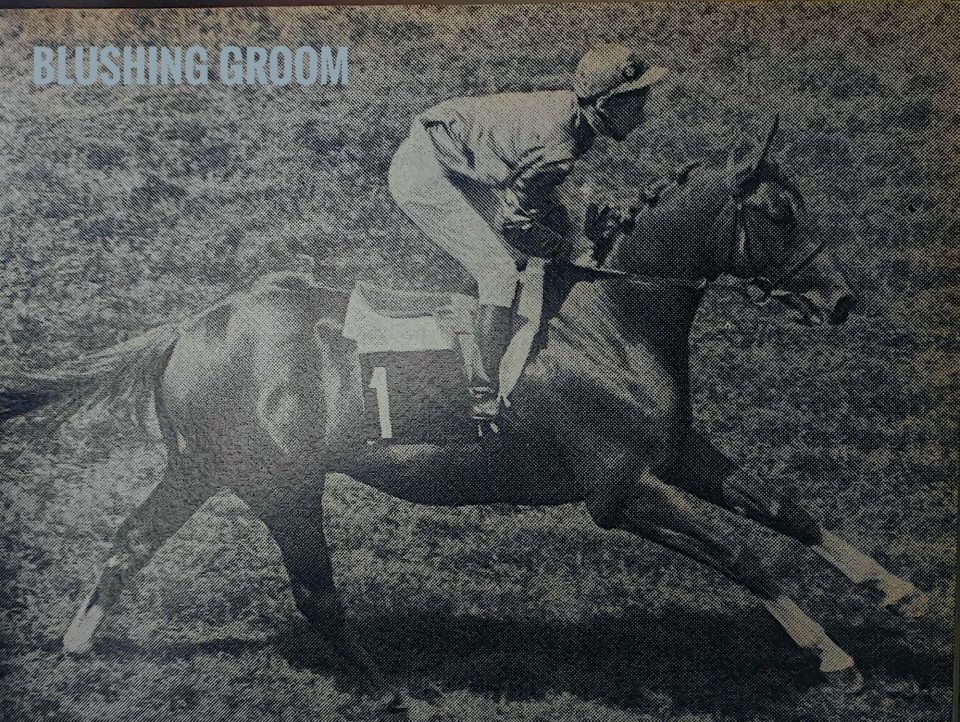


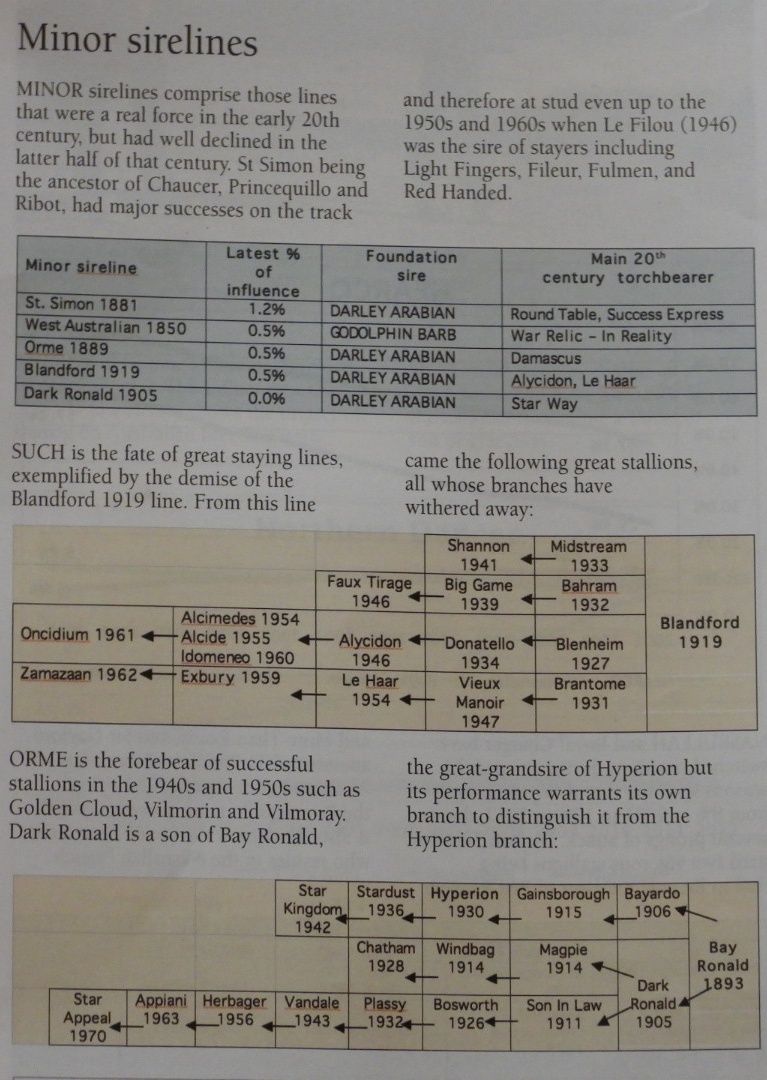
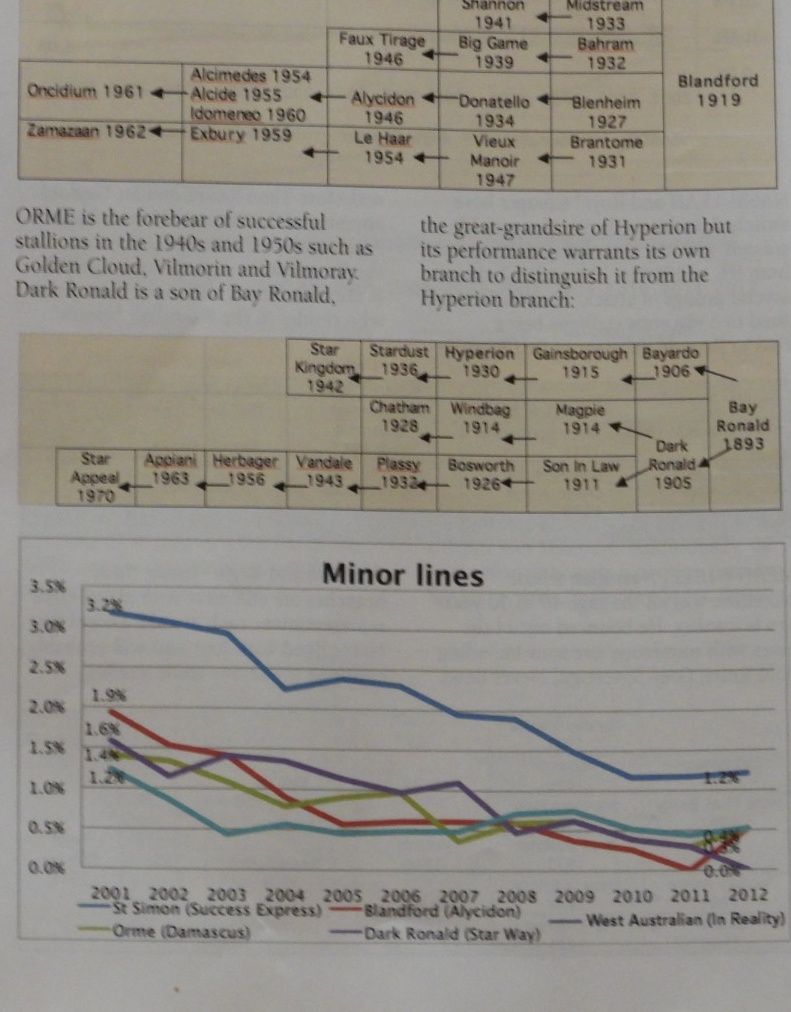


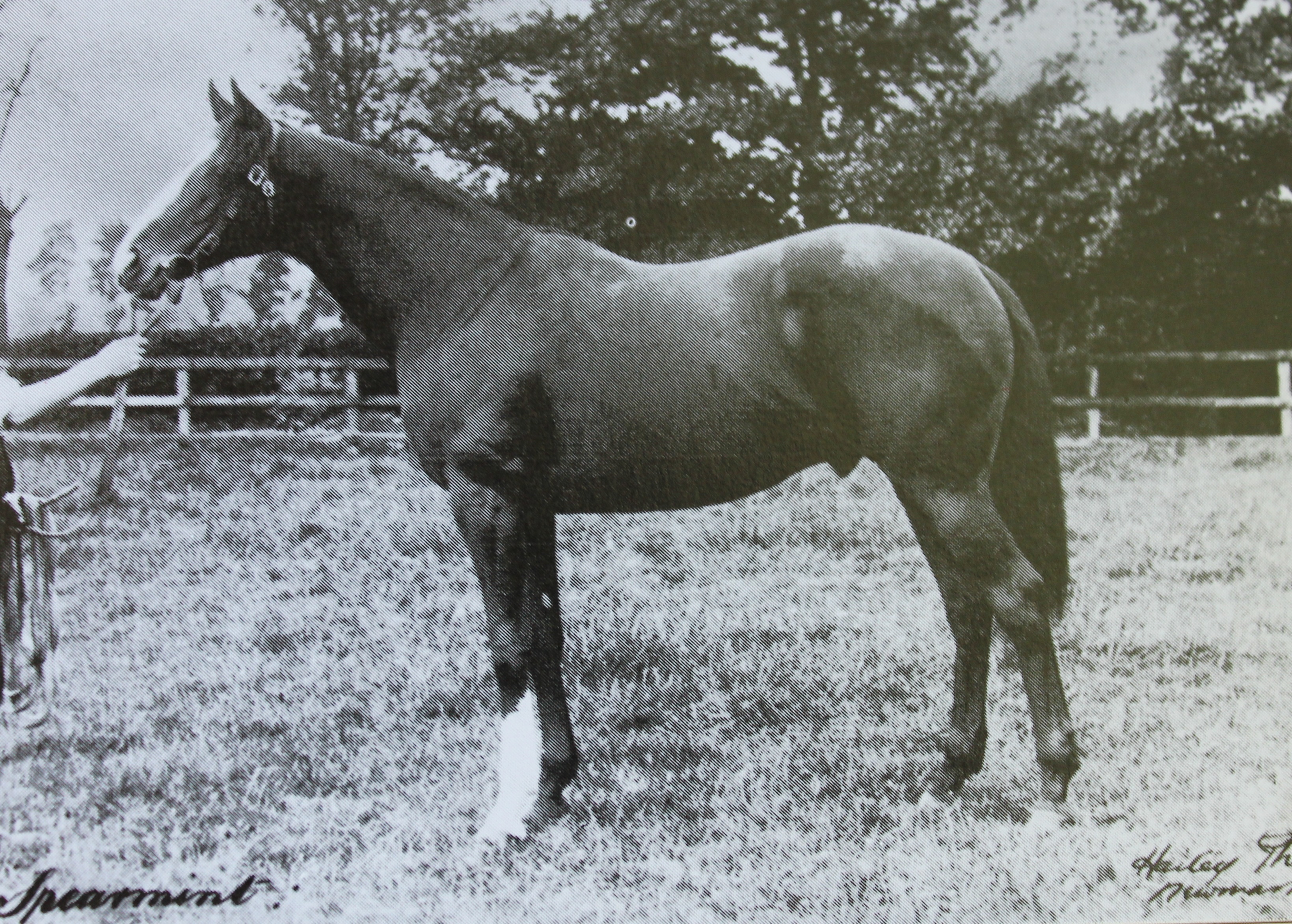


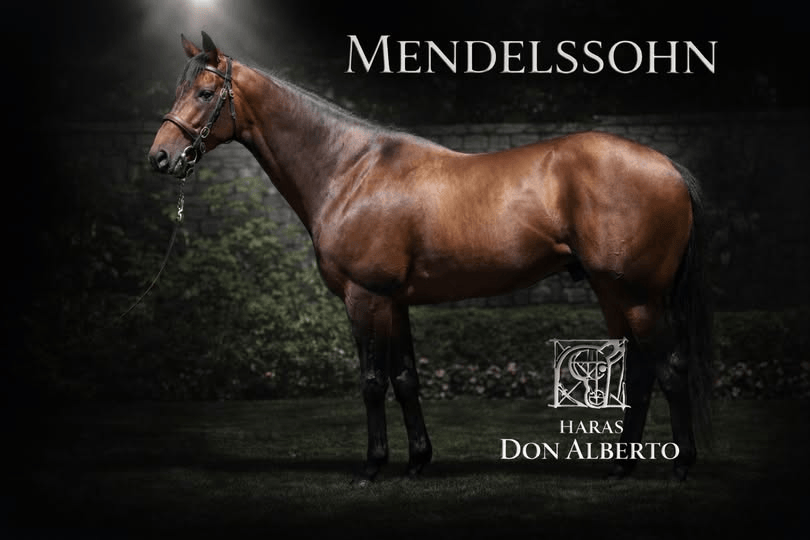


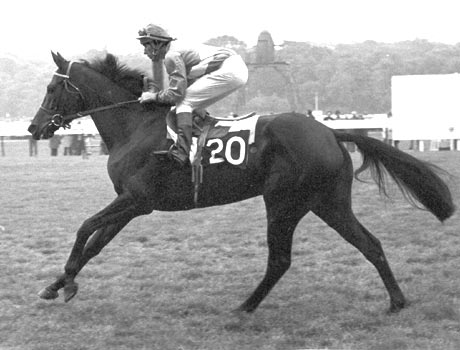


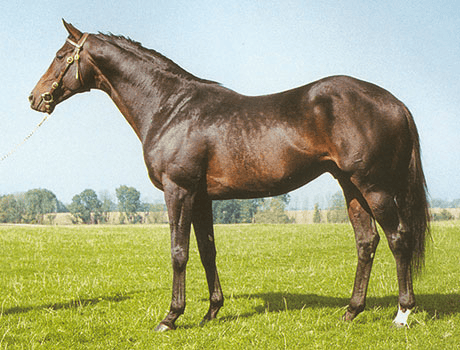

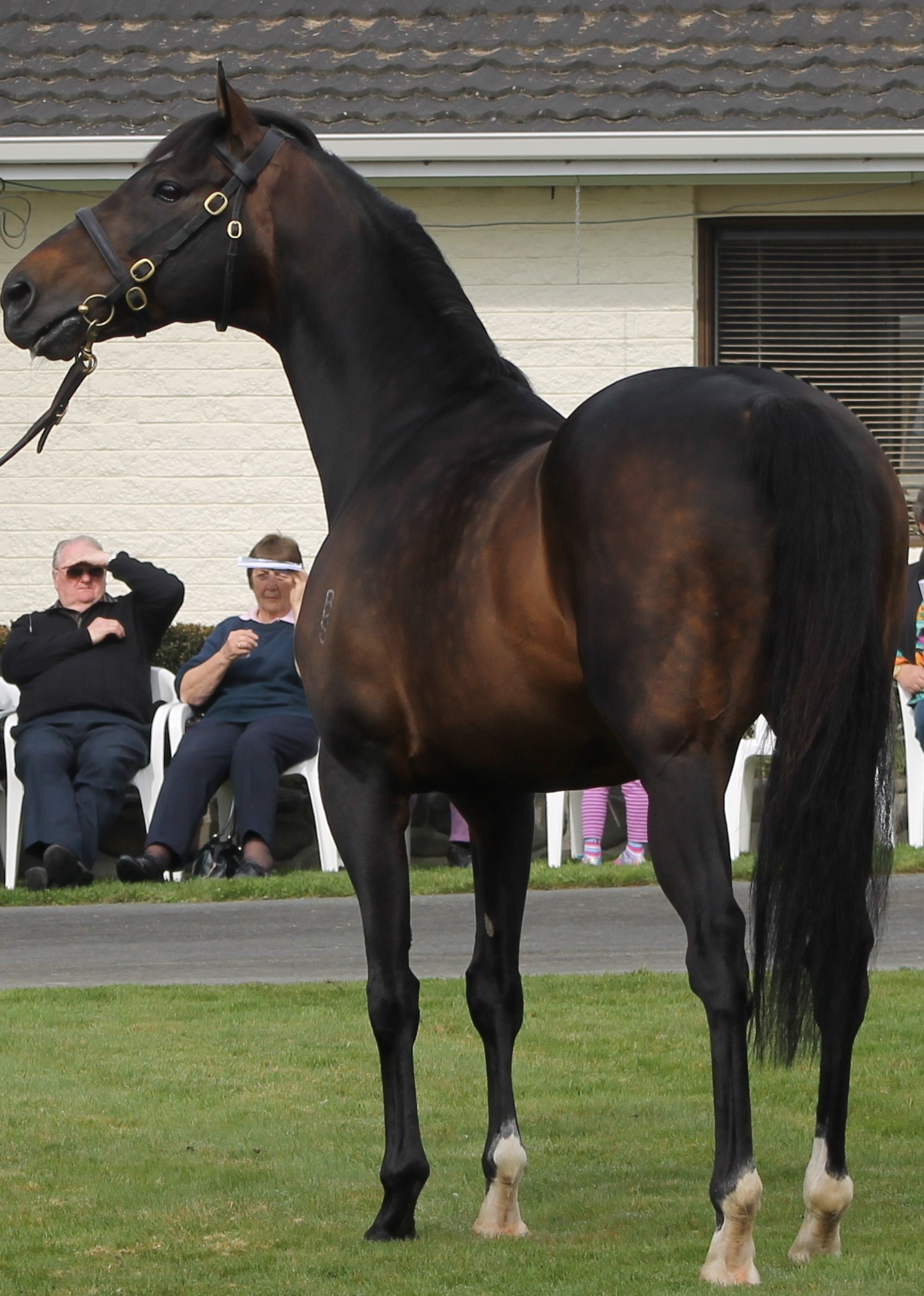
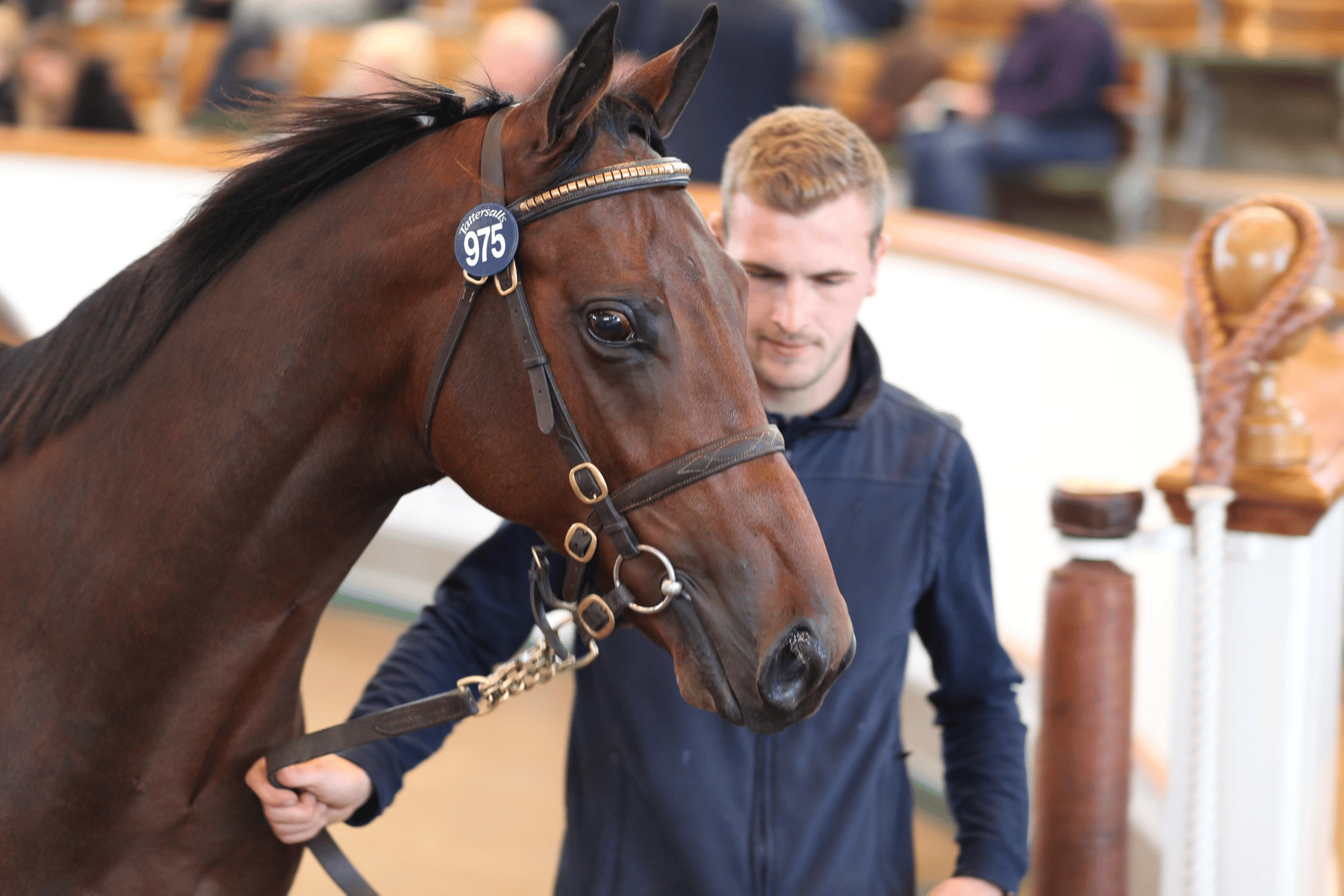


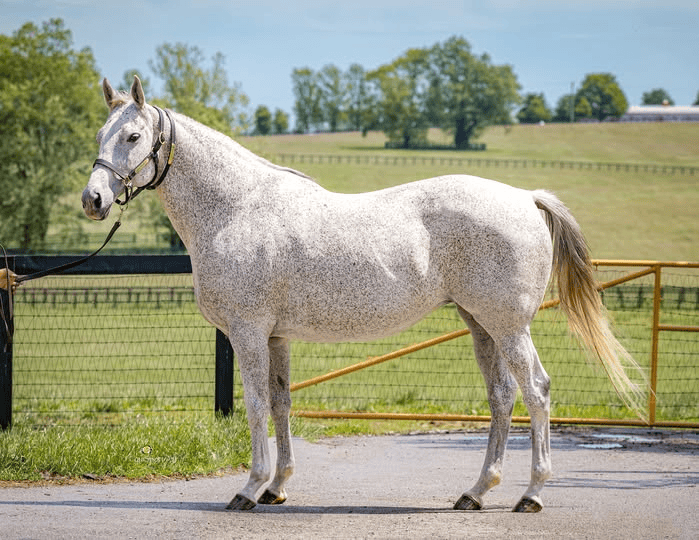


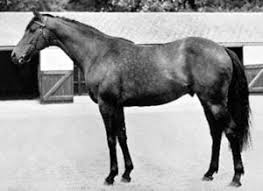


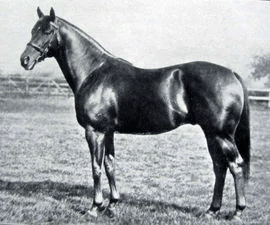


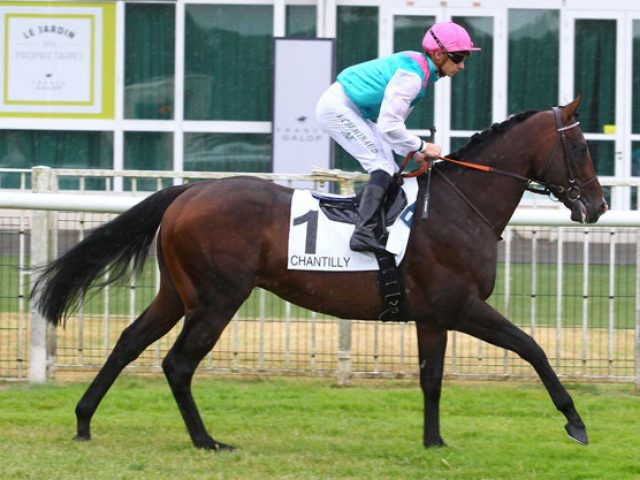


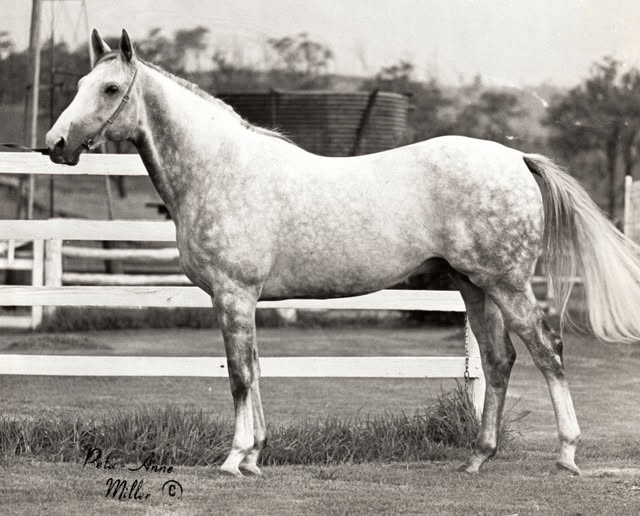
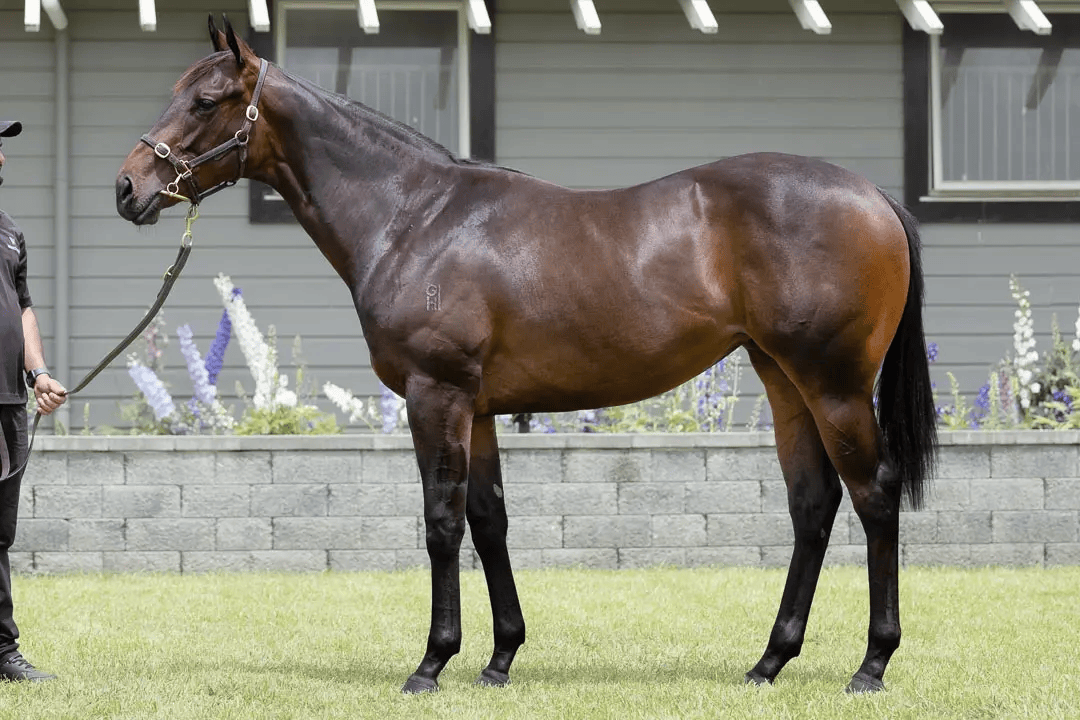


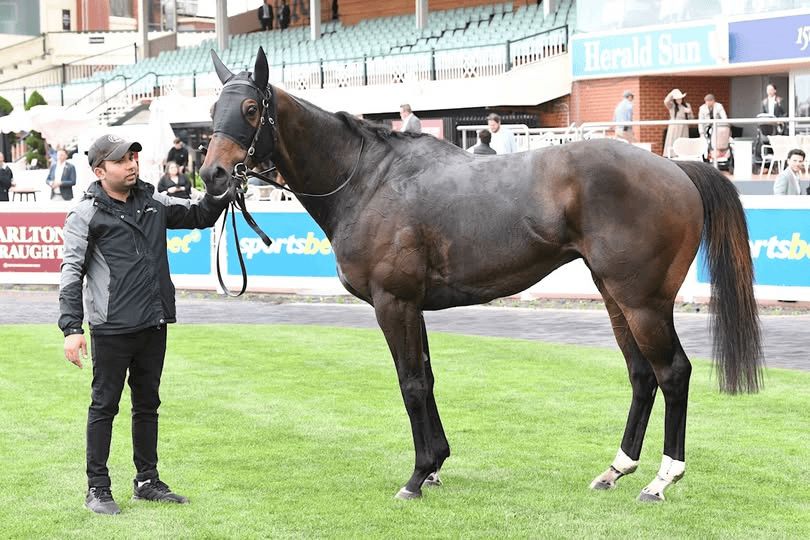


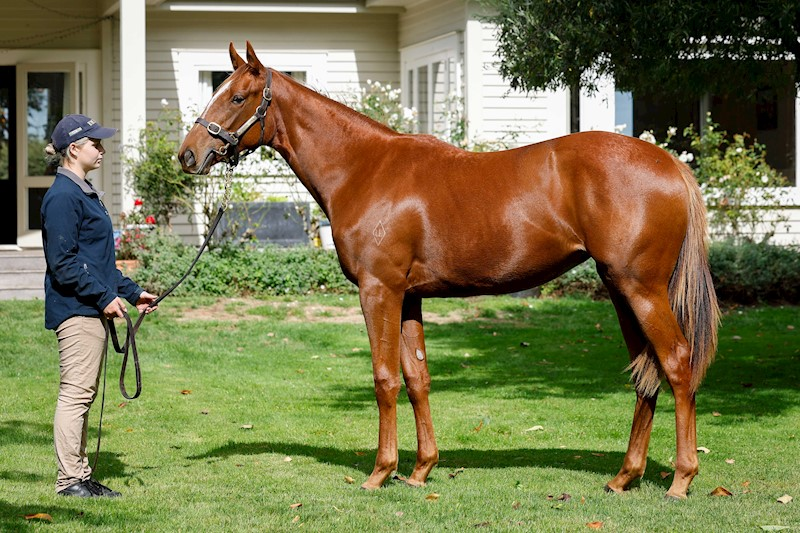
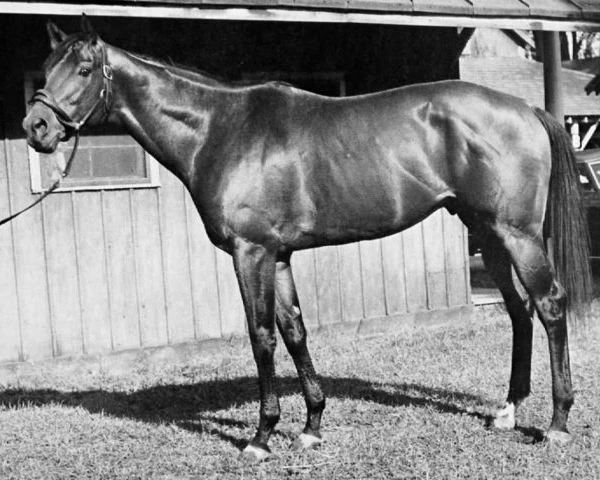


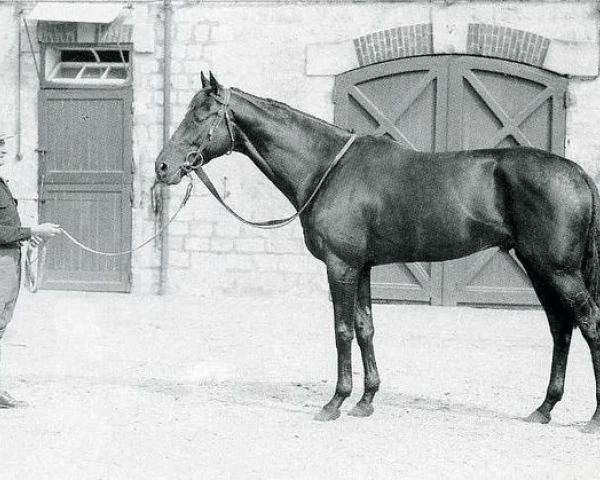




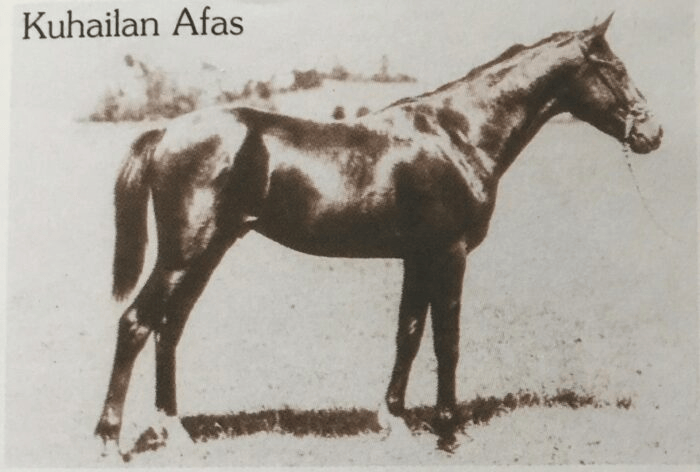
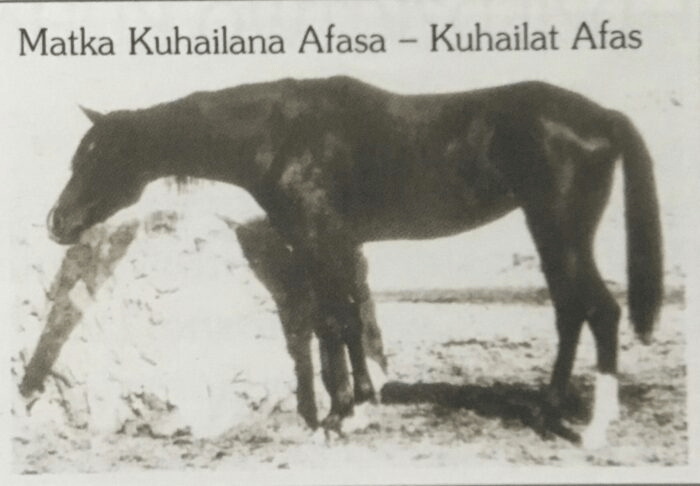

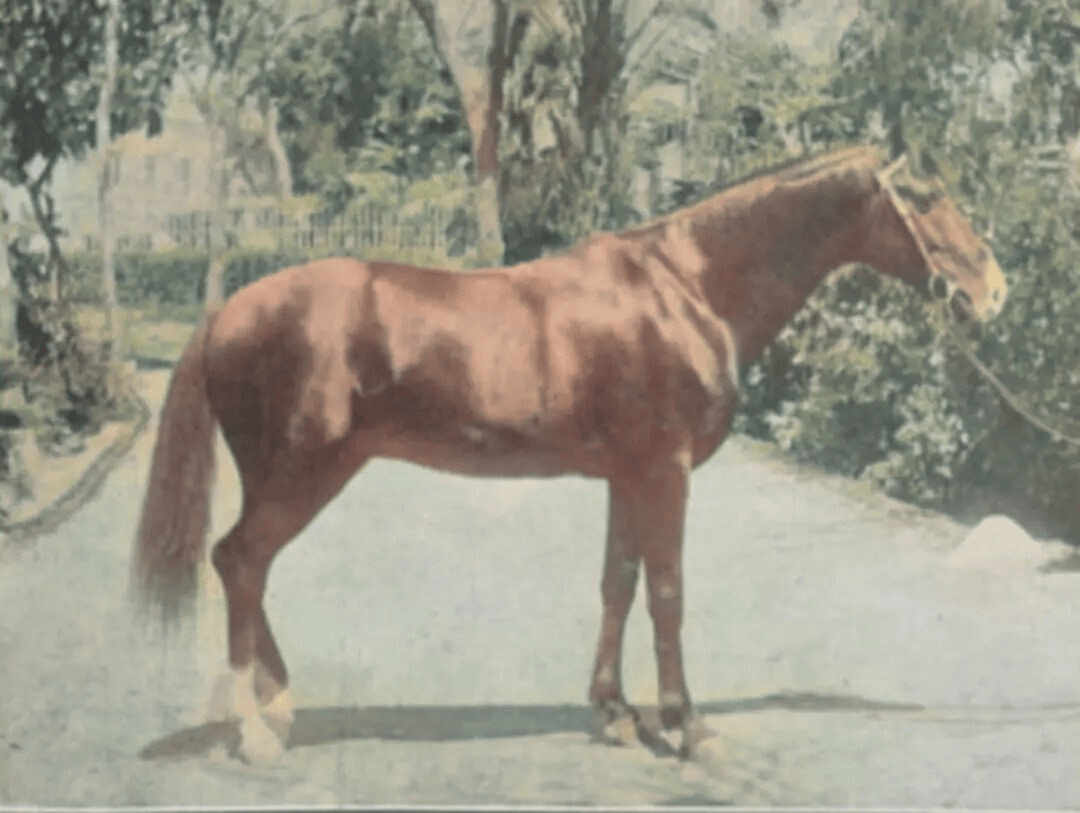
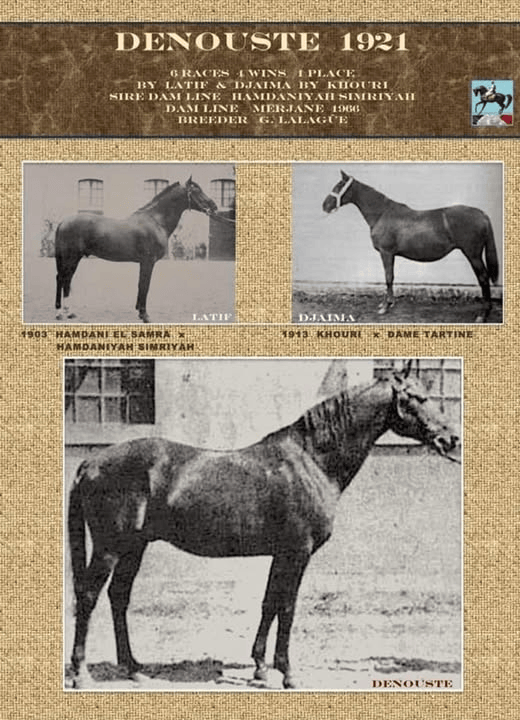


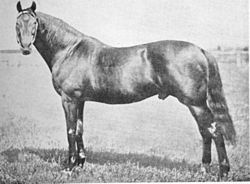

Leave a Reply