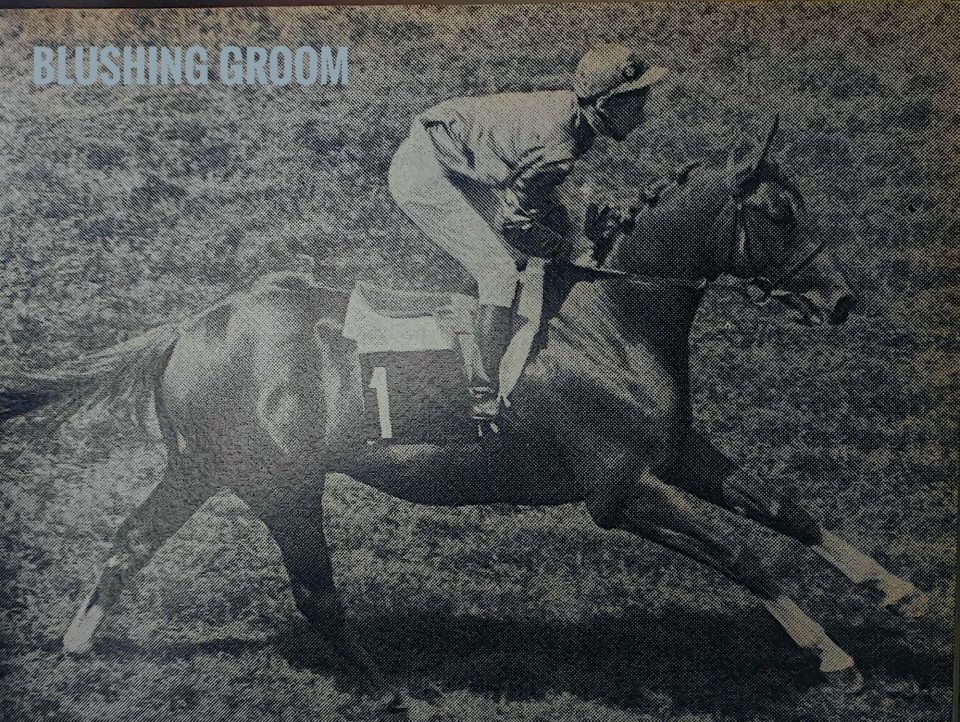
Such and such a mare produced the Derby winner but nothing else – thereby implying that the production of Classic winners or high-class winners is something akin to sausages being rolled out of a machine.
Sir Charles Leicester – Bloodstock Breeding
Queens of the racing World – Enable, Zenyatta, Winx, Black Caviar, Sunline, Rachael Alexandra et al – each shattered records and made their world champion status something remarkable.
Onwards to a new chapter – the champion becomes broodmare, proceeds to the breeding barn where she will be covered by chosen and distinguished stallion.
The initial offspring make for headlines, suggesting remarkable performances will once again be applauded. Characteristically, their black type as worded for sale headlines.
Reality speaks otherwise…
Determining the regularity with which a productive fertile mare breeds throughout her lifetime recognizes a distinction between i) breeding and ii) racing. The commercial sector uses impression that the most esteemed mares are also the leading producers, a value as collateral asset, where based on performance and race record earnings.
A misconception common is that we do not value a strong maternal lineage. We assume that everyone agrees that, ideally, our broodmares should have a history of solid racing and a strong maternal lineage. But, for economic reasons, this is not possible for most market participants. credit – Turf and Élevage : 2026, Breeders: the debate between performance and pedigree.
Thoroughbred History tells of the great broodmares with their phenomenally hard racing records. They certainly contributed their fair share to the earliest development of the breed. Unequalled tap-root mares, the abnormal good matrons of a bygone age are all imprinted upon toughness.
Contrasting were the mares with poor stud records and when getting on in their years (around a 20-year-old mark) produced Derby winners. Their progeny shows the GSB elite.
Produced some useful stock but nothing comparable to Ksar (French Derby and first-class stallion) produced at 19 years old (Kizil Kourgan (1893) by Omnium II, a great race filly who won the French 1,000 Guineas, Oaks and Grand Prix de Paris but barren 1911, 1912 & 1917.)
At 14 produced Angelica (the dam of Orme) but no good until she was 16 and foaled St Simon – possibly the greatest horse of all time. Her bad stud record was the probable reason that St Simon was not entered for the Derby or St Ledger. Dam, St. Angela (1865) by King Tom. Her grandam was a half sister to The Little Wonder) The Little Wonder Thoroughbred
Bred nothing of note until 22 years old when she foaled the 2,000 Guineas, 1,000 Guineas and Oaks winner mare Crucifix. Octaviana (1815) by Octavian – 12 for 12 wins. Crucifix produced Surplice (Derby & St Leger), he sired Lady Clifden, no lines further
Produced nothing above selling-plate class until 20 years old when she foaled Le Petit France (French derby 1954) – Mercia by Teddy, full sister to the grandam of Phil Drake (1955 English Derby and Grand Prix de Paris). Le Petit France exported to Argentina 1955 – Puesto en la estadistica anual de padrillos 1962-19; 1963-10; 1964-21; 1965-21; 1966-21;
Puesto en la estadistica anual de Abuelos Maternos: 1969-8; 1970-41; 1972-45; 1973-13; 1974-9; 1975-10; 1979-34; 1980-33; 1982-41; 1983-38;
Then again –
Tulyar, Mahmoud, Son-in-Law, Hampton were the first produce of dams.
These accounted are the extreme breeding greats. Santa Claus (Chamossaire) had come from a line of mares with nothing to recommend them on the racecourse. The great Sea Bird was even more bereft in this direction since not one of his first five dam in his pedigree won under rules on the flat. Sea Bird ( at first) got a reputation of being the failure at stud. Until Allez France winner of the French 1,000 Guineas and Oaks, the Arc de Triomphe, Prix Vermeille and Prix Ganay twice. Brillance came further to Gyr from an Italian mare and 2nd to none other than Nijinksy in the Epsom Derby. Son Arctic Tern a G1 champ at 4 years, was a top stallion in France.
As the industry ‘norms’ further evolved, the first few foals produced by a winning mare came usually regarded as superior sales prospects as compared to those from non-winners. However, with deeper examination reveals those winning abilities may not be as extraordinary as perceived; one or two successes achieved may lack significant merit or potentially aided by weight advantages or as occurring in low-class races primarily to secure a favorable position for early yearling saleable prospects.
These factors constitute the commercial prerequisites of the industry. The advantages shall somewhere lie in the geno strains/traits, the defined ‘type’ from a quality mare whereby adding to the stallion’s value, and thereby her female pedigree ‘upgraded’.
Breeding for outright champions of the turf – the underlying shall account strongly to a sudden hybrid explosion and when reviewing Queens of the Racing World their individuality has perculiar genetic pathways. Who or what may spear the pedigree is the perennial question. And here, analysis places due contributors, and secondly, the depth identifying patterns or crosses & conduits that are refreshing or ‘newly’ breaking from the conforming norms. (Wootton Bassett by Iffraaj is a prime example. Noting Ka Ying Rising (Timeform 130) reportedly trainer/owner of the mare had structural weakness to her racing ability and was accordingly advised a robust stallion being Shamexpress (OReilly)
At every generational wave, the genetic profile shall improve or decline or ‘rest’. Experience @TBL is that far to much in-breeding emphasis goes on speed for speed alone. Capturing more outcrossing strains preferred, based on stayer blood depth. Improve phenotype from less density in muscle – more length and strong bone skeleton.
Yet ever so oddly, a champions pedigree is one that cannot be so easily explained but fits priming a design; it addresses a phenotype we don’t see commonly.
In each case the apex of success having been at last reached, the process of deterioration sets in, and the immediate followers to these great horses were far inferior as racehorses.
Bruce Lowe (Breeding Racehorses by the Figure System)
Keep in mind, the incessant nature and practice of genetics may follow a ‘rest’ period. Keeping the champion value is back on the stallion. The individual progeny produced is continual noting ‘character’, its characteristics of typology. Here, the grandparent family (either side) are deciding a determination of representative physiology.
As breeders come to know their products more and more, (ie, families over many generations) there comes finer appreciation – as if it is a breeding ‘timeline’ to itself. Exactly how Tesio, Boussac, Aga Khan & stud breeder competency are judges being to finely observe what is working or not as to procure the stock desired.
(AI research produced, as follows)
Champion Thoroughbred mares often do not reproduce offspring as talented as themselves because racing brilliance is influenced by a complex mix of genetics, biology, and statistical probability. The science and breeding data show that even the best mares face structural limits that stallions do not.
🧬 Core Reason: Genetics of Performance Are Only Partially Heritable
Racing ability is heritable, but only 35–50% of performance traits (speed, stamina, soundness) can be passed on, according to modern breeding science. The rest depends on developmental factors, training, environment, and chance.
Even a mare with elite genetics can produce foals that inherit a weaker combination of alleles, because:
- Performance traits are polygenic (controlled by many genes).
- Key genes like MSTN (“speed gene”) vary in expression and combination.
- Genetic recombination reshuffles traits unpredictably.
🐎 Biological Constraints Unique to Mares
Unlike stallions, who may sire hundreds of foals per year, mares produce one foal annually at most. This creates:
- Small sample size — fewer chances to produce a standout.
- Higher impact of random variation — one or two mediocre foals skew perception.
- Physical wear from racing — intense campaigns may reduce reproductive efficiency.
Pedigree analysis shows that even among elite Classic-winning mares, only 18.5% ever produce a Group 1 winner.
🔒 The Closed Studbook Problem
All Thoroughbreds descend from a very small genetic base:
- This creates a genetic bottleneck, increasing:
- Inbreeding levels
- Fertility issues
- Reduced genetic diversity
- Difficulty consistently producing elite athletes
🧩 Why Some Great Mares Do Become Great Producers
A small subset of champion mares—like Urban Sea and Miesque—produce multiple elite offspring. These mares tend to share:
- Strong, consistent female families
- High genetic compatibility with elite stallions
- Favorable MSTN variants
- Exceptional physical soundness
But these mares are statistical outliers, not the norm. Even among Classic winners, only 57% produce any stakes-level offspring at all.
🧪 Breeding Theory: “Breed the Best to the Best… and Hope for the Best”
Even with perfect pedigree matching, breeders acknowledge:
“A well-designed mating increases the probability of success, although many other factors also come into play.”
Elite mares increase the odds of producing elite foals, but they cannot guarantee it.
📌 Summary: Why Champion Mares Often Don’t Reproduce Themselves
1. Limited reproductive output — one foal per year. 2. Polygenic traits — racing ability is complex and only partly heritable. 3. Genetic bottleneck — limited diversity reduces consistent excellence. 4. Biological wear — hard racing careers may affect fertility. 5. Statistical reality — even top mares rarely produce top foals (18.5% G1 producers).
references
Pedigree Pointers: Cassie Tully on whether elite racemares go on to produce quality offspring
The Equine Engine: How Genetics and Breeding Shape Modern Racehorses – World of Horses
Bloodstock Breeding – Sir Charles Leicester

