Tags
Not one French horse ever managed to beat the French-trained Riverman, who lost only three times in two seasons in the top company. Steel Pulse beat him narrowly in the Criterium de Maisons-Laffitte as a two year old. Brigadier Gerard and Parnell beat him more easily in the King George VI and Queen Elizabeth Stakes, and Brigadier Gerard again, this time by one and a half lengths in the Champion Stakes.
Few milers in France were capable of giving Riverman a hard race; two or three that probably were, notably Lyphard, came from the same stable and never took him on. Had his stable-companions been allowed to take him on no-one would be confident that his record of four wins from four starts in France as a three-year-old would have been different.
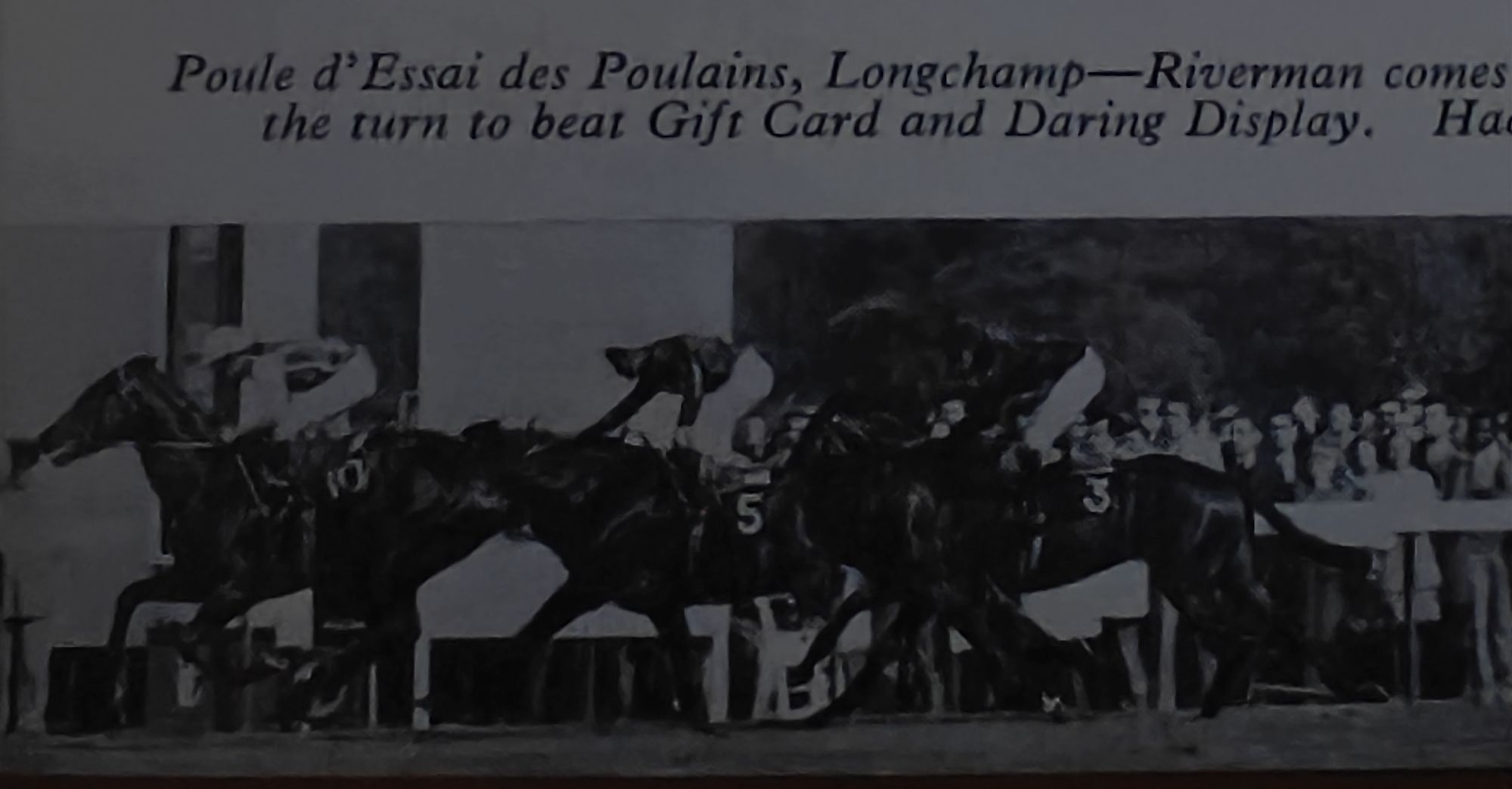
It was obvious Riverman would stay further than a mile; however, for the time being he was kept to distances of around a mile. His stable companion Talleyrand deputised in the Prix du Jockey-Club, Lyphard went to the Epsom Derby and Riverman took on an easier task, though not an easy one in the Prix Jean Prat at Chantilly on the same field, producing a tremendous burst of speed after being weighted with once again and winning as he liked from My Snot, subsequently second in Citheron and in front of Daring Display in the Prix Eugene Adam.
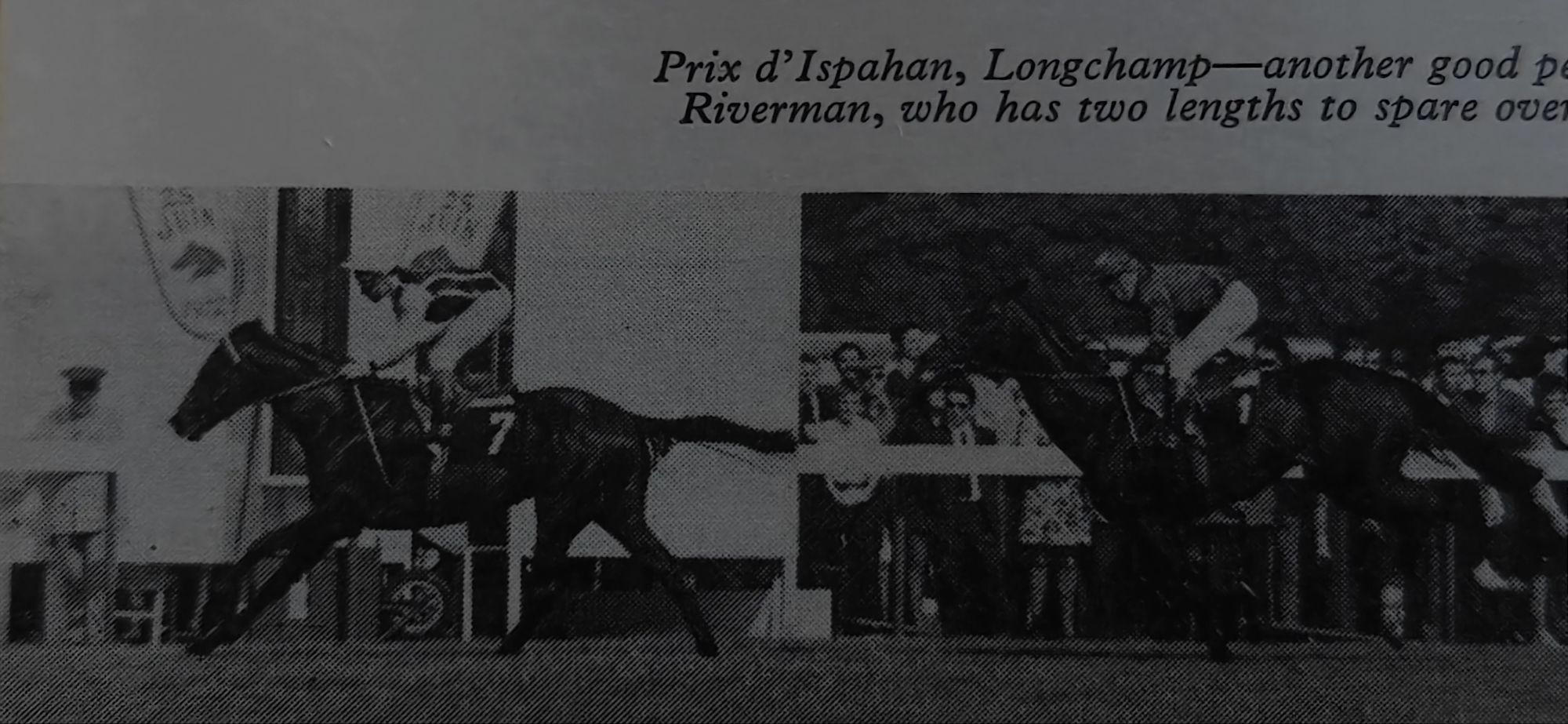
A stiffer test, a very stiff test faced Riverman in the Prix d’Ispahan at Longchamp later in June and he came through with flying colours. He won impressively by two lengths from Sharapour taking advantage in a few strides of a cap that appeared between Sharapour and Ballyhot, the leaders, when the former hung to the left at the distance.
For a horse untried in public over the distance Riverman could scarcely have had a stiffer trial than in the King George VI and Queen Elizabeth Stakes at Ascot, particularly if Brigadier Gerard proved anywhere near as good at the trip as at shorter distances. Apart from the quality of the opposition, one important factor weighted against Riverman – he would almost certainly be held up. In the event, he proved unable to give start to Brigadier Gerard and Parnell and win; he languished in a last of nine until approaching the short straight, appearing as he had sometimes done in France have little chance of getting in the race. He came wide on the turn and made up a remarkable amount of ground considering the ability of those in front of him and finished third, six and a half lengths behind Brigadier Gerard and five lengths behind Parnell and turning the tables on his old rival Steel Pulse.
Freddie Head gave him less to do in the Champion Stakes, and with two and a half furlongs to run had every chance of beating Brigadier Gerard. At this point Brigadier Gerard produced a startling burst of speed that took him clear. Not even a horse of Riverman’s pace, driven extremely hard, could stay with him immediately, but as they struck the rising ground Riverman still being rousted along began steadily to reduce Brigadier Gerald’s lead and kept on so well that margin of his defeat became only half that which appeared on the cards a furlong out. Riverman would probably have worked his way alongside Brigadier Gerald with another furlong to cover.
Here was a very fine racehorse – strong, very attractive and deep bodied. A good classic winner, whose performance in running Brigadier Gerard to a length and a half on his final appearance speaks volumes for him and provides him a better reference than is possessed by most of his contemporaries who, like, Riverman had been retired to stud.
American bred he purchased at public auction as was his stable companions Lyphard and Pistol Packer and cost 41,000 dollars as a foal at the Keeneland Sales.
His great grandam Azalea, was a lightly raced half-sister to two stakes winners, notably the stayer Pavot, winner of the Belmont Stakes in 1945. His grandam Nile Lily was a stakes winner; she won nine races. His dam River Lady by a son (Prince John) of Princequillo won a race at two years and another at three.
Riverman was River Lady’s first registered foal.
Riverman had not Mill Reef’s exceptionally fluent action – he was inclined to scratch his way along in his slower paces, particularly when the ground was on top, but he showed form on a firm surface at least the equal of his form on soft.
He was a very genuine and most consistent racehorse.
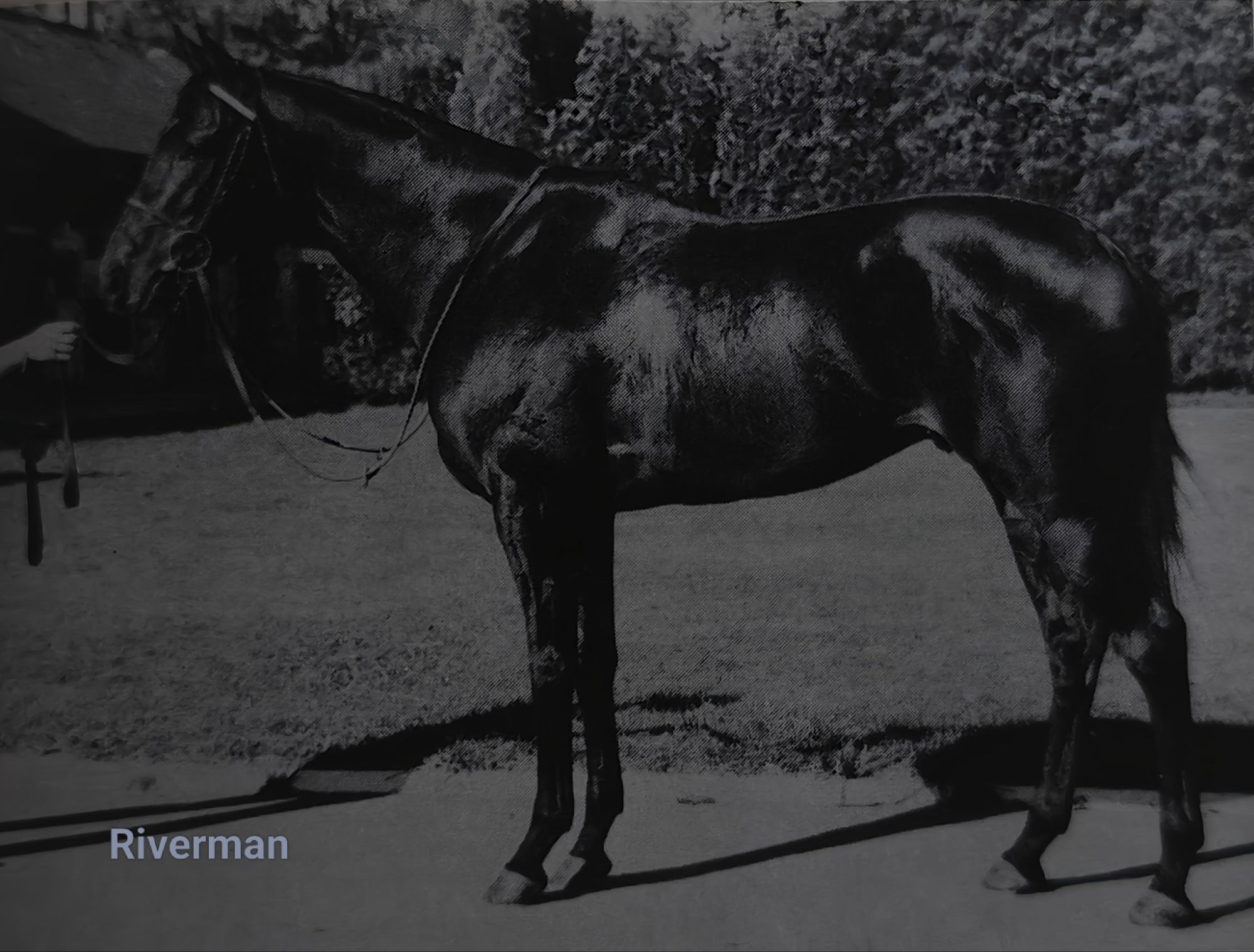
reference and credit: A. Head, France. Racehorses of 1972.
Additional
@ distaff, Man O’ War daughter Coquelicot (female family 10-a) > Haplotype L4.
His contribution to pedigree profiles is undoubtedly a most dominant influence. Pinatubo colt on the rise https://www.pedigreequery.com/komorebi5 8f winner in France an example.
Riverman daughter Waterway (Fr) dam of Helen Street dam of Street Cry & 2nd day of Shamardl are both female families 1-l. It is interesting these (1) families are variant @ Haplotype N of which are sub-clades.
2x Riverman daughters developed 2013 Cartier Horse of the Year.2013 Cartier Champion 3yo Filly Treve. https://www.pedigreequery.com/treve3, the Champions line Triptych by Riverman.
Perhaps it is only a good time when Riverman will start to appear to frequent further to linebred ‘clusters.’ This account provides beneficial insight – specifically re Mill Reef – https://www.thoroughbreddailynews.com/pdf/cau/cau041116.pdf
 The Thoroughbred Link