Tags
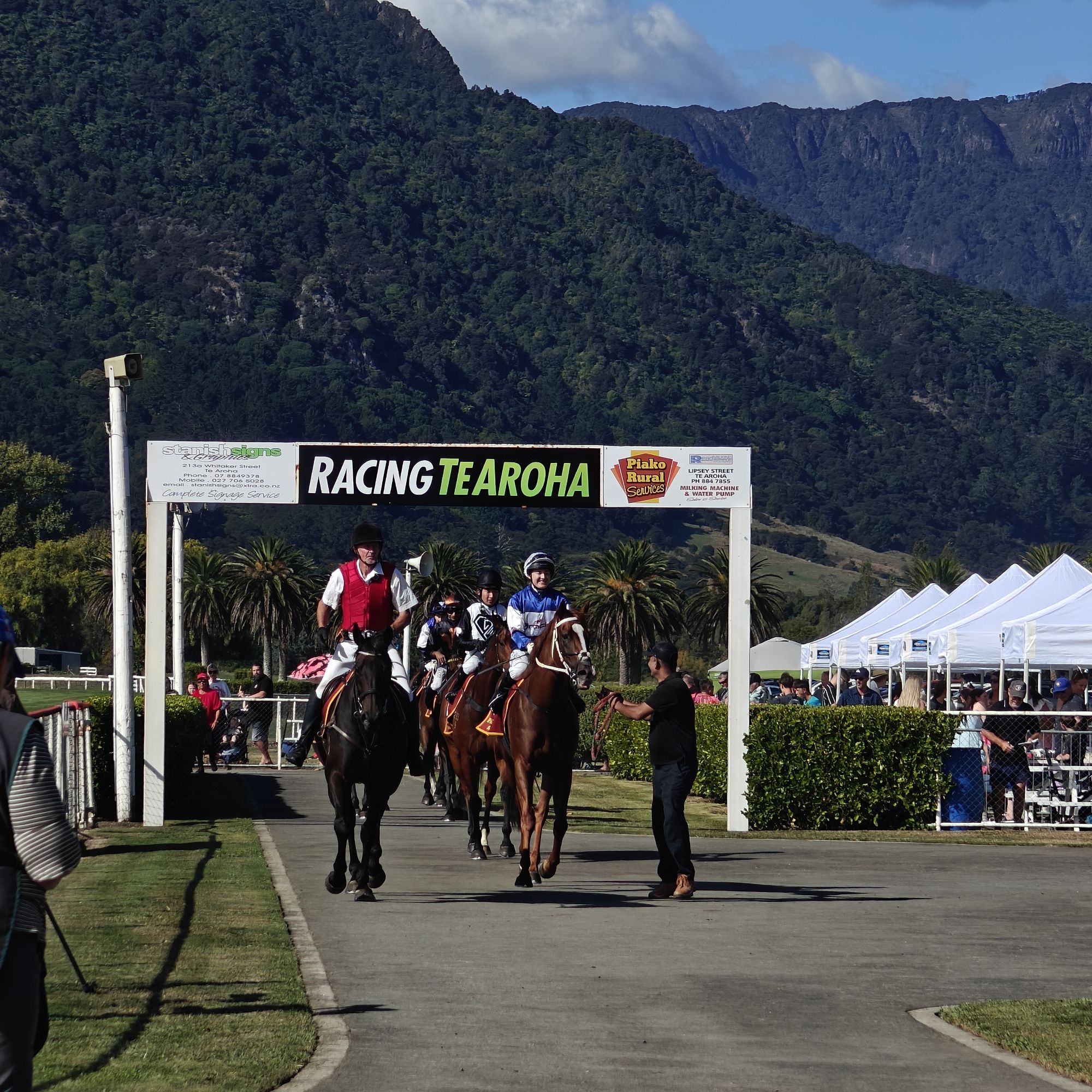
Velocious’s development from a yearling purchased for $190k (view yearling parade ➡️➡️➡️https://www.nzb.co.nz/sales/23kaa/412 , a G1 2 yr old winner, to her ‘back-in’ 3 yr old form was last weekend witnessed at local track Te Aroha (Waikato, New Zealand) .
The filly has a Type, spectacular!
Viewing the remarkable ability of Written Tycoon’s daughter – my phone captured videos – just really don’t do her justice.
2024 analysis & Pedigree post when Velocious was G1 Sistema Stakes & Karaka Million winning 2yo, her pedigree is outbred.
Since post, a newer thesis @ 2023 Russian Thoroughbred science papers apply. (References below)
***references: a Haplotype has underlying affinity connection of family 2-N and families 9-b,e,f, h upholding a prototype produced upon Haplotype G. By hypothesis-modelling bloodline carriers: likes of Teddy ranging to Damascus, via Selene.
Having reviewed different modelling references, the pedigree constructs expressively sound.
It is this redirecting, upon a recessive-latent – ‘why’ I also believe Tesio pursued experimental refinement to a Type superior pure.
This is precisely what I {have} set out to prove. In hybrid animals, although they may be highly selected, the different physical and non-physical characters are passed on absolutely independently one from the other.
Breeding the Racehorse: Tesio
If they tell you that a horse flew, they are speaking of a chestnut
By classic breeding, besides speed or stamina elements – it is rather the characteristic latency to a ‘source’ genome variation which shall surpass. It is beyond the ‘given’ discernment to the modern Thoroughbred.
A genomic variation, the genes may be cloistered to high-adaptive stress load capacity, this from certain ancestral bred, that ultimately contributed to the hybrid-thoroughbred.
The ancestral Silk Road breeds (not simply by term Arabic horse & other) states a long, collective horse History, the long-term crossings over nomadic with cultured oriental horses. Science also has each or ‘what’ to Haplotype. To the point here, the ‘G’ Haplotype is thought of an ‘old breed thoroughbred’ before closure of General Studbook 1791.
In Type, this geno/Haplotype upholds the ‘pedigree’ to pheno capacity and its finer selection lines may appear by preferred pathways.
Whilst science will hopefully service the public something wiser, Tesio intelligently clearly understood the potential of Mendelism because he had worked out what the ‘pure’ principle went to or, from. As such, my belief has, this was to be his best kept secret.
At the beginning of the 19th century, to admit a small group of Arabian horses. The experiment raised expectations of fabulous results – the so-called re-stocking of the breed. It proved a dismal failure. The resulting products lost both speed and staying power and the new Arabian blood ended by virtually eliminating itself. Its descendants were incapable of winning good races so they were discarded and forgotten. Breeding for Speed/Breeding the Race-Horse: Tesio
The theoretical pedigree algorithm, its precedent model as replication/combination or either of the science using categories speed & stamina types, to foresee muscle fibre growth/development, remains questionable.
For mine, a ‘type’ responsible is not yet disclosed sufficiently and the science yet to find further potential.
However let’s say… it is remarkable how superior design matings shall find the zig-zag pathways. I think both pedigree and haplotype can open to superior lines and make for a reasonable probability what bloodline are carrier(s) essential.
These subtle details do continue…. Velocious by Written Tycoon – a distaff family 5-H – D1-b Haplotype. Dam-side infused @ Prince Chevalier (fam. 9-f), Damascus, strains to Secretariat ( we can better understand the magnificent Secretariat😉 and @ sire lines are Better Boy, Wilkes, My Babu through the Lavendlar/Marchetta 1-W family are likely indicating.
Strikingly the modern-classification D1-b – a cold-climate breed may also be possibly attributed to G Haplotype, been dominate of the Don breed horse. A type integrity defined by soundness, a capacity to superior quality, a race performance achieved with ease.
Nature has endowed the breed with a very strong constitution, unpretentiousness, good distance abilities, undemanding conditions for keeping and feeding, and high performance. Modern horses of the Don breed are characterized by good conformation, dry strong limbs, and strong hooves.
Credit references
https://www.duruttya.com/?mod=regarding-the-breeding-nature-of-russian-thoroughbreds
https://www.semanticscholar.org/reader/5fb359a9fede71f9758845e1e8185731813cd972
https://pmc.ncbi.nlm.nih.gov/articles/PMC10378902/
https://pmc.ncbi.nlm.nih.gov/articles/PMC6805228/
The Genetic Diversity of Horse Native Breeds in Russia, is a scientific publication authored by L.A. Khrabrova, A.A. Nikolaeva, N.V. Blohina, and S.I. Sorokin.https://www.mdpi.com/2073-4425/14/12/2148
GENETIC DIVERSITY OF MITOCHONDRIAL DNA
HAPLOGROUPS IN THE DON HORSE BREED
L.A. Khrabrova, A.A. Nikolaeva,
N.V. Blohina, S.I. Sorokin
 The Thoroughbred Link